In the vast pantry of Chinese aromatics, few ingredients command as much respect—and require as much restraint—as the clove. While you might associate them with holiday hams or pumpkin spice lattes in the West, in China, Cloves (丁香, Dīng Xiāng) are a pillar of savory cooking. They are the “bass notes” in the symphony of a master stock, providing a warm, numbing depth that transforms simple meats into culinary masterpieces.
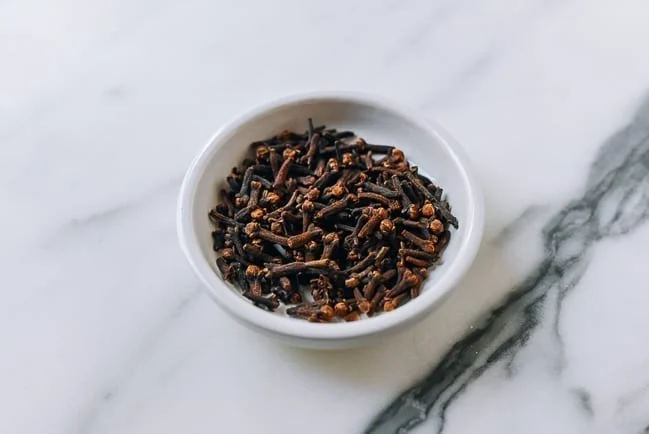
History tells us that as early as the Han Dynasty (206 BC – 220 AD), courtiers were required to chew on these dried buds to freshen their breath before addressing the Emperor. Today, we don’t just chew them; we use them to build layers of flavor that define regional Chinese cuisines.
What Are Cloves?
Scientific Name: Syzygium aromaticum Chinese Name: 丁香 (Dīng Xiāng) – Literally “Nail Fragrance”
Cloves are the dried, unopened flower buds of an evergreen tree belonging to the myrtle family. Native to the Maluku Islands of Indonesia (historically known as the “Spice Islands”), they have been traded globally for thousands of years.
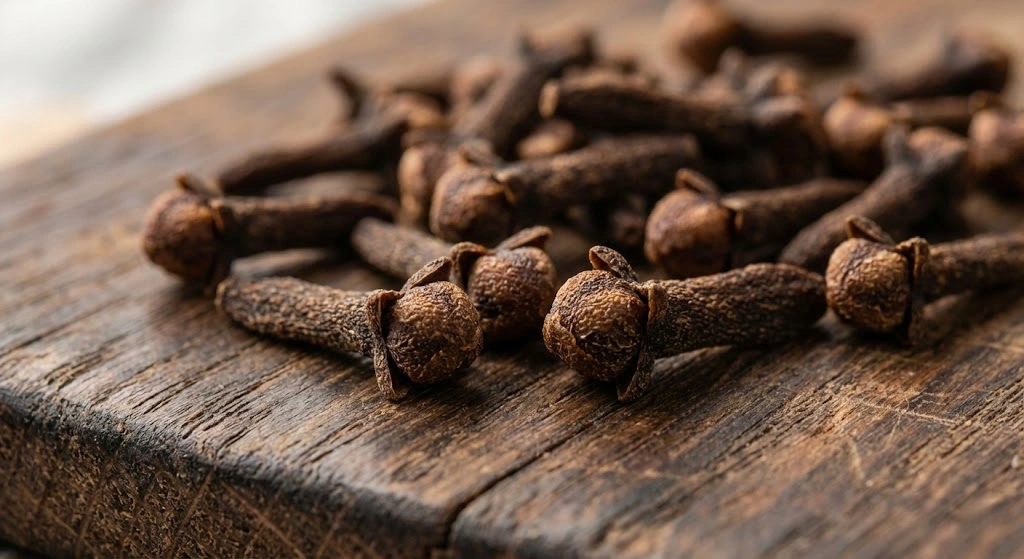
The Chinese name “Ding Xiang” is incredibly descriptive. “Ding” means nail, referring to the spice’s shape—a bulbous head atop a stiff stem—while “Xiang” means fragrance. When harvested, the buds are pink, but they turn a rich, dark reddish-brown upon drying.
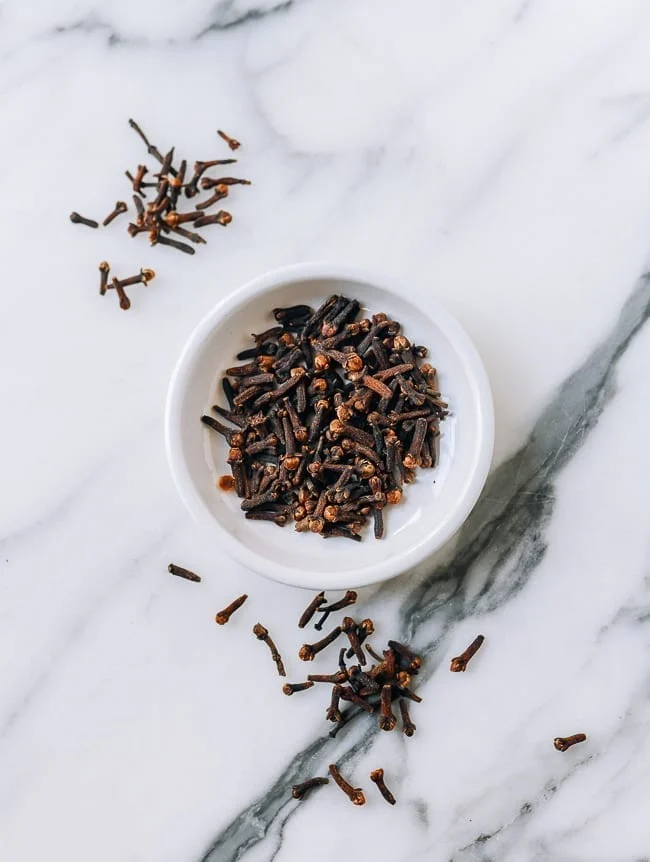
The Science of Flavor
What makes cloves so powerful? The answer lies in a compound called Eugenol. This chemical component is responsible for the spice’s intense aroma and its slight numbing, anesthetic effect on the tongue (similar to, but distinct from, Sichuan peppercorns). Because of this high concentration of essential oils, cloves are considered a “warm” spice in Traditional Chinese Medicine (TCM), often used to dispel cold and aid digestion.
Flavor Profile: The Art of Restraint
Cloves are intensely aromatic, sweet, and bitter with a distinct astringency. They are not a background player; they are a spotlight stealer. If you use too many, your dish will taste medicinal, resembling mouthwash.
However, when used correctly—usually just 2 to 4 buds for a large pot of stew—they provide a bridge between sweet and savory flavors. They add a lingering warmth that cuts through the greasiness of fatty meats, making them indispensable for pork and beef dishes.
Culinary Applications in Chinese Cooking
While Western cuisine often relegates cloves to desserts, Chinese cuisine utilizes them primarily in savory applications.
1. The Soul of “Lu Wei” (Master Stock)
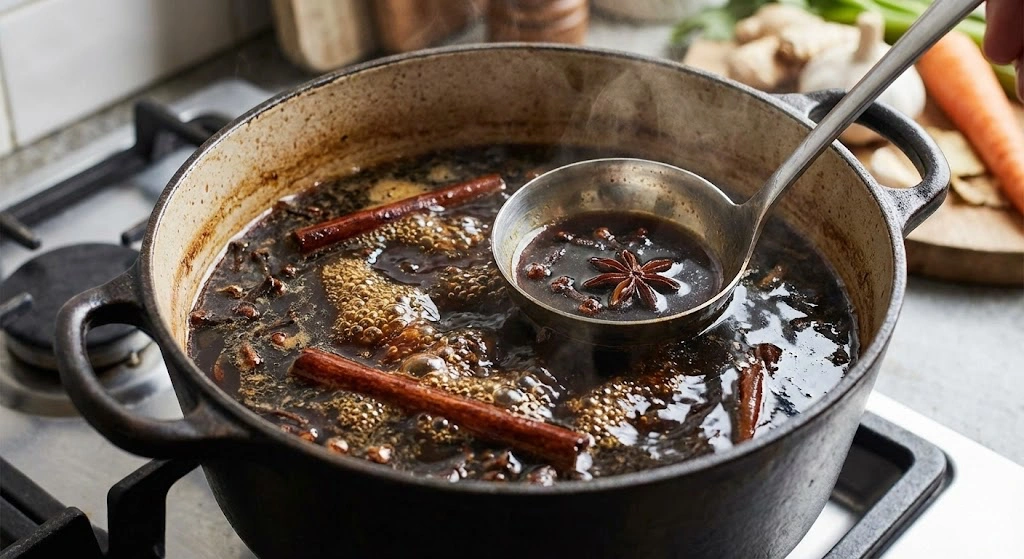
The most common use of cloves is in Lu Shui (master stock), the liquid used to braise meats, eggs, and tofu. Cloves work synergistically with star anise, cinnamon, and fennel seeds to create a complex bouquet. For example, when making Braised Pork Trotters, a few cloves in the sauce help mask the gaminess of the pork skin while highlighting the richness of the collagen.
2. Red Braising (Hong Shao)
In classic “Red Braised” dishes, cloves add a subtle complexity that soy sauce and sugar alone cannot achieve. If you are preparing a hearty Braised Beef Brisket with Radish, adding just two cloves during the simmering process will elevate the broth, making it taste like it came from a professional restaurant rather than a home kitchen.
3. Spice Powders and Marinades
Cloves are a mandatory ingredient in Five Spice Powder (Wuxianfen). They are also frequently ground into marinades for roasted meats. For instance, the deep flavor of cloves pairs exceptionally well with gamey meats. We often include a pinch of ground cloves or a whole clove in the marinade for a Roasted Lamb Leg to balance the strong flavor of the lamb.
4. Flavoring Oils and Sauces
Sichuan cuisine sometimes infuses oil with cloves and other spices to create a base for cold dishes. You will also find them in complex sauces. A rich Spicy Beef Sauce relies on the blooming of spices like cloves in hot oil to release their fat-soluble flavors before the meat is added.
Perfect Pairings: What to Mix with Cloves
Understanding flavor synergy is key to mastering Chinese cooking. Cloves rarely work alone; they need companions.
- Star Anise & Cassia Bark: The “Holy Trinity” of Chinese braising. The sweetness of the anise and the woodiness of the cassia balance the medicinal bite of the clove.
- Dried Tangerine Peel (Chenpi): The citrus notes of Chenpi brighten the heavy warmth of cloves.
- Ginger & Scallions: Fresh aromatics provide the base notes, while cloves provide the high notes.
- Soy Sauce: The umami of soy sauce grounds the volatile oils of the clove.
Buying and Storage Guide
To ensure your dishes have the best flavor, you must start with high-quality spices.
How to Select Quality Cloves:
- Appearance: Look for buds that are plump and have the “crown” (the petals) still intact. Avoid shriveled, dusty, or broken stems.
- The Oil Test: Press a clove between your fingernails. A good quality clove should release a tiny amount of oil. If it’s dry and brittle, the essential oils have evaporated, and it will add little flavor.
- The Float Test: Place a clove in a cup of water. High-quality cloves (rich in oil) should sink or float vertically (head up). If they float horizontally on the surface, they are likely old and stale.
Storage: Keep whole cloves in an airtight glass jar away from direct sunlight and heat. Whole cloves can last up to 4-5 years, but ground cloves lose their potency rapidly—usually within 6 months.
Practical Cooking Tips
- Whole vs. Ground: For long-simmered dishes like Simple Clear Beef Noodle Soup, always use whole cloves. They release flavor slowly and keep the soup clear. Ground cloves are best for dry rubs or fillings.
- Removal: Because biting into a whole clove can be an overwhelming (and tongue-numbing) experience, it is polite to fish them out before serving, or use a stainless steel spice ball.
- Caution with Poultry: While excellent with beef and pork, cloves can easily overpower delicate poultry. However, in robust recipes like Cantonese Soy Sauce Chicken, where the sauce is rich and dark, a single clove adds a necessary layer of fragrance without dominating the chicken.

Recipes That Shine with Cloves
If you are looking to experiment with cloves, we recommend starting with these recipes where the spice plays a crucial supporting role:
- Homestyle Braised Pork Belly: The fat in the pork belly absorbs the clove aroma beautifully, creating a melt-in-your-mouth experience that isn’t greasy.
- Braised Chicken Legs: A beginner-friendly introduction to “Red Braising” where cloves add a restaurant-quality finish.
- Cantonese Honey Glazed Char Siu: The marinade for authentic BBQ pork often contains a pinch of five-spice powder (which includes cloves) or ground cloves to cut the sweetness of the honey/maltose.
Authoritative References
For further reading on the botany, historical trade, and chemical composition of cloves, please refer to these established sources:
- Kew Royal Botanic Gardens: Syzygium aromaticum (Clove) – Detailed botanical information.
- National Center for Biotechnology Information (NCBI): Pharmacological properties of Eugenol.
- Britannica: History of the Spice Trade and the role of cloves.





Leave a Reply