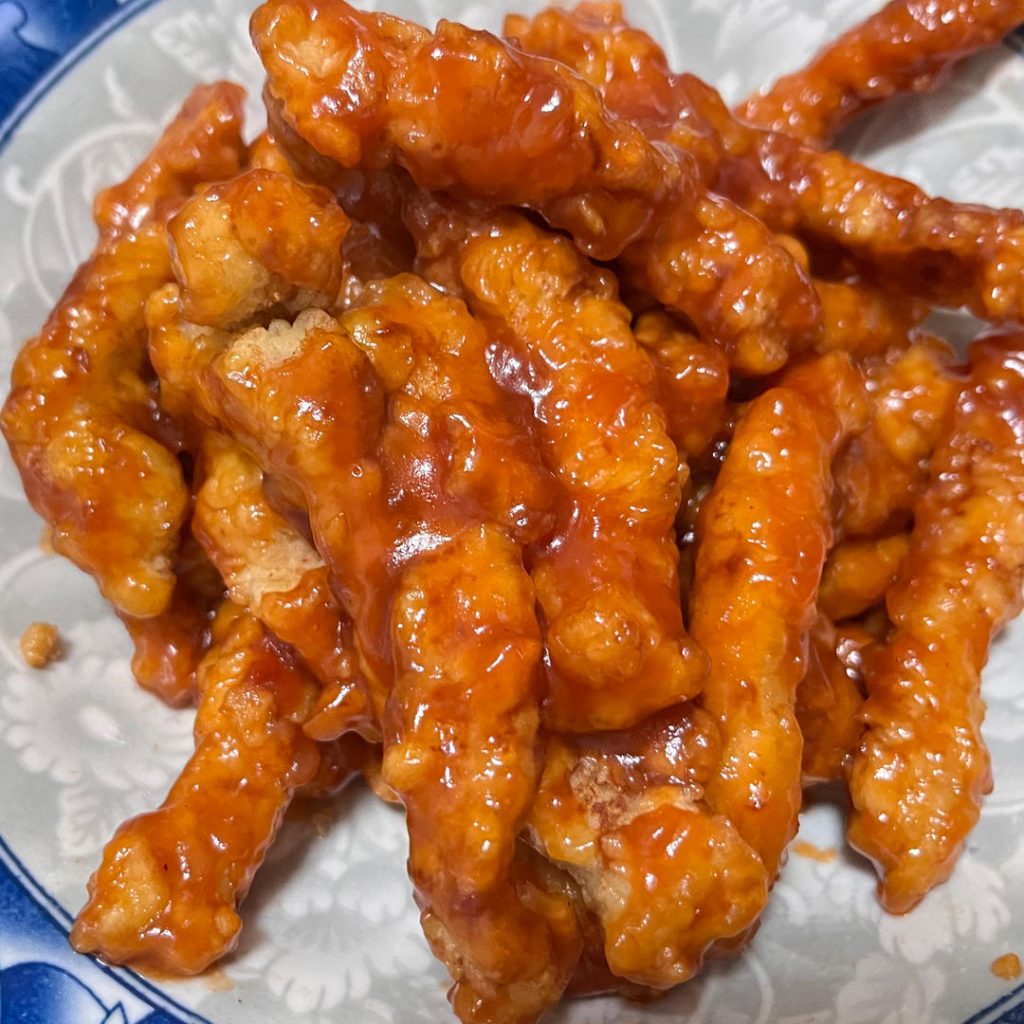
Sweet and Sour Pork (Tang Cu Li Ji) is, without a doubt, one of the most beloved dishes in Chinese cuisine. It features juicy strips of pork tenderloin, coated in a batter that shatters upon the first bite, all glazed in a glossy, vibrant sweet and sour sauce.

Growing up in Sichuan, my parents—both chefs—taught me that while we are famous for spice, the balance of Tang (Sugar) and Cu (Vinegar) is just as important as the heat of chili peppers. I remember watching my father work the wok; the moment he tossed the golden, fried pork into the bubbling red sauce was always pure magic. The smell of caramelized sugar and zesty vinegar would fill our small kitchen, signaling that a treat was on the way.
In this recipe, I am sharing the “Home-Style” (Jia Chang) version. Unlike the complex restaurant versions that rely solely on caramelized sugar for color, this home-style method uses a touch of ketchup. This is a very common technique in modern Chinese households to achieve that appetizing red hue and a depth of savory umami that balances the sweetness perfectly.
If you are a fan of this flavor profile but prefer poultry, you should definitely check out my Sweet and Sour Chicken recipe as well!
Why This Recipe Works
- The Double-Fry Technique: We fry the meat twice. The first fry at a lower temperature cooks the meat through, while the second “flash fry” at a high temperature drives out excess oil and makes the batter incredibly crispy.
- The 1:1 Batter Ratio: Using equal parts cornstarch and all-purpose flour creates a crust that is both crunchy (from the cornstarch) and structured (from the flour), ensuring it doesn’t turn soggy the moment it touches the sauce.
- The “Golden Ratio” Sauce: This recipe uses a tested ratio of 4:4:2:2 (Ketchup, Water, Sugar, Vinegar) for a foolproof sweet and sour balance that isn’t cloying.
What is Sweet and Sour Pork?
Tang Cu means “Sweet and Sour,” and Li Ji refers to the pork tenderloin. While Western takeout versions often use chunks of pork shoulder and include pineapples and bell peppers (similar to Cantonese Gu Lao Rou), the traditional Tang Cu Li Ji from Northern and Western China focuses purely on the meat. It is served as strips of tenderloin, prioritizing the contrast between the crispy coating and the tender meat inside.
Key Ingredients & Substitutions
- Pork Tenderloin (Li Ji): This is the filet mignon of pork. It is lean, tender, and cooks quickly.
- Comparison: You could use Pork Loin, but it is tougher and requires careful slicing. Pork Shoulder is too fatty for this specific quick-fry strip method. Stick to tenderloin for the melt-in-your-mouth texture.
- Ketchup: Yes, ketchup! In “Home-style” Chinese cooking, ketchup provides acidity, sweetness, and a brilliant red color without needing artificial dyes.
- Shaoxing Wine: Essential for removing any “porky” odor. You can substitute with Dry Sherry.
- Cornstarch & Flour: You need both. Using only cornstarch makes a batter that is too hard; using only flour makes it too bready. The mix is perfect.
Ingredients
The Meat & Marinade:
- 11 oz (300g) Pork Tenderloin
- 1 tsp (approx) Shaoxing Cooking Wine
- 1/2 tsp (2g) Salt
- 1 large Egg
The Batter:
- 1/3 cup (40g) Cornstarch
- 1/3 cup (40g) All-Purpose Flour
The Sauce:
- 4 tbsp Ketchup
- 4 tbsp Water
- 2 tbsp Sugar
- 2 tbsp White Vinegar
- 1 tsp Cornstarch + 1 tbsp Water (Slurry for thickening)
Garnish:
- Toasted Sesame Seeds (optional)
- Cooking Oil (for deep frying)
Recipe Notes Before You Start
- Temperature Control: You will need a kitchen thermometer. The success of this dish relies on hitting 320°F (160°C) for the first fry and 390°F (200°C) for the second fry.
- Mise en Place: Once you start frying and saucing, things move very fast. Have your sauce mixed and your slurry ready before you turn on the stove.
- Sauce Consistency: We want the sauce to coat the meat, not drown it. It should be a glaze.
How to Make Sweet and Sour Pork
Step 1: Prep the Pork
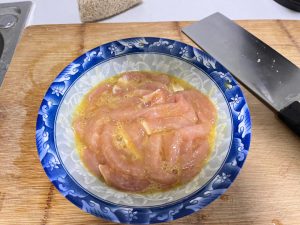
Slice the pork tenderloin into strips about 1 cm (0.4 inch) thick. Place them in a bowl. Add the Shaoxing wine, salt, and the egg. Mix vigorously with your hand until the egg and liquid are absorbed into the meat.
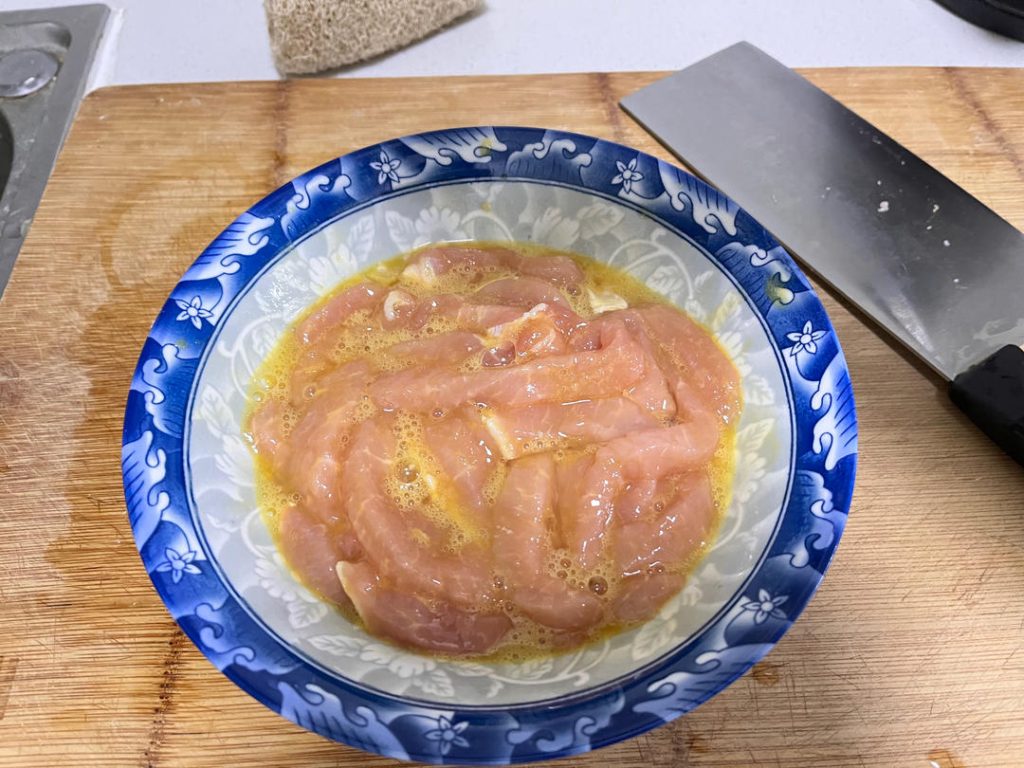
Why? This step, known as “velveting,” ensures the meat stays juicy even after deep frying. Let it marinate for 20-30 minutes.
Step 2: Batter the Meat
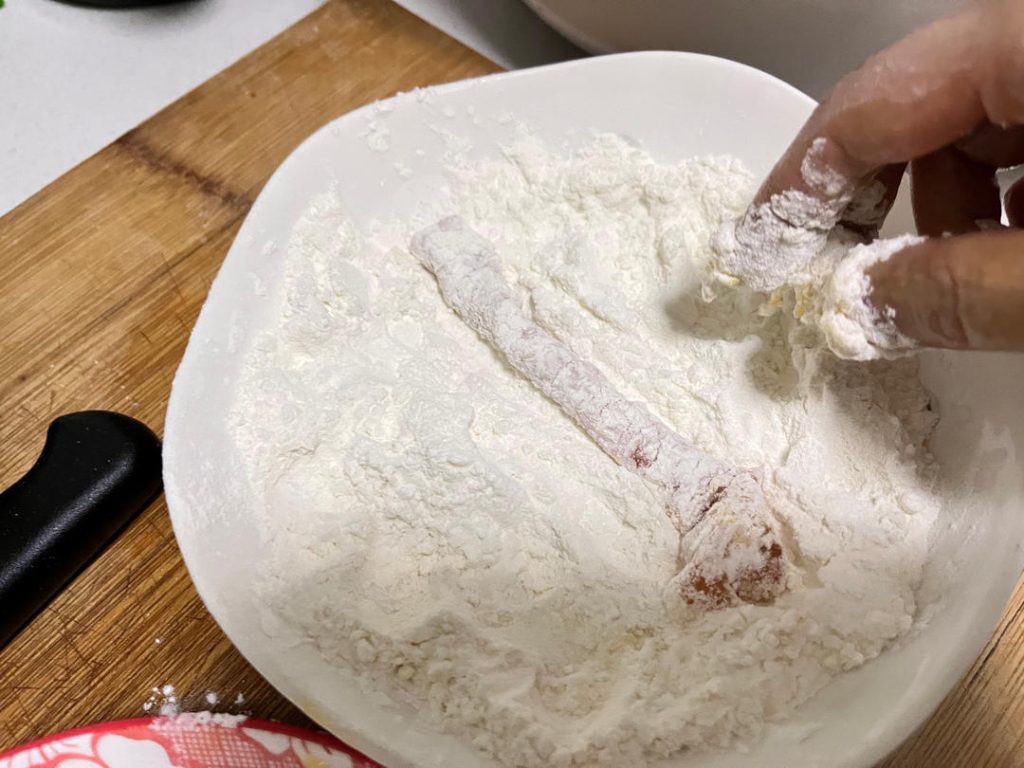
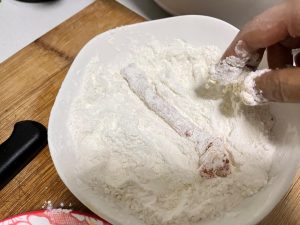
In a bowl, mix the 40g cornstarch and 40g flour. Add this powder mixture to the marinated meat and toss until every strip is evenly coated. The meat should feel tacky and well-covered, not dripping wet.
Step 3: The First Fry (Cooking Through)
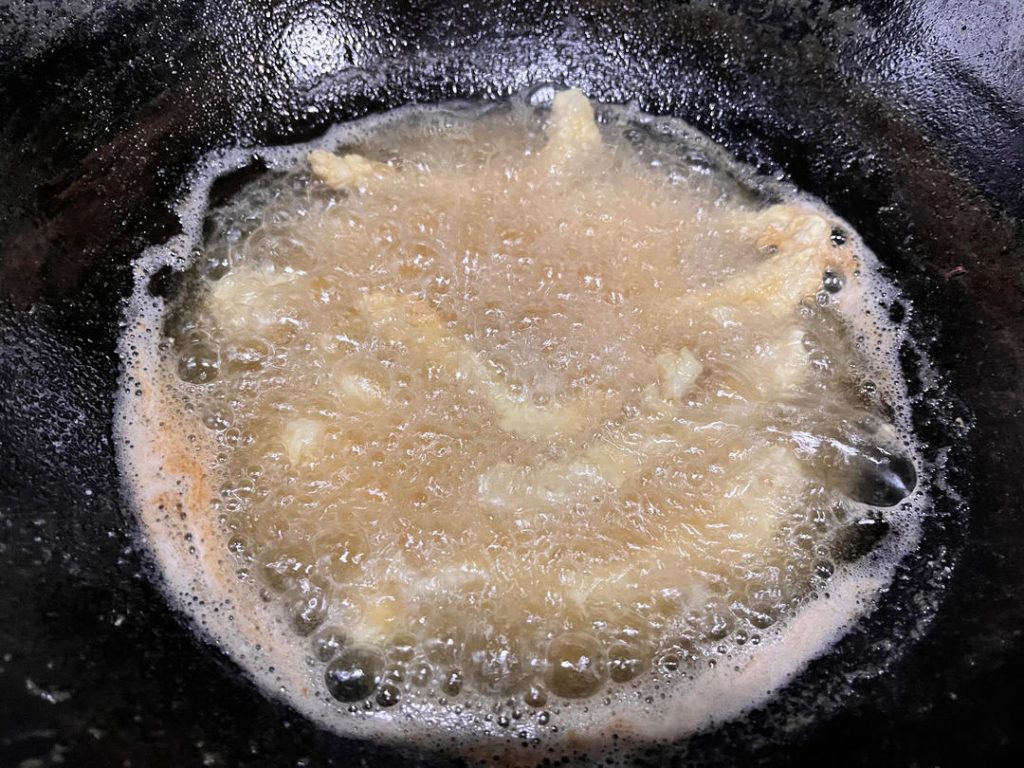
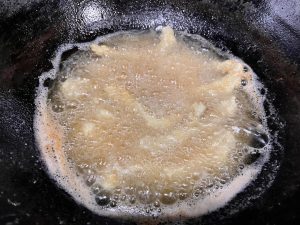
Heat a generous amount of oil in a wok or deep pot to 320°F (160°C). If you don’t have a thermometer, dip a wooden chopstick into the oil; small, steady bubbles should appear around it. Carefully drop the meat strips in one by one to prevent sticking. Fry for about 2 minutes until the surface is pale yellow and the coating has set. Remove the meat and set aside.
Step 4: The Second Fry (Crisping)
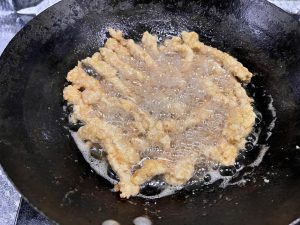
Heat the oil up to 390°F (200°C). This is high heat—the oil surface will look shimmering and may release a wisp of smoke. Add all the meat back into the oil at once. Fry for just 1 minute until the batter turns golden brown and feels crispy when tapped with chopsticks. Remove immediately and drain.
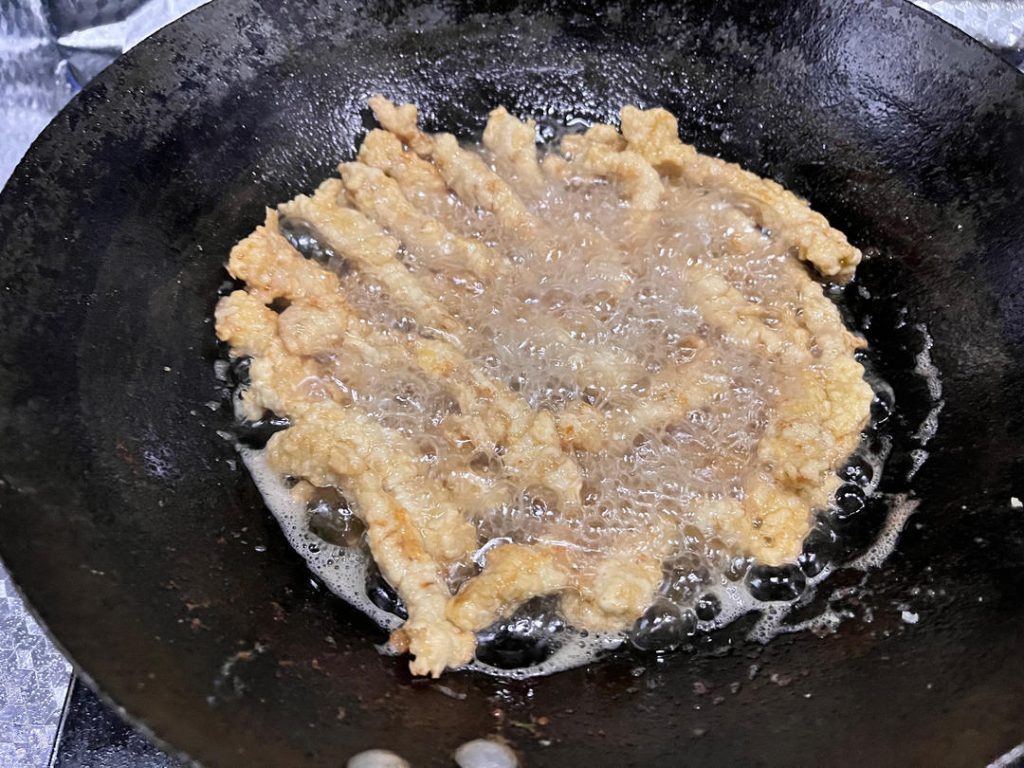
Safety Tip: Be careful when adding meat to 200°C oil; it will bubble aggressively.
Step 5: Make the Sauce
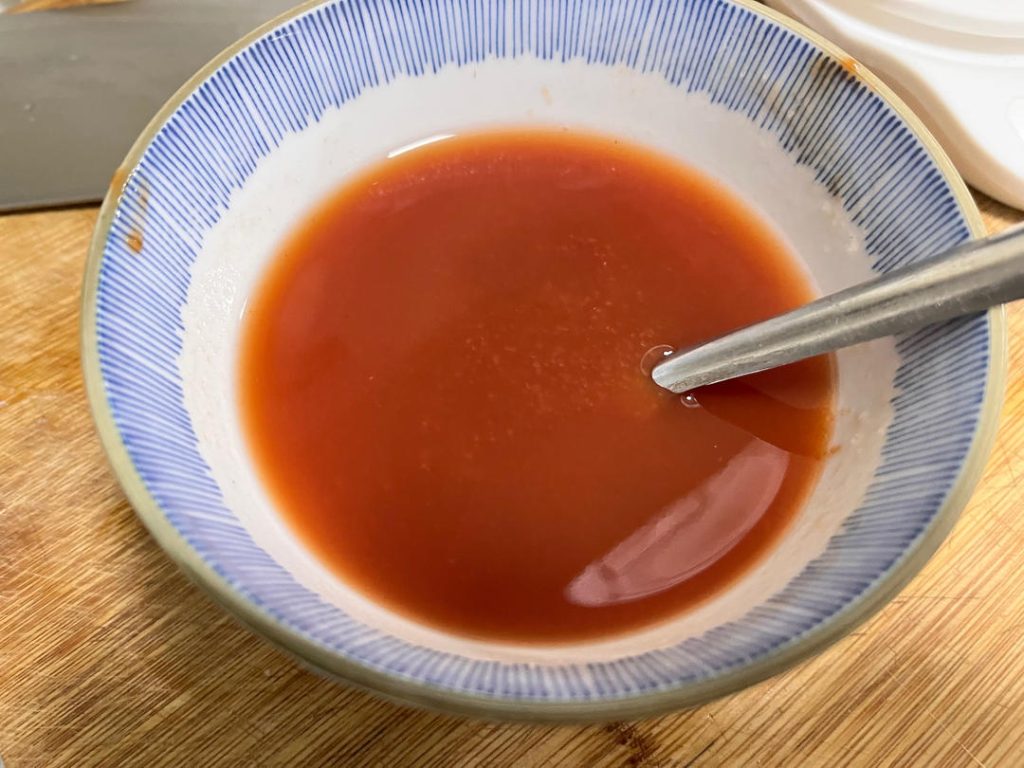
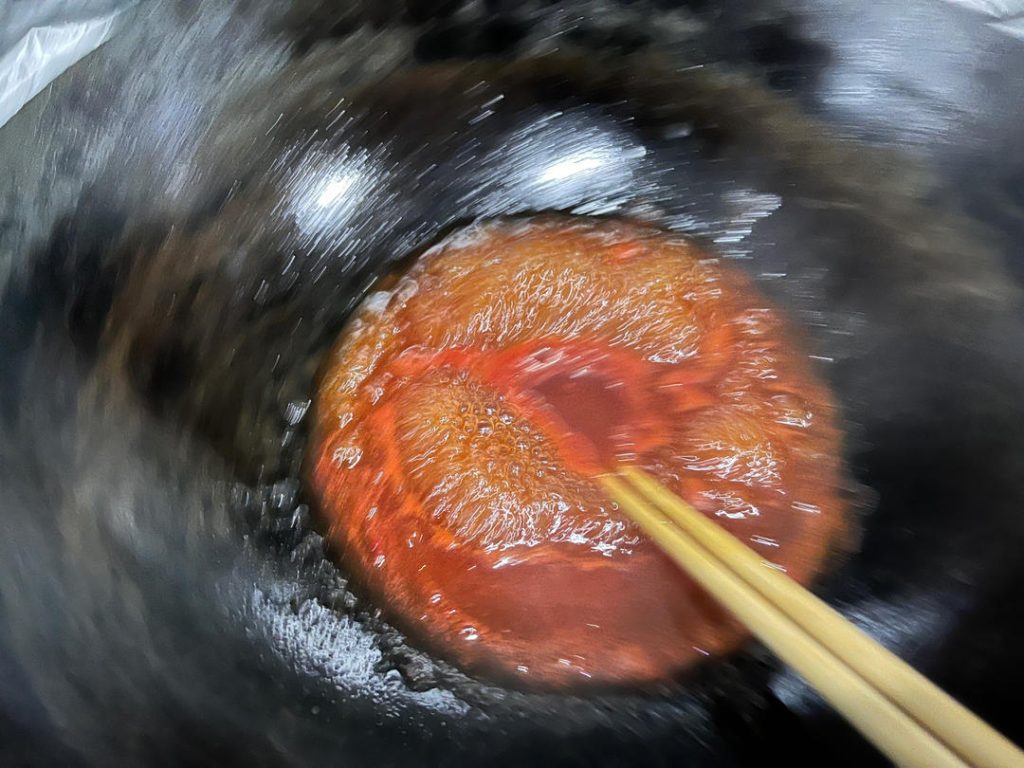
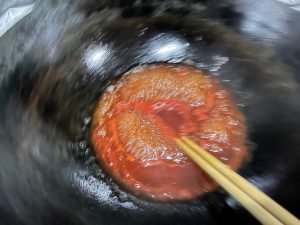
In a small bowl, whisk together the ketchup, 4 tablespoons of water, sugar, and white vinegar. Pour this mixture into a clean pan or wok over low heat. Bring it to a simmer. Stir in your cornstarch slurry (water mixed with starch) slowly until the sauce thickens into a glossy glaze.
Step 6: Toss and Serve
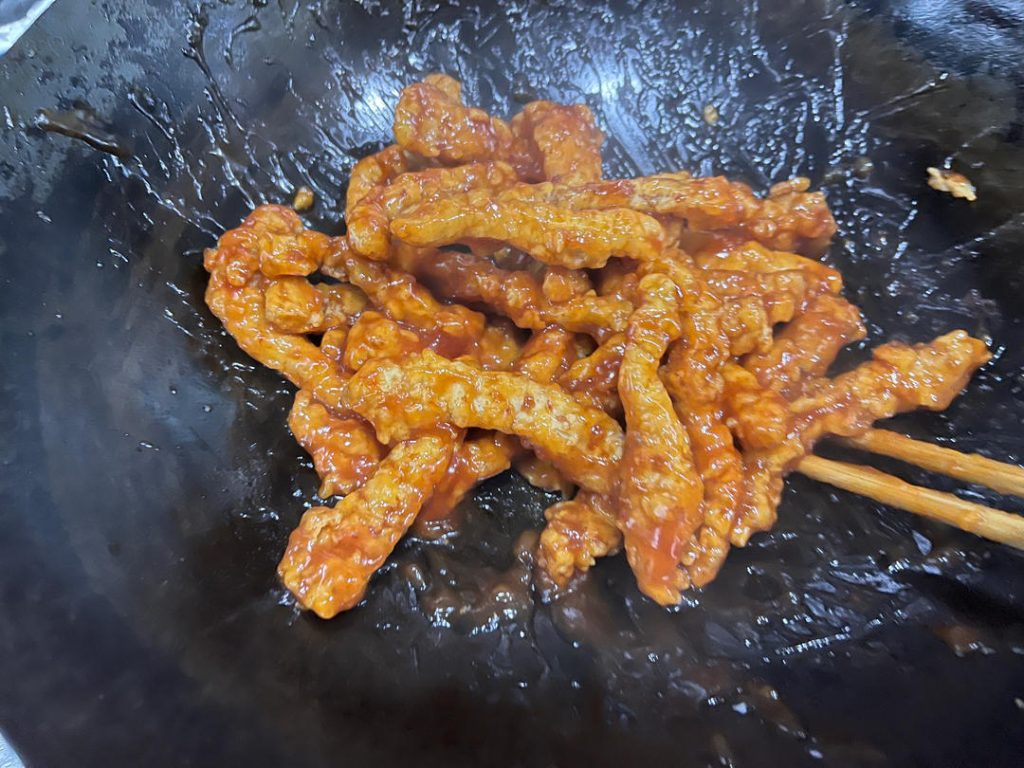
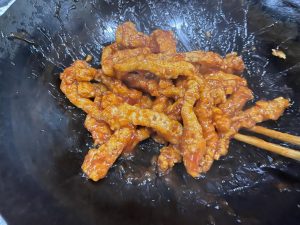
Dump the fried pork strips into the sauce. Turn off the heat immediately and toss quickly to coat every piece. The residual heat is enough. Transfer to a plate and sprinkle with sesame seeds for a nutty aroma and professional look.
Troubleshooting & FAQ
Q: Why did my batter fall off?
- A: This usually happens if the oil wasn’t hot enough, or if the meat was too wet before adding the flour. Make sure the egg marinade is fully absorbed before adding the powders.
Q: Can I use an Air Fryer?
- A: You can try, but it won’t be the same. To replicate the Air Fryer Crispy Pork Belly texture, spray the battered strips generously with oil and cook at 400°F for 10-12 minutes, flipping halfway.
Q: Is this gluten-free?
- A: The recipe uses wheat flour. For a gluten-free version, use only cornstarch or a mix of cornstarch and rice flour, and ensure your soy sauce/ketchup is GF.
Serving Suggestions
This dish is rich and tangy, so it pairs best with simple, neutral sides.
- Rice: Steamed Jasmine rice is a must to soak up any extra sauce.
- Vegetables: A simple green veggie is essential for balance. Try this Pork and Green Bean Stir-fry (omit the pork if serving as a side) or a simple garlic broccoli.
- Soup: Clear the palate with a light Seaweed Egg Drop Soup.
Storage and Reheating
- Storage: Store leftovers in an airtight container in the fridge for up to 2 days.
- Reheating: To be honest, this dish loses its crispiness quickly. To reheat, use an air fryer or toaster oven at 350°F for 5 minutes. Microwaving will result in soft, chewy pork (though it still tastes good!).
Food Safety Note
- Ensure the pork reaches an internal temperature of at least 145°F (63°C) during the first frying stage.
- When deep frying, never leave the hot oil unattended. Keep a lid nearby to cover the pot in case of flare-ups.
Nutrition Information
Amount Per Serving (Estimate):
- Calories: 420 kcal
- Carbohydrates: 38g
- Protein: 24g
- Fat: 18g
- Saturated Fat: 3g
- Cholesterol: 95mg
- Sodium: 580mg
- Potassium: 450mg
- Fiber: 1g
- Sugar: 12g
- Vitamin A: 150 IU
- Vitamin C: 2mg
- Calcium: 25mg
- Iron: 1.8mg
Nutrition Disclaimer: Nutrition information is calculated using an ingredient database and should be considered an estimate. In cases where multiple ingredient alternatives are given, the first listed is calculated for nutrition. Garnishes and optional ingredients are not included. Actual values may vary depending on the specific brand of ingredients used and the amount of oil absorbed during the deep-frying process.
Food Safety & Preparation
- Deep Frying Caution: You are working with oil at very high temperatures (up to 390°F / 200°C). Use a heavy-bottomed pot or wok and never fill it more than halfway with oil to prevent boil-overs. Keep a lid nearby to cover the pot immediately in case of a fire (never use water on a grease fire).
- Internal Temperature: Pork tenderloin should be cooked to an internal temperature of at least 145°F (63°C) to ensuring it is safe to eat. The first frying stage usually achieves this, but always double-check if you are unsure.
- Raw Meat Handling: Wash hands, cutting boards, and utensils thoroughly with hot soapy water after handling raw pork to prevent cross-contamination.
- Allergen Alert: This recipe contains Wheat (flour), Egg, and potentially Soy (if your ketchup or cooking wine contains additives). Check labels if cooking for someone with allergies.
Recipe Notes
“The Secret to Staying Crispy” The biggest challenge with Sweet and Sour Pork is keeping the coating crispy once it hits the sauce. Here are a few tips from my kitchen tests:
- Don’t Skip the Double Fry: The first fry cooks the meat; the second high-heat fry (at 200°C) drives out moisture from the crust. This is non-negotiable for that signature crunch.
- Batter Consistency: When mixing the cornstarch and flour into the marinated meat, it should feel tacky and sticky, not runny. If it’s too dry, add a teaspoon of water; if it’s too wet, add a pinch more cornstarch. The flour gives the crust structure, while the cornstarch provides the crunch.
- Speed is Key: Once the sauce has thickened, toss the pork in and get it out onto the plate immediately. If it sits in the hot wok with the sauce for too long, the crust will soften. Serve this dish the moment it is ready!
- Customizing the Sauce: This “4:4:2:2” ratio (Ketchup:Water:Sugar:Vinegar) is a classic home-style balance. If you prefer it sweeter, add an extra tablespoon of sugar. If you like it sharper, increase the vinegar slightly. Taste the sauce in the pan before you add the slurry!
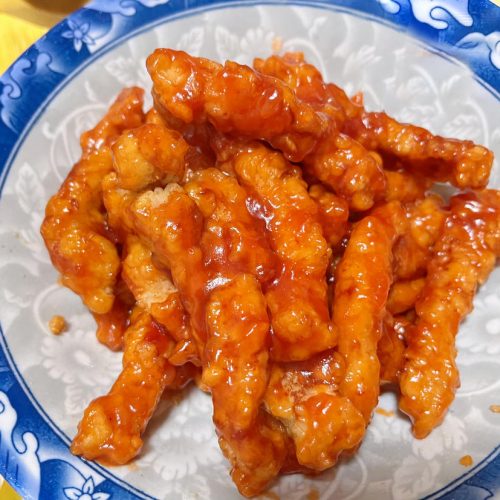
Home-style Sweet and Sour Pork Tenderloin (Tang Cu Li Ji)

Equipment
- Wok or Deep Pot For deep frying
- Kitchen Thermometer Essential for monitoring oil temperature
Ingredients
The Pork
- 11 oz pork tenderloin approx. 300g, cut into 1cm thick strips
- 1 tsp Shaoxing cooking wine or dry sherry
- 1/2 tsp salt approx 2g
- 1 egg
The Batter
- 1/3 cup cornstarch 40g
- 1/3 cup all-purpose flour 40g
The Sauce
- 4 tbsp ketchup
- 4 tbsp water
- 2 tbsp sugar
- 2 tbsp white vinegar
- 1 tsp cornstarch mixed with 1 tbsp water for slurry
Garnish
- 1 tsp toasted sesame seeds optional
Instructions
- Cut the pork tenderloin into strips about 1 cm thick. In a bowl, combine the pork with the Shaoxing wine, salt, and the egg. Mix vigorously by hand until the egg is fully absorbed and the meat feels velvety. Marinate for 30 minutes.

- In a separate bowl, mix the 40g cornstarch and 40g all-purpose flour. Add this dry mixture to the marinated meat and toss until every strip is evenly coated.
- First Fry (Medium Heat): Heat plenty of oil in a wok to about 320°F (160°C). If you insert a chopstick, small bubbles should appear around it. Fry the meat strips in batches for about 2 minutes until the surface is pale yellow and set. Remove and drain.
- Second Fry (High Heat): Increase the oil temperature to about 390°F (200°C). The oil surface may have slight smoke. Add all the meat back in for a ‘flash fry’ for about 1 minute until golden brown and crispy. Remove and drain.
- Make the Sauce: In a small bowl, mix the ketchup, water, sugar, and vinegar. Pour into a clean pan and bring to a boil. Add the cornstarch slurry (water + starch) and stir until thickened.
- Add the fried pork to the sauce and toss quickly to coat evenly. Sprinkle with sesame seeds and serve immediately.
Notes
- Don’t Skip the Double Fry: The first fry cooks the meat; the second high-heat fry (at 200°C) drives out moisture from the crust. This is non-negotiable for that signature crunch.
- Batter Consistency: When mixing the cornstarch and flour into the marinated meat, it should feel tacky and sticky, not runny. If it’s too dry, add a teaspoon of water; if it’s too wet, add a pinch more cornstarch. The flour gives the crust structure, while the cornstarch provides the crunch.
- Speed is Key: Once the sauce has thickened, toss the pork in and get it out onto the plate immediately. If it sits in the hot wok with the sauce for too long, the crust will soften. Serve this dish the moment it is ready!
- Customizing the Sauce: This “4:4:2:2” ratio (Ketchup:Water:Sugar:Vinegar) is a classic home-style balance. If you prefer it sweeter, add an extra tablespoon of sugar. If you like it sharper, increase the vinegar slightly. Taste the sauce in the pan before you add the slurry!







Leave a Reply