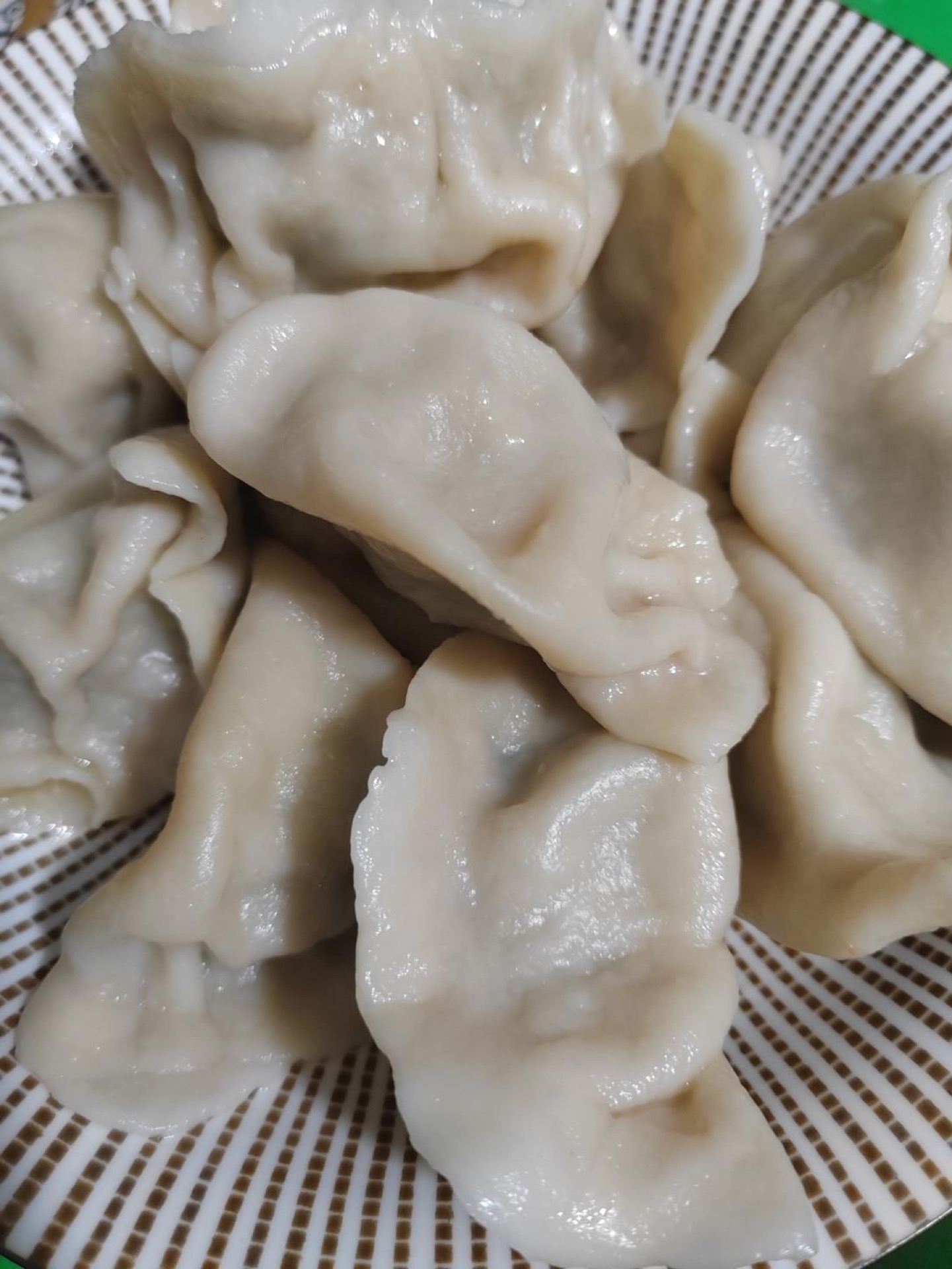
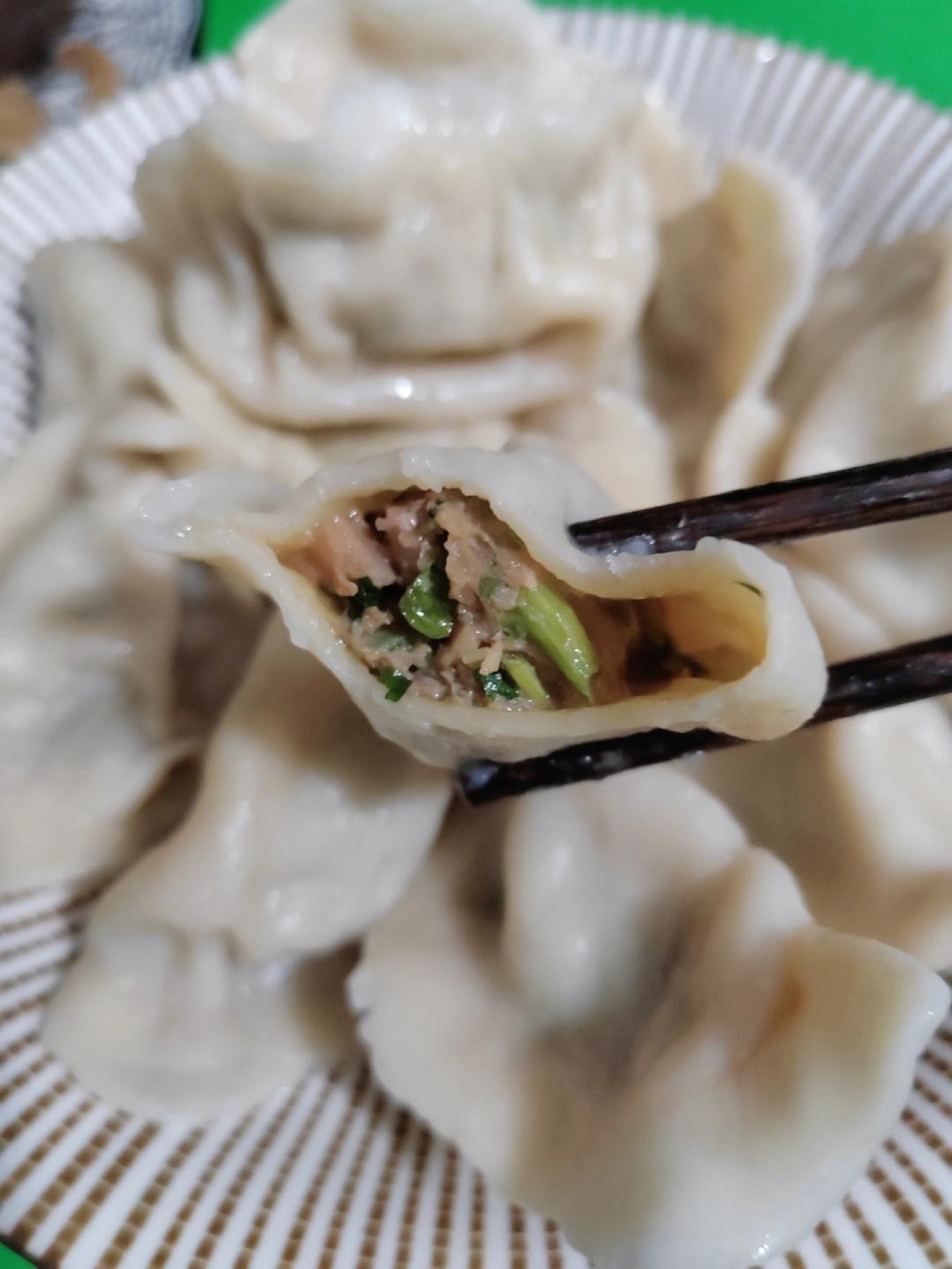
Cilantro pork dumplings are the kind of weeknight project that rewards you twice: once with the smell of scallion oil hitting warm pork, and again when the first batch floats to the top of the pot. The filling is generous with fresh cilantro — more herb than most dumpling recipes dare — and the dough is a simple flour-and-water wrapper rolled thin at the edge and thick in the middle. The result is a juicy, savory jiaozi with a bright green note that cuts straight through the pork fat.
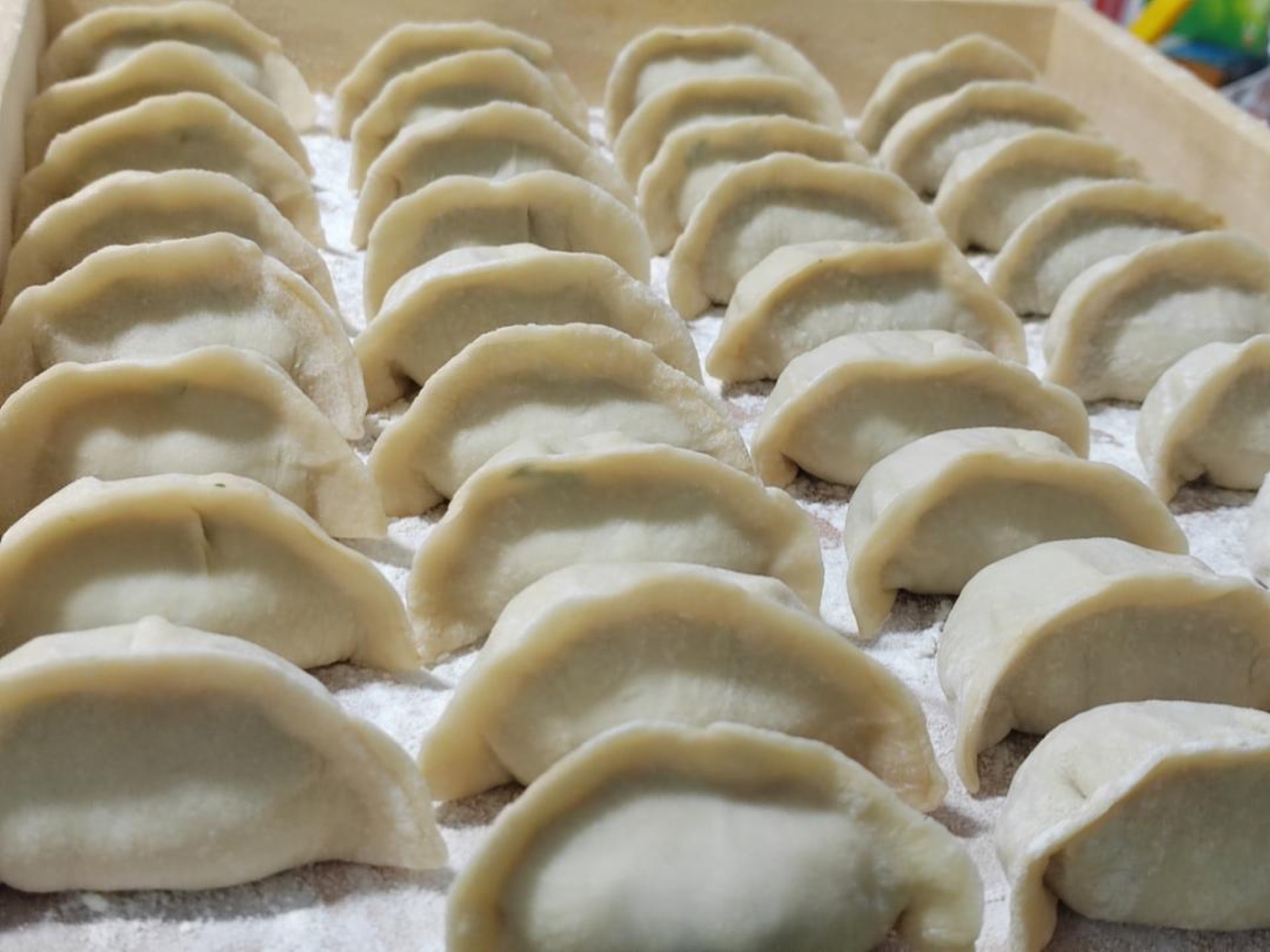
If you have made dumplings before, this one will feel familiar — the technique is the same as any northern-style jiaozi. What changes is the balance of the filling. Cilantro is a strong herb, and when you pair it with pork that has been seasoned with soy, oyster sauce, and a hit of Sichuan peppercorn water, the herb stops being a garnish and becomes the point. The scallion oil is the quiet hero here; it carries the aroma of the scallions into every bite.
I keep the seasoning amounts flexible on purpose. Every family’s palate is different, and a dumpling filling is one of those things you really should taste and adjust as you go. Start with the amounts below, then nudge the salt, the soy, or the cilantro until it tastes right to you. There is no single correct version of this dish — there is only the version your family will fight over at the table.
What Is 香菜猪肉饺子?
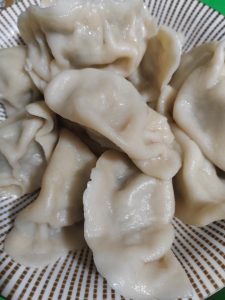
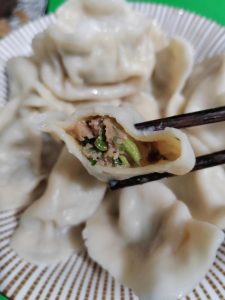
香菜猪肉饺子 (xiāngcài zhūròu jiǎozi) is a Chinese boiled dumpling filled with ground pork and fresh cilantro. It belongs to the broad family of northern-style jiaozi, where a simple wheat dough is rolled into thin rounds, filled with a seasoned meat mixture, sealed by hand, and boiled until the wrappers turn translucent and the filling cooks through. The name is literal: 香菜 (cilantro), 猪肉 (pork), 饺子 (dumplings).
Cilantro is a divisive herb in the West, but in Chinese home cooking it is used with confidence — chopped fine and folded into pork, it adds a clean, grassy edge that keeps a rich filling from tasting heavy. The dumplings are usually served with a black vinegar and chili oil dip, and they are eaten by the plateful, not by the piece.
For a pan-fried take on the same pork-and-wrapper idea, our sheng jian bao shows how the same filling logic works in a bun, and our juicy dumpling filling breakdown explains why the meat stays tender instead of turning into a dry puck.
1Easy Sheng Jian Bao (Pan-Fried Pork Buns)A quick, 20-minute hack to make crispy, juicy Shanghai-style Pan-Fried Pork Buns using store-bought dumpling wrappers. No yeast or kneading required!Check out this recipe

If you love a juicy dumpling, the technique in our juicy pork dumpling filling guide is the foundation for this recipe — the same water-and-fat balance applies, just with cilantro added at the end.
2Juicy Pork Dumpling Filling (Master Recipe)This authentic “Salt-Water-Oil” method creates a tender, bouncy, and incredibly juicy pork filling for dumplings, buns, or wontons. By incorporating aromatic water and finishing with hot oil, you achieve professional restaurant-quality results at home.Check out this recipe

For the next cook from the same playbook, juicy dumpling filling is the recipe I point people to.
3The Secret to Juicy Pork Filling for Dumplings & Buns (万能肉馅)Learn the restaurant secret to a juicy, flavorful pork filling (万能肉馅) for any dumpling or bun. This all-purpose recipe is tender, delicious, and foolproof, perfect for potstickers, steamed buns, and shumai.Check out this recipe

Why This Recipe Works
The filling is built in two stages. First the pork is seasoned with soy sauces, oyster sauce, MSG, sesame oil, peanut oil, and scallion oil, plus Sichuan peppercorn water added in three additions so the meat absorbs it slowly. Then it goes into the freezer for a short chill. That chill matters: cold fat holds its shape, so the filling is easier to wrap and stays juicy when it hits the boiling water.
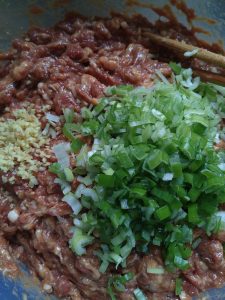
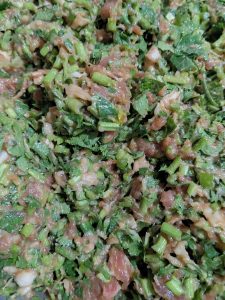
The cilantro goes in last, after the meat has chilled and the scallion and ginger are stirred through. Adding it at the end keeps its flavor bright and prevents the salt in the filling from drawing out its water too early. The result is a dumpling that tastes herbal and fresh, not muddy.
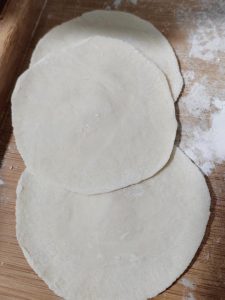
The dough is a plain flour-and-water wrapper with a pinch of salt. Warm water makes it supple, and kneading until smooth gives it enough gluten to stretch around a generous spoonful of filling without tearing. Rolling the wrappers thin at the rim and thick in the center is the single most useful habit in dumpling making — it keeps the base strong enough to hold the meat.
Equipment Needed
You do not need special gear for this. A wok or a wide pot for boiling, a cutting board and a sharp chef’s knife for the cilantro and aromatics, a couple of mixing bowls, and a rolling pin for the wrappers will get you there. A slotted spoon is handy for lifting the dumplings out without breaking them, and a small fine-mesh strainer helps if you are making your own Sichuan peppercorn water.
If you have a dumpling press or a steamer basket, keep them nearby — the same filling works beautifully steamed. A kitchen scale is optional but useful for portioning the dough into even pieces so the dumplings cook at the same rate.
Ingredients
The filling is ground pork, a generous bunch of cilantro, scallion, ginger, light and dark soy sauce, oyster sauce, MSG, Sichuan peppercorn water, sesame oil, peanut oil, and scallion oil. The dough is all-purpose flour, warm water, and a pinch of salt. For boiling, you need water and a spoonful of salt for the pot.
Use pork with some fat in it — about 20% is ideal. Lean pork makes a dry filling, and no amount of oil fully fixes that. If your butcher only has lean ground pork, ask them to grind in a little pork fat, or mix in a tablespoon of finely chopped pork belly.
Ingredient Notes
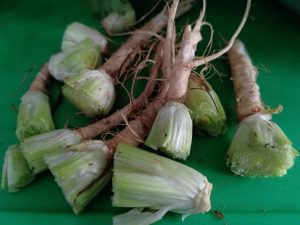
Cilantro. Use one full bunch, stems and all. The stems carry a lot of flavor, so only the tough root ends get trimmed. Wash it thoroughly — cilantro holds grit — and dry it completely before chopping. Wet cilantro will water down the filling.
Sichuan peppercorn water. Toast a teaspoon of Sichuan peppercorns in a dry pan until fragrant, crush them, and steep them in a quarter cup of hot water for ten minutes. Strain and use the water. It adds a gentle citrus-floral aroma without the numbing heat of whole peppercorns.
Scallion oil. If you don’t have any, simmer sliced scallions in neutral oil over low heat until they turn golden, then strain. A spoonful of this oil is what makes the filling smell like a restaurant dumpling. Store-bought sesame oil is a different ingredient — you want both.
MSG. Optional, but it is traditional in this filling and it rounds out the savoriness. If you skip it, taste the filling and add a little more oyster sauce or salt.
Flour. All-purpose flour is what most home cooks use. Bread flour gives a chewier wrapper; cake flour gives a softer one. Stick with all-purpose unless you have a reason to change it.
Prep & Mise en Place
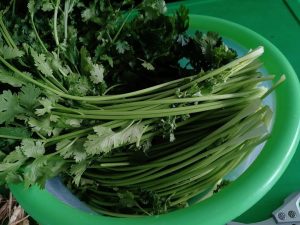
Trim and wash the cilantro, then spread it on a clean towel to dry while you do everything else. Finely chop the scallion and mince the ginger. Measure the soy sauces, oyster sauce, MSG, and oils into small bowls so the filling comes together quickly.
Make the Sichuan peppercorn water and let it cool. Mix the dough first so it can rest while you make the filling — a rested dough rolls out much more easily. Once the filling is mixed and chilled, chop the cilantro, fold it in, and you are ready to roll, fill, and boil.
Cooking Process
Step 1 — Trim the Cilantro
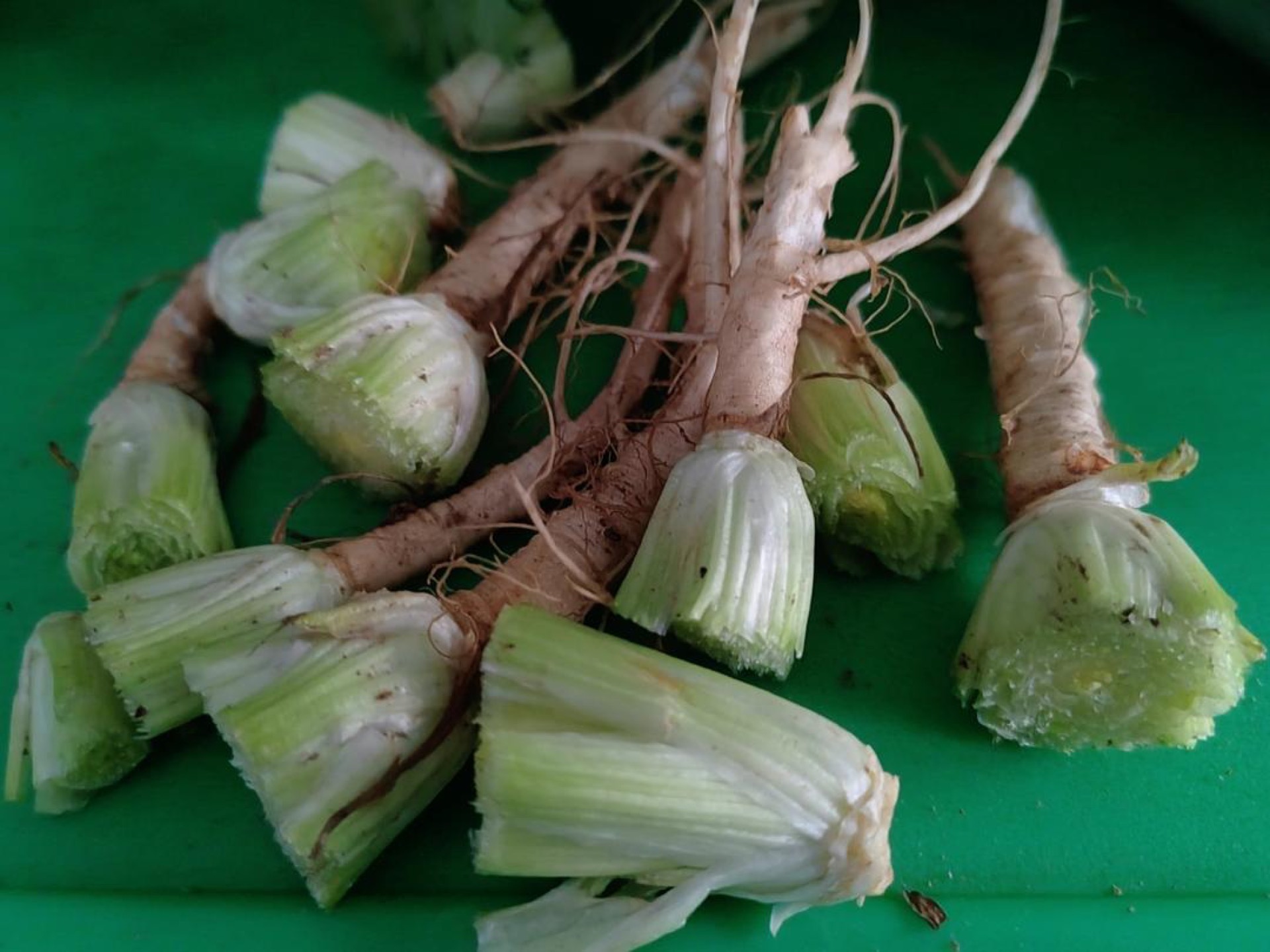
Trim the roots off the cilantro, keeping the tender stems and leaves.
Step 2 — Wash and Dry
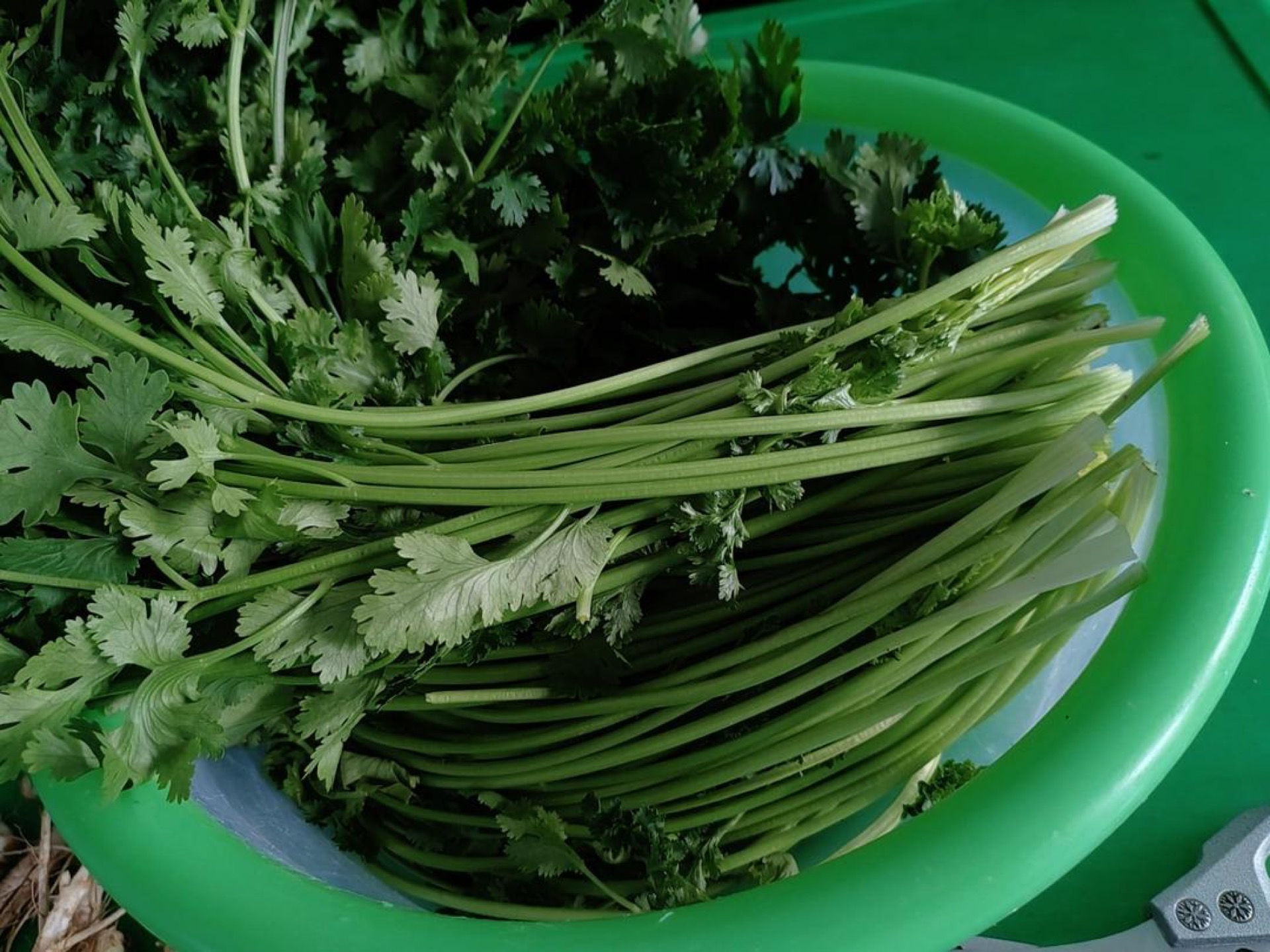
Wash the cilantro well and spread it out to air-dry completely so no water clings to the leaves.
Step 3 — Season the Pork
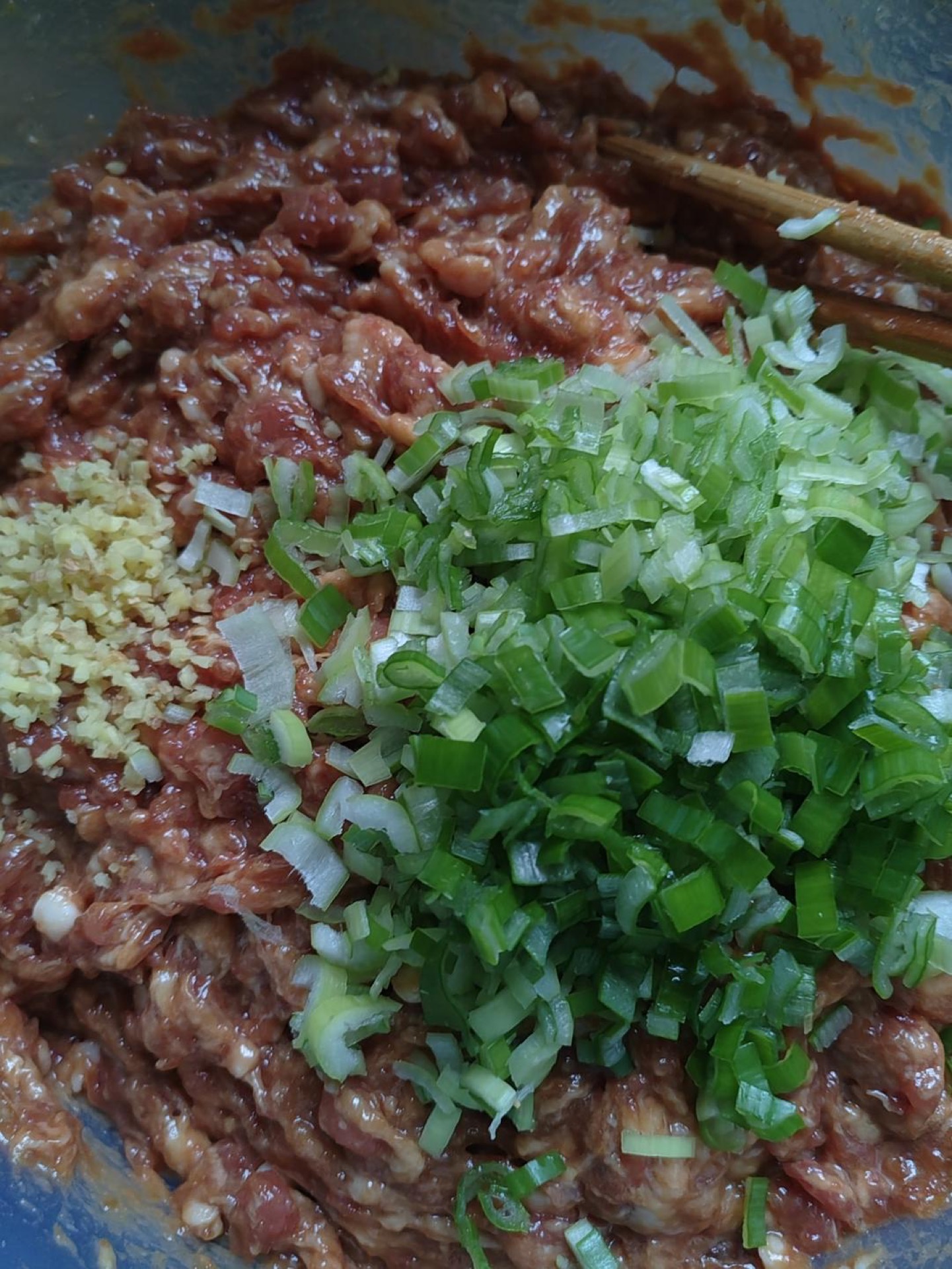
Add the light soy sauce, dark soy sauce, oyster sauce, MSG, Sichuan peppercorn water in three additions, sesame oil, peanut oil, and scallion oil to the ground pork, stir thoroughly, then chill in the freezer.
Step 4 — Add Aromatics and Cilantro
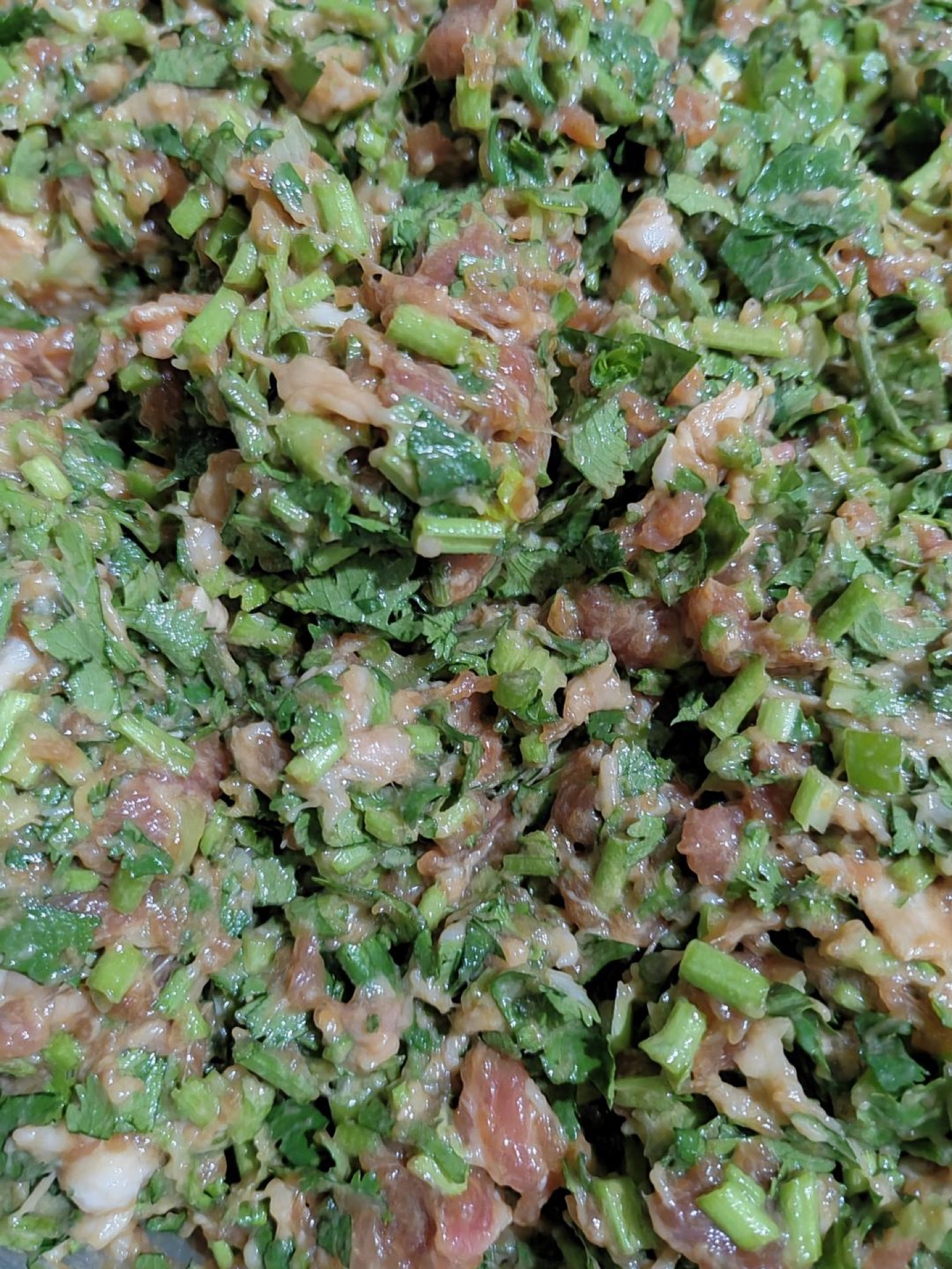
Take the chilled pork filling out of the freezer and stir in the chopped scallion and ginger, then finely chop the dried cilantro and fold it into the meat until evenly combined.
Step 5 — Mix the Dough
Add a pinch of salt to warm water and pour it gradually into the flour, stirring with chopsticks into shaggy flakes before kneading by hand so the dough doesn’t stick.
Step 6 — Roll and Cut the Dough
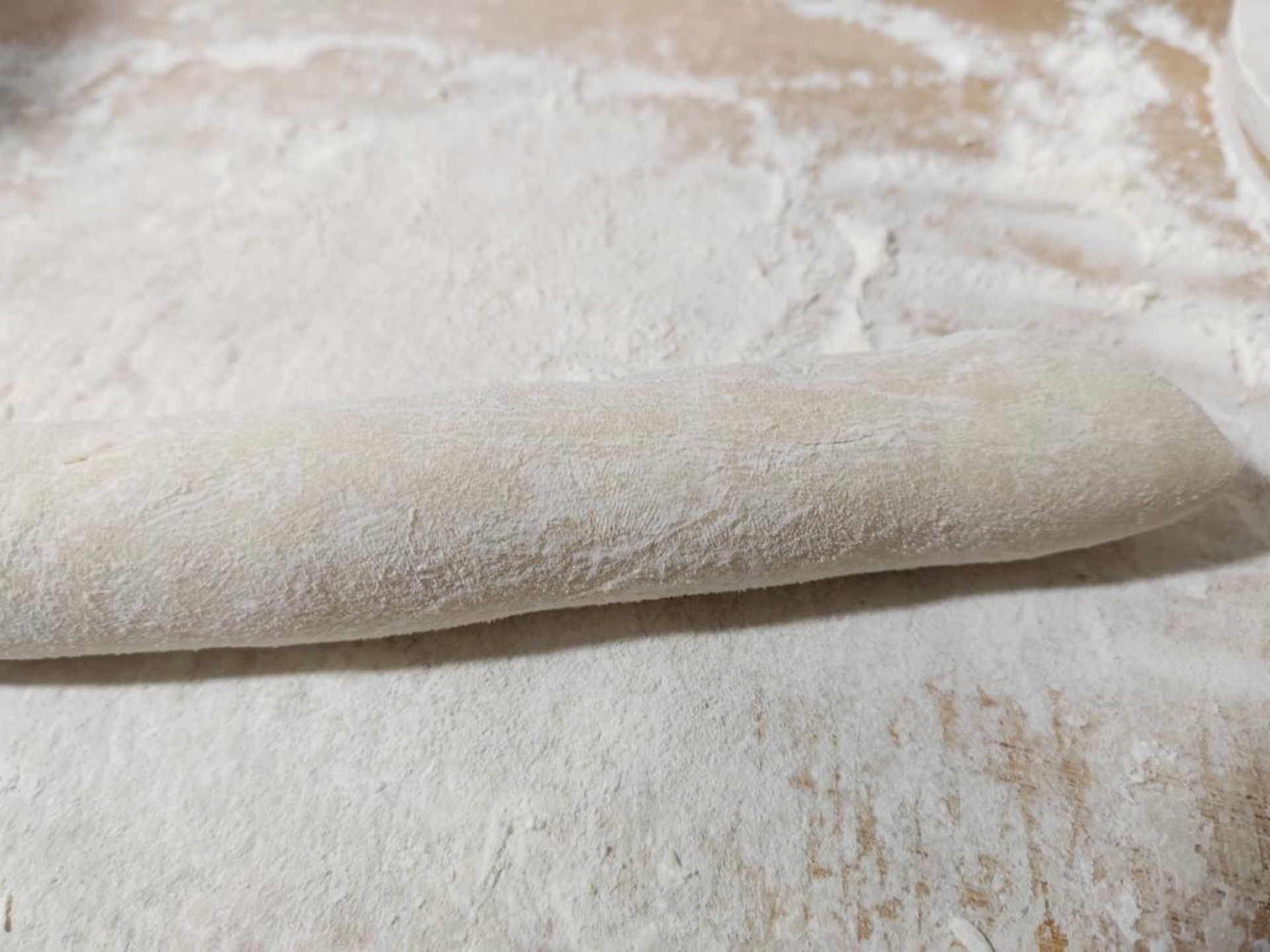
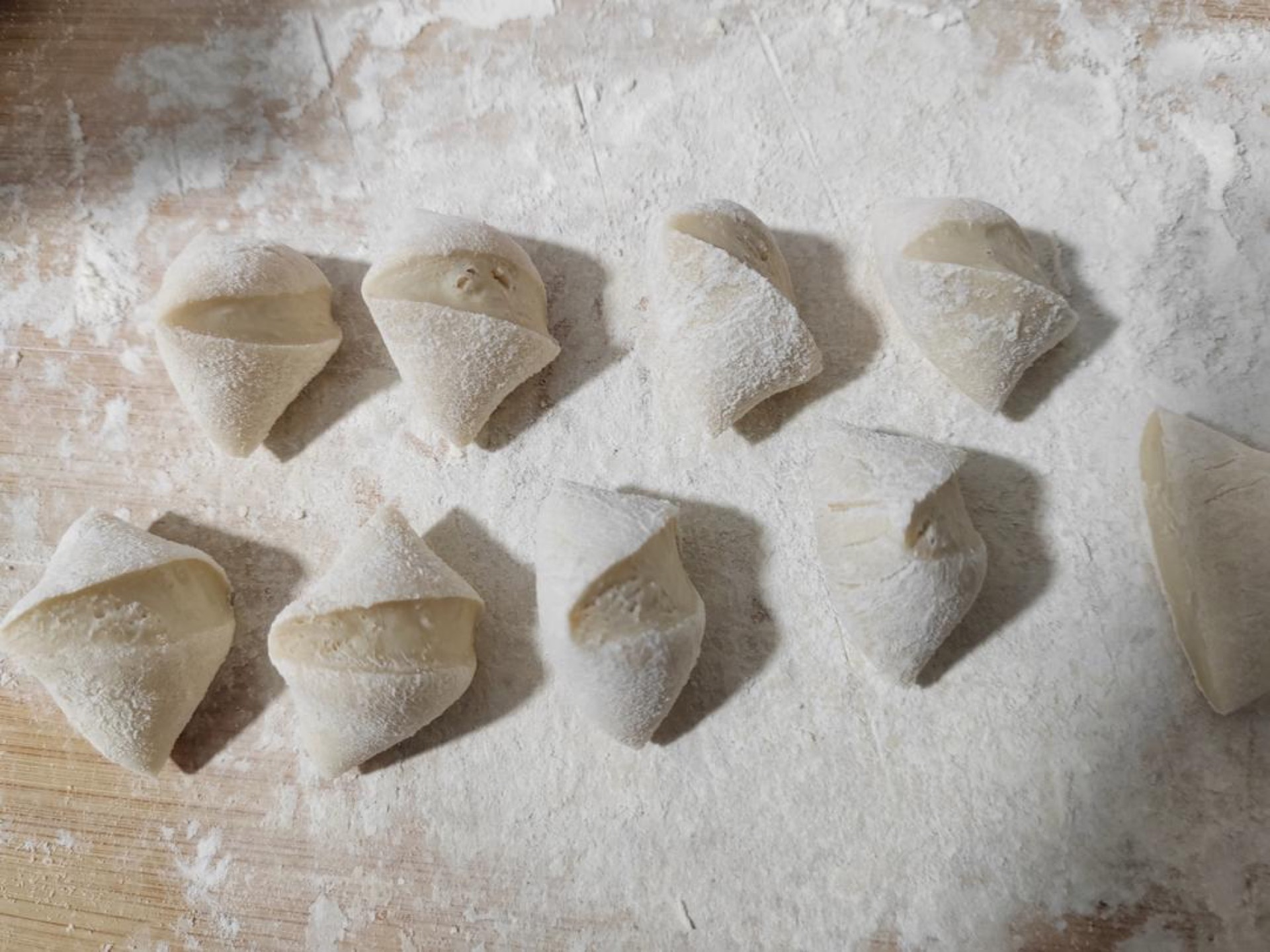
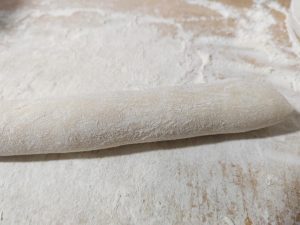
Cut off a piece of the rested dough, knead it until the surface is smooth, roll it into a log, and cut it into small pieces with a rolling cut.
Step 7 — Roll Wrappers and Fill
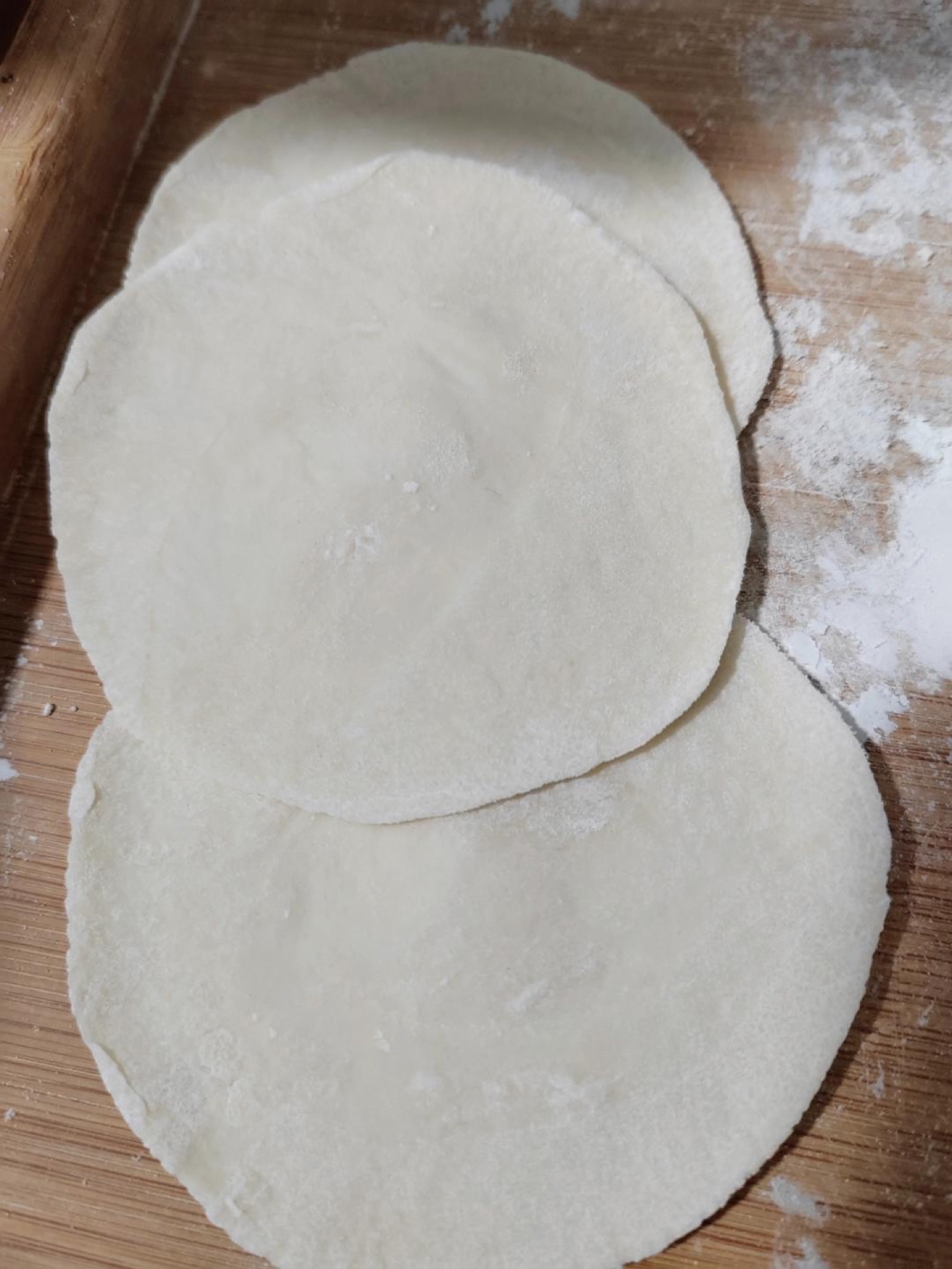
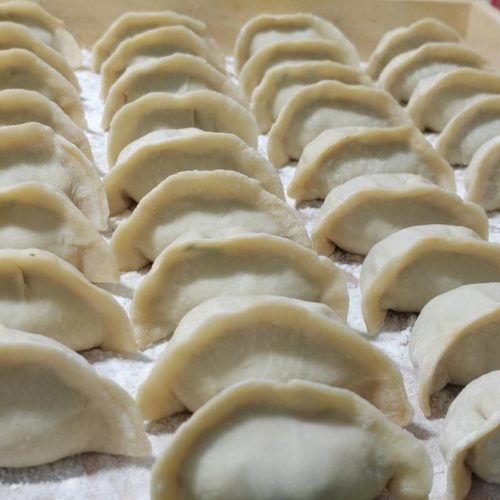
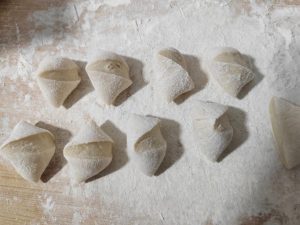
Roll each piece into a wrapper that is thin at the edges and thick in the center, then fill and pleat however you like as long as no filling leaks out.
Step 8 — Season to Taste
I don’t give exact amounts for the seasonings because everyone’s taste is different — season to your own palate, there’s no right or wrong.
Step 9 — A Note From Lin
My education level isn’t high and I’m not great with words, so if anything is unclear you can always ask me.
Common Mistakes When Making Cilantro Pork Dumplings
1. Using wet cilantro. Water clinging to the leaves dilutes the filling and makes the wrappers soggy. Cause: skipping the drying step. Fix: spread the washed cilantro on a towel and let it air-dry fully, or pat it dry, before chopping.
2. Lean ground pork. Lean meat produces a dry, crumbly filling. Cause: buying 90% lean pork. Fix: choose pork with about 20% fat, or ask the butcher to add pork fat to the grind.
3. Adding all the peppercorn water at once. The meat can’t absorb it and the filling turns soupy. Cause: pouring the liquid in one go. Fix: add it in three additions, stirring in one direction until each addition is absorbed before adding the next.
4. Skipping the chill. Warm filling is soft and hard to wrap, and it leaks. Cause: wrapping immediately after mixing. Fix: chill the seasoned pork for at least 30 minutes before folding in the aromatics and cilantro.
5. Rolling the wrappers evenly thin. The base tears when you lift the dumpling. Cause: rolling the whole wrapper to the same thickness. Fix: keep the center thicker and roll the edges thinner so the base can hold the filling.
6. Overcrowding the pot. The dumplings stick together and tear. Cause: boiling too many at once. Fix: cook in batches of 12 to 15 in a wide pot, stirring gently once at the start.
Variations
Pan-fried (potstickers). Skip the boil. Arrange the dumplings in an oiled nonstick pan, fry until the bottoms are golden, add a splash of water, cover, and steam until the water evaporates. The result is a crisp bottom and a juicy top — the same move we use for crispy egg skirt dumplings.
Steamed. Steam the dumplings in a lined bamboo steamer for 8 to 10 minutes. Steaming preserves the cilantro’s color and gives a softer wrapper.
Add cabbage. Fold in a cup of finely chopped napa cabbage that has been salted and squeezed dry. It stretches the filling and adds a gentle sweetness that plays well with the cilantro.
Spicier filling. Add a teaspoon of chili flakes or a spoonful of chili oil to the pork along with the other seasonings. A pinch of curry powder is a less traditional but surprisingly good addition if you like a warm, aromatic note.
Frequently Asked Questions
Can I use store-bought dumpling wrappers? Yes. Round gyoza or dumpling wrappers work well; moisten the edge with water before sealing. Homemade wrappers are more tender, but store-bought saves a lot of time on a weeknight.
How do I know the dumplings are cooked? They float to the top and the wrappers turn slightly translucent. To be certain, cut one open — the pork should be gray throughout with no pink, and it should reach 160°F (71°C) on an instant-read thermometer.
Can I freeze them uncooked? Yes. Freeze the filled dumplings on a tray until firm, then transfer to a bag. Cook from frozen, adding about two minutes to the boiling time.
Why did my filling leak out? Usually a tear at the seam or a wrapper that was too thin at the base. Pinch the seam firmly and roll the center of the wrapper thicker than the edge.
Is cilantro the same as coriander? In North America, “cilantro” refers to the leaves and stems of the coriander plant. The dried seed is a different spice with a citrusy flavor and is not a substitute here.
How to Serve
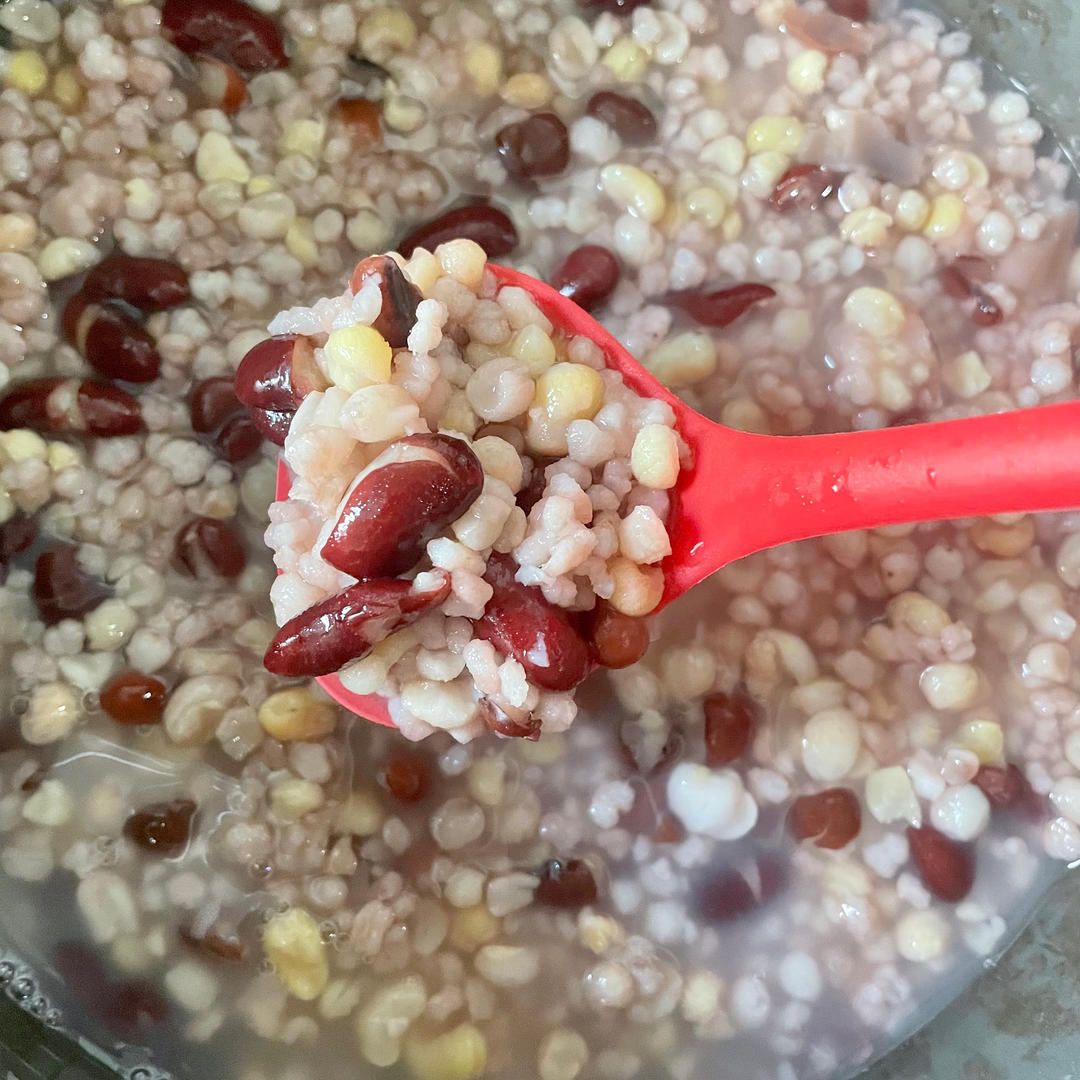
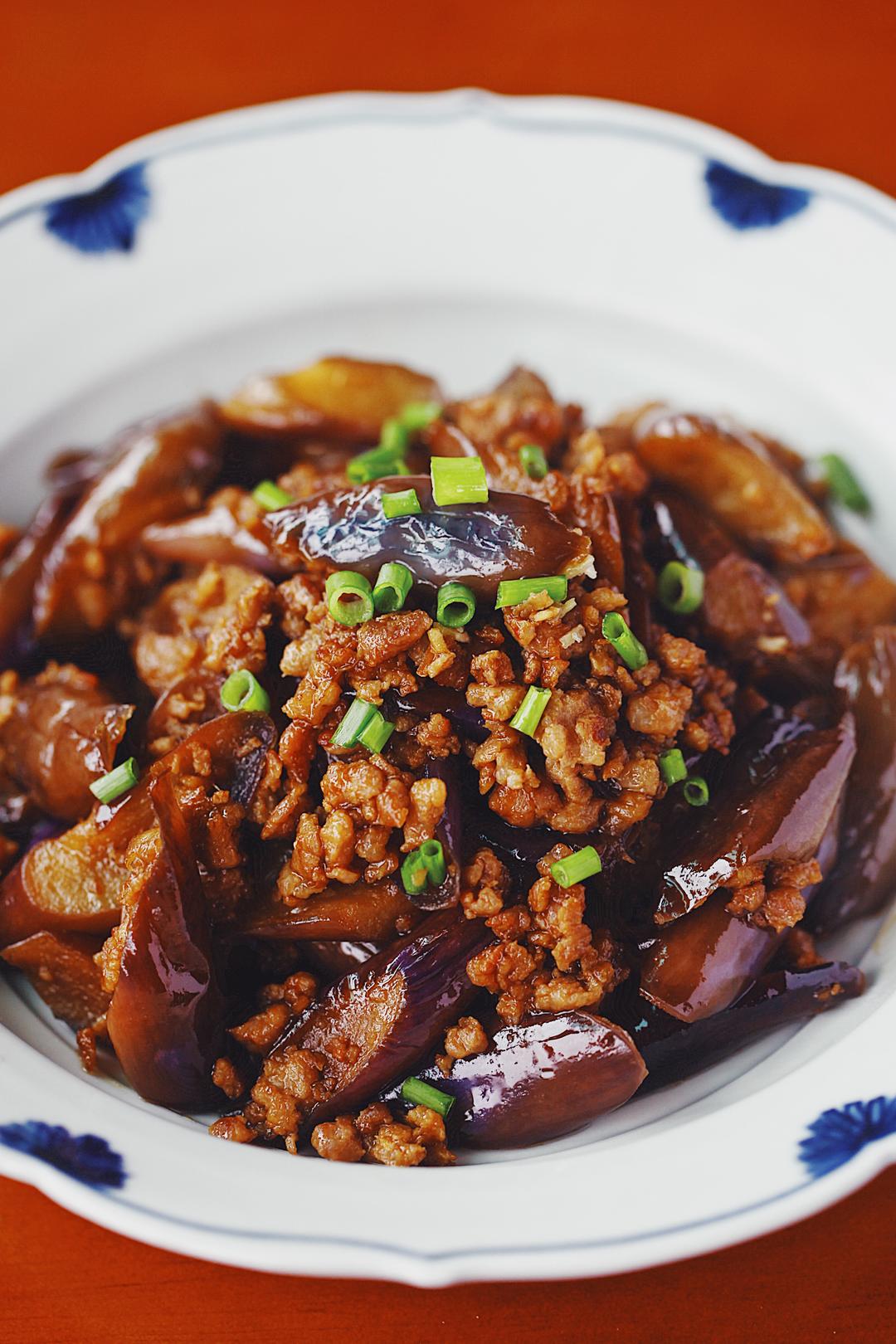
Cilantro pork dumplings are best served hot, straight from the pot, with a small dish of black vinegar, soy sauce, and chili oil for dipping. A bowl of sorghum and corn porridge northeastern summer breakfast on the side makes a classic northern Chinese pairing, and a plate of minced pork eggplant turns the dumplings into a full family spread.
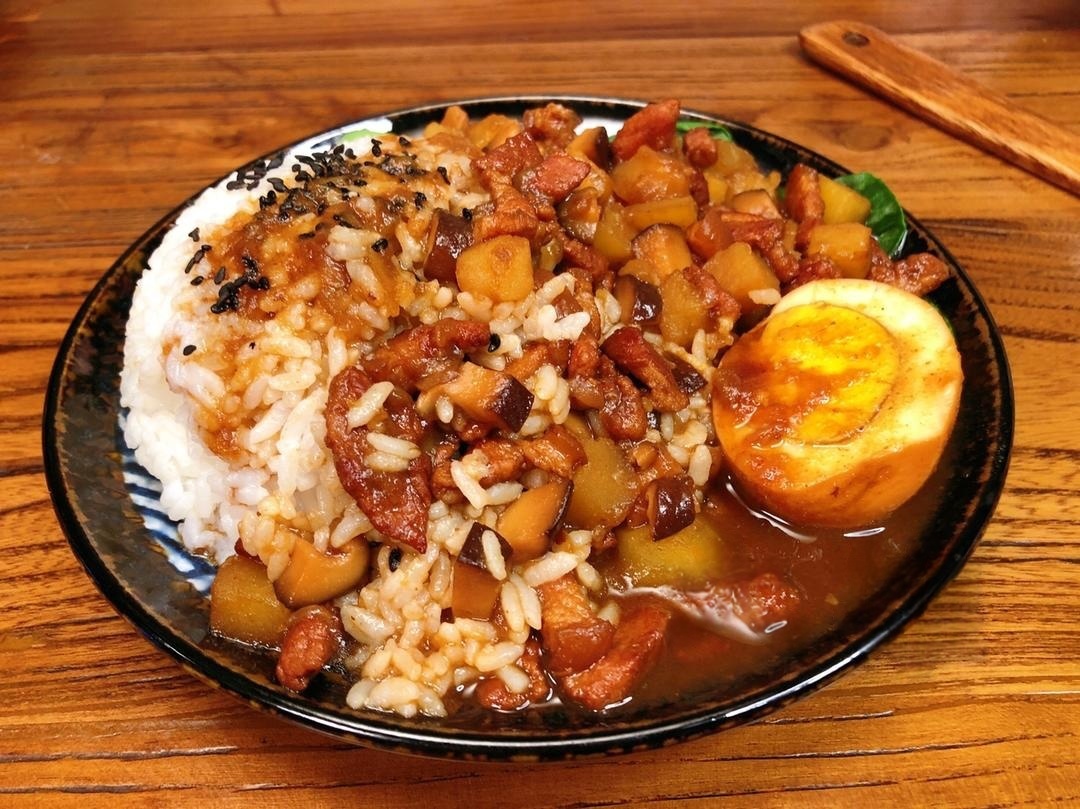
For a heartier table, serve them alongside braised pork rice with potatoes or a bowl of chestnut chicken rice. Leftover dumplings reheat beautifully in a hot pan with a splash of water, or dropped into a simple broth for a quick soup.
Storage & Reheat
Cooked dumplings keep in the refrigerator for up to 3 days in a sealed container. Reheat them by pan-frying with a splash of water until hot, or steam them for 5 minutes. Uncooked filled dumplings can be frozen for up to 2 months; freeze them on a tray first so they don’t clump, then bag them.
The filling itself can be made a day ahead and kept refrigerated. If you are making the dough ahead, wrap it tightly and refrigerate it for up to 24 hours — bring it back to room temperature before rolling.
Allergen Notice
This recipe contains wheat (gluten) from the flour and wrappers, and soy from the soy sauce and oyster sauce. Check the labels on your oyster sauce and soy sauce, since some brands add wheat. If you need a gluten-free version, use a gluten-free flour blend and tamari, and confirm your oyster sauce is gluten-free.
Nutrition Disclaimer
Nutrition information is calculated using an ingredient database and should be considered an estimate. In cases where multiple ingredient alternatives are given, the first listed is calculated for nutrition. Garnishes and optional ingredients are not included.
About the Author & Recipe Development
I’m Lin, and I write the recipes here at Woks of Love. This cilantro pork dumpling recipe came out of my own kitchen — the kind of home-style northern jiaozi I grew up eating, where the filling is seasoned by taste rather than by a strict formula. I tested the dough and filling proportions over several batches to make sure the wrappers hold a generous scoop of pork without tearing, and that the cilantro stays bright after boiling.
If you make this recipe and change something — more cilantro, less soy, a different wrapper — that is exactly how it is supposed to work. Taste as you go, and adjust to your own family’s palate.
Authoritative References
For safe cooking temperatures for pork, see the USDA safe minimum internal temperature chart. For food storage and handling guidance, the FDA refrigerator and food safety guidance is a useful reference.
Cilantro Pork Dumplings (香菜猪肉饺子): Juicy Pork, Fresh Cilantro

Equipment
- Wok
- Cutting Board
- Slotted Spoon
- Mixing bowls
- Rolling Pin
- Chef’s knife
Ingredients
For the Pork Filling
- 1 lb ground pork about 20% fat
- 1 bunch cilantro about 4 oz / 115 g, roots trimmed
- 3 stalks scallion finely chopped
- 1 thumb ginger about 1 inch, minced
- 2 tbsp light soy sauce or tamari
- 1 tbsp dark soy sauce for color
- 1 tbsp oyster sauce
- 1/2 tsp monosodium glutamate optional
- 3 tbsp Sichuan peppercorn water divided, see notes
- 1 tbsp sesame oil
- 1 tbsp peanut oil
- 1 tbsp scallion oil homemade or store-bought
For the Dough
- 3 cups all-purpose flour plus more for dusting
- 1 cup warm water plus 1 tbsp
- 1/4 tsp salt
For Cooking
- 6 cups water for boiling
- 1 tbsp salt for the pot
Instructions
- Trim the roots off the cilantro, keeping the tender stems and leaves.

- Wash the cilantro well and spread it out to air-dry completely so no water clings to the leaves.
- Add the light soy sauce, dark soy sauce, oyster sauce, MSG, Sichuan peppercorn water in three additions, sesame oil, peanut oil, and scallion oil to the ground pork, stir thoroughly, then chill in the freezer.

- Take the chilled pork filling out of the freezer and stir in the chopped scallion and ginger, then finely chop the dried cilantro and fold it into the meat until evenly combined.
- Add a pinch of salt to warm water and pour it gradually into the flour, stirring with chopsticks into shaggy flakes before kneading by hand so the dough doesn’t stick.
- Cut off a piece of the rested dough, knead it until the surface is smooth, roll it into a log, and cut it into small pieces with a rolling cut.
- Roll each piece into a wrapper that is thin at the edges and thick in the center, then fill and pleat however you like as long as no filling leaks out.
- I don’t give exact amounts for the seasonings because everyone’s taste is different — season to your own palate, there’s no right or wrong.
- My education level isn’t high and I’m not great with words, so if anything is unclear you can always ask me.





Leave a Reply