糯米巧克力 is the dessert equivalent of a magic trick: six ingredients, one bowl, a steamer, and about twenty-five minutes later you have a slab of chewy chocolate mochi that pulls into long, glossy threads when you tear it. This xiachufang recipe is written by a parent cooking with a kid, step by step and almost entirely foolproof, and it has become one of my favorite things to make when someone says they want dessert but not a project.
The formula is a classic Chinese glutinous-rice ratio — glutinous rice flour, a little cornstarch to keep it from being gluey, cocoa for flavor, sugar, milk, and a spoon of oil worked in after steaming. Steaming rather than cooking on the stovetop is the trick: the dough sets evenly without scorching, and a fork test tells you when it is done. Then it is simply rolled in cocoa powder and cut into cubes.
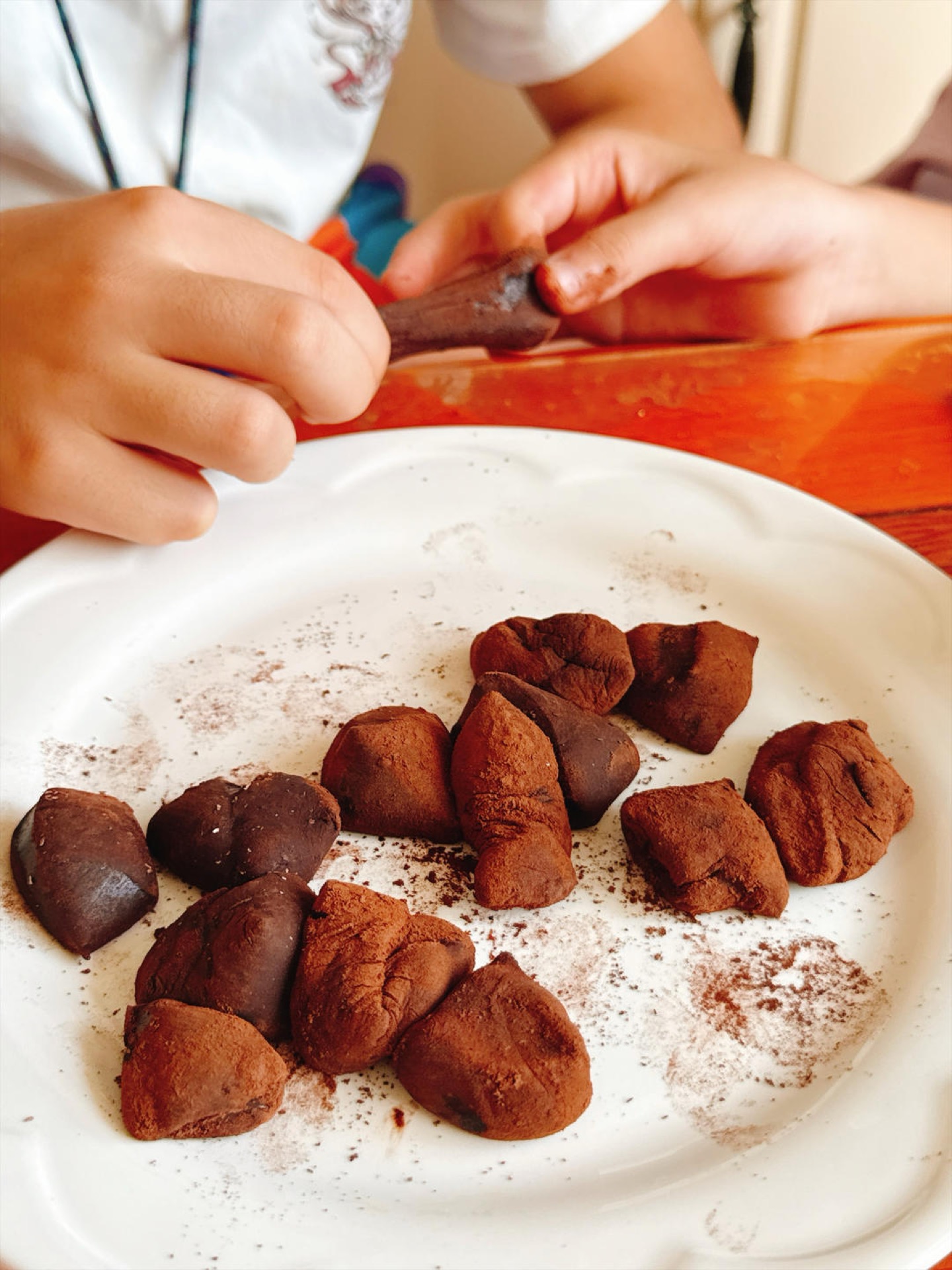
What Is 糯米巧克力 (Chocolate Mochi)?
糯米巧克力 is a Chinese home dessert made from steamed glutinous rice flour dough flavored with cocoa, then dusted with cocoa powder and cut into bite-sized pieces. 糯米 means glutinous (sticky) rice, and the texture is exactly what you would expect from mochi: soft, chewy, and slightly elastic.
It sits somewhere between Japanese mochi, Chinese 麻薯 (mochi), and a chocolate truffle — the cocoa powder on the outside keeps the pieces from sticking to each other and gives a slightly bitter edge to the sweet, milky dough. Because it is steamed and not baked, it stays soft for a day or two, which is why it is such a popular home recipe.
Glutinous rice flour behaves nothing like wheat flour, and that is the point. There is no gluten to develop, no kneading to judge, and no rise to wait for — the dough is done when it is smooth and the steam has set it. If you have ever made pan-fried glutinous lotus root cakes, you already know the feel.
1Pan-Fried Glutinous Lotus Root Cakes (Xiang Jian Nuo Mi Lian Ou)Pan-fried glutinous lotus root cakes: grated lotus root mixed with glutinous rice flour and egg into a thick batter, shaped into cakes, and pan-fried golden – crisp outside, chewy within, the moistening breakfast.Check out this recipe
Why This Recipe Works
- Steaming sets the dough evenly. No scorching, no stirring over heat — the steamer does the work in 20 minutes.
- Cornstarch keeps it from being gluey. A small amount of cornstarch softens the chew so the mochi is tender rather than rubbery.
- Sifting prevents lumps. Cocoa powder clumps; sifting it with the flours gives a smooth batter.
- Oil goes in after steaming. Working the oil in at the end makes the dough glossy and stops it sticking to your hands.
- Cocoa powder on the outside is functional. It prevents the pieces from fusing together and adds a bittersweet contrast.
Equipment Needed
- Steamer with a lid
- Mixing bowl and whisk
- Fine sieve
- Heatproof dish for steaming
- Plastic wrap
Ingredients
- 150 g (1 1/4 cups) glutinous rice flour
- 30 g (1/4 cup) cornstarch
- 15 g (2 tbsp) cocoa powder, plus more for dusting
- 60 g (1/4 cup) sugar
- 250 g (1 cup) milk
- 15 g (1 tbsp) neutral oil
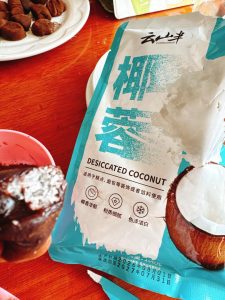
- Desiccated coconut, optional, for coating
Ingredient Notes
Glutinous rice flour (糯米粉). Sold in Asian groceries; do not substitute regular rice flour, which will not be chewy.
Cocoa powder. Natural unsweetened cocoa is best. Dutch-process gives a darker color and a milder flavor.
Milk. Whole milk gives the richest result; oat or soy milk works for a dairy-free version.
Oil. A neutral oil — the cook uses 15 g and mixes it in after steaming to make the dough workable.
Prep & Mise en Place
Weigh the glutinous rice flour, cornstarch, cocoa, and sugar into a bowl and sift them together. Measure the milk and the oil. Set up a steamer with plenty of water and bring it to a rolling boil, and have plastic wrap and a heatproof dish ready for the batter.
Cooking Process
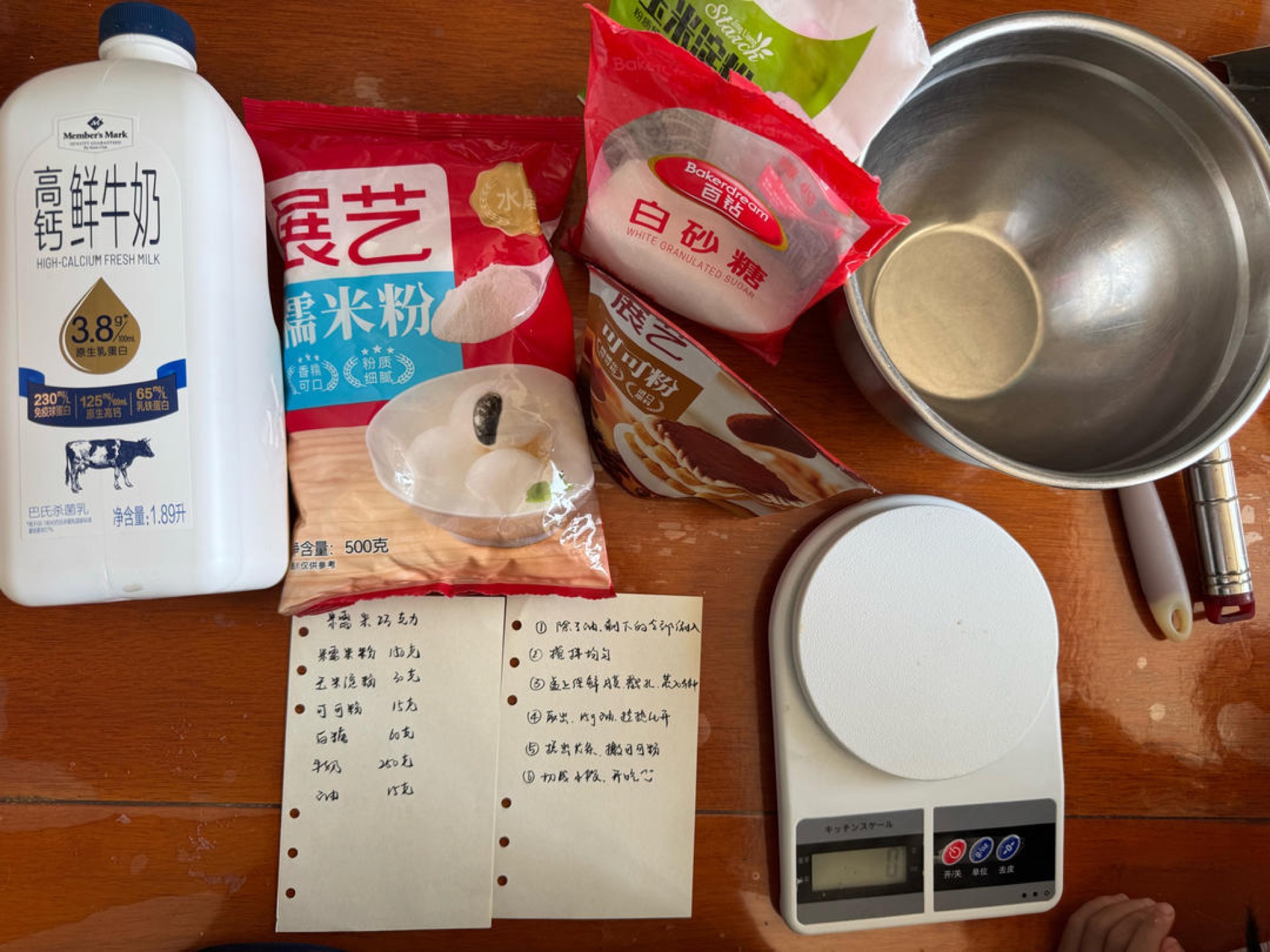
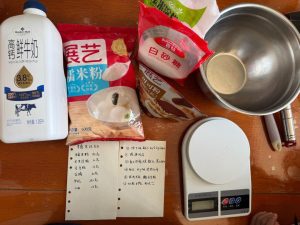
Step 1 — Gather the Ingredients
Set out the glutinous rice flour, cornstarch, cocoa, sugar, milk, and oil.
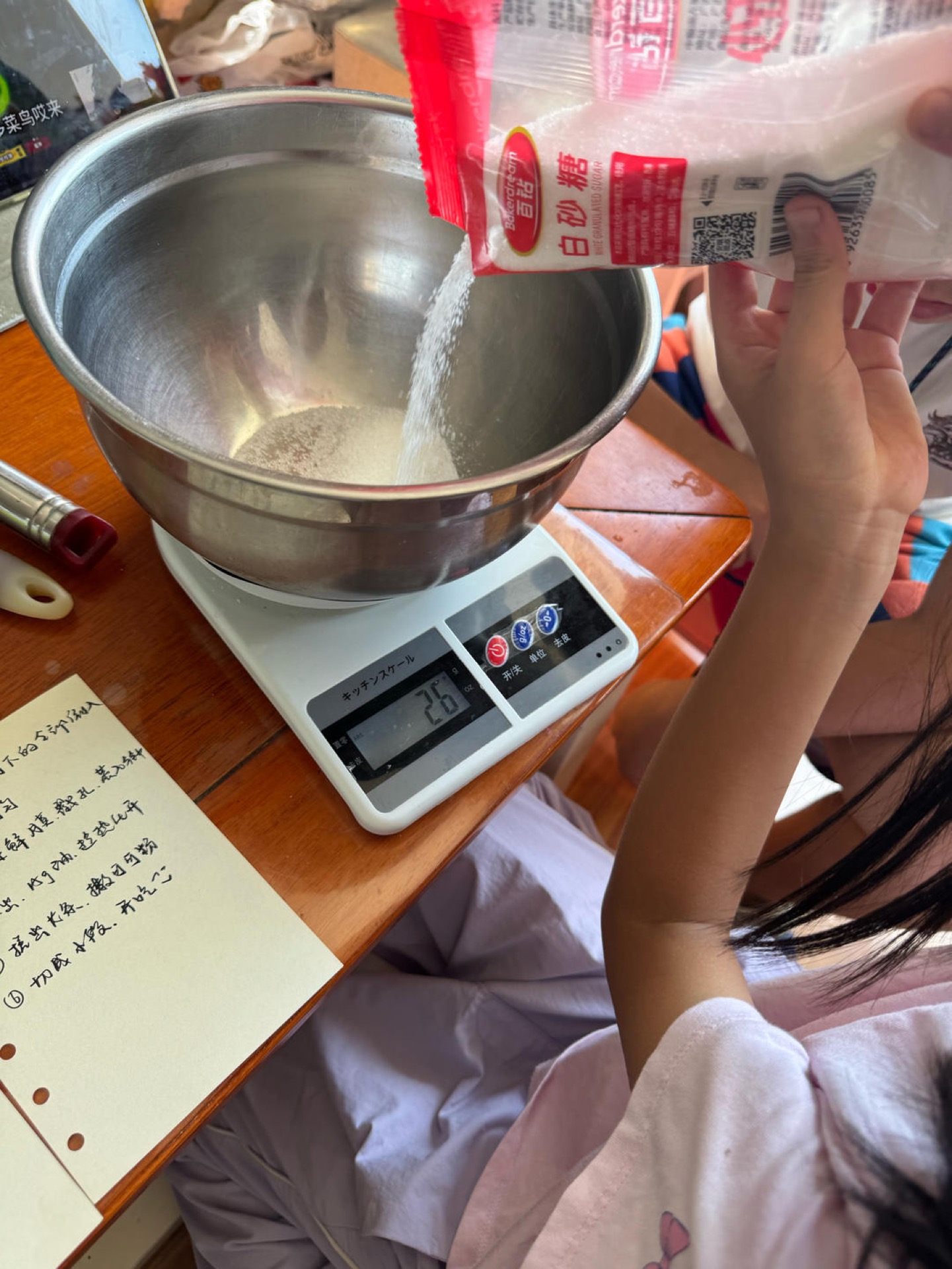
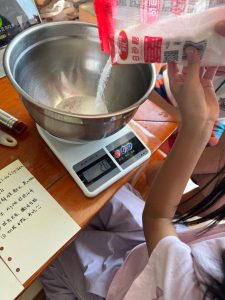
Step 2 — Weigh the Dry Ingredients
Combine everything except the oil in a mixing bowl, measuring carefully.
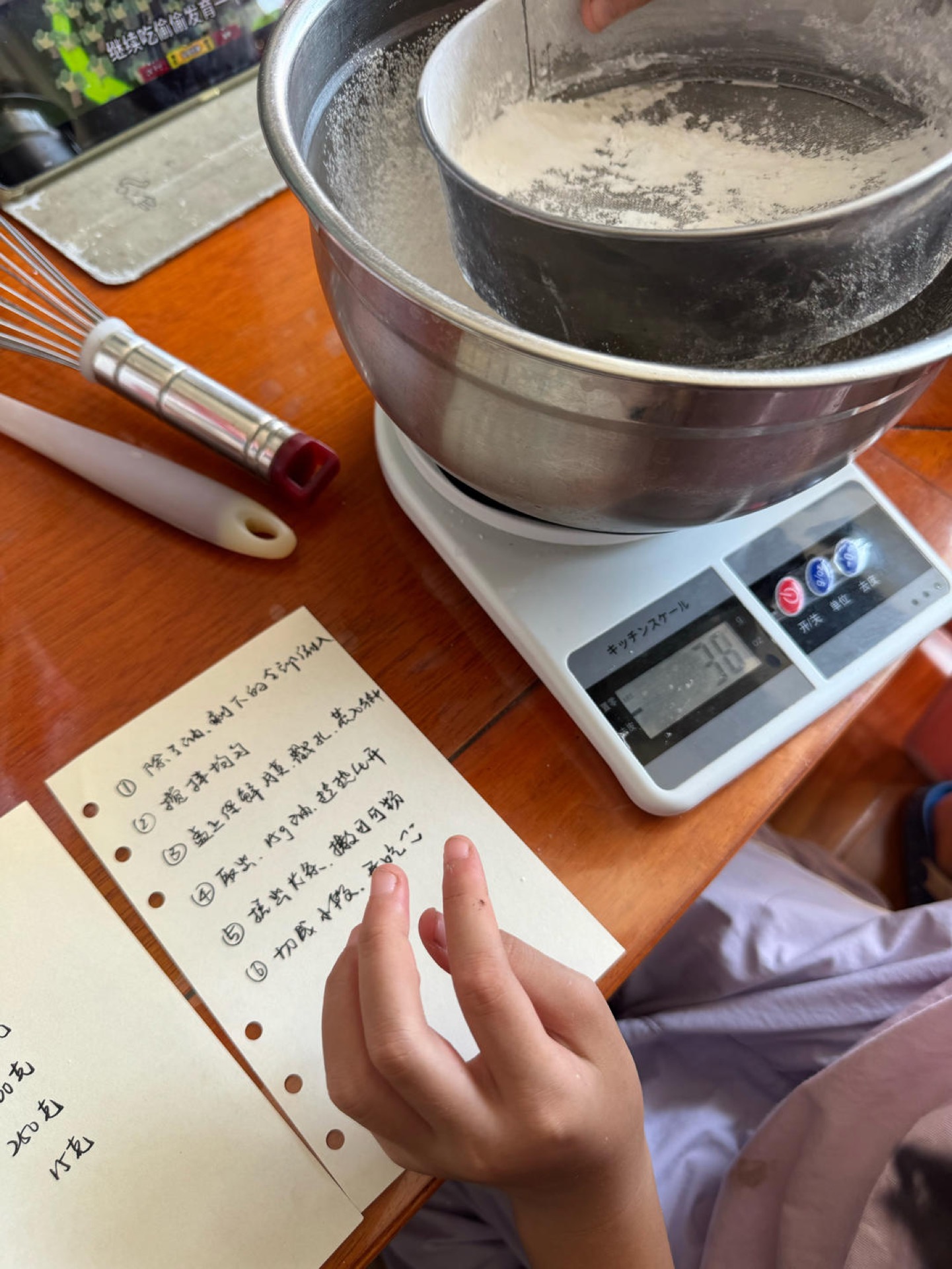
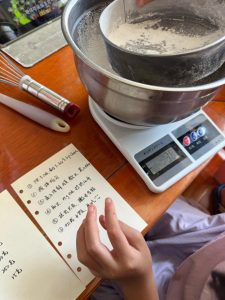
Step 3 — Sift
Sift the mixture to remove cocoa lumps.
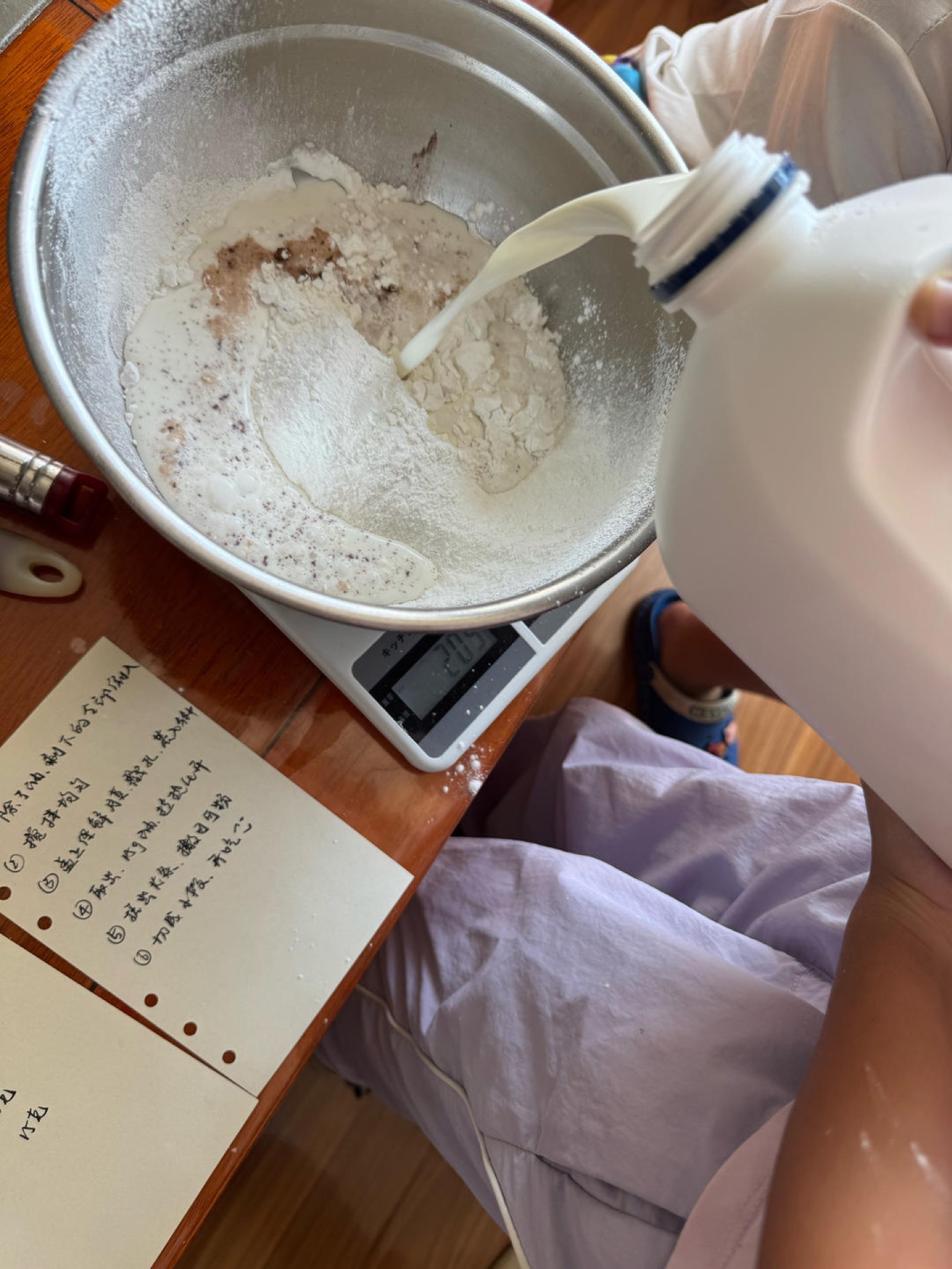
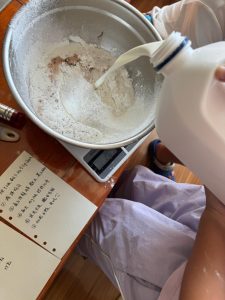
Step 4 — Add the Milk
Pour in the milk.
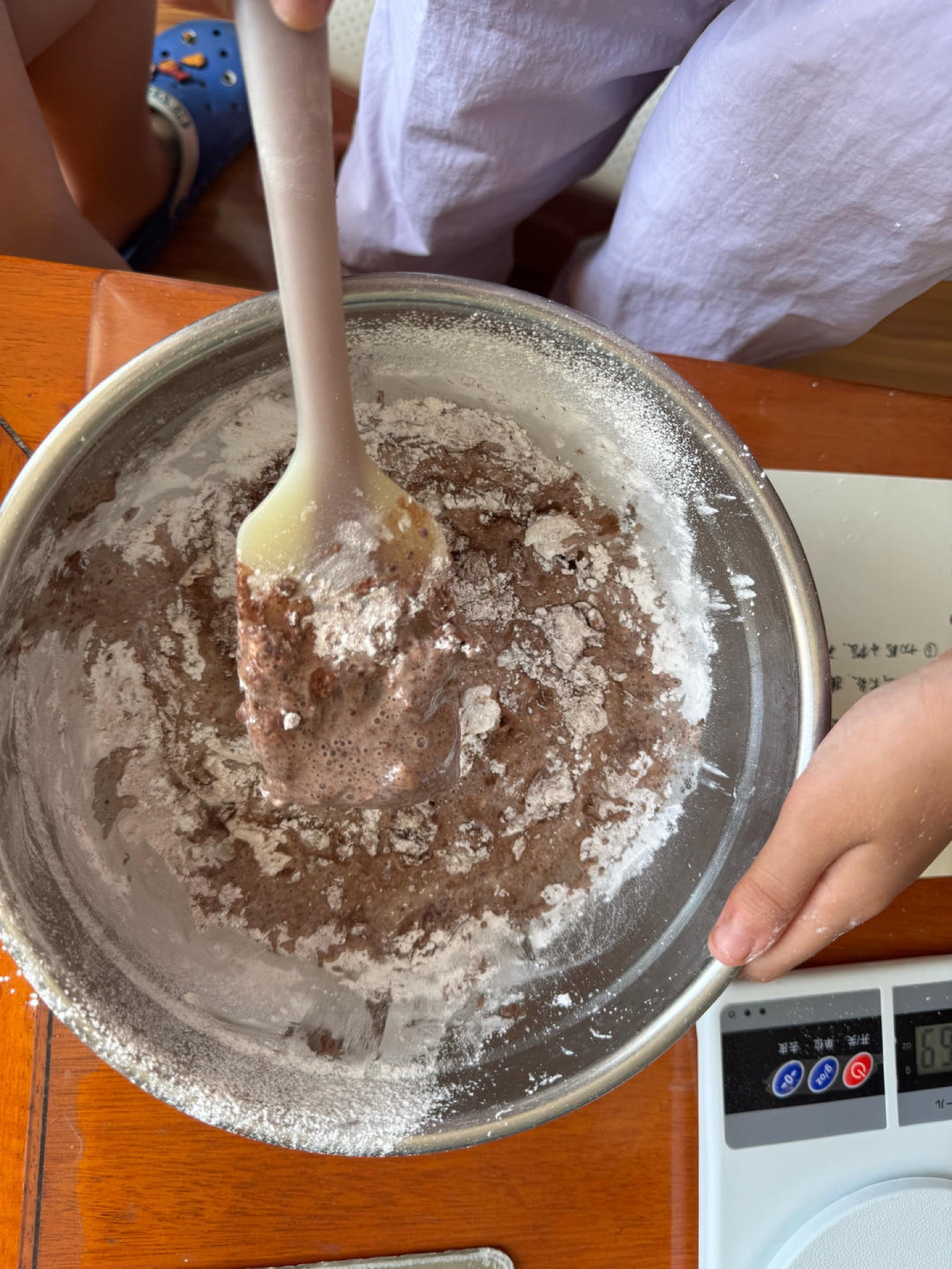
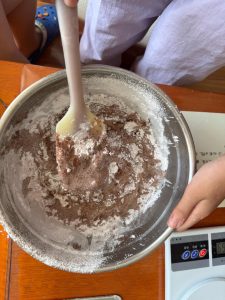
Step 5 — Whisk Smooth
Stir until completely smooth with no dry pockets.
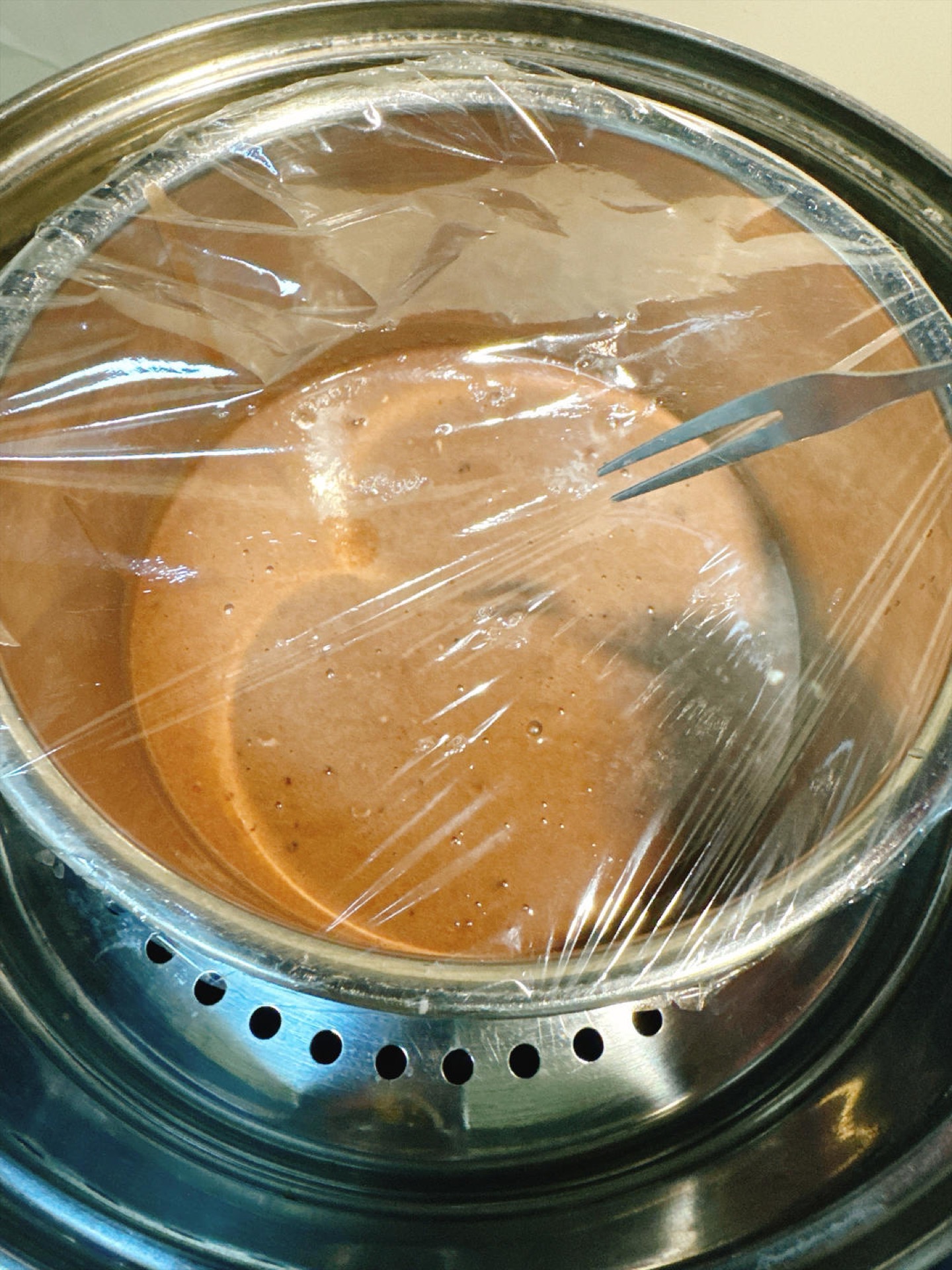
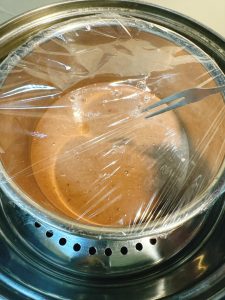
Step 6 — Cover and Steam 20 Minutes
Cover the bowl with plastic wrap, poke a small hole for steam, and steam for 20 minutes.
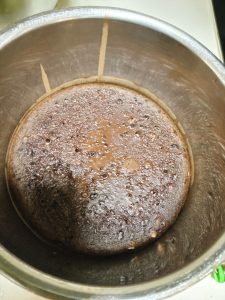
Step 7 — Test With a Fork
A fork inserted into the dough should come out clean — if it does not stick, it is cooked.
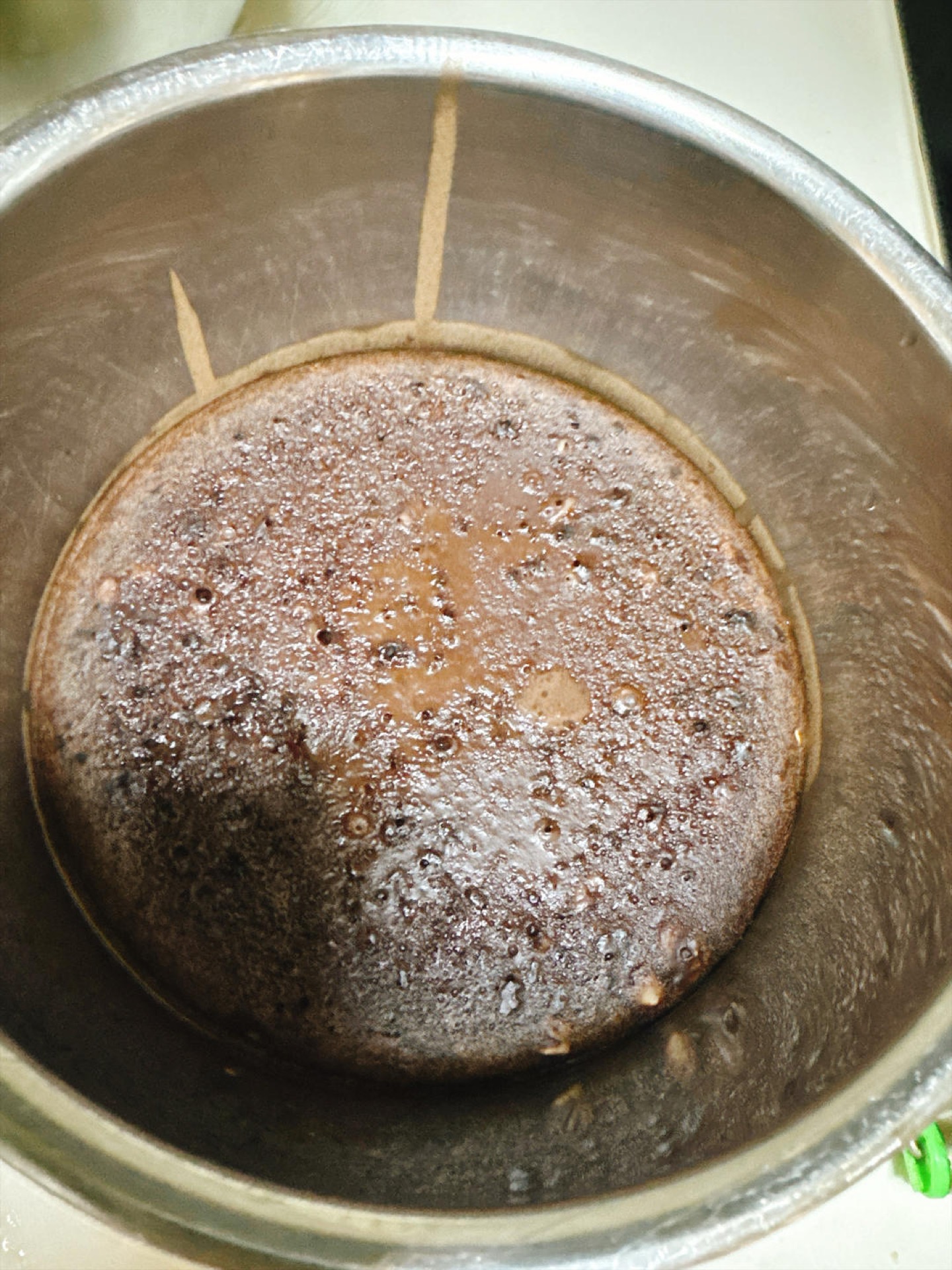
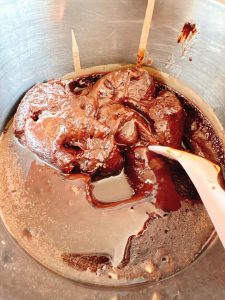
Step 8 — Work In the Oil
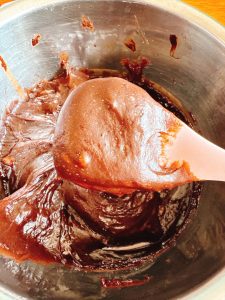
Add the oil and stir it through until the dough is glossy.
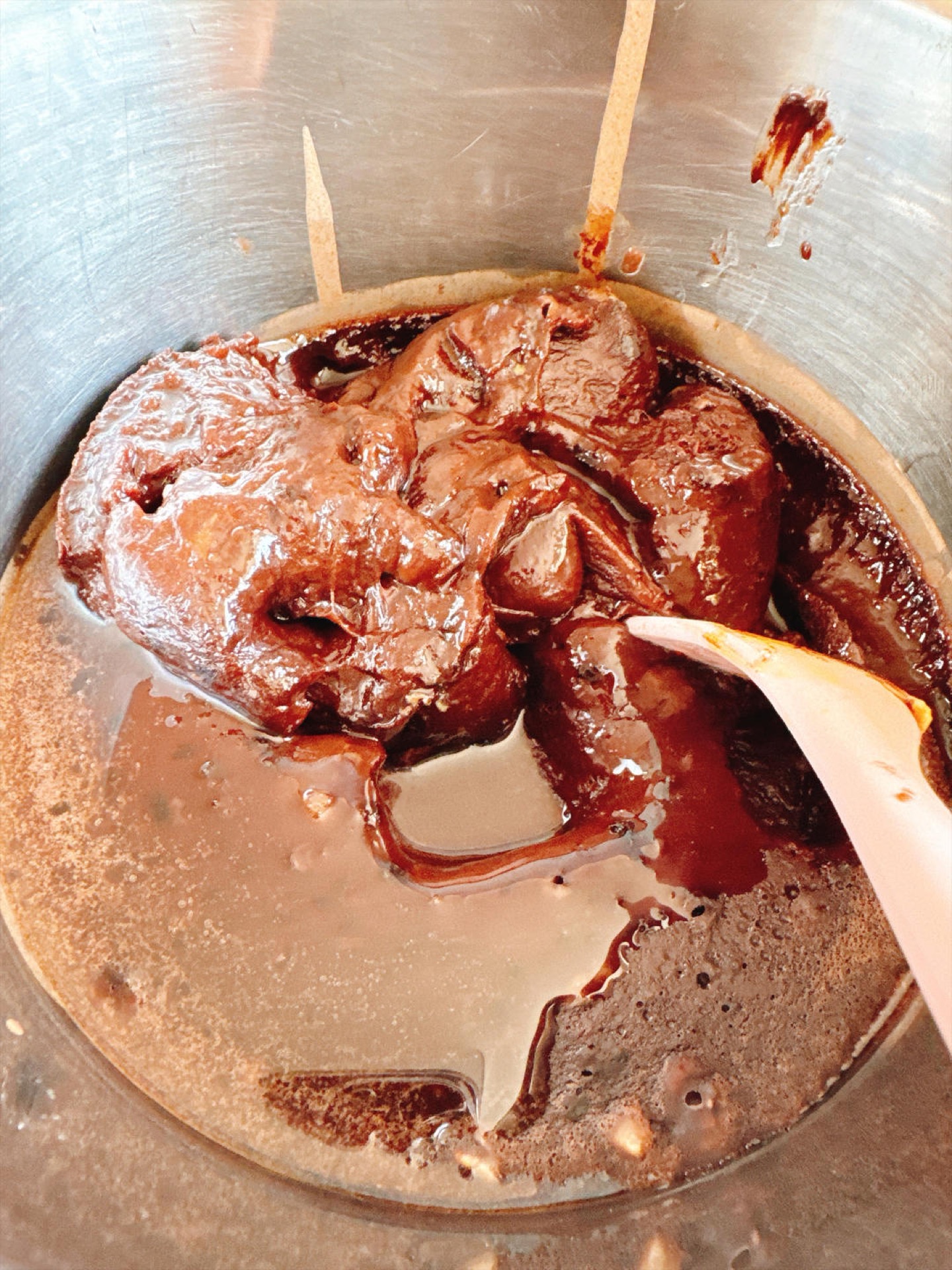
Step 9 — Let It Cool Slightly
The dough is ready when it is smooth, elastic, and cool enough to handle.
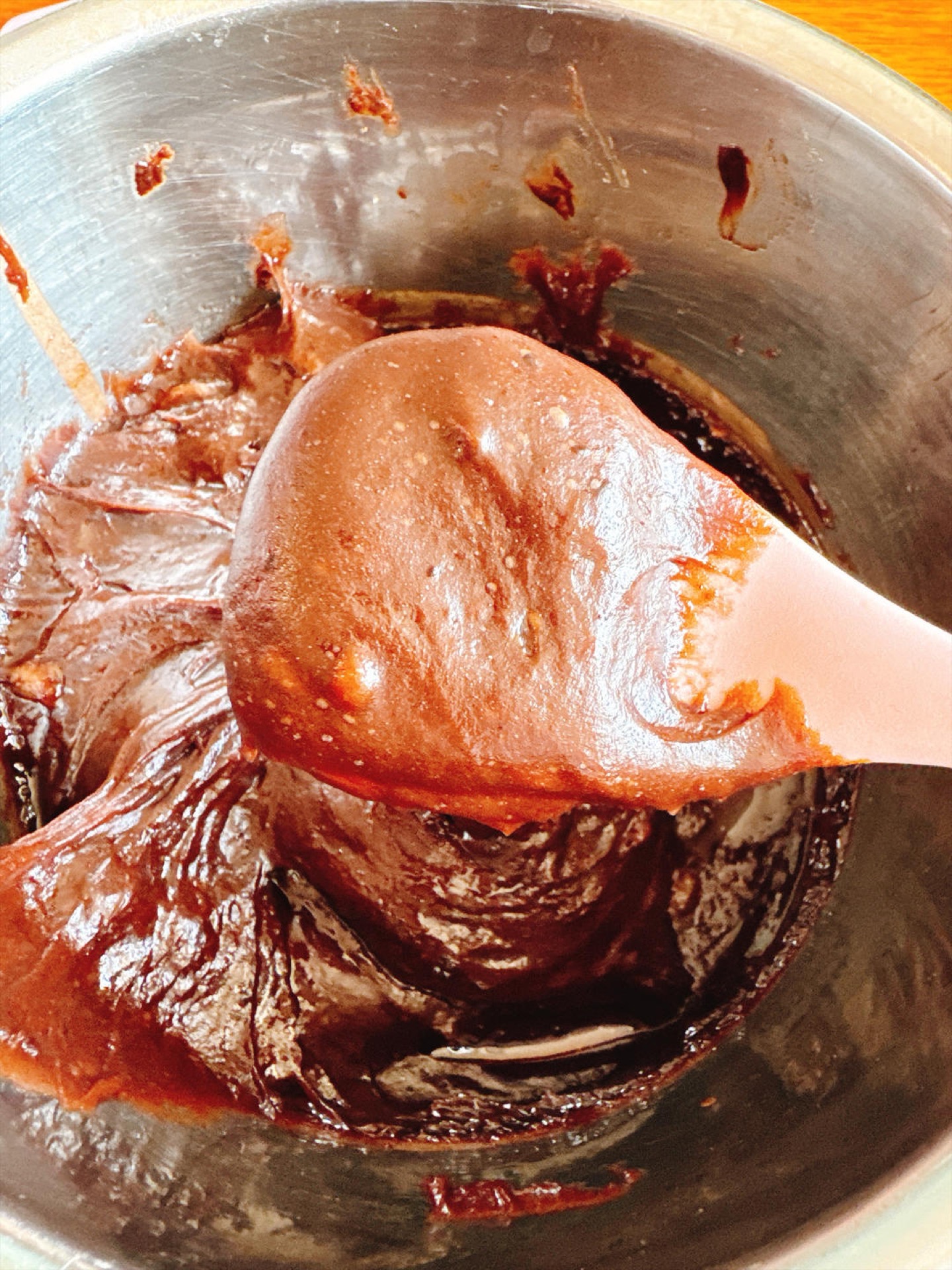
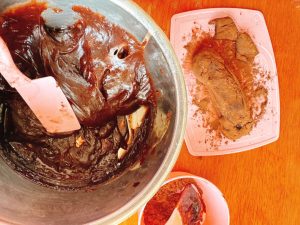
Step 10 — Roll in Cocoa Powder
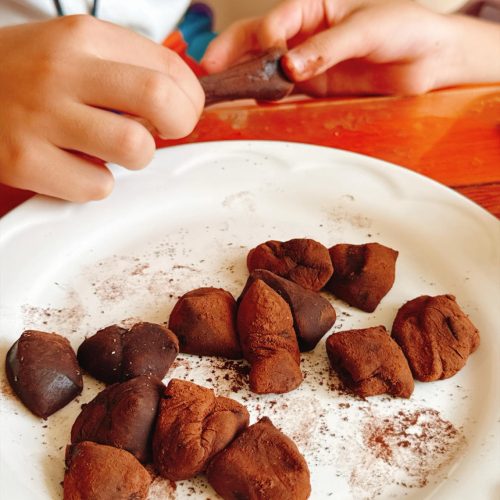
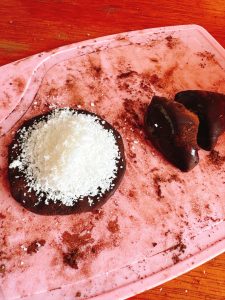
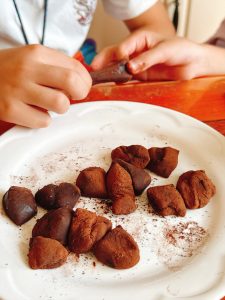
Take a portion and coat it in cocoa powder so it does not stick.
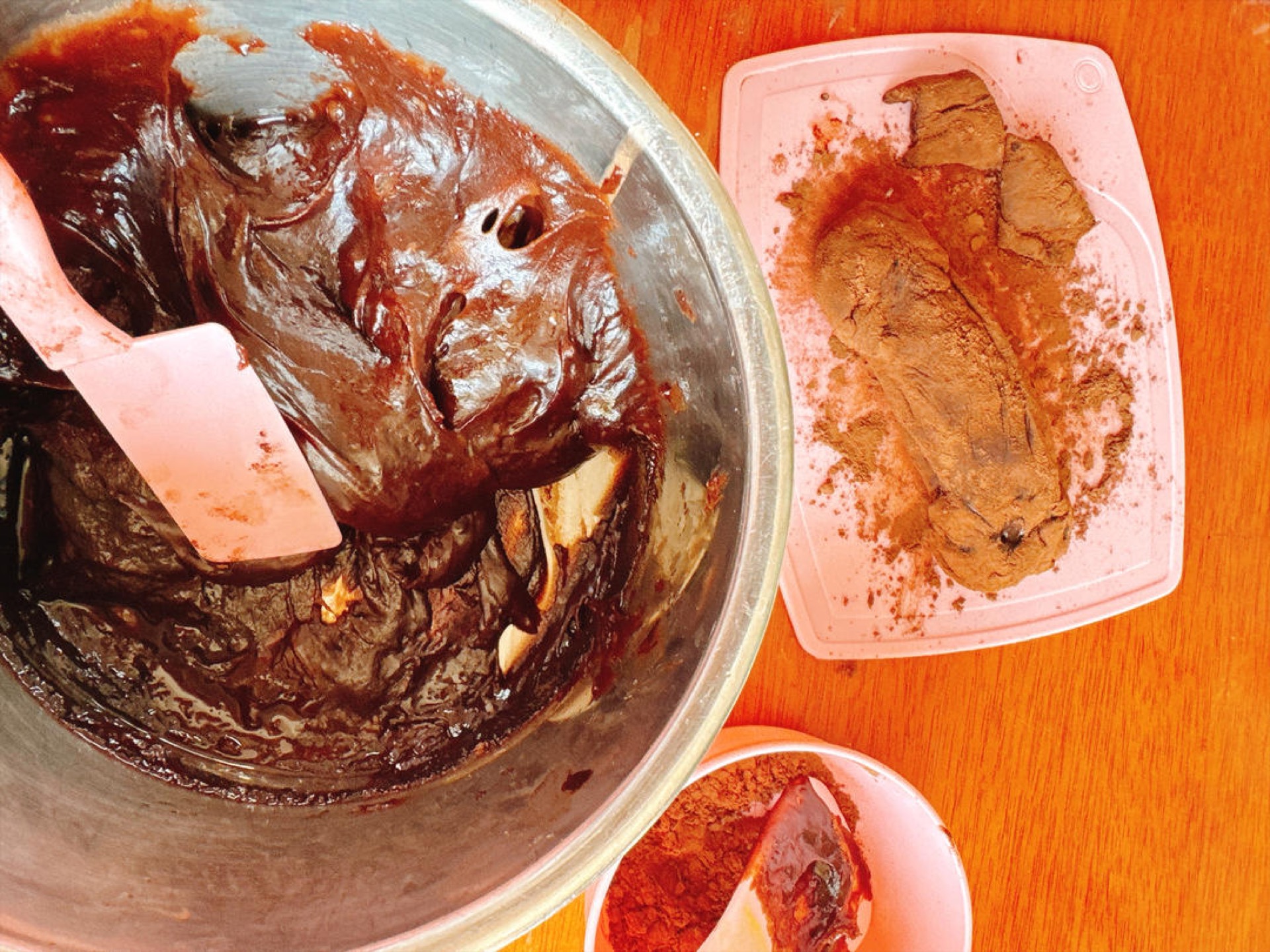
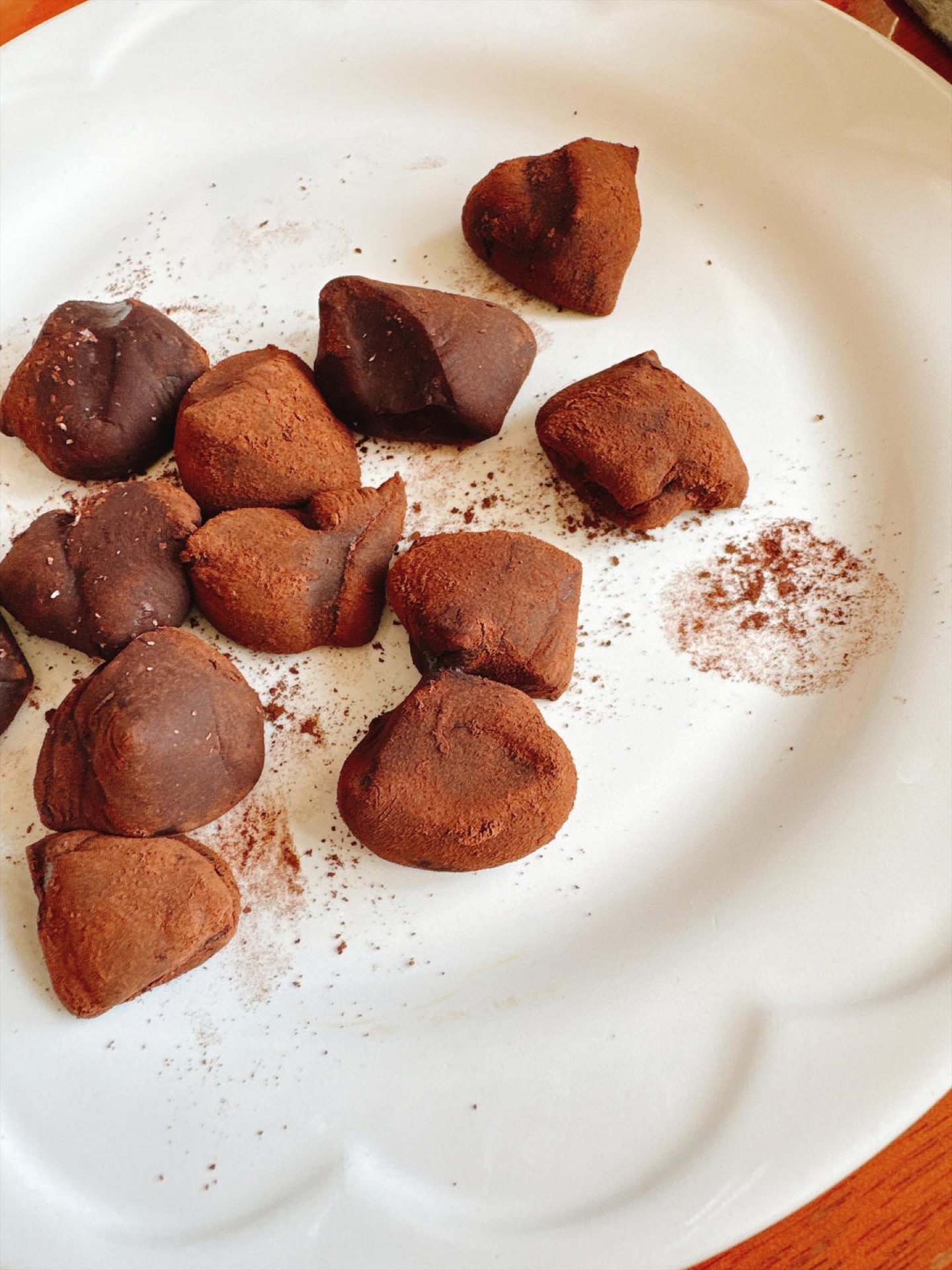
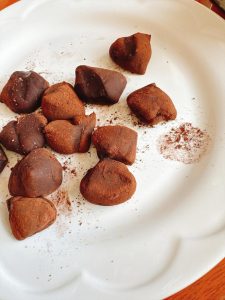
Step 11 — Cut Into Bites
Cut the coated dough into small pieces.
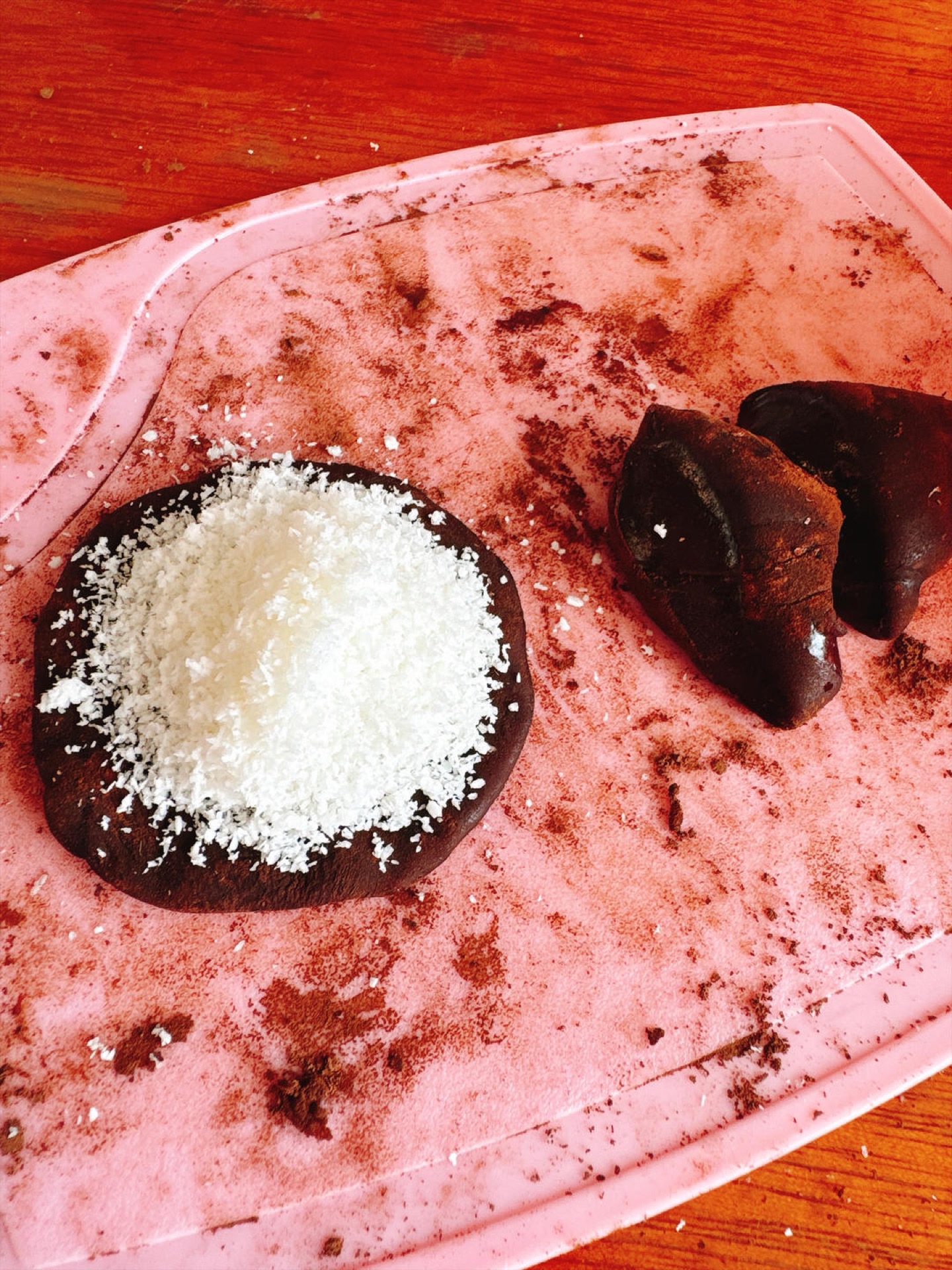
Step 12 — Optional Coconut Coating
Desiccated coconut works as a second coating if you want to vary the texture.
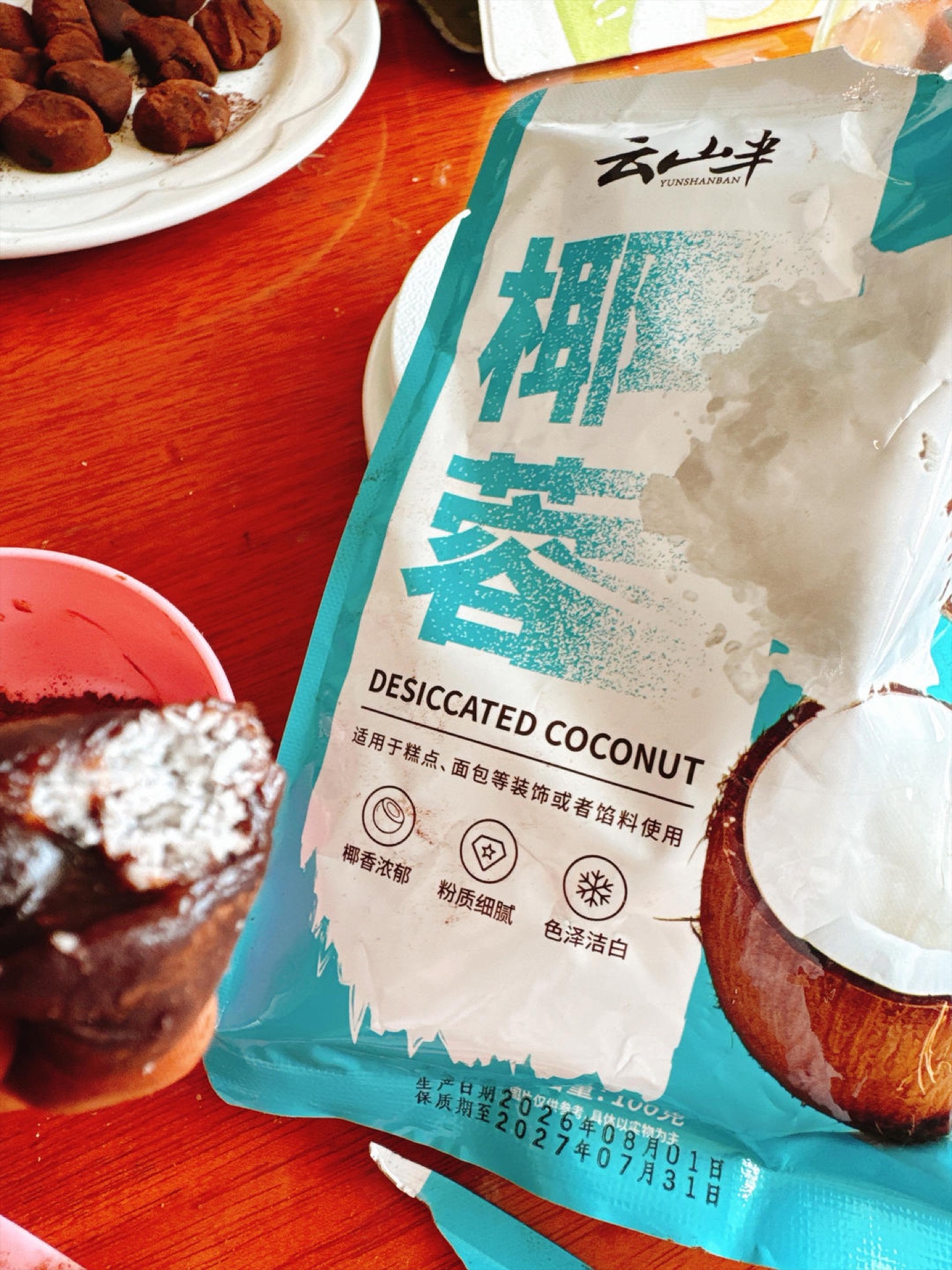
Working the oil in after steaming is the step that turns a sticky, unmanageable mass into dough you can actually shape. Do not skip it, and do not add the oil before steaming — it would float on the batter and leave greasy patches in the finished mochi. Warm dough absorbs oil; cold dough just slides around in it.
Step 13 — Taste Test
Chewy, soft, and just sweet enough — this is the moment to decide whether you want more cocoa on top.
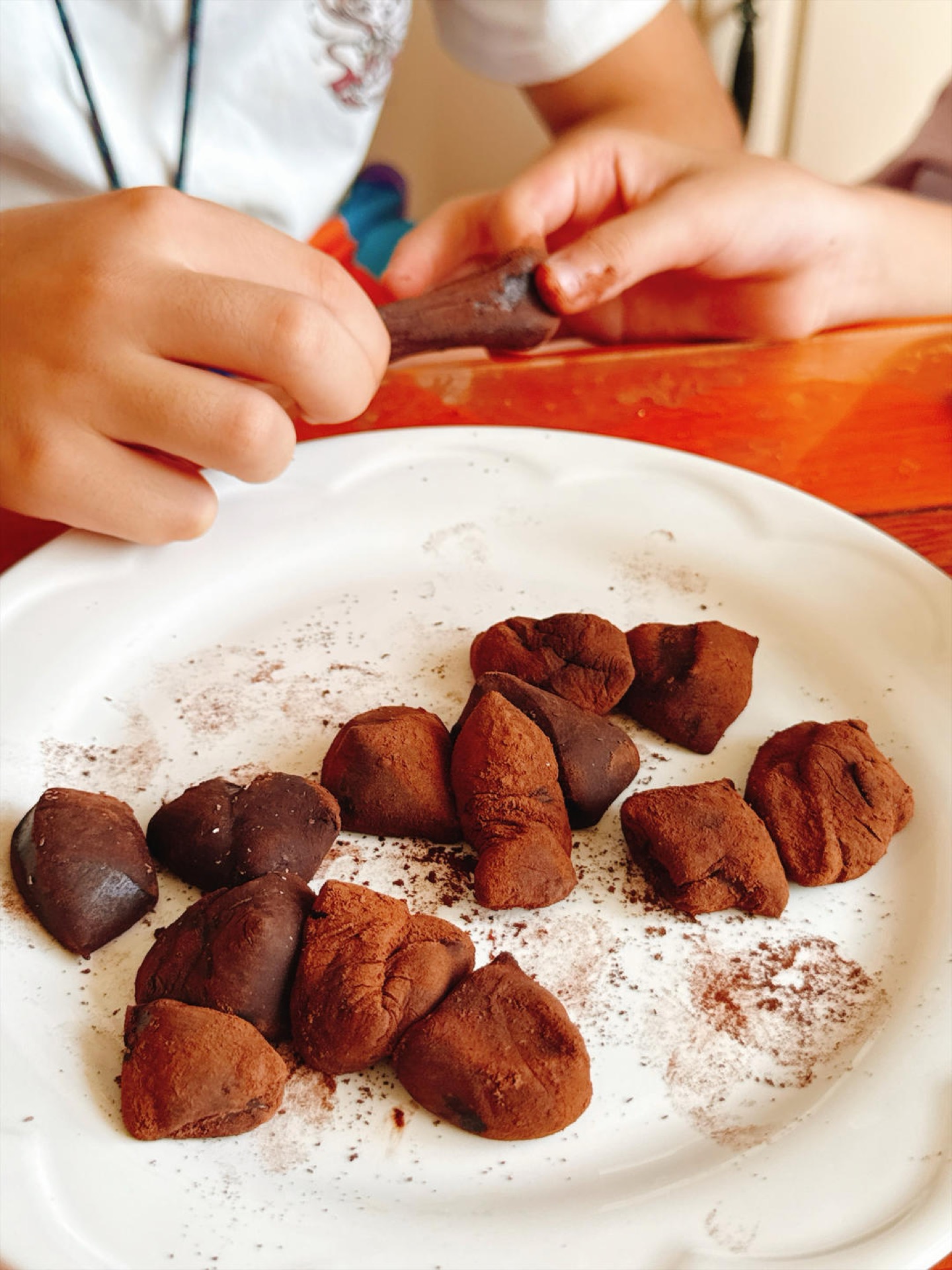
Step 14 — Pull and See the Stretch
The finished mochi stretches when you pull it — that is glutinous rice flour doing its job.
Common Mistakes When Making Chocolate Mochi
1. The mochi is tough and rubbery. Cause: too much glutinous rice flour or not enough cornstarch. Fix: keep the ratio as written, and do not over-steam.
2. It is gluey and impossible to shape. Cause: under-steamed dough. Fix: steam the full 20 minutes and check with the fork test.
3. The batter has lumps. Cause: unsifted cocoa. Fix: always sift the dry ingredients together.
4. The pieces fuse together. Cause: not enough cocoa on the outside. Fix: coat each portion generously before cutting.
5. It goes hard the next day. Cause: glutinous rice starch retrograding. Fix: store airtight at room temperature and re-steam for two minutes to soften.
Variations
Matcha. Replace the cocoa with matcha powder and dust with matcha.
Coconut. Use coconut milk instead of dairy milk and coat in desiccated coconut.
With red bean. Wrap a spoon of red bean paste in the center before coating — a nod to classic Chinese sweets like mung bean cakes.
Frequently Asked Questions
Can I use regular rice flour? No — glutinous rice flour (糯米粉) is what gives the chew.
Do I have to steam it? Steaming is the reliable method; microwaving works but gives an uneven texture.
How long does it keep? A day or two in an airtight container at room temperature; refrigeration makes it hard.
Is it gluten-free? Yes, as written — glutinous rice flour contains no wheat gluten.
Can kids make it? Yes, and this recipe was written for exactly that — the adult handles the steamer and the child does the rolling and cutting.
How to Serve
Serve the mochi bites as a snack or dessert with tea. They make a nice sweet plate alongside glass cookie cake, taro paste star buns, homemade canned yellow peaches, Cantonese mooncakes, and savory qi zi mo biscuits for a Chinese tea table.
Storage & Reheat
Store in an airtight container at room temperature for up to 2 days. To revive, steam for 2 minutes or microwave for 10 seconds; refrigeration will make the mochi hard, so avoid it if you can.
Allergen Notice
Contains milk. Check the cocoa and coconut labels if you have allergies.
Nutrition Disclaimer
Nutrition information is calculated using an ingredient database and should be considered an estimate. In cases where multiple ingredient alternatives are given, the first listed is calculated for nutrition. Garnishes and optional ingredients are not included.
About the Author & Recipe Development
I am Lin, and I grew up in my parents’ restaurant kitchen in Chengdu, where 麻薯 was something we bought, never made — the good versions came from a shop with a wooden steamer and a cook who had been doing it for thirty years. This xiachufang recipe, written by a parent making it with a child, convinced me that the home version is just as good and a lot more fun. I tested it twice: once adding the oil before steaming (greasy patches, exactly as warned) and once after, which gave a glossy, easy-to-shape dough. The fork test is the detail I now trust over any timer.
Authoritative References
FDA cold storage guidance for cooked desserts, and USDA Safe Temperature Chart for general food safety.
Chocolate Mochi Bites (糯米巧克力): Chewy 6-Ingredient Treat

Equipment
- Steamer
- Fine sieve
- Heatproof dish
- Plastic Wrap
Ingredients
For the Mochi
- 1.25 cups glutinous rice flour 150 g
- 0.25 cup cornstarch 30 g
- 2 tbsp cocoa powder 15 g, plus more for dusting
- 0.25 cup sugar 60 g
- 1 cup milk 250 g
- 1 tbsp neutral oil 15 g
- 2 tbsp desiccated coconut optional coating
Instructions
- Set out the glutinous rice flour, cornstarch, cocoa, sugar, milk, and oil.

- Combine everything except the oil in a mixing bowl.

- Sift the dry mixture to remove cocoa lumps.
- Add the milk.
- Whisk until completely smooth.
- Cover with plastic wrap, poke a hole, and steam 20 minutes.
- Test with a fork — it should come out clean.
- Stir in the oil until the dough is glossy.
- Let the dough cool until it is easy to handle.
- Roll a portion in cocoa powder.
- Cut into bite-sized pieces.
- Optional: coat some pieces in desiccated coconut.
- Taste and add more cocoa if you like.
- Serve — the mochi should stretch when pulled.







Leave a Reply