Hey there! Let’s be real for a second—have you ever wondered why the braised pork belly at your favorite Chinese restaurant glistens like a polished gem, while the version you make at home tastes good but looks a bit… dull?

Growing up in my parents’ chaotic Sichuan kitchen in Chengdu, I used to watch the chefs toss large, crystal-like chunks into the wok. They weren’t just adding sweetness; they were adding luxury.
Today, we are talking about Chinese Rock Sugar (Bingtang 冰糖). It is the unsung hero of the Chinese pantry. Whether I’m teaching a student in a professional kitchen or writing to you here, I always say: if you want that professional “red-braised” sheen, put down the granulated sugar and grab the rocks.
What is Rock Sugar? (The Science & History)
Rock sugar is essentially crystallized cane sugar. Its history runs deep—production likely began during the Tang Dynasty (around the 7th century A.D.), where it was referred to as “sugar frost” because the crystals looked like ice.
Unlike standard white sugar, which is highly refined and uniform, rock sugar is produced by dissolving sugar in water and allowing it to recrystallize over time. This process creates a polycrystalline structure.

So, why does a culinary school graduate care about crystals? Because science matters in the pot. Rock sugar is slightly less sweet than granulated sugar, but it has a cleaner finish. More importantly, because of its structure and water content, it produces a translucent, shiny glaze when melted down, giving dishes that signature “glassy” look that standard sugar struggles to achieve.
Note: In Traditional Chinese Medicine (TCM), rock sugar is often viewed as having “cooling” properties and is used to soothe sore throats, often boiled with Asian pears.
The Two Main Types
You will usually find two varieties in the Asian market. Trust me, it helps to know the difference.
1. White/Yellow Rock Sugar (Bingtang)
These come in irregular, jagged lumps ranging from white to pale yellow.
- Best for: Light-colored soups, teas (like chrysanthemum tea), bird’s nest soup, and lighter braises.
- Flavor: Clean, simple sweetness.
2. Brown Rock Sugar Slabs (Bing Piantang)
These look like rectangular wafers or “bricks.” They are my personal go-to for savory cooking. Because they contain molasses (similar to Western brown sugar but in crystal form), they have a deeper depth of flavor.
- Best for: Heavy meat dishes, red-braised pork, and desserts like Chinese New Year Sweet Rice Cakes (Nian Gao) (Wait, Nian Gao uses brown sugar, but if you want a similar depth in savory dishes, this is the one).
- Flavor: Caramel-like, warm, and rich.

Why Use It? (The “Chef’s Secret”)
You might be asking, “Lin, can’t I just use white sugar?”
Technically? Yes. But if you want to elevate your cooking, here is the “why”:
- The Gloss Factor: This is the big one. When rock sugar melts and caramelizes, it coats the meat in a way that reflects light beautifully. It is essential for dishes like our Braised Pork Belly (Hong Shao Rou).
- Mellow Sweetness: It provides a slow, steady sweetness that balances out aggressive salty ingredients like soy sauce without making the dish taste like candy.
- Complexity: especially with the brown slabs, you get hints of caramel and toffee that pair perfectly with spices like star anise and cassia bark.
Essential Flavor Pairings
Rock sugar rarely works alone. In a “Woks of Love” kitchen, we view it as a harmonizer. It is almost always paired with:
- Dark Soy Sauce: The sugar cuts the harsh saltiness and helps the soy sauce cling to the meat. You can learn more about selecting the best bottle in our guide to Dark Soy Sauce.
- Chinese Black Vinegar: The sweetness of the rock sugar mellows the sharp acidity of the vinegar, creating that addictive “sweet and sour” profile found in dishes like Sweet and Sour Pork Ribs.
- Aromatics: Ginger, scallion, and Star Anise.
How to Cook With Rock Sugar
Using rock sugar can be intimidating because of the size of the chunks. Here is my “No Secrets” advice on how to handle it.
1. Breaking it Down
Don’t throw a fist-sized rock into a quick stir-fry! It won’t melt in time.
- The Method: Wrap the sugar chunks or slabs in a clean kitchen towel.
- The Action: Whack it gently with the back of a cleaver, a meat mallet, or even a rolling pin.
- The Result: You want pieces roughly the size of marbles or smaller.
2. The Melting Technique (Sugar Color)
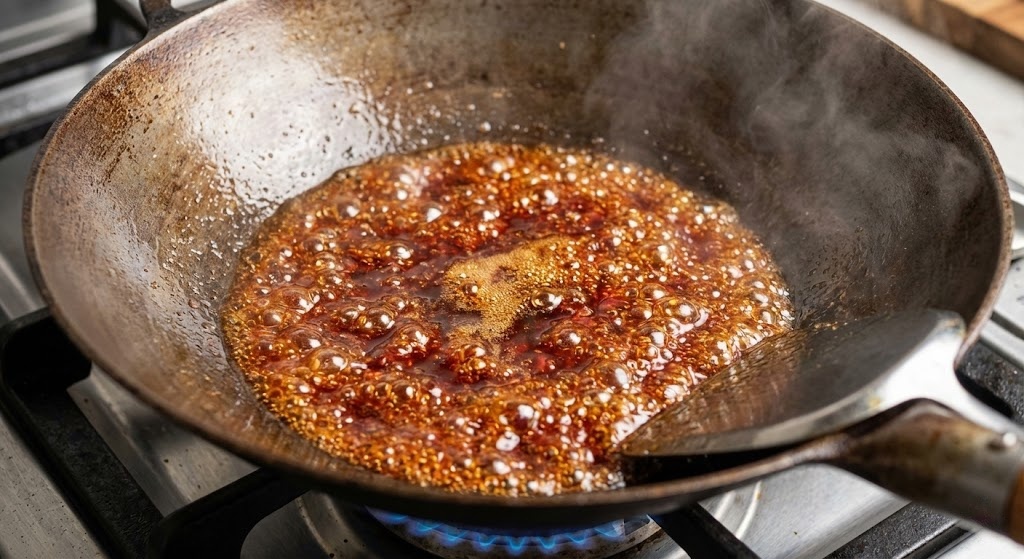
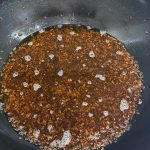
In professional kitchens, we often do a step called chao tang shai (frying sugar color).
- Add oil and rock sugar to a cool wok.
- Heat gently until the sugar melts and turns an amber color.
- Sensory Cue: Watch for the “fish eye” bubbles. Once the bubbles turn small and the color is reddish-brown, toss in your pork immediately. This locks in the color.
Lin’s Top Recipes Using Rock Sugar
Ready to put this ingredient to the test? Here are the recipes where I strongly recommend using rock sugar over granulated sugar:
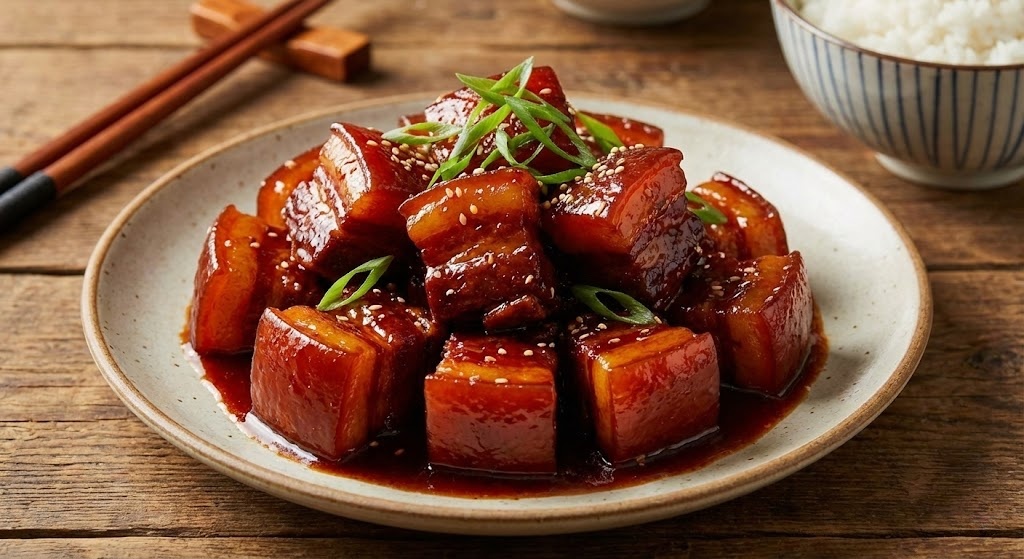
- Red Braised Pork Belly (Nanru Rou): This recipe relies on the red fermented bean curd and rock sugar for that incredible color.
- Braised Beef Brisket with Potatoes: The sugar helps tenderize the beef and thickens the gravy naturally.
- Chinese Braised Oxtails: (While this links to our short ribs, the technique of braising with rock sugar applies perfectly to oxtails and tough cuts).
- Soy Sauce Chicken: If you are making a master stock for soy sauce chicken, rock sugar is non-negotiable for the glaze.
For a lighter touch, rock sugar dissolves beautifully in hot liquids, making it perfect for soothing drinks like Sour Tomato Beef Soup bases or fruit teas.
Substitution Guide
We live in the real world. If you can’t find rock sugar, don’t cancel dinner.
- Substitute for White Rock Sugar: Use regular granulated white sugar. Use slightly less (by volume), as granulated sugar packs tighter.
- Substitute for Brown Rock Sugar Slabs: Use Brown Sugar (Muscovado is great) or jagged Chinese Black Vinegar… wait, not vinegar! Use raw cane sugar.
- Trade-off: You will get the sweetness, but you might lose a bit of that “restaurant gloss.”
Buying & Storing
- Where to buy: Any Asian grocery store (99 Ranch, H-Mart) in the spice or tea aisle. Look for clear bags showing the crystals.
- Storage: Keep it in an airtight jar in a cool, dry place. Humidity is the enemy—it will make the rocks sticky. If kept dry, it lasts indefinitely (though we recommend using it within 2 years for best flavor).
Authoritative References
To ensure we are giving you the most accurate information regarding the production and chemical properties of sugar, we reference the following authoritative sources:
- The Sugar Association: For detailed scientific breakdowns of sucrose crystallization and the differences between turbinado, brown, and white sugars. Types of Sugar
- ScienceDirect: Academic articles regarding the Maillard reaction and caramelization processes in culinary applications. Maillard Reaction Overview
- National Library of Medicine: Historical context on sugarcane processing and traditional uses. History of Sugar


Leave a Reply