For most Westerners, the word “licorice” instantly conjures images of polarizing candy—black jelly beans or Good & Plenty. However, in the world of Chinese cuisine and Traditional Chinese Medicine (TCM), licorice root is far more than a confection. It is a fundamental building block of flavor, revered not just for its sweetness, but for its unique ability to harmonize complex ingredients.

Ancient history tells us that King Tut was entombed with a large supply of licorice root to enjoy his favorite sweet beverage, mai sus, in the afterlife. Similarly, in China, this woody root has been used for millennia, earning the nickname “The Old Man of the Kingdom” (国老) because of its wisdom in balancing the “empires” of different flavors in a single pot.
What Is Chinese Licorice Root?
Chinese Name: 甘草 (Gāncǎo) Pinyin: Gāncǎo (Literal translation: “Sweet Grass”) Botanical Source: Glycyrrhiza uralensis (distinct from the European Glycyrrhiza glabra)
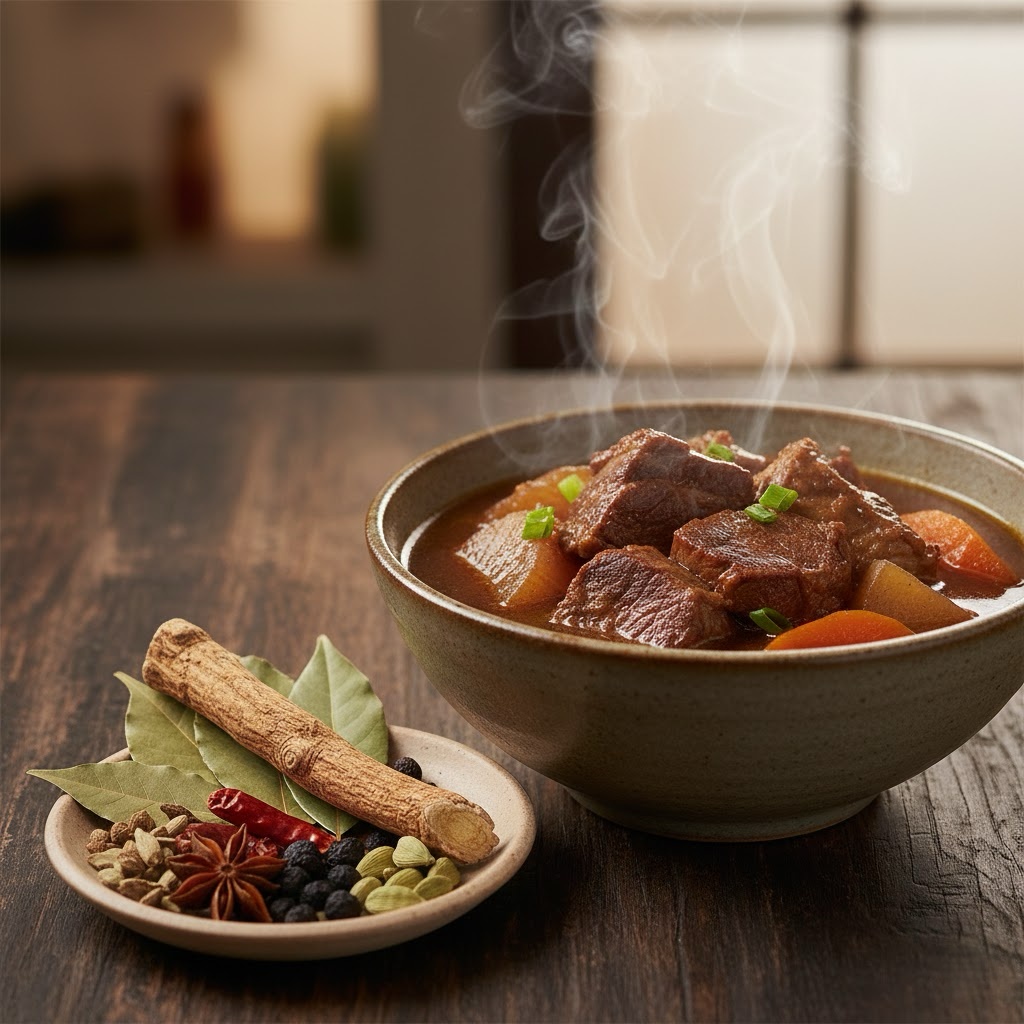
Chinese Licorice root is the dried rhizome of a flowering legume native to Asia. Unlike the soft, chewy candy (which is often flavored with anise oil rather than real licorice), the raw ingredient looks like a dry, woody twig.
When you buy it for cooking, it typically comes in dried, diagonal slices. These slices have a rough, reddish-brown bark on the outside and a distinct, lemon-yellow fibrous interior. It is this yellow core that holds the potent compound glycyrrhizin, which is chemically up to 50 times sweeter than cane sugar.

Flavor Profile: The Art of “Hui Gan”
The flavor of Chinese licorice root is distinctively bittersweet, warm, and herbaceous. It shares aromatic DNA with fennel and anise but possesses a much longer finish.
In Chinese gastronomy, we often talk about Hui Gan (回甘), which refers to a returning sweetness that lingers in the throat after the initial taste fades. Licorice is the master of this sensation. It doesn’t just make a dish “sweet”; it rounds off the sharp edges of salty soy sauce and spicy chilies, creating a full-bodied mouthfeel that sugar alone cannot achieve.
Culinary Applications: How to Use It
In the kitchen, Gancao is rarely the star of the show. Instead, it plays a supporting role, working in the background to enhance other ingredients.
1. The “Master Stock” Essential
The most common use for licorice root is in a Master Stock (Lu Shui). When simmering savory meats, spices like cloves or excessive soy sauce can sometimes turn a dish bitter. Adding a few slices of licorice root neutralizes that bitterness and adds a subtle savory-sweet depth.
It is particularly essential when cooking hearty cuts of meat. For example, when we make our rich Braised Beef Noodle Soup, the licorice root works to mask the gaminess of the beef while highlighting the meat’s natural savory notes.
2. Braised Meats and Stews
Any “red-braised” (Hong Shao) dish benefits from a slice or two of Gancao. It pairs exceptionally well with fatty cuts. If you are preparing Braised Pork Belly, the licorice helps cut through the grease, leaving a clean, aromatic aftertaste.
3. Herbal Teas and Drinks
Because of its therapeutic reputation for soothing throats, licorice is often boiled into drinks. A classic summer beverage is Sour Plum Drink (Suan Mei Tang), where licorice is simmered with smoked plums, hawthorn, and Chinese Rock Sugar to create a thirst-quenching, smoky-sweet cooler.

Spice Combinations: The Perfect Partners
For beginners, the easiest way to use licorice root is to pair it with other “warm” spices. It acts as a bridge, connecting the flavors of stronger spices together.
- The Trinity for Beef: Licorice Root + Star Anise + Chinese Cinnamon. This combination creates the classic flavor profile found in many noodle soups.
- The Aromatic Citrus Blend: Licorice Root + Dried Mandarin Orange Peel. The earthy sweetness of the root grounds the bright, medicinal citrus notes of the aged peel.
Buying and Storing Guide
Where to Buy: You can find Chinese licorice root at any Asian grocery store, usually in the dried herb and spice aisle (often near the dried mushrooms and goji berries). It is generally sold in plastic bags containing pre-cut slices.
Selection Tips:
- Look for slices that are relatively large and intact.
- The color should be a vibrant, pale yellow, not gray or dull brown.
- Avoid packages with too much “dust” or broken fragments at the bottom.
Storage: Like most dried aromatics, moisture is the enemy. Store your licorice slices in an airtight jar in a cool, dark cabinet. Under these conditions, they can last for 2 to 3 years.
Health Considerations and Safety
While licorice root is a beloved ingredient, it is powerful medicine. In Traditional Chinese Medicine, it is often used to “detoxify” the body and harmonize other herbs.
However, from a modern scientific perspective, the compound glycyrrhizin can cause potassium levels in the body to drop and blood pressure to rise if consumed in large quantities over a long period.
- Moderation is Key: In culinary applications (using 2-4 slices for a whole pot of soup serving 4-6 people), it is generally considered safe for healthy individuals.
- Consult a Doctor: Individuals with hypertension (high blood pressure) or heart conditions should consult their healthcare provider before consuming licorice root regularly.
- For more authoritative information on the safety of licorice root, you can refer to the National Center for Complementary and Integrative Health (NCCIH).
Try It In These Recipes
Ready to experiment with the “Peacemaker” of spices? Here are some classic recipes where licorice root makes all the difference:
- Simple Clear Beef Noodle Soup – The licorice adds a subtle sweetness to the clear broth.
- Braised Beef Brisket with Potatoes – A hearty stew where the spice blend is crucial.
- Braised Beef Short Ribs with Tomato – Use licorice here to balance the acidity of the tomatoes.
- Universal Chinese Meat Sauce – Add a slice during the simmering process for depth.
Authoritative References
- National Center for Complementary and Integrative Health (NCCIH). “Licorice Root.” U.S. Department of Health and Human Services. https://www.nccih.nih.gov/health/licorice-root
- Encyclopedia Britannica. “Licorice.” Britannica.com. https://www.britannica.com/plant/licorice




Leave a Reply