About the Author & Recipe Development
This recipe was developed and tested by Lin, a professionally trained chef with over 10 years of experience and a lifelong background in a family-run Sichuan restaurant. Each method has been repeatedly tested in a home kitchen to ensure clarity, safety, and reproducible results.
Growing up in Sichuan, my family’s restaurant kitchen was often filled with the heavy, spicy aromas of chili oil and doubanjiang. However, when we wanted something restorative, nourishing, and pure, my father would make Qing Dun Niu Jian (Clear Stewed Beef Shank). This dish is the antithesis of heavy, greasy food. It relies on the “rustic” flavor of the beef itself, amplified by a specific blend of aromatics, rather than masking it with heavy sauces.
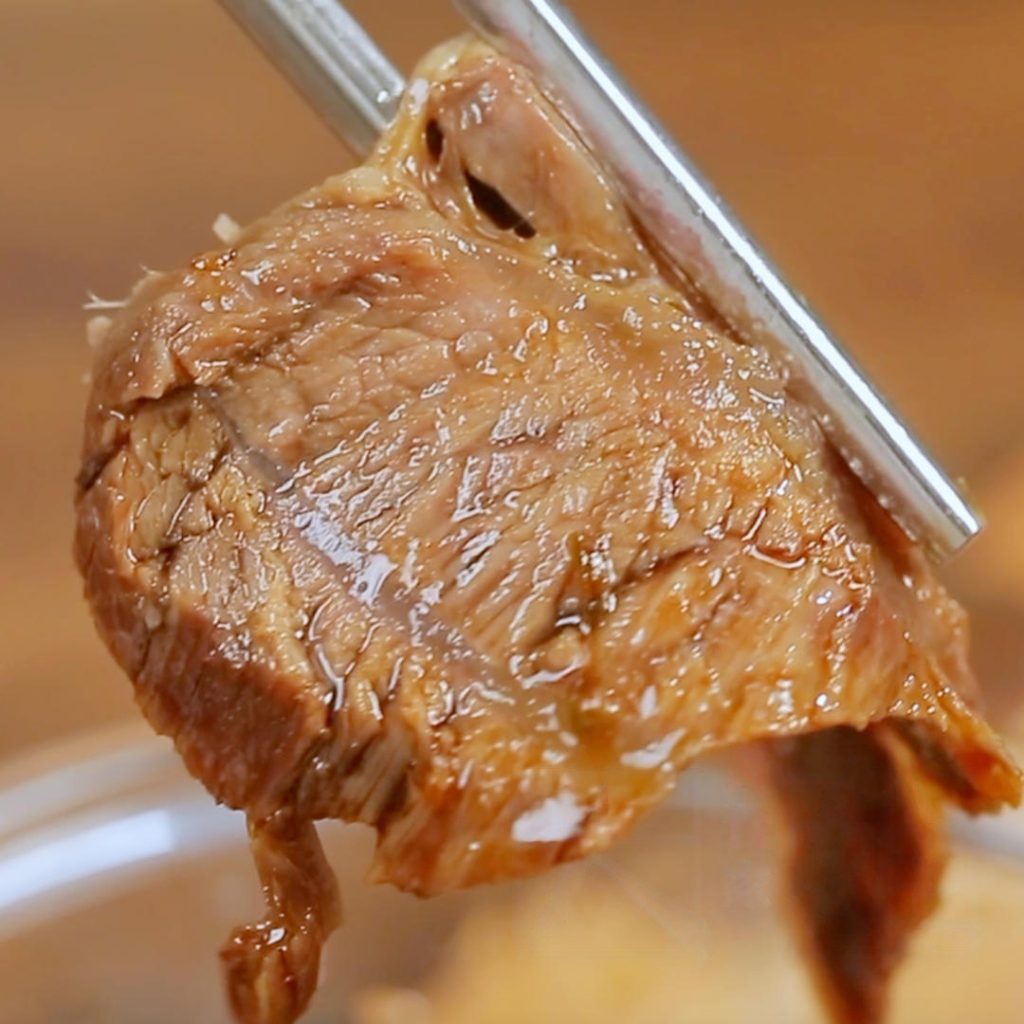
I have tested this recipe multiple times in my home kitchen to adapt professional techniques for home cooks. Whether you are a fitness enthusiast looking for high-quality protein without the grease, or you simply crave a comforting bowl of hot soup, this recipe is incredibly forgiving. It restores the natural essence of the beef, and the secret dipping sauce provides that signature Sichuan kick I can’t live without.
What Is Clear Stewed Beef Shank?
Qing Dun (清炖) translates to “clear stew.” Unlike “Red Braised” (Hong Shao) dishes that use soy sauce and sugar to create a dark, caramelized gravy, clear stewing focuses on a translucent, golden broth and maintaining the original color of the meat.
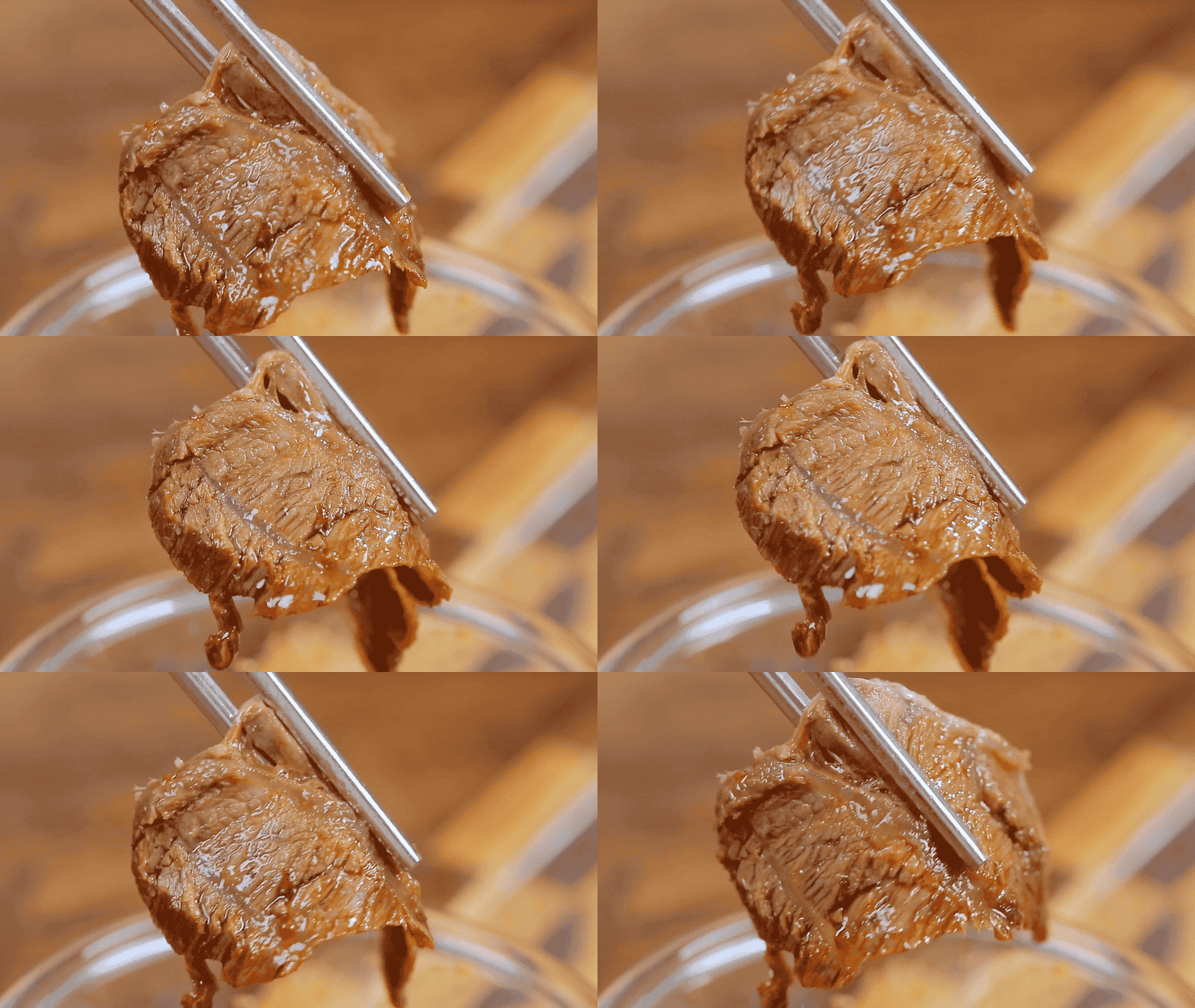
The star ingredient is beef shank (golden coin shank is preferred), a cut rich in connective tissue. When cooked properly, this tissue breaks down into gelatin, giving the soup a rich mouthfeel while the meat remains tender but structurally intact. In China, this is often served as a standalone meat dish with a dipping sauce, or the broth is used as a base for Simple Clear Beef Noodle Soup.
Why This Recipe Works
- Cold Water Blanching: Starting the beef in cold water is scientifically crucial for a clear soup. It allows blood and impurities to release slowly before the proteins coagulate and trap them inside.
- Precise Spicing: The spice blend is subtle enough to remove any gamey odor (using ginger and cooking wine) but doesn’t overpower the beef’s natural sweetness.
- Texture Control: We use the “chopstick test” to ensure the collagen has softened into a palatable texture without the meat falling apart completely.
Key Ingredients & Substitutions
- Beef Shank (牛腱子): This is a hard-working muscle leg cut. You need the connective tissue here.
- Substitution: If you cannot find shank, beef brisket is a decent alternative, though it will be fatty. Do not use lean steak (like sirloin), as it will dry out.
- Fresh Aromatics: Scallions (green onions), fresh Ginger, and Wire Chili (Xian Jiao).
- Substitution: If you can’t find Xian Jiao (long, thin, medium-hot peppers), use fresh cayenne peppers or serrano peppers.
- Dried Spices: Star Anise, Dried Chili, Sichuan Peppercorns, Bay Leaves, White Peppercorns.
- Special Note: The recipe calls for Sha Ren (Amomum Villosum/Sand Ginger). This adds a camphor-like, refreshing note. If you cannot find it at an Asian herbal shop, you can omit it or use one green cardamom pod as a rough substitute.
- Dipping Sauce Base: Light Soy Sauce (Sang Chau) and Sesame Oil.
A Note on Salt and Chemistry
We add the majority of the salt after the beef is mostly tender. Adding salt too early in a stew can cause the muscle fibers to contract tightly due to osmosis, potentially making the meat tougher and prolonging the cooking time.
Ingredients
The Beef & Aromatics:
- 2.2 lbs (1 kg) Beef Shank (Golden Coin Shank preferred)
- 2 stalks Scallion (green onion), white parts cut into sections
- 1 large chunk Ginger (approx. 2 inches), sliced into 8 pieces
- 2-3 Fresh Wire Chilies (or Serrano), cut into sections
- 8 cups Water (approximate, enough to submerge beef)
The Spice Blend:
- 2 whole Star Anise
- 6 Dried Red Chilies, cut in half
- ½ tbsp Sichuan Peppercorns (Hua Jiao)
- 2 Bay Leaves
- 2 pods Amomum Villosum (Sha Ren) – Optional
- 1 tsp White Peppercorn berries
The Seasoning:
- 1 tsp Salt (adjust to taste)
- ½ tsp MSG (optional, but highly recommended for authentic flavor)
The Secret Dipping Sauce:
- 2 tbsp Light Soy Sauce
- ½ tsp Sesame Oil
- 1 tbsp Chopped Scallions
- 1 tbsp Chopped Cilantro
- 1 tbsp Fresh Red/Green Chili rings
Recipe Notes Before You Start
- Equipment: You can use a standard heavy-bottomed pot (Dutch oven) or a pressure cooker (Instant Pot). The pressure cooker is faster (20 mins vs 70+ mins), but the stovetop method gives you more control over the broth clarity.
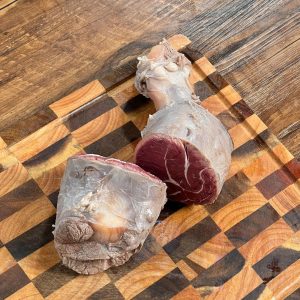
- Selection: Look for beef shank that is firm, dark red, and has visible white lines of tendon running through it. This is the collagen that will turn delicious later.
Mise en Place
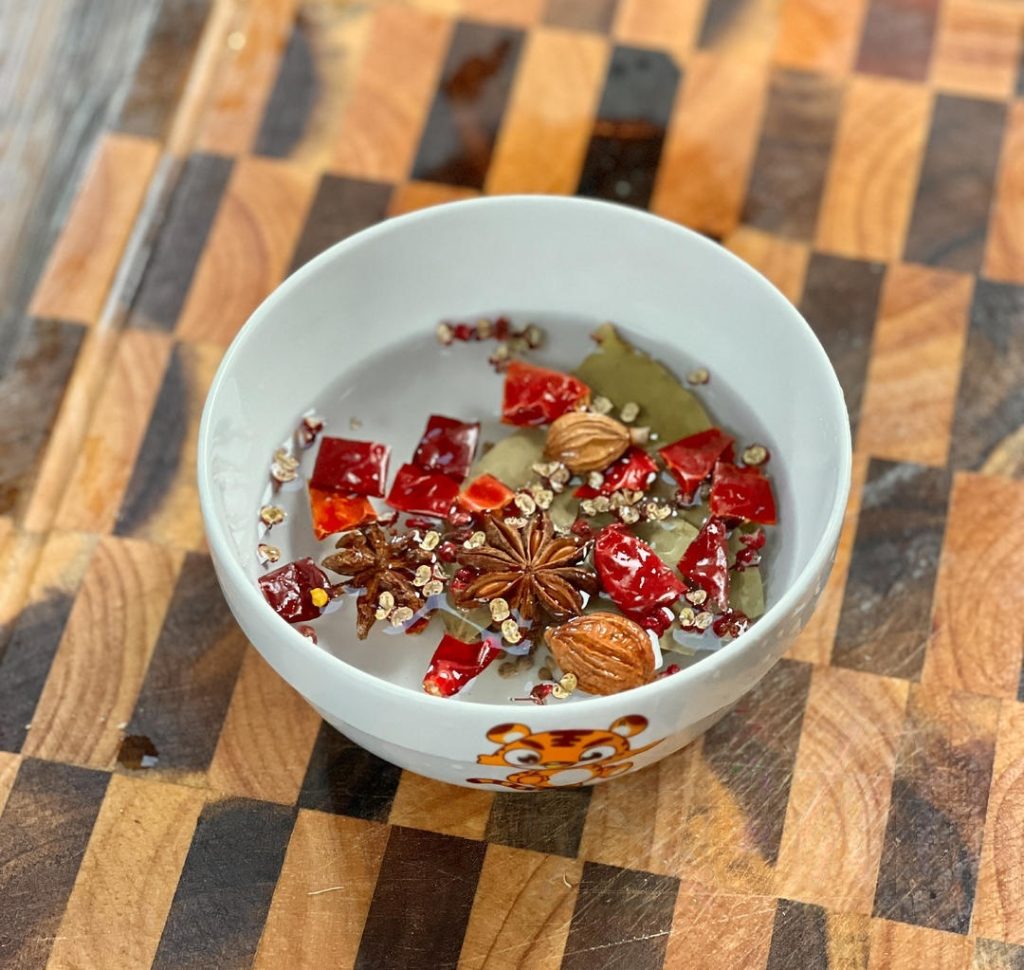
- Soak Spices: Place all dried spices (star anise, dried chili, Sichuan peppercorns, bay leaves, Sha Ren, white pepper) in a bowl of cold water for 5 minutes. This washes away dust and prevents them from burning if they touch the bottom of the pot.
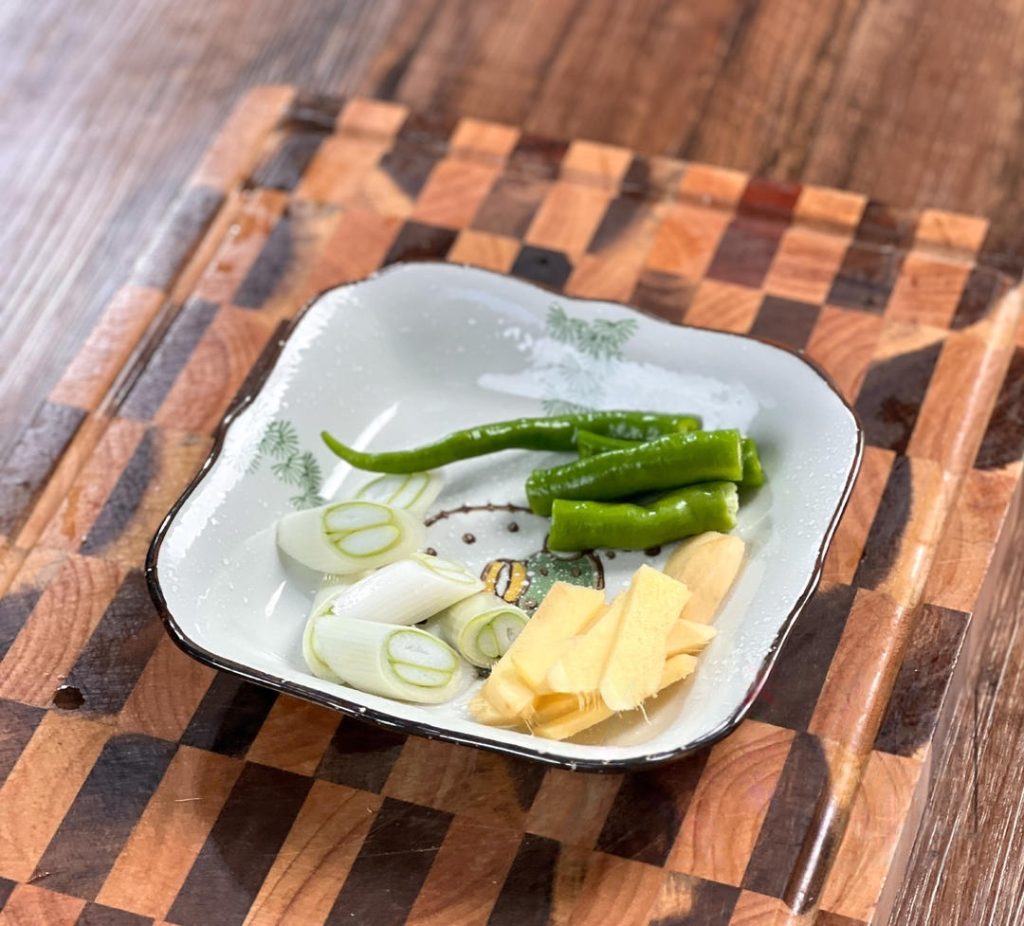
- Prep Vegetables: Slice the ginger thickly. Cut the scallion whites diagonally. Cut fresh peppers into segments.
- Beef Prep: If your pot is small, cut the shank into two large chunks. If you have a large stockpot, you can leave it whole.
How to Make Clear Stewed Beef Shank
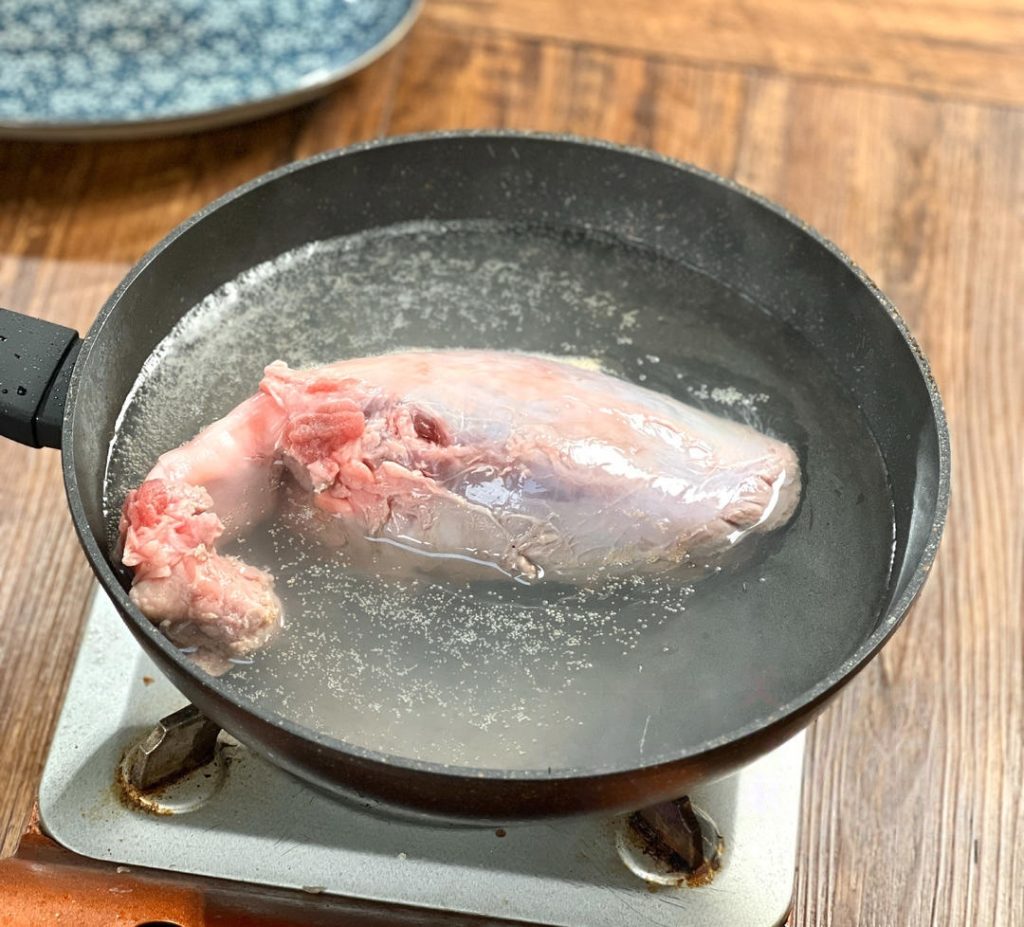
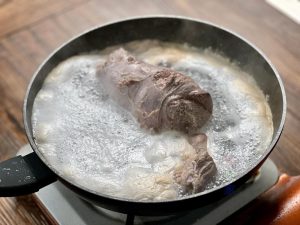
Step 1: The Cold Water Blanch (Crucial for Clear Soup) Place the beef shank in a pot and cover with cold water. Turn the heat to high. As the water comes to a boil, you will see grey scum floating to the top. Let it boil vigorously for 5 minutes.
Why? This pushes out the myoglobin and impurities. If you boil the water first and drop the beef in, the proteins seal instantly, trapping the blood inside, leading to a murky soup later.
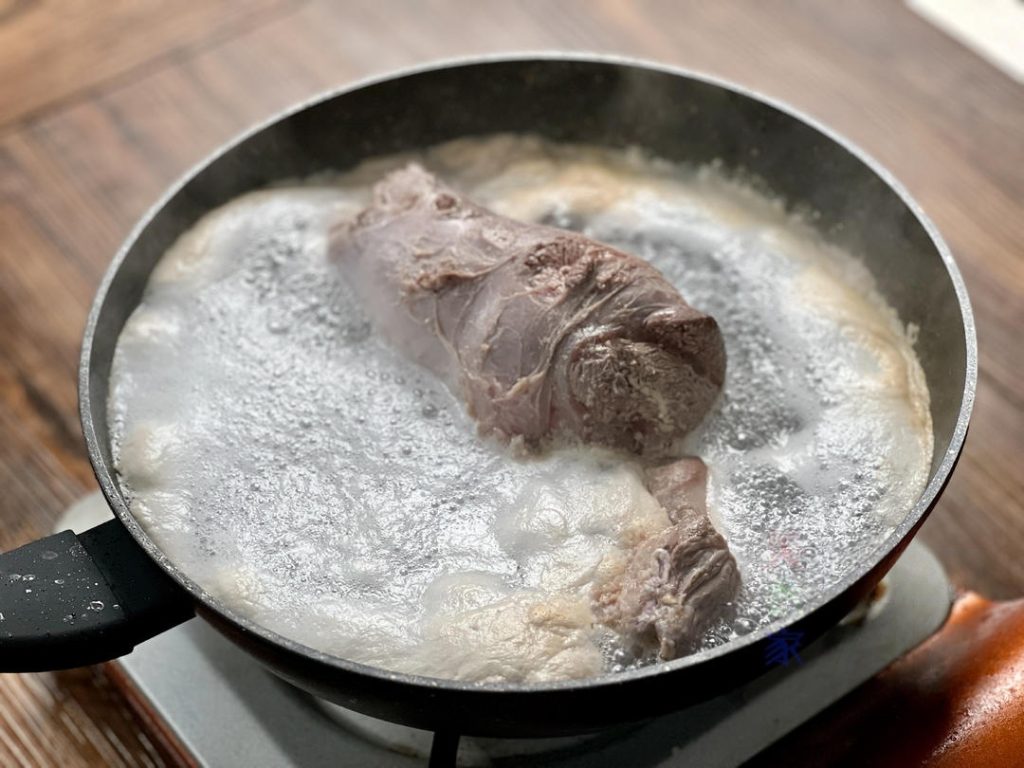
Step 2: Rinse Remove the beef. Rinse it thoroughly under warm water to remove any scum clinging to the meat.
Tip: Do not use ice-cold water here, or the sudden temperature drop will tighten the meat fibers tough.
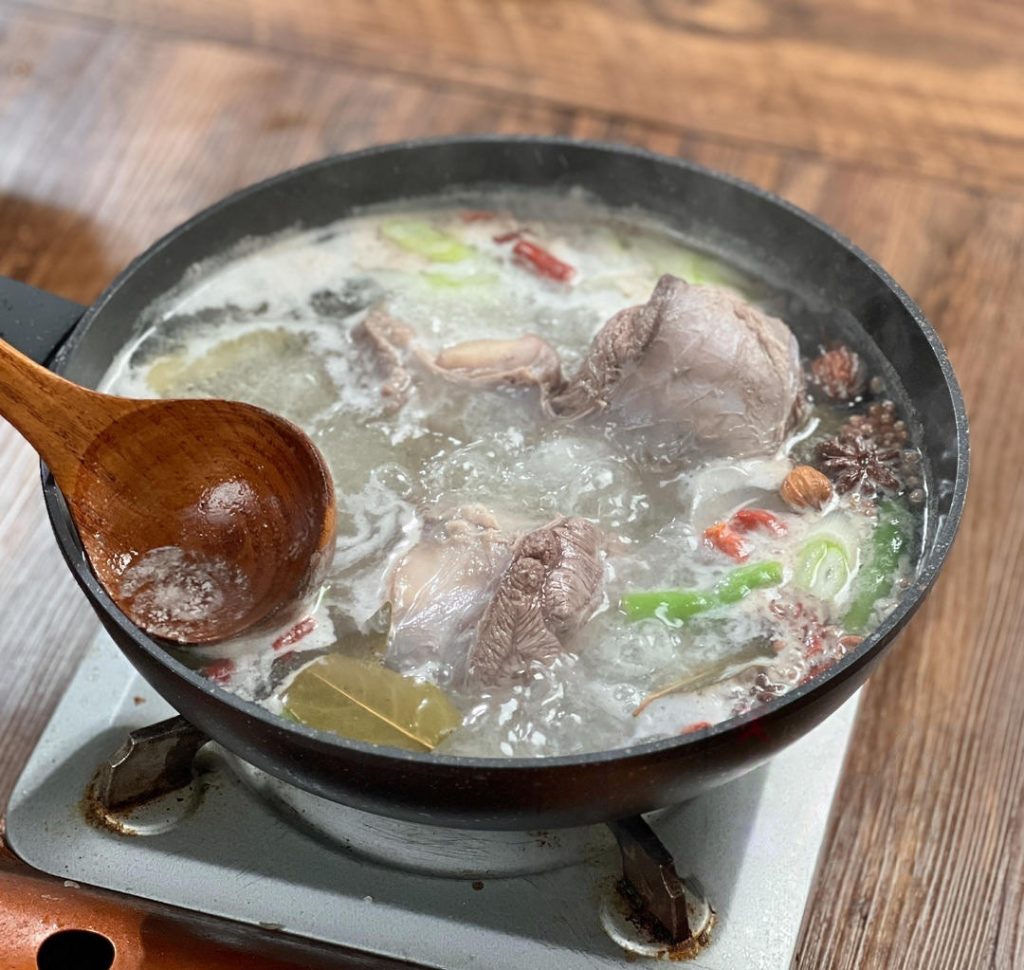
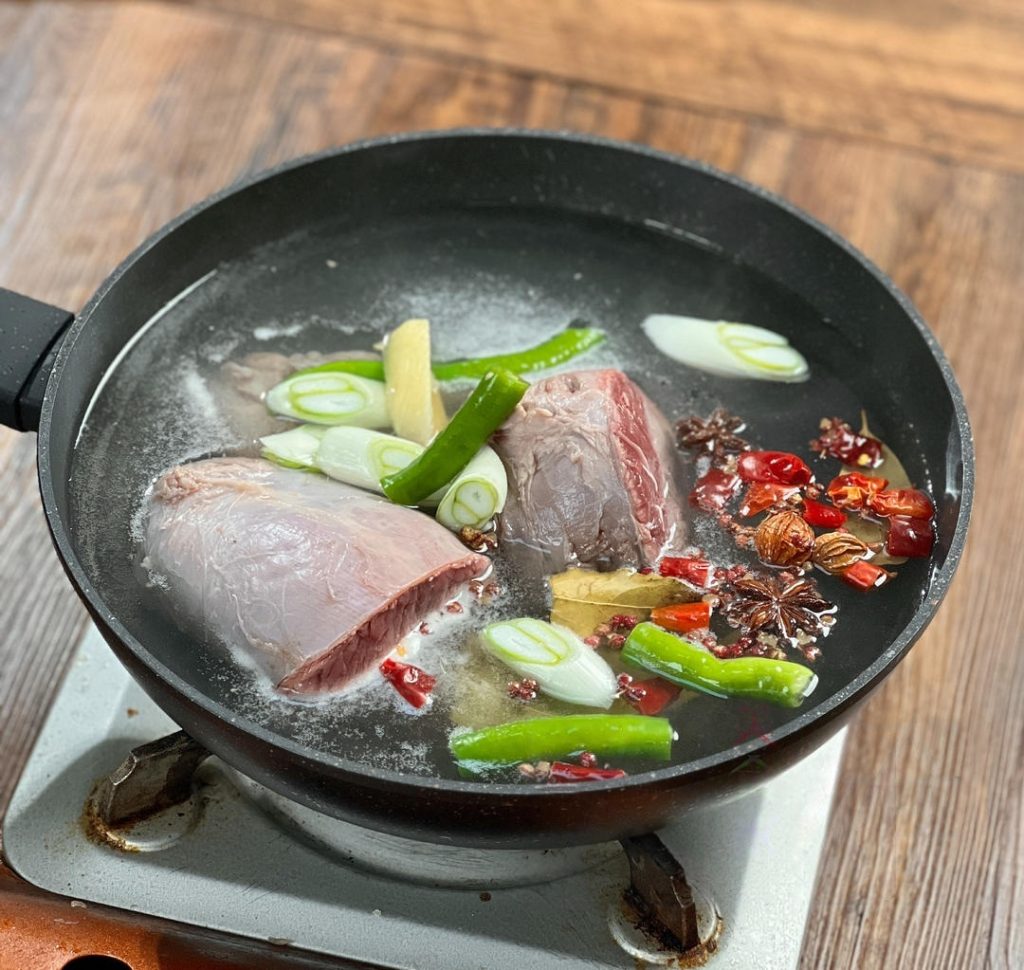
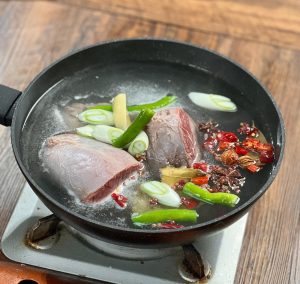
Step 3: The Stew (Stovetop or Pressure Cooker) Return the clean beef to a clean pot. Add fresh cold water to cover. Add the washed spices, ginger slices, scallion segments, and fresh chili sections.
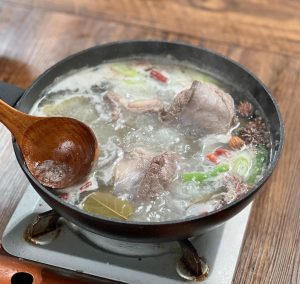
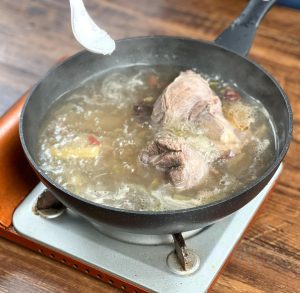
- Method A: Stovetop (Traditional) Bring to a boil. Skim off any remaining foam on the surface. Cover with a lid, turn heat to low (maintain a gentle simmer), and stew for about 70 minutes.
- Method B: Pressure Cooker (Fast) Seal the lid. Cook on High Pressure for 20 minutes. Allow for natural release for 10 minutes.
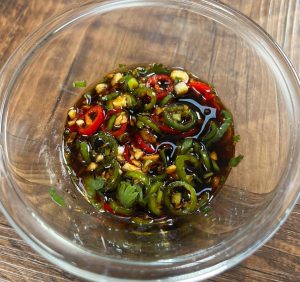
Step 4: The Dipping Sauce While the beef cooks, prepare the soul of this dish. In a small bowl, mix 2 tablespoons light soy sauce, a dash of sesame oil, chopped scallions, cilantro, and fresh chili rings.
Chef’s Note: This sauce provides the savory salinity that contrasts with the sweet, natural beef broth.
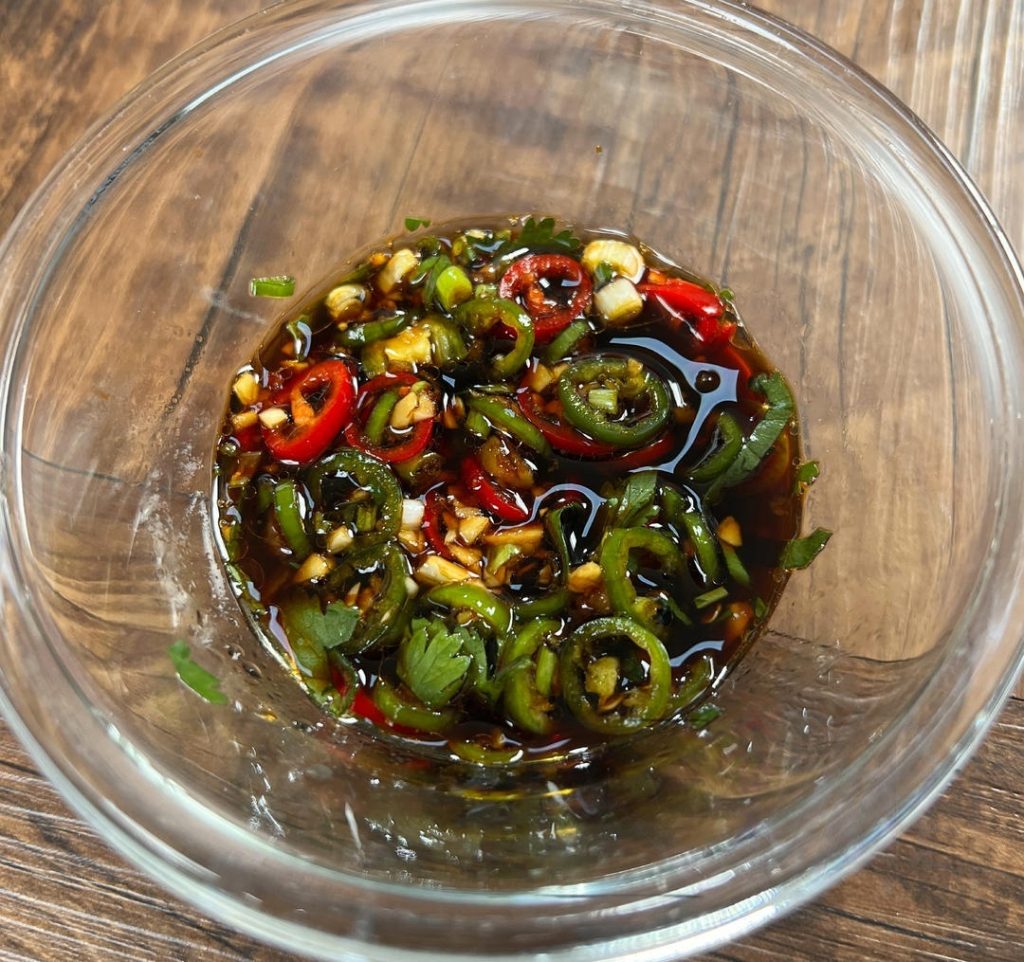
Step 5: Seasoning
- Stovetop: After 60 minutes, open the lid. Add the MSG and salt. Continue to simmer for another 10-15 minutes.
- Pressure Cooker: After the pressure releases, open the lid. Add salt and MSG. Simmer on “Saute” mode for 5 minutes to let the flavors absorb.
Step 6: The Doneness Test Insert a chopstick into the thickest part of the shank. It should slide in easily with very little resistance. If it feels rubbery, cook for another 10-15 minutes.
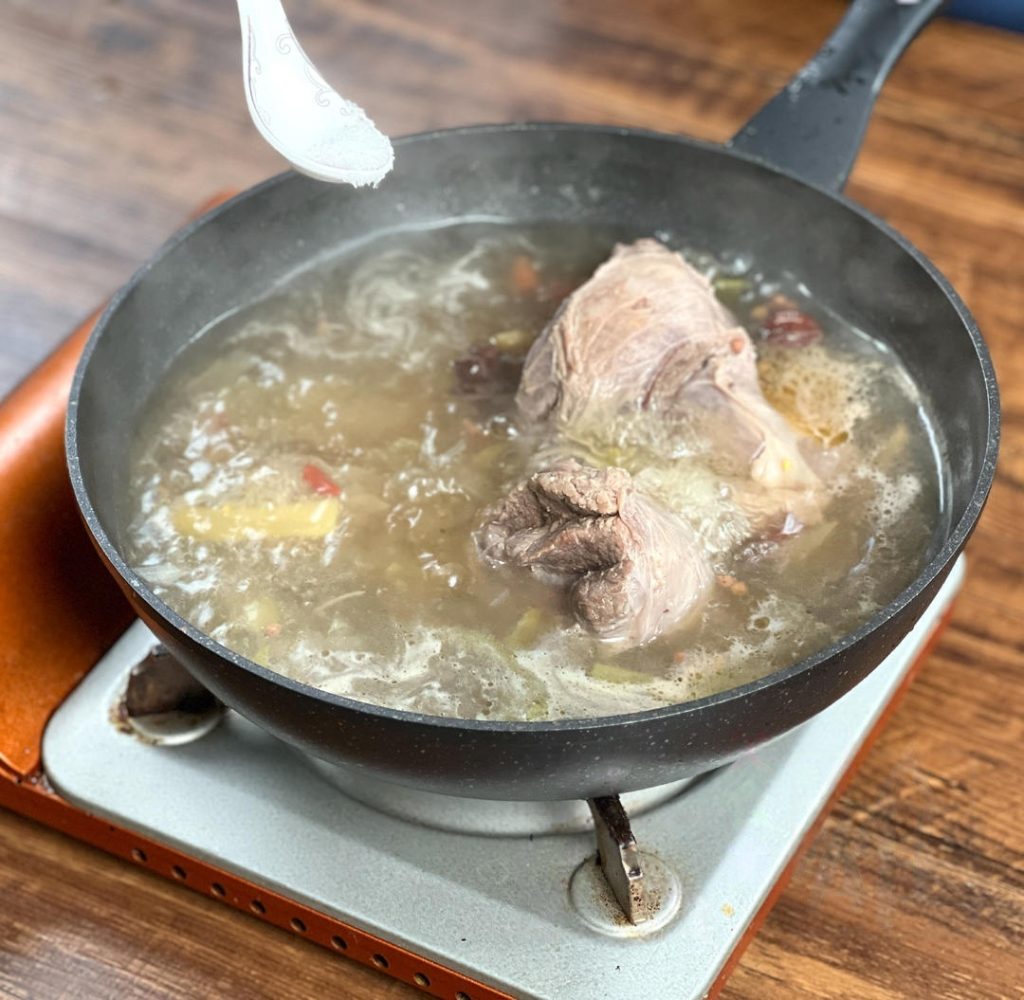
Step 7: Serve Remove the beef and let it rest for 5 minutes (this keeps the juices in). Slice thinly against the grain. Strain the spices out of the soup. Serve the sliced meat with the dipping sauce and a bowl of the hot, clear soup garnished with cilantro.
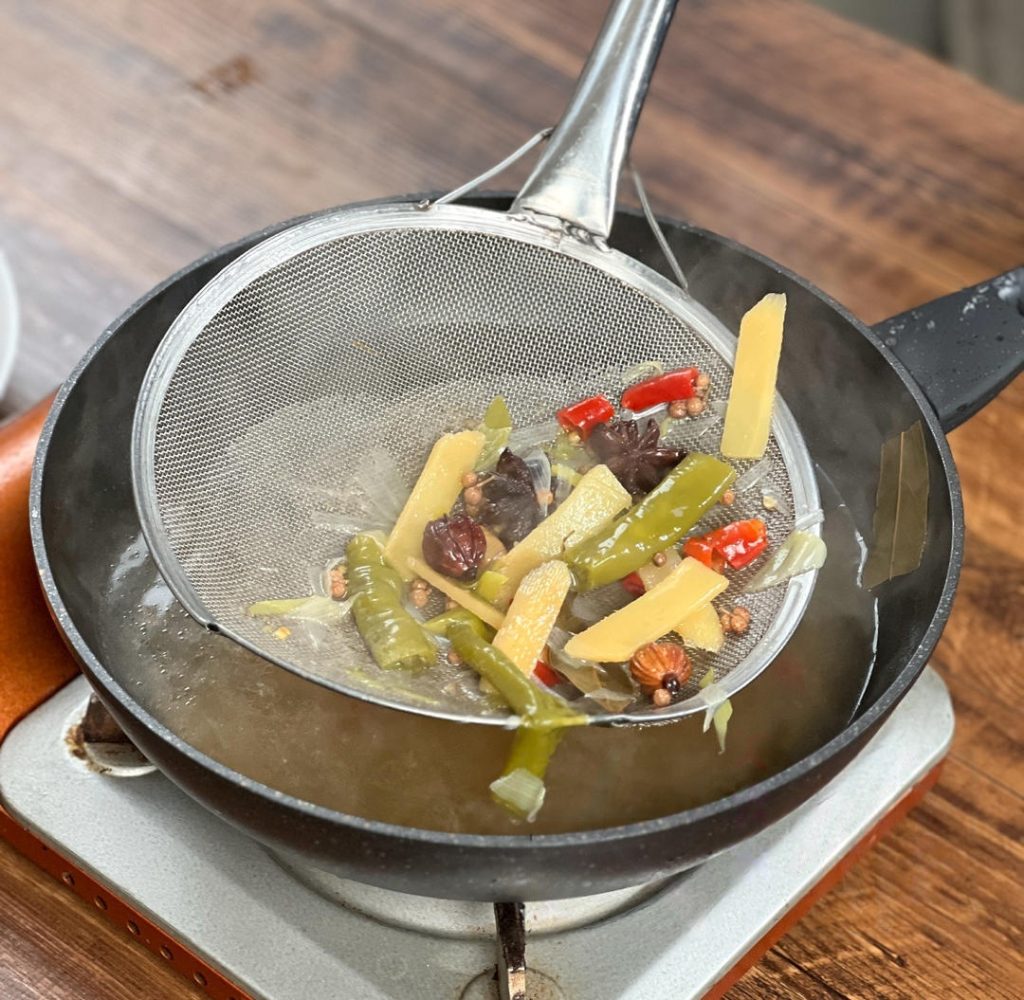
Common Troubleshooting & Variations (Our Test Notes)
- Soup is cloudy: You likely let the water boil too violently during the stewing process. Maintain a gentle simmer (small bubbles). Violent boiling emulsifies the fat, turning the soup milky (which is good for ramen, but not for this dish).
- Meat is dry: You likely used a lean roast cut instead of shank, or you sliced it while it was piping hot. Let it rest!
- Flavor variation: For a northern twist, serve with a side of Homemade Chili Garlic Sauce instead of the soy-based dip.
Food Safety and Preparation
- Beef Temperature: Ensure the beef reaches an internal temperature of at least 145°F (63°C), though for shank to be tender, it usually needs to exceed 190°F (88°C) to break down collagen.
- Cooling: If storing leftovers, do not leave the large chunk of hot beef on the counter for more than 2 hours. Slice it or divide it into smaller containers to cool rapidly in the fridge.
Serving Suggestions
This dish is protein-dense and clean. It pairs perfectly with:
- Steamed white rice or Steamed Noodles.
- A refreshing vegetable side like Smashed Cucumber Salad to add crunch.
Nutrition Information (Estimate)
- Calories: 250 kcal
- Protein: 34g
- Fat: 10g
- Carbohydrates: 2g
- Sodium: 850mg (variable based on salt/soy sauce usage)
- Allergen Alert: Contains Soy (in sauce), Sesame. Gluten-free if using Tamari instead of Soy Sauce.
- Disclaimer: Nutrition information is calculated using an ingredient database and should be considered an estimate. Garnishes and optional items are not included. Actual values vary.
Recipe Notes
- A Note on “Jin” (斤): The original recipe calls for 2 Jin. 1 Jin = 500g. So we use 1kg (approx 2.2 lbs) of beef.
- Serving Leftovers: The beef firms up when cold. Thinly sliced cold beef shank is a classic Chinese appetizer (Liang Cai). You can serve it cold the next day!
Authoritative References
- For beef cuts and safety standards, refer to the USDA Beef Safety Guide.
- For the role of collagen in cooking, see Science of Cooking’s Collagen breakdown explanation.
Chinese Clear Stewed Beef Shank (Qing Dun Niu Jian)

Equipment
- Pressure cooker Optional, for faster cooking (20 mins)
- Large Stockpot For stovetop method and blanching
- Skimmer To remove scum for clear soup
Ingredients
Main Ingredients
- 2.2 lbs beef shank approx. 1kg / 2 Jin; Golden Coin Shank preferred
- 2 stalks scallion whites cut into sections
- 8 slices ginger thick slices
- 3 fresh wire chili or serrano peppers, cut into sections
Spice Blend
- 2 star anise
- 6 dried red chili cut in half
- 0.5 tbsp Sichuan peppercorns Hua Jiao
- 2 bay leaves
- 2 pods Amomum Villosum Sha Ren (optional)
- 1 tsp white peppercorns whole berries
Seasoning
- 1 tsp salt adjust to taste
- 0.5 tsp MSG optional but recommended
Dipping Sauce
- 2 tbsp light soy sauce
- 0.5 tsp sesame oil
- 1 tbsp scallion finely chopped
- 1 tbsp cilantro finely chopped
- 1 tbsp fresh chili sliced into rings
Instructions
- Place the beef shank in a pot of cold water. Bring to a boil over high heat. Let it boil for 5 minutes to release impurities (scum).

- Remove the beef and rinse thoroughly under warm water to clean off any scum. (Warm water prevents the meat from tightening up). Cut the shank into two large pieces if your pot is small.

- Rinse the dried spices (star anise, dried chili, peppercorns, bay leaves, Sha Ren, white pepper) in cold water to remove dust.
- Place the clean beef into a clean pot (or pressure cooker). Add fresh cold water to cover. Add the washed spices, ginger slices, scallion sections, and fresh chili sections.

- Stovetop Method: Bring to a boil, skim any foam, cover, and simmer on low heat for 70 minutes. Pressure Cooker Method: Cook on High Pressure for 20 minutes, then natural release.
- While stewing, prepare the dipping sauce by mixing light soy sauce, sesame oil, chopped scallions, cilantro, and chili rings in a small bowl.

- After the initial cooking time (60 mins for stove, or after pressure release), season the soup with salt and MSG. Simmer for another 15 minutes (stove) or 5 minutes (pressure cooker saute mode).

- Test doneness: A chopstick should easily pierce the thickest part of the meat.
- Remove the meat and let rest for 5 minutes. Strain spices from the soup. Slice the beef thinly and serve with the dipping sauce and a bowl of hot soup.




Leave a Reply