In the West, the scent of cinnamon often conjures images of holiday cookies, apple pies, and sugary lattes. However, in the vast landscape of Chinese cuisine, cinnamon—specifically Chinese Cinnamon or Cassia Bark—plays a drastically different, yet equally vital role. It is the backbone of “red cooking” (braising), a key player in the famous Five Spice powder, and a warming ingredient that transforms simple meat dishes into aromatic masterpieces.

If you have ever wondered why your homemade beef noodle soup lacks the depth of the restaurant version, the answer often lies in the specific type of cinnamon you are using.
What is Chinese Cinnamon? (The Science & Botany)
When we speak of “cinnamon” in a culinary context, we are referring to the dried inner bark of trees from the genus Cinnamomum. However, not all cinnamon is created equal.
Chinese Cinnamon (Scientific name: Cinnamomum cassia) is known in Mandarin as Guì Pí (桂皮), which literally translates to “Cinnamon Skin,” or sometimes Ròu Guì (肉桂), meaning “Cinnamon Meat” (referring to the thicker, fleshy bark).
Unlike “True Cinnamon” (Ceylon cinnamon or Cinnamomum verum), which is native to Sri Lanka, Chinese Cassia is native to southern China. It is harvested by removing the bark from the tree, which is then dried and fermented. The result is a spice that is chemically distinct from its Sri Lankan cousin.
Cassia vs. Ceylon: Spotting the Difference
It is crucial for the home cook to distinguish between these two to achieve the correct flavor profile.
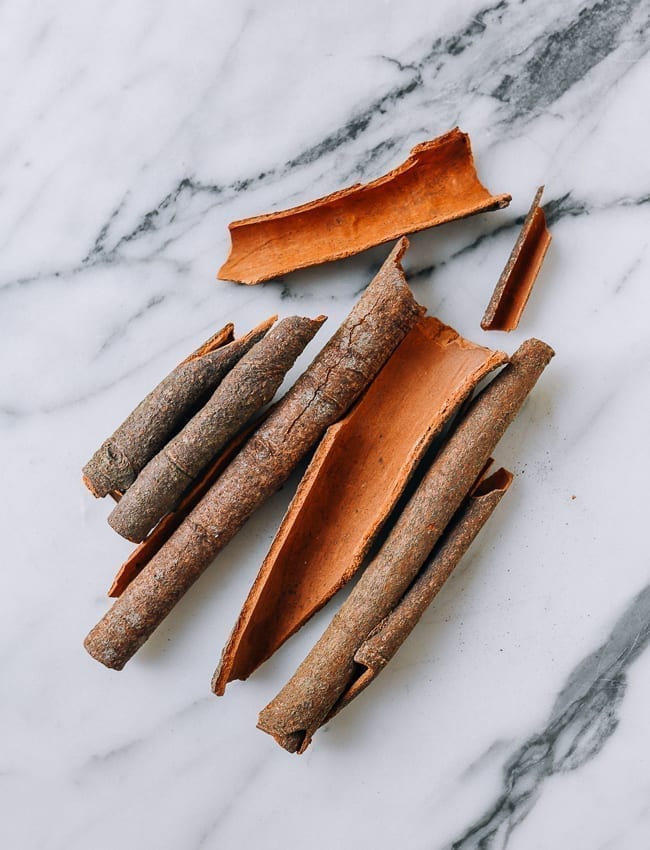
- Ceylon Cinnamon: Often sold as “quills,” these look like tightly rolled cigars with many thin, papery layers. They are tan in color, brittle, and have a delicate, floral, and sweet flavor.
- Chinese Cassia (Guì Pí): This is what you find in Asian grocery stores. It looks like thick, rugged tree bark. It is dark reddish-brown, hard, and consists of a single thick layer rather than multiple papery ones.

Flavor Profile: The “Yang” of Spices
Chinese cinnamon is described in Traditional Chinese Medicine (TCM) as having powerful yang (warming) energy. In terms of flavor, it is significantly more pungent, astringent, and spicy than Ceylon cinnamon.
While Ceylon whispers, Cassia shouts. It has a bold, bittersweet kick with woody undertones. Because of this robust profile, it can stand up to strong savory ingredients like beef, pork belly, soy sauce, and fermented pastes without getting lost. It acts as a foundational base note, providing a subtle sweetness that balances the saltiness of soy sauce.
Culinary Applications: Beyond the Dessert Plate
In Chinese kitchens, Guì Pí is almost exclusively used in savory applications. It is rarely ground into powder for home cooking; instead, the whole bark is used to infuse liquids during long simmers.
1. The Art of “Red Braising” (Hong Shao)
The most iconic use of Chinese cinnamon is in Red Braised dishes. The bark is tossed into hot oil or the braising liquid to release its oils. It pairs exceptionally well with fatty meats, cutting through the richness.
- It is the secret soul of our Braised Pork Belly (Hong Shao Rou). Without the woody sweetness of the bark, the dish would just taste salty.
- For a Taiwanese variation, it is indispensable in making Lu Rou Fan (Braised Pork Rice), where the sauce requires a deep, lingering aftertaste.
2. Soups and Broths
A piece of cinnamon bark is standard in many beef broths to neutralize the “gamey” smell of the meat.
- It provides the signature aromatic backdrop for Braised Beef Noodle Soup.
- It adds complexity to lighter stews, such as Tomato Beef Stew, where the spice bridges the gap between the acidity of the tomatoes and the savory beef.
3. Marinades and Roasts
Even if not braising, the bark is often added to the master sauce for marinating meats, such as Cantonese Honey Glazed Char Siu.
Spice Pairings: The Flavor Trinity
Chinese cooking is about harmony. Guì Pí is rarely used alone. It works in concert with other strong spices to create a “compound flavor” (fu he wei).
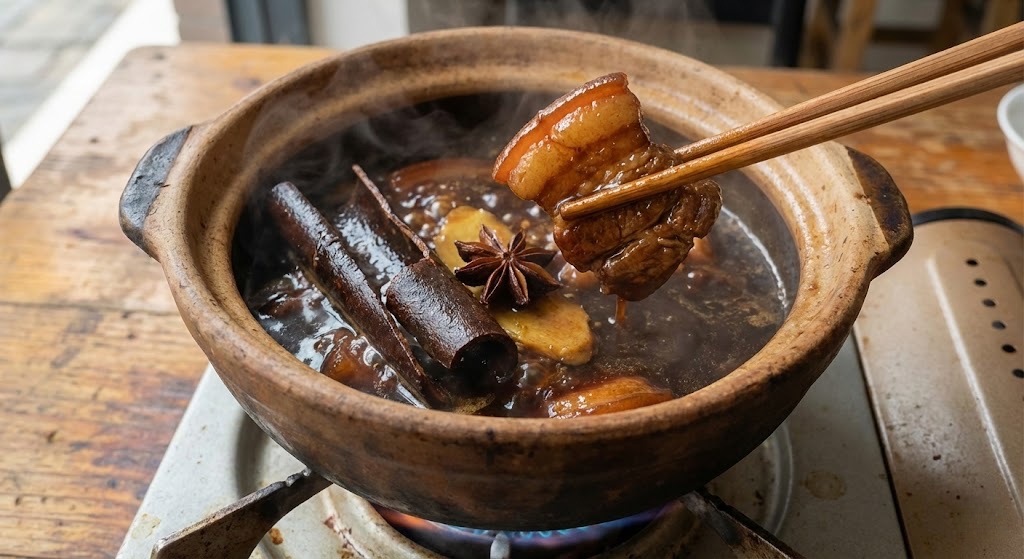
- The Braising Trinity: Chinese Cinnamon + Star Anise + Sichuan Peppercorns. This trio creates the classic aroma of traditional Chinese kitchens.
- The Savory Balance: When combined with Dark Soy Sauce and rock sugar, the cinnamon helps create a glossy, caramelized flavor profile that white sugar alone cannot achieve.
- Aromatic Roots: It is almost always sautéed alongside ginger slices and scallions at the beginning of a recipe to infuse the cooking oil.
Buying and Storing Guide
Where to Buy
Don’t look in the baking aisle of a Western supermarket. Head to an Asian grocery store or check online retailers like Yamibuy or specialized spice merchants.
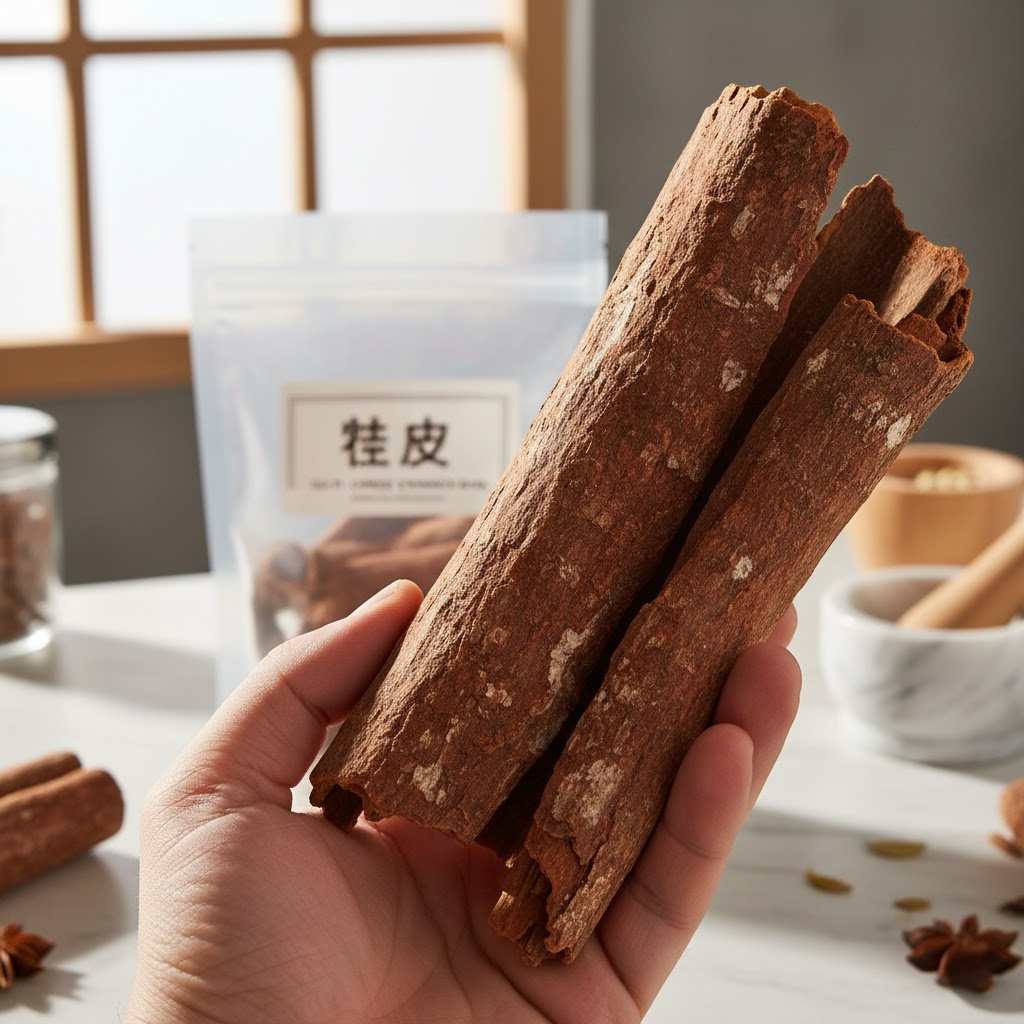
- Look for: Packages labeled “Dried Cinnamon Bark,” “Gui Pi,” or “Cassia Bark.”
- Appearance: You want thick, heavy pieces of bark (often sold as “flesh” or Rou Gui) rather than thin, twig-like scraps. The thicker the bark, the higher the oil content and the more potent the flavor.
- Smell: It should have a strong, spicy, almost peppery fragrance even through the bag.
Storage
Because it is wood-like, whole Cassia bark is very durable.
- Container: Store in an airtight glass jar or a sealed bag.
- Location: Keep in a cool, dark cupboard away from stove heat.
- Shelf Life: Whole bark can last 2-4 years. If it loses its scent, simply break a piece in half; if the inside is still fragrant, it is still good to use.
Quick Recipe Idea: Spiced Soy Syrup
If you want to understand the flavor of Chinese cinnamon, try this simple syrup which can be drizzled over cold tofu or noodles.
- In a small pot, combine 1/2 cup Soy Sauce, 2 tbsp sugar, 1 piece of Chinese Cinnamon, and 1 Star Anise.
- Simmer on low heat for 10 minutes until slightly thickened.
- Let it cool. The cinnamon will have infused the soy sauce with a unique, warm sweetness.
Authoritative References
- National Center for Complementary and Integrative Health (NCCIH): Cinnamon. A government overview of the herb and its health research. https://www.nccih.nih.gov/health/cinnamon
- ScienceDirect: Cinnamomum cassia. Detailed botanical and chemical properties of Cassia bark. https://www.sciencedirect.com/topics/agricultural-and-biological-sciences/cinnamomum-cassia
- European Food Safety Authority (EFSA): Scientific Opinion on Coumarin in flavourings and other food ingredients. https://www.efsa.europa.eu/en/efsajournal/pub/793






Leave a Reply