Hey there! Welcome back to my kitchen.
If you’ve been following my stories about growing up in my parents’ chaotic Sichuan restaurant or my time in culinary school, you know I’m a bit obsessed with the details. The tiny tweaks that take a dish from “it’s okay” to “wait, did you order this from a restaurant?”

Today, let’s be real about sugar. I know, I know—sugar is sugar, right? Not exactly.
In the pastry module of culinary school, we learned that crystal size is everything. And at Woks of Love, some of our absolute favorite recipes rely on a very specific type: Caster Sugar (or shātáng, 砂糖).
If you’ve ever wondered why your Easy Pumpkin Chestnut Pound Cake didn’t come out quite as velvety as the bakery’s, or why your sweet and sour sauce felt a little gritty, this ingredient might be the missing link.
What Exactly Is Caster Sugar?
Caster sugar (also spelled castor sugar) is simply granulated sugar that has been ground to a superfine texture.

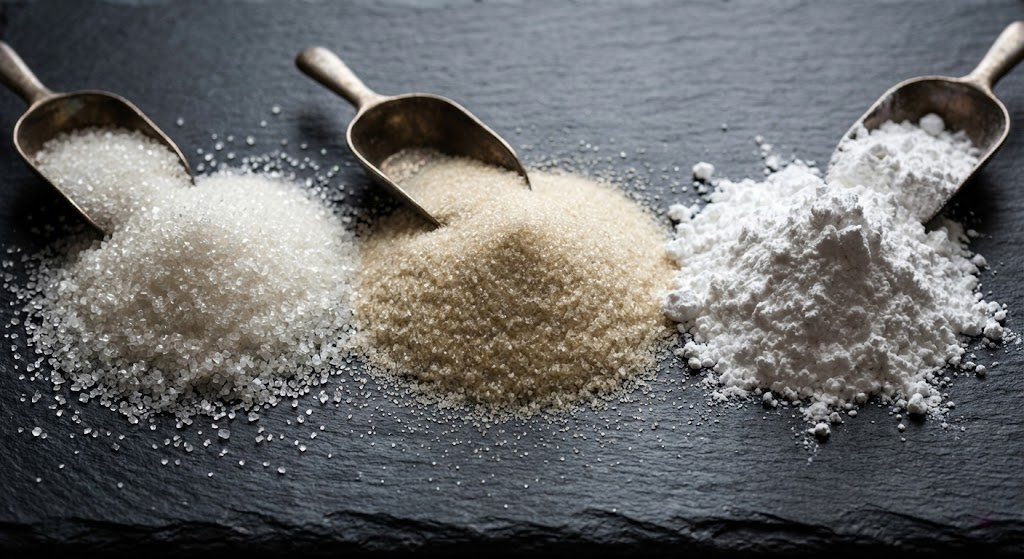
Think of sugar on a spectrum:
- Granulated Sugar: The standard stuff. Coarse crystals.
- Caster Sugar (Superfine): Sand-like, fine crystals that dissolve almost instantly.
- Confectioners’ (Powdered) Sugar: Chalky dust mixed with cornstarch.
The Golden Rule: You cannot swap Caster Sugar with Powdered Sugar. Powdered sugar contains anti-caking agents (usually cornstarch) that will mess up the chemistry of your dough or sauce. Caster sugar is pure sucrose, just finer.
Fun Fact: The name comes from the “caster” (or castor), a shaker with a perforated top used to sprinkle sugar on fruits or pastries in Victorian England.
The “Why”: Culinary School Logic
Why do I insist on keeping this in my pantry? It comes down to solubility and aeration.
1. Instant Dissolving (No Heat Needed)
Because the surface area of the crystals is smaller, caster sugar dissolves almost instantly. In the heat of a wok, when you are making a fast stir-fry sauce, you don’t have time to wait for large crystals to melt.
- If you are making the glossy glaze for my Sweet and Sour Pork, using caster sugar ensures the sauce is silky and smooth, never grainy.
- It is also essential for cold applications! When whipping up a quick dressing for a Smashed Cucumber Salad, you want the sweetness to integrate immediately without needing heat to melt it.
2. Aeration in Baking
When you cream butter and sugar, the sharp edges of sugar crystals cut into the butter, creating tiny air pockets. Caster sugar is smaller, meaning more crystals and more tiny air pockets.
- This is the secret to a lighter crumb in delicate treats like Chinese Date Cake.
- It also helps yeast distribute more evenly when making doughs, resulting in that signature fluffy texture found in bakery buns.
How to Make Caster Sugar at Home (DIY)
Let’s be real—sometimes you can’t find “Superfine Sugar” at the grocery store, or you just don’t want to pay the premium price for it. I’ve been there.
Here is the trick I used in restaurant kitchens when we ran out:
- Measure your standard Granulated Sugar.
- Pour it into a clean blender or food processor.
- Pulse (don’t just run it!) for about 30-45 seconds.
- Stop when it looks like fine sand.
Chef’s Warning: Do not over-blend! If you go too far, the friction will heat the sugar, and you’ll end up with powdered sugar clumps. You want “sand,” not “dust.”

Flavor Pairings & “Woks of Love” Combinations
In Chinese cooking, we rarely use sugar just to make things “sweet.” We use it to balance flavors. Caster sugar is particularly good for this because it integrates so quickly without leaving texture behind.
1. Balancing Salty & Savory
We often use a pinch of sugar to counteract the intense salinity of soy sauce.
- Try it here: When making Homestyle Braised Pork Belly, a little sugar helps caramelize the meat and balances the saltiness, creating that deep, complex flavor profile.
2. Taming the Heat
If you love spicy food but want to round out the sharp edges of the chili, sugar is your best friend.
- Try it here: Dishes like General Tso’s Chicken rely on sugar to create that addictive “sweet heat.” Caster sugar melts instantly into the sauce, preventing any gritty mouthfeel.
3. Creating Delicate Wrappers
For batters that need to be thin and crispy, fine sugar is a must to ensure even browning.
- Try it here: If you are feeling adventurous and making Homemade Spring Roll Wrappers, ensuring your batter is smooth is critical for that paper-thin result.
4. The Perfect Glaze
Nothing beats the sheen of a sugar glaze on roasted meats.
- Try it here: For our Char Siu (Chinese BBQ Pork), caster sugar helps build that sticky, finger-licking lacquer without burning as easily as honey alone.
Where to Buy & Storage
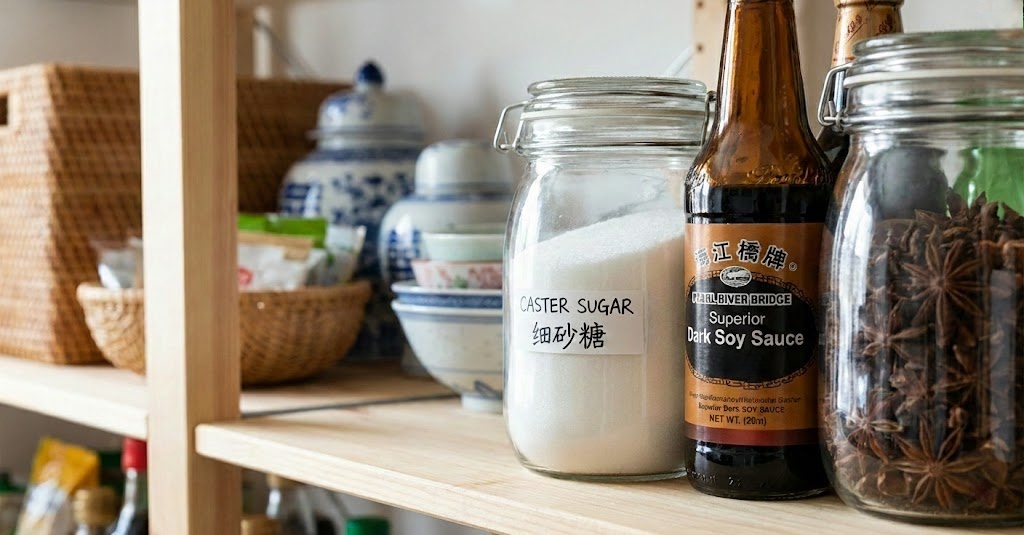
In the US, look for boxes labeled “Superfine Sugar” or “Baker’s Sugar” (brands like Domino or C&H usually carry it). In the UK and Australia, it is simply “Caster Sugar.”
Storage Tip: Because the crystals are so fine, they attract moisture like crazy. Store your caster sugar in an airtight container in a cool, dry place. If it clumps, it’s much harder to sift than powdered sugar!
Authoritative References
To further understand the science and standards of sugar types, these resources provide excellent deep dives:
- The Sugar Association: Provides detailed definitions on sugar particle sizes and their specific culinary applications.
Final Thoughts
Whether you are whipping up a batch of marinade or trying your hand at a delicate sponge cake, having caster sugar in your arsenal brings you one step closer to professional results.
Trust me on this one—the texture change is subtle, but your tastebuds will know the difference!


Leave a Reply