Carbon Steel vs. Cast Iron Wok: A Professional Chef’s Comparison
Choosing between a carbon steel and a cast iron wok is one of the most critical decisions for any serious home cook. As a chef who grew up in a professional Sichuan kitchen, I’ve seen both tools pushed to their limits. While both are staples in Chinese culinary history, they offer fundamentally different experiences in heat response, maneuverability, and long-term maintenance.
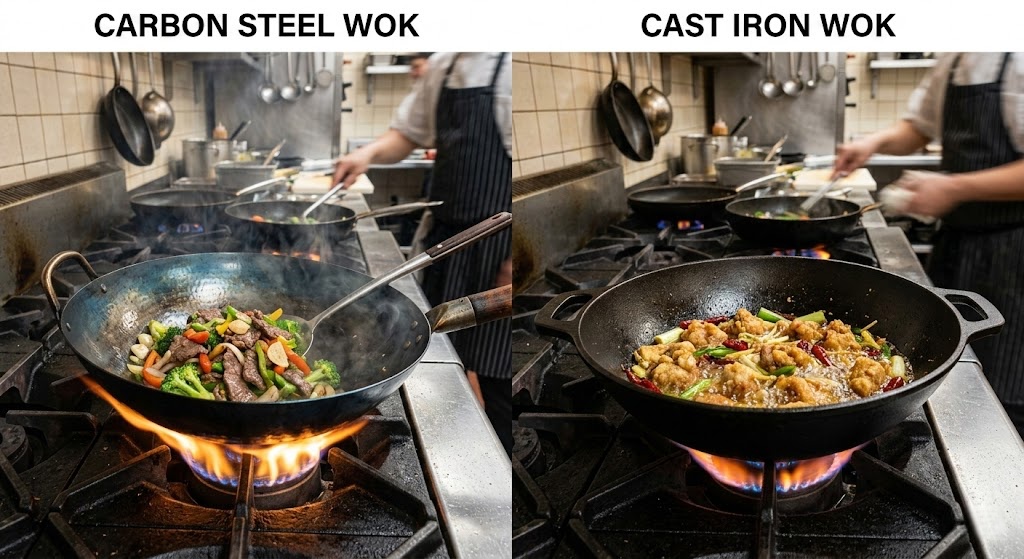
This guide breaks down the technical differences to help you decide which material belongs on your stove.
Material Comparison Table
| Feature | Carbon Steel Wok | Cast Iron Wok (Traditional/Hand-Hammered) |
| Composition | Iron and approximately 2% carbon | Iron and 2%–4% carbon |
| Wall Thickness | Thin (typically 1.2mm–2mm) | Thick (typically 3mm+) |
| Weight | Lightweight and maneuverable | Heavy and stable |
| Heat Response | Rapid (heats and cools instantly) | Slow to heat; high heat retention |
| Technique | Best for “tossing” (Bao) | Best for “searing” and long braises |
| Durability | Resilient; will dent before cracking | Brittle; can crack if dropped or thermal shocked |
What It Is Used For
The wok is the heartbeat of a Chinese kitchen, but the material dictates its function.
Carbon Steel is the industry standard in restaurant kitchens. Its thin walls allow a chef to regulate the temperature of the food instantly by adjusting the flame or moving the pan. It is designed for high-speed stir-frying where ingredients must stay in constant motion to achieve “wok hei.”
Cast Iron excels in stability. Because it is denser, it holds onto heat far longer than steel. This makes it superior for home stoves with lower BTU outputs, as the pan won’t lose its temperature the moment you add cold ingredients like shrimp and broccoli. It is also the traditional choice for braised pork belly and other slow-cooked dishes that require consistent, even heat.
The Pros and Cons
Carbon Steel Woks
- Pros: * Weight: Effortless to lift and toss for professional results.
- Speed: Reaches stir-fry temperatures (200°C+) in under 60 seconds.
- Price: Generally more affordable and widely available.
- Cons:
- Hot Spots: Thinner metal can lead to uneven heating on electric or induction coils.
- Maintenance: Requires immediate drying to prevent rust.
Cast Iron Woks
- Pros:
- Natural Non-Stick: Due to its porous nature, cast iron often develops a superior seasoned patina over decades.
- Heat Retention: Once hot, it stays hot—essential for authentic mapo tofu where a consistent simmer is key.
- Cons:
- Weight: Hard to maneuver for “tossing” techniques; usually requires two hands.
- Fragility: A cast iron wok can shatter if dropped on a hard floor.
Who Should Buy Which?
Buy Carbon Steel if:
- You use a high-output gas range or a dedicated wok burner.
- You want to master the art of the toss and stir-fry properly.
- You prefer a tool that responds immediately to your touch.
Buy Cast Iron if:
- You cook on an electric or induction stove where heat recovery is slow.
- You frequently make one-pot rice cooker meals or heavy braises.
- You want a “set it and forget it” pan that provides deep, consistent searing.
Maintenance and Care
Both materials require seasoning—the process of polymerizing oil into the metal to create a protective, non-stick layer.
- Initial Burn: New woks often come with a factory oil to prevent rust. You must scrub this off with soap and steel wool, then “blue” the wok over high heat until the color changes.
- Oil Coating: Apply a high-smoke-point oil (like peanut or grapeseed) to the hot surface and wipe it thin.
- Cleaning: Never use a dishwasher. Use hot water and a bamboo brush. If you must use soap, ensure you re-oil the pan immediately afterward.
Common Mistakes
- Buying Non-Stick Coated Woks: Teflon and other coatings cannot withstand the 250°C temperatures required for a proper stir-fry and will degrade rapidly.
- Overcrowding the Pan: This is the #1 reason for watery stir-fries. In a carbon steel wok, too much food drops the temperature too quickly, steaming the meat instead of searing it.
- Washing While Screaming Hot: Running cold water over a hot cast iron wok can cause “thermal shock,” leading to cracks. Let it cool for 5 minutes first.
When This Method Does Not Work
- Scenario 1: Acidic Ingredients. If you are making a slow-simmered tomato-based stew, neither wok is ideal. The acid can strip the seasoning and impart a metallic taste to the food. Use stainless steel or enameled cast iron for long acidic braises.
- Scenario 2: Low-Heat Cooking. If you are trying to gently poach delicate items, the aggressive heat of a seasoned carbon steel wok may be difficult to control.
FAQ
Q: Can I use a round-bottom wok on a flat stove? A: No. Round-bottom woks require a wok ring or a specialized burner. For flat-top electric or induction stoves, always choose a flat-bottomed wok for maximum surface contact.
Q: Why is my wok turning black? A: This is actually the goal! That black layer is called “patina.” It is the non-stick coating you’ve earned through cooking.
Q: Is “Hand-Hammered” better? A: For carbon steel, hand-hammering creates tiny indentations that help keep food from sliding down the sides while you work the center. It is both functional and aesthetic.






Leave a Reply