For years I treated roast duck as a restaurant-only dish – something you order, never make. The roasting rack, the dangling duck, the skin that crackles like it was fried in its own secrets – surely that could not happen in a home oven. Then a line cook from Guangdong showed me the truth: the duck does not need a special oven, it needs a patient skin. The marinade is a paste you spoon in; the crackling comes from air-drying the skin overnight until it is taut as a drum. That is the whole secret, and it fits in a normal kitchen.
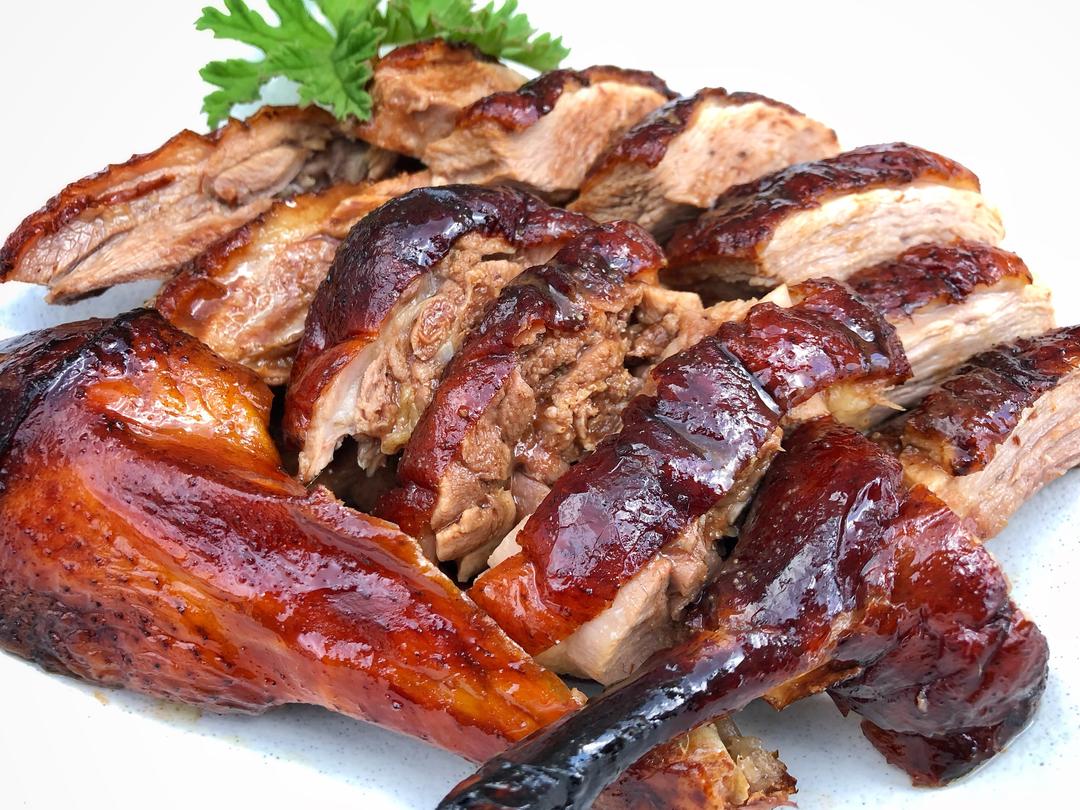
Yue shi cui pi shao ya (粤式脆皮烧鸭) is Cantonese roast duck with crispy skin – the restaurant classic translated to a home oven. This recipe comes from a Chinese home cook who spells out the entire process: a chu hou paste marinade stitched inside the cavity, a three-dunk blanching to tighten the skin, a maltose-and-vinegar glaze, an overnight air-dry, and a two-stage roast. It is a two-day project, but the pay-off is a duck that looks and tastes like it came from a hanging roast shop in Guangzhou.
What Is Cantonese Roast Duck (Yue Shi Cui Pi Shao Ya)?
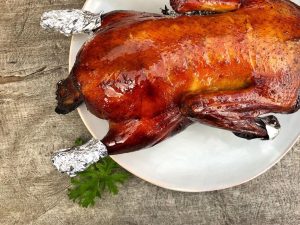
Yue shi cui pi shao ya (粤式脆皮烧鸭) is Cantonese roast duck – a whole duck marinated inside the cavity, blanched, glazed with a maltose-based “skin water,” air-dried, and roasted until the skin is deep mahogany and shatteringly crisp. It is one of the pillars of Cantonese roast-meat culture, sold by the half in hanging roast shops alongside char siu and roast goose.
The technique has three pillars. First, the marinade is sealed inside the cavity – the duck seasons from within. Second, the skin is blanched and glazed, then air-dried until bone-dry; the maltose in the glaze caramelizes in the oven into that glossy mahogany, and the dry skin crisps instead of steaming. Third, a two-stage roast cooks the breast first, then the back, so the whole bird finishes evenly. This home version uses a convection oven at 175°C (347°F), which is honestly all the equipment the technique needs.
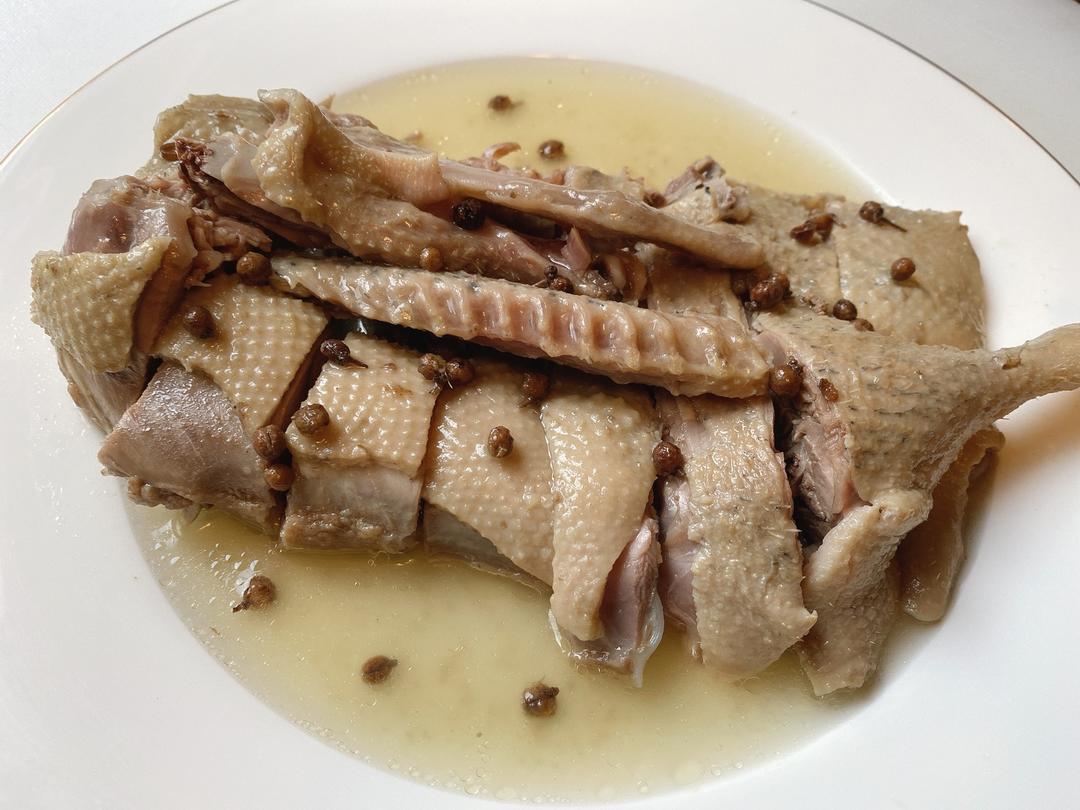
If you love whole-duck cooking, my Sichuan peppercorn duck (hua jiao ya) is the boldly spiced opposite of this Cantonese classic.
1Authentic Hua Jiao Ya (Sichuan Peppercorn Duck in 90 Mins)A traditional Shaoxing dish featuring tender duck infused with aromatic toasted Sichuan peppercorns and salt, finished with a skin-tightening ice bath for the perfect texture.Check out this recipe
Why This Version Works
- The overnight marinade does the seasoning. Chu hou paste, hoisin, five-spice, rose wine, and slab sugar sit in the cavity for 12 hours, so the flavor works from the inside out – the Cantonese way.
- The three-dunk blanch tightens the skin. Dunking the duck in boiling water three times shrinks and firms the skin, which is what lets it dry taut and roast crackling.
- Maltose is the gloss, vinegar is the helper. The skin water’s maltose caramelizes into the lacquer; the vinegar is there to relax the skin so the maltose penetrates. It is a small chemical team.
- The overnight air-dry is non-negotiable. Dry skin crisps; damp skin steams. The recipe labels this “the key step for crispy skin,” and I agree – it matters more than the roast itself.
- Convection heat does the hang-job’s work. The fan in a convection oven circulates heat the way a roast shop’s airflow does, browning the skin evenly without a rotisserie.
Equipment Needed
- A roasting rack set in a pan (to catch the drippings)
- A meat needle or trussing twine for sewing the cavity shut
- A large pot for the blanching dunk
- A pastry brush for the skin water
- A cool, airy place to hang or prop the duck overnight – a clean fridge shelf works
- A carving knife
Ingredients
- 1 whole duck (about 2 kg / 4.4 lb), cleaned
- For the marinade:
- 5 g (1 tsp) five-spice powder
- 2 tbsp (30 ml) chu hou paste (Cantonese bean paste)
- 1 tbsp (15 ml) hoisin sauce
- 10 g (2 tsp) rose wine (mei gui lu jiu)
- 1 tsp (5 g) salt
- 25 g (1 1/2 tbsp) slab sugar (huang pian tang), crushed
- 5 slices fresh ginger
- 2 shallots, sliced
- For the skin water:
- 50 g (2 1/2 tbsp) maltose
- 20 g (1 1/3 tbsp) white vinegar
- For serving:
- Plum sauce (suan mei jiang)
Ingredient Notes
Chu hou paste: A Cantonese fermented soybean paste, sweet and savory, named after a Qing-era chef. It is the backbone of this marinade; hoisin sauce is the closest Western-pantry substitute, though you lose some depth. Both are explained in my guide to essential Chinese sauces.
Rose wine (mei gui lu jiu): A fragrant Cantonese spirit used in roast-meat marinades. Shaoxing wine works as a substitute; the rose note softens but the flavor holds.
Slab sugar (huang pian tang): The amber slabs of unrefined sugar used across Cantonese cooking. Crush it before measuring; brown sugar is a fine substitute.
Maltose: The thick, honey-like barley syrup that gives roast duck and char siu their lacquer. Sold in tubs at Asian grocers; it needs warming or thinning to brush evenly – the vinegar in the skin water handles that here.
Prep & Mise en Place
This recipe is two days long but the hands-on time is about 40 minutes total. Day one: clean the duck, mix the marinade, spoon it into the cavity, sew it shut, and refrigerate overnight. Day two: blanch, glaze, air-dry (ideally another overnight), and roast.
Mix the marinade before touching the duck – it is a paste, so stir the five-spice, chu hou, hoisin, rose wine, salt, and crushed sugar together until smooth, then add the ginger and shallots. Have the needle or twine ready, and clear fridge space where the duck can sit uncovered. The original recipe’s order is exact, and I have not found a step that can be safely skipped.
Cooking Process
Step 1 – Clean and Dry the Duck
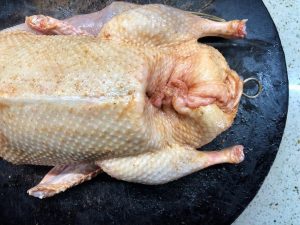
Rinse the duck inside and out, remove the feet, wing tips, and any loose fat, and pat it completely dry – inside and out. The cavity must be dry before the marinade goes in, or the paste will not cling.
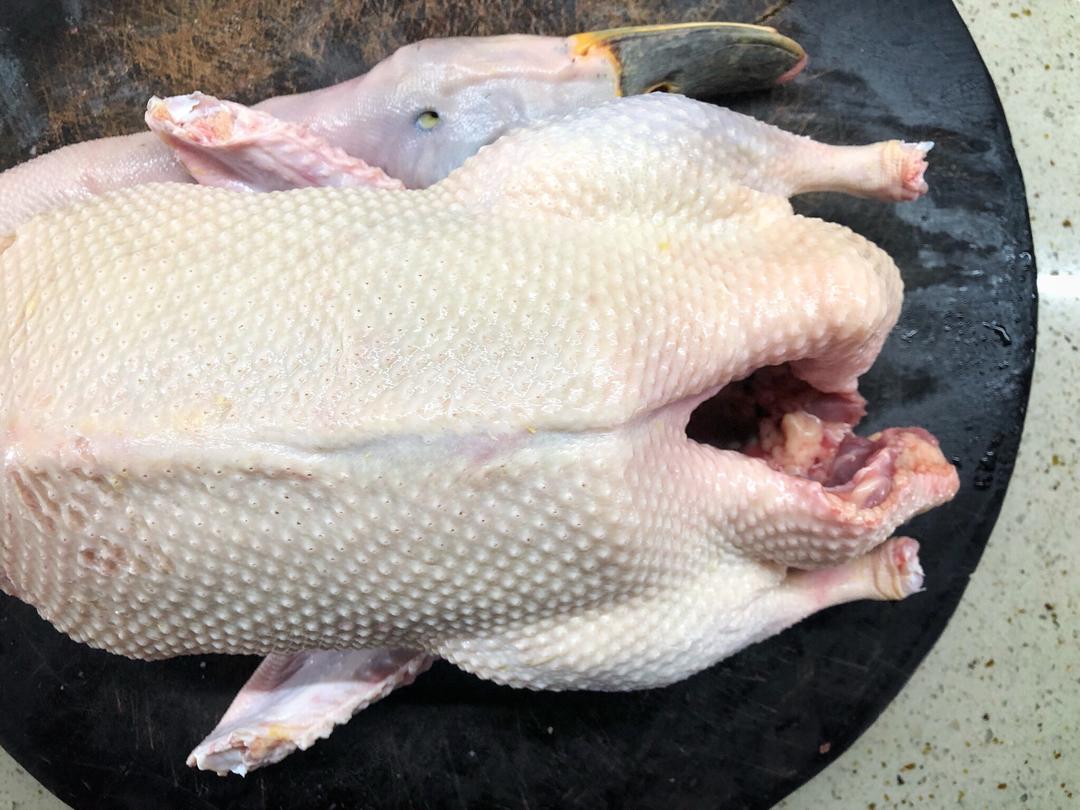
Step 2 – Stuff the Marinade and Sew It Shut
Spoon the marinade paste into the cavity and spread it around with your hand. Sew the opening closed with a meat needle and twine, or truss it tightly – the marinade must stay sealed inside during the roast so it steams the meat from within and collects as sauce.
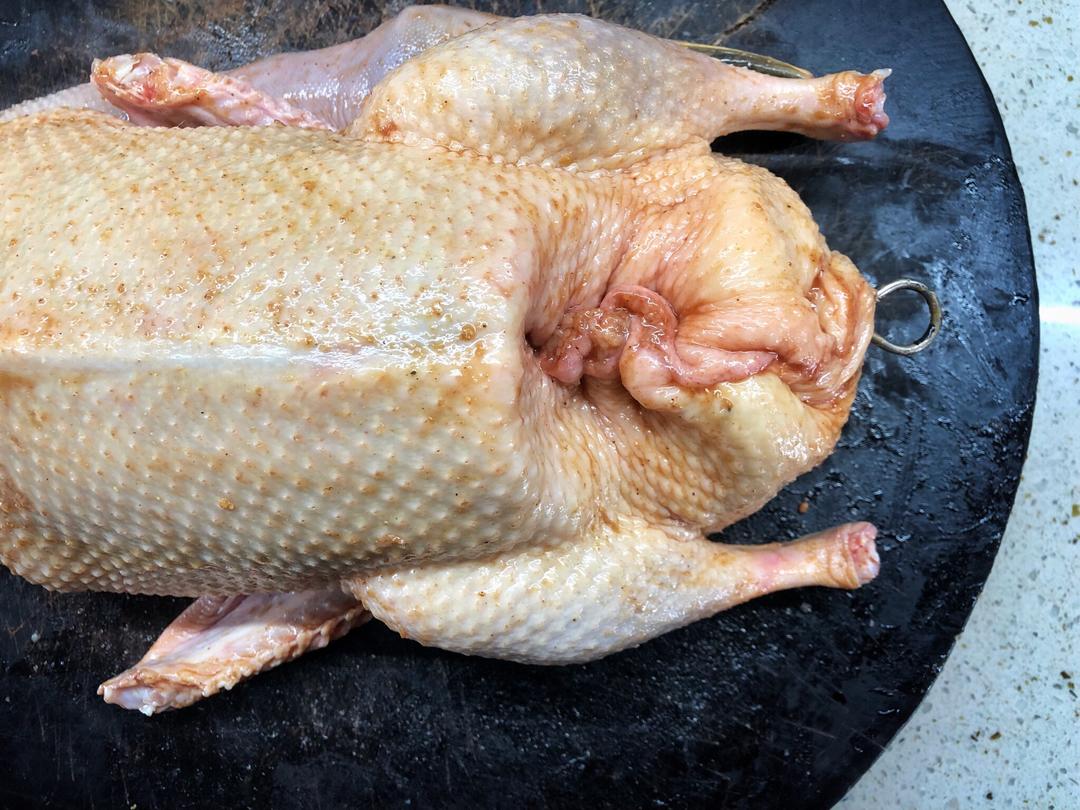
Step 3 – Refrigerate Overnight, Sealed
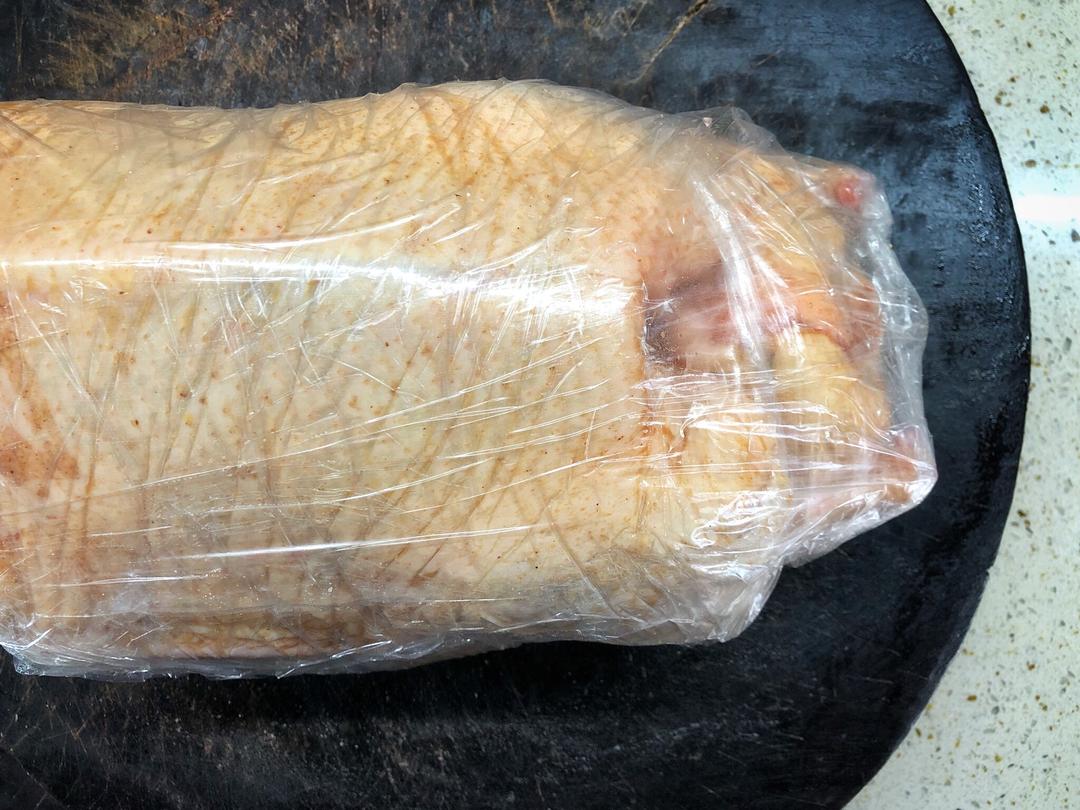
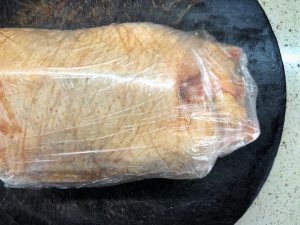
Wrap the stuffed duck tightly in plastic wrap and refrigerate overnight. The 12-hour rest lets the marinade penetrate the meat from the inside – this is the flavor step, and it cannot be rushed to a few hours.
Step 4 – Blanch the Skin Three Times
Bring a large pot of water to a rolling boil. Holding the duck by the neck or a hook, lower it into the water and lift it out – three times total (三提三放). The blanch tightens and firms the skin. Immediately rinse the duck under cold water to stop the cooking, and let it drain.
The three-dunk blanch is skin chemistry: heat denatures the skin’s collagen and shrinks it, tightening the surface like a drumhead. A tight, dry skin renders and crisps in the oven; a slack, damp one steams. This is why the blanch comes before the air-dry, and why neither step can be skipped.
Step 5 – Glaze and Air-Dry Overnight
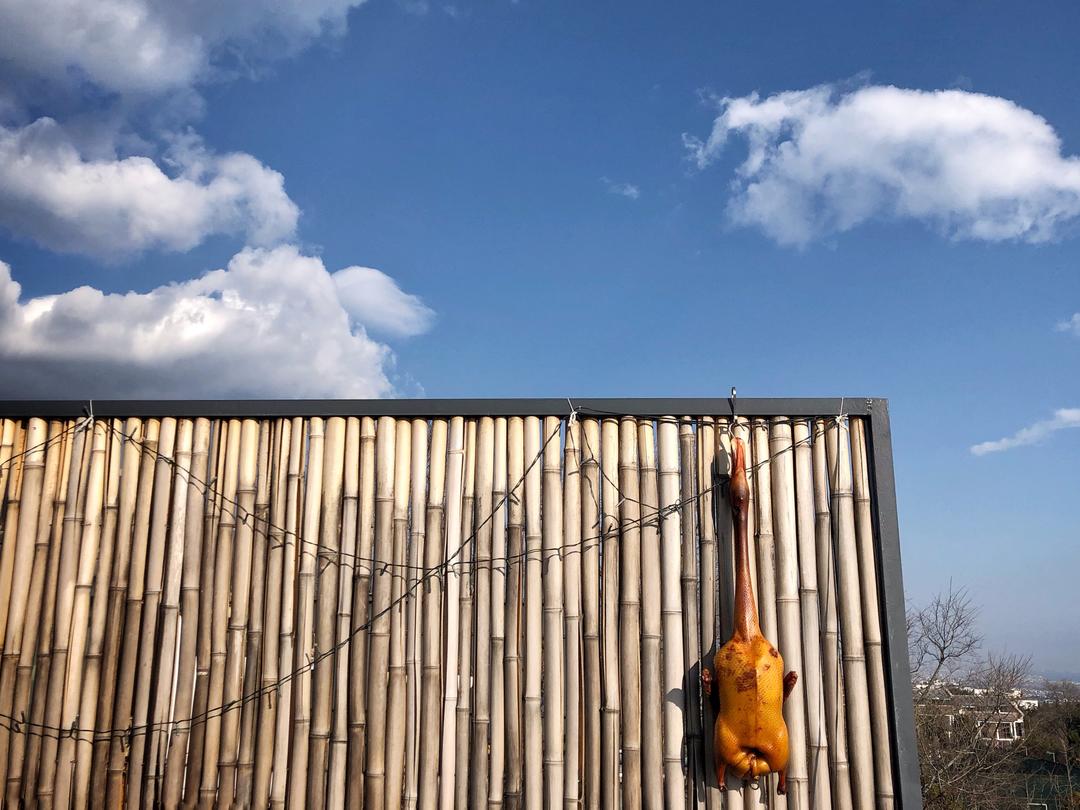
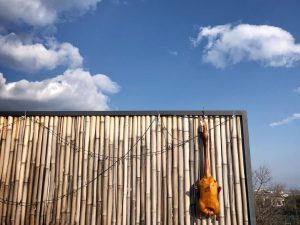
Mix the maltose and white vinegar until smooth and brush the mixture evenly over the duck’s skin – two coats, letting each set briefly. Hang the duck (or prop it on a rack) in a cool, airy spot – a fridge shelf works – and let the skin dry completely overnight. The original calls this “the key step for crispy skin,” and it is.
Step 6 – Roast Breast-Up at 175°C for 30 Minutes
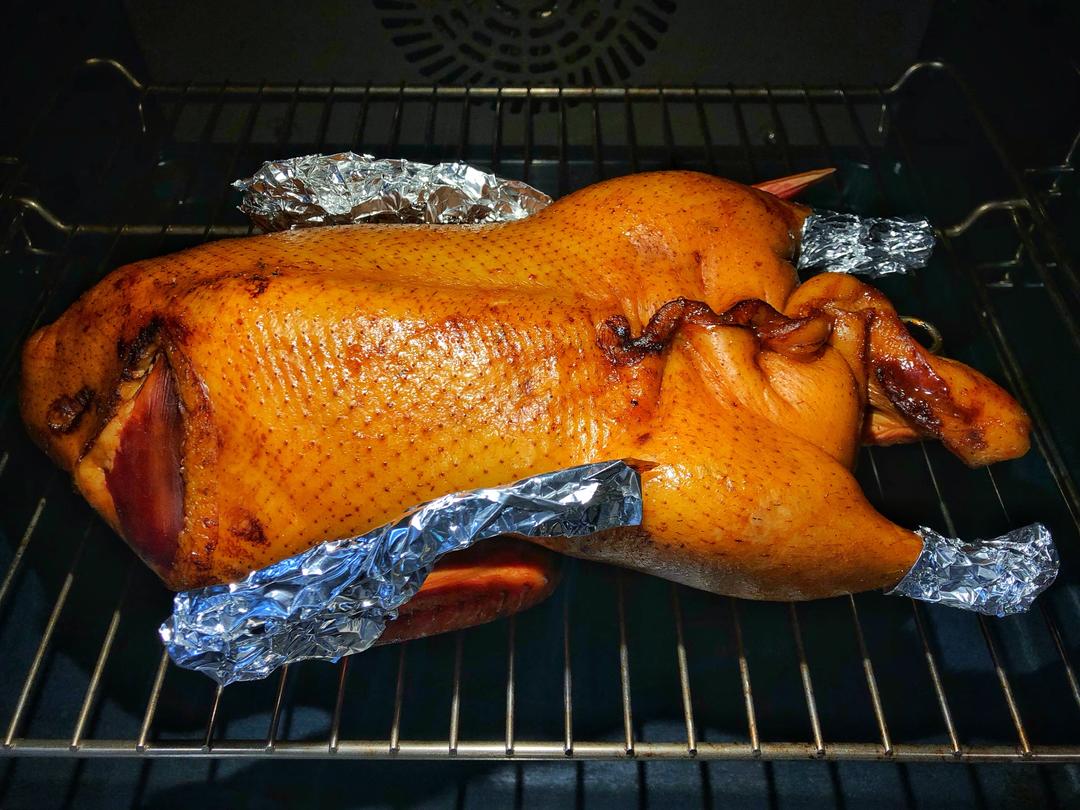
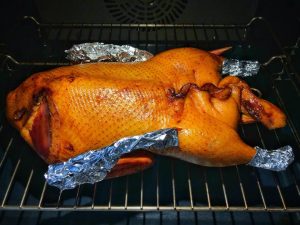
Preheat the oven to 175°C (347°F) with convection on. Set the duck breast-side up on a rack in a roasting pan and roast for 30 minutes. The convection fan does the hanging-shop airflow work, browning the skin as it renders.
Step 7 – Flip and Roast 20 More Minutes
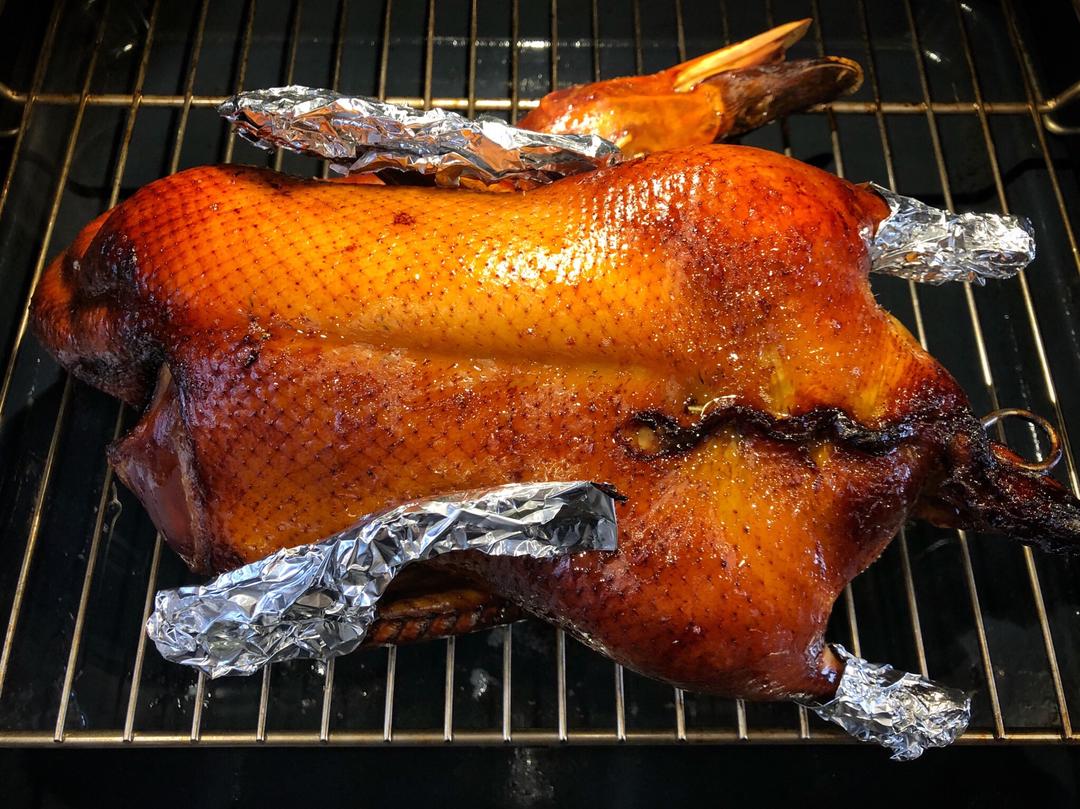
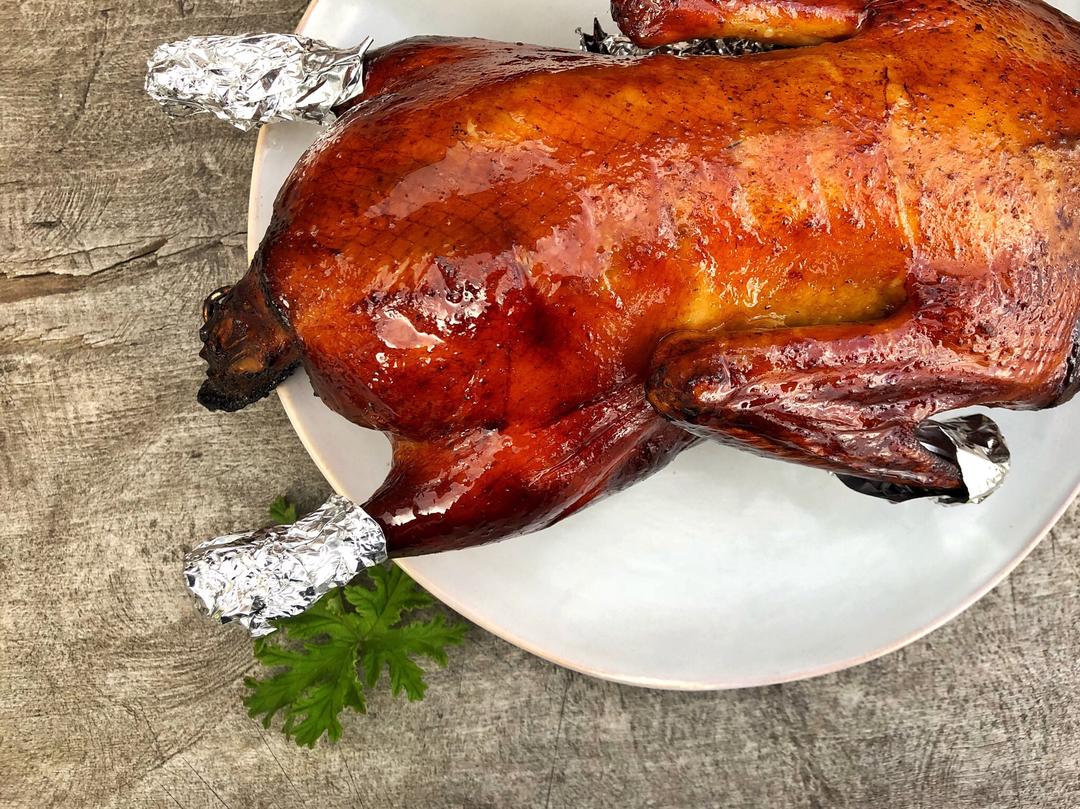
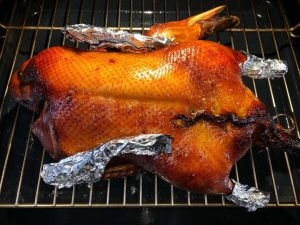
After 30 minutes, flip the duck over and check the color. Continue roasting for about 20 minutes, until the back is deeply colored and the skin is mahogany and crisp. If the skin colors too fast, lower the heat slightly – the roast should develop gradually.
Step 8 – Rest 15 Minutes
Take the duck out of the oven and rest it for 15 minutes before carving. The rest lets the juices settle, the same as any roast – and it makes the skin stay crisp longer on the cutting board.
Step 9 – Unseal, Pour the Juices, and Carve
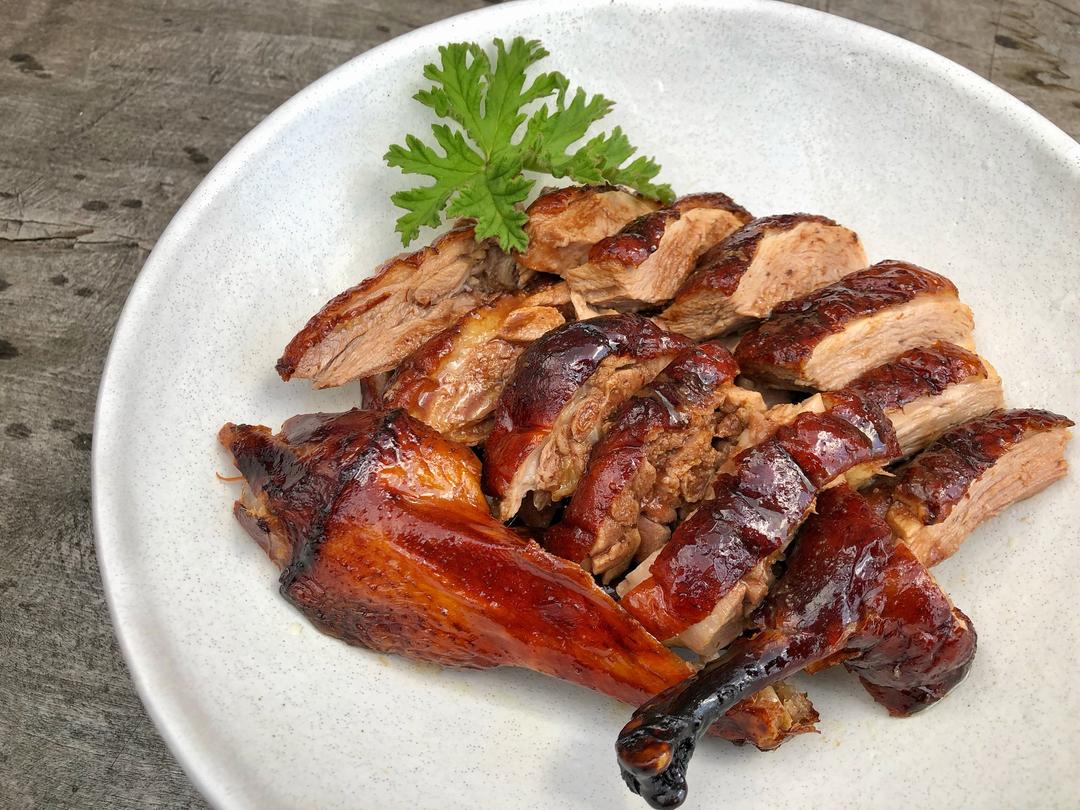
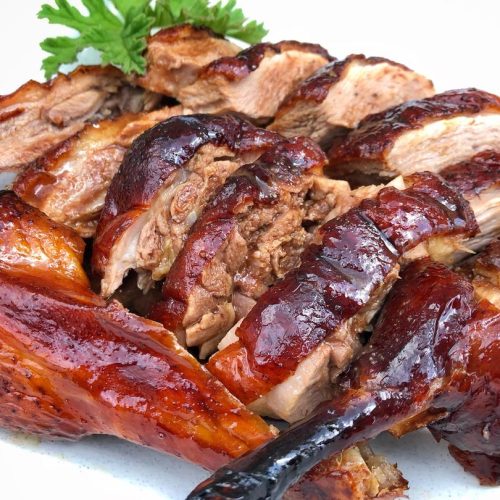
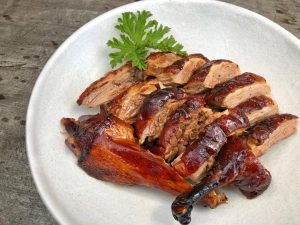
Remove the trussing needle or twine and pour the juices from the cavity into a small bowl – these are the roast’s sauce, seasoned by the marinade. Carve the duck into pieces and serve with the juices spooned over and plum sauce on the side. The skin should crackle; the meat should be tender and deeply flavored.
Common Mistakes When Making Cantonese Roast Duck
1. Leathery, non-crisp skin. Cause: skipping the air-dry, or roasting while the skin is still damp. Fix: the overnight dry is the recipe’s labeled key step – dry skin is what crisps. I have made this mistake once; the skin was edible but never crackling.
2. A pale, dull finish. Cause: too little maltose in the skin water, or the glaze brushed once. Fix: two even coats, and let the maltose-vinegar mix fully dissolve.
3. Marinade leaking out mid-roast. Cause: a loose seal. Fix: sew the cavity properly and truss tightly – the paste must stay sealed to steam the meat and become the sauce.
4. Burnt breast, raw leg. Cause: roasting too hot, or skipping the flip. Fix: 175°C (347°F) convection, breast-up for 30 minutes, then flip for the final 20.
5. Greasy, soft skin. Cause: the duck was not dried before the glaze. Fix: pat the skin completely dry after the blanch, before brushing on the skin water.
6. Disappointing, bland meat. Cause: rushing the marinade. Fix: the full overnight rest in the fridge is what gets the paste deep into the meat – a few hours will not do it.
Variations
Smaller scale: The same method works on duck legs or a chicken – scale the marinade and roast times down by about a third. I have tested this with chicken and it holds, though the skin is thinner.
Different glaze: Some cooks add a spoon of honey to the skin water for extra gloss. I have not compared them side by side, so I will not claim which is better.
Leftover duck: Shredded roast duck is superb in noodle dishes or over rice with the reserved juices – see my rice cooker whole chicken for the lazy Sunday alternative.
Regional duck night: For a duck feast, pair the roast with the numbing Sichuan peppercorn duck and a gentle steamed duck in a pumpkin bowl – three ducks, three styles, one table.
Frequently Asked Questions
Can I skip the overnight air-dry? You can, but the skin will not crisp – this is the recipe’s stated key step. If you are short on time, a fan-assisted dry for 4-6 hours is a partial compromise; I have only tested the full overnight.
What if I do not have chu hou paste? Hoisin is the closest substitute, though the marinade loses some of its fermented depth. The rest of the recipe is unchanged.
Can I use a regular (non-convection) oven? Yes – roast at the same 175°C (347°F) but add 5-10 minutes and rotate the pan once, since there is no fan to circulate heat.
Is the cavity juice safe to eat? Yes – it is the marinade plus rendered duck juices, fully cooked through the roast. It is the best sauce in the dish; do not throw it away.
How do I keep the skin crisp after carving? Carve just before serving and spoon the juices over the meat, not the skin. The skin stays crackling for about 15 minutes.
How to Serve
Serve the roast duck hot, carved and arranged on a platter with the cavity juices and plum sauce alongside. It is a centerpiece dish – the kind that anchors a holiday or a special Sunday table. Pair it with rice and a simple green like my stir-fried eggplant and green beans, or make it a roast-meat spread with char siu and vegetarian roast goose – the full Cantonese roast shop, at home. For the oven method in miniature, my authentic Chinese roast chicken is the same two-stage roast idea with chicken.
Storage & Reheat
Refrigerate leftover duck in a sealed container for up to 3 days. Reheat slices in a single layer in a 180°C (356°F) oven for 6-8 minutes – this restores the crisp skin better than a microwave, which turns it rubbery. Reheat to an internal temperature of at least 74°C (165°F). The reserved juices freeze well for up to 2 months and make a superb sauce base. Never leave the roasted duck out for more than 2 hours.
Allergen Notice
This recipe contains soy (chu hou paste, hoisin sauce) and may contain gluten and sesame depending on the brands used – check labels. It is free of nuts, eggs, dairy, and shellfish.
Nutrition Disclaimer
Nutrition information is calculated using an ingredient database and should be considered an estimate. In cases where multiple ingredient alternatives are given, the first listed is calculated for nutrition. Garnishes and optional ingredients are not included.
About the Author & Recipe Development
I am Lin, a professional Chinese chef who spent a decade in high-volume restaurant kitchens before writing about Chinese cooking. Roast duck was the dish I most feared attempting at home, and this xiachufang home recipe is the one that changed my mind – because it names the two steps every casual version skips: the three-dunk blanch and the overnight air-dry. I tested it in a convection oven exactly as written, kept the maltose-and-vinegar skin water, and learned that the cavity juices are half the dish. I have not tested the honey-glaze variation or a fan-dried shortcut beyond the full method, and I will not pretend I have.
Authoritative References
USDA Food Safety and Inspection Service – Safe Temperature Chart for duck handling, cooking, and storage guidance.
Crispy Cantonese Roast Duck (Yue Shi Cui Pi Shao Ya)

Equipment
- Roasting rack and pan
- Meat needle or twine
- Large Pot
- Pastry Brush
Ingredients
For the Marinade
- 1 whole duck, cleaned about 2 kg / 4.4 lb
- 5 g five-spice powder 1 tsp
- 2 tbsp chu hou paste 30 ml; hoisin works in a pinch
- 1 tbsp hoisin sauce 15 ml
- 10 g rose wine (mei gui lu jiu) 2 tsp; Shaoxing works
- 1 tsp salt 5 g
- 25 g slab sugar, crushed 1 1/2 tbsp; brown sugar works
- 5 slices fresh ginger
- 2 shallots, sliced
For the Skin Water
- 50 g maltose 2 1/2 tbsp
- 20 g white vinegar 1 1/3 tbsp
- plum sauce, for serving
Instructions
- Clean the duck, remove feet and wing tips, and pat completely dry inside and out.

- Spoon the marinade into the cavity, then sew or truss the opening shut tightly.
- Wrap the duck in plastic and refrigerate overnight to marinate from within.
- Dunk the duck in boiling water three times, then rinse in cold water to tighten and set the skin.
- Brush the maltose-vinegar skin water over the duck in two coats, then air-dry overnight until the skin is completely dry – the key to crisp skin.
- Roast breast-up at 175°C (347°F) with convection for 30 minutes.
- Flip and roast 20 more minutes until the skin is mahogany and crisp.
- Rest the duck 15 minutes before carving.
- Unseal the cavity, pour out the juices, carve, and serve with the juices and plum sauce.







Leave a Reply