My sister’s favorite bakery bread was never the fancy one with the cream swirls. It was the plain butter bread, a soft enriched loaf you could pull apart in shreds, with butter folded through the dough in layers so every bite tasted faintly of toast before it was even toasted. When I started making it at home, the recipe that finally worked was this xiachufang one, and it taught me the shape trick that makes the whole loaf: roll the dough around butter, chill it, roll it again, and cut it into horn-shaped buns that bake into a pull-apart wreath.
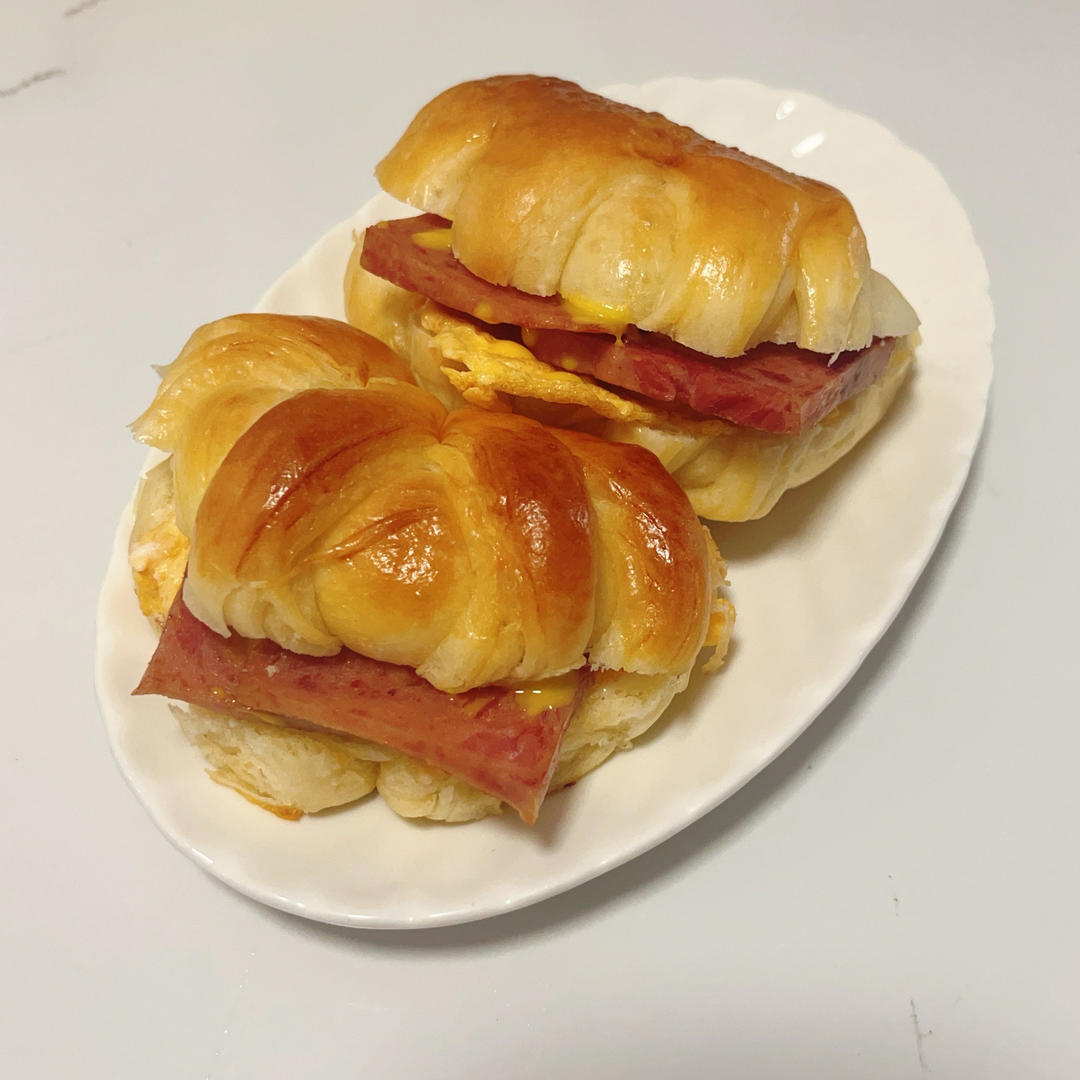
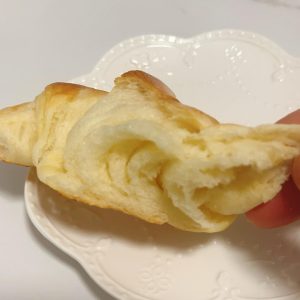
This is a classic soft bread dough: milk, egg, butter, and a little sugar, kneaded to a full windowpane. The shaping is the fun part. The proved dough is rolled into a wide round, painted with softened butter, cut like a pie, and rolled into horns, then proved again and baked until deep gold. The finished buns shred into feathery layers, and the author’s final note is the best endorsement: split one, add a fried egg and luncheon meat, and you have a burger kids actually ask for.
What Is Butter Bread (黄油面包)?
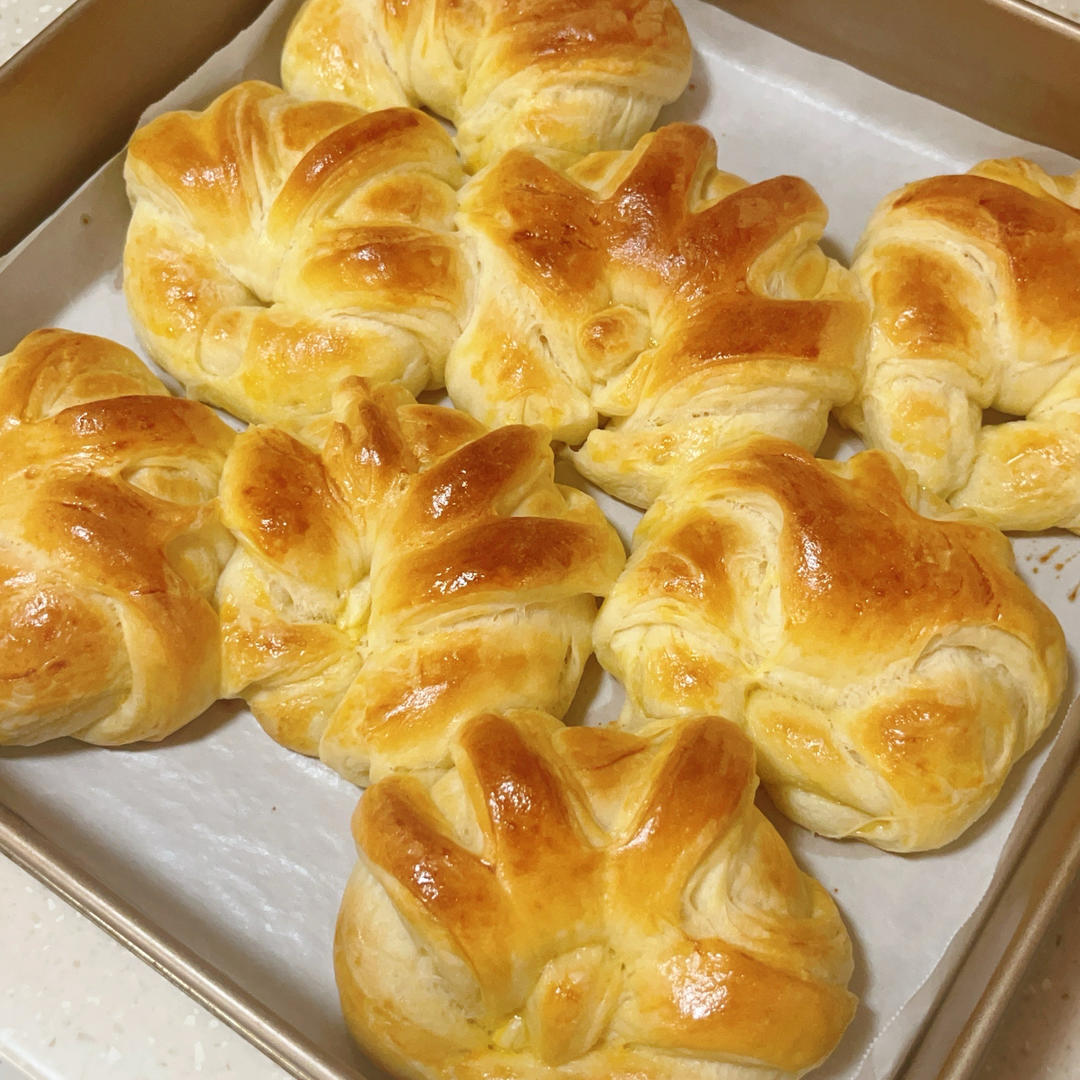
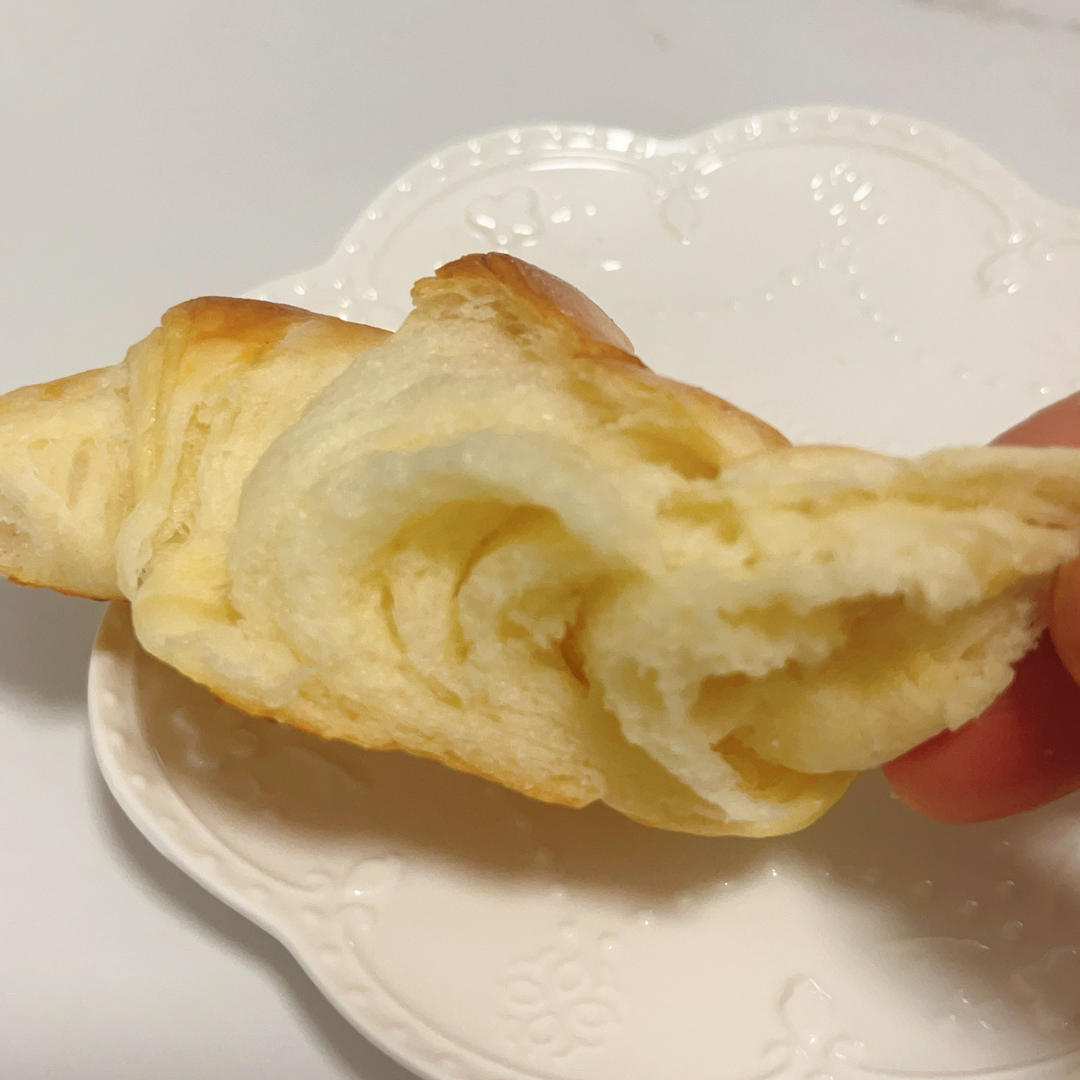
Butter bread is the Chinese bakery classic that sits between plain mantou and rich brioche: a softly sweetened milk dough enriched with butter, baked into rolls or a loaf with a tender, shredding crumb. Unlike laminated pastries, the butter here is rolled through the dough in a simple fold, so the bread stays soft rather than flaky, with fine, feathery layers you can pull apart by hand.
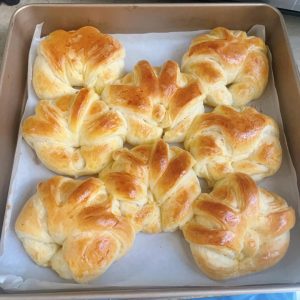
This version shapes the dough into eight horn-shaped buns that bake together into one pull-apart round. Each horn has butter and a faint spiral of layers baked through it, and the buns are soft enough to dent, glossy from an egg wash, and sturdy enough to split for a sandwich. It is a bread that does double duty: bakery-snack sweet on its own, or the best hamburger bun you have never bought.
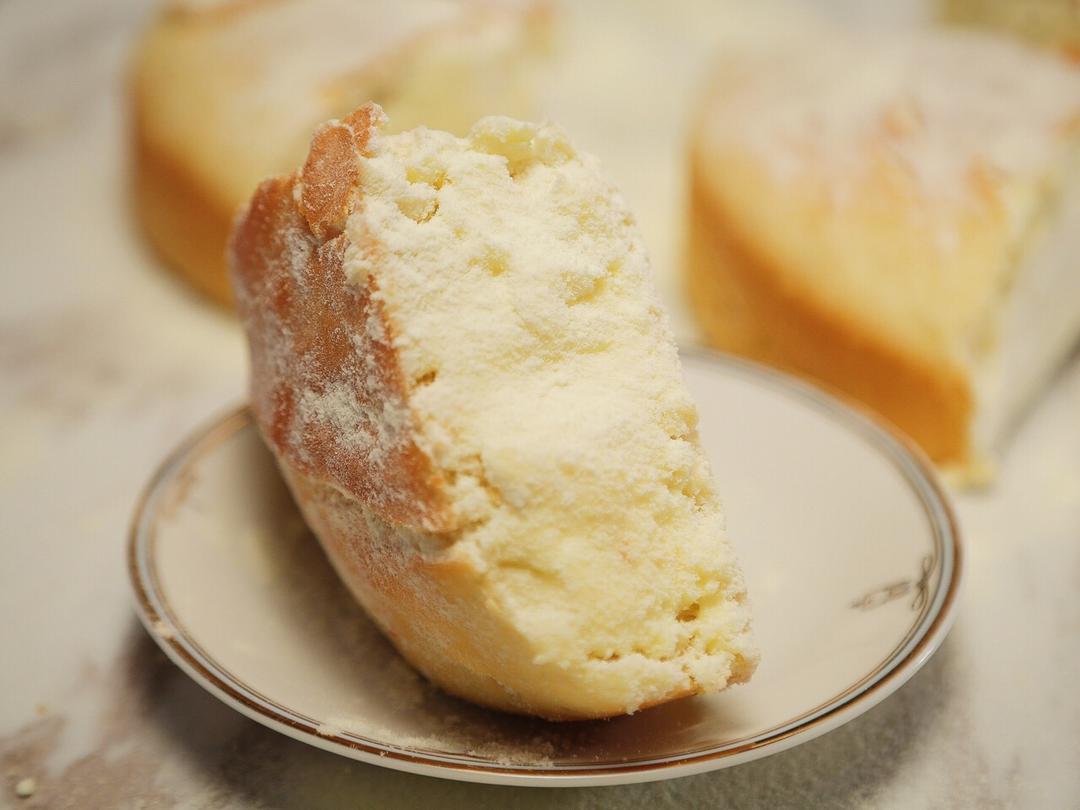
If you love soft, enriched Chinese breads, my milk cream cheese bread is another favorite built on a similar tender dough.
1Milk Cream Cheese Bread (Nai Lao Bao)A viral Chinese bakery hit: soft, fluffy milk bread wedges stuffed with sweet cream cheese and dusted with milk powder. Better than the bakery and additive-free!Check out this recipe
Why This Recipe Works
- A full windowpane makes it shred. Kneading the enriched dough until it stretches into a thin, elastic membrane gives the crumb its feathery softness.
- Butter is rolled through, not just mixed in. Rolling the proved dough with a layer of butter builds fine layers that bake into the pull-apart texture.
- A fridge rest firms the butter. Chilling the rolled dough relaxes the gluten and sets the butter, so the next roll is clean and even.
- Horn shaping bakes evenly. Cutting the round into eight wedges and rolling each into a horn gives uniform buns that pull apart in spirals.
- A warm, humid proof and golden bake. Proving in the oven with steam and baking at 355°F (180°C) produces a soft, glossy, bakery-style finish.
Equipment Needed
- Stand mixer with dough hook
- Rolling pin
- Pastry brush
- Plastic wrap
- Baking sheet lined with parchment
- Instant-read thermometer
Ingredients
- 2 1/3 cups (300 g) bread flour
- 1 large egg
- 1 tsp (3 g) instant yeast
- 1 1/2 tbsp (20 g) fine sugar
- 2/3 cup (160 g) ice-cold milk
- 1 1/2 tbsp (20 g) unsalted butter, softened, for the dough
- 1/2 tsp (2 g) fine salt
- 2 tbsp (30 g) unsalted butter, softened, for spreading and brushing
- 1 egg yolk beaten with 1 tsp water, for the egg wash (optional)
Ingredient Notes
Bread flour. High-protein flour is what gives this bread its stretch and softness. All-purpose works but makes a slightly less elastic, shorter crumb.
Ice-cold milk. Cold liquid keeps the dough from overheating during the long knead. If your kitchen is warm, chill the mixer bowl too.
Butter, twice. Twenty grams go into the dough for richness; thirty grams soften for spreading over the rolled dough, which creates the pull-apart layers.
The egg wash. Brushing the proved buns with egg yolk gives them the deep golden, glossy bakery finish. Plain milk or cream works if you skip the egg.
Prep & Mise en Place
Weigh everything before you start. Mix the dough ingredients except the butter and salt, knead to a rough membrane, then add the butter and salt and knead to a full windowpane, with the dough elastic enough to pull long without tearing. Cover and prove until doubled, about an hour in a warm spot.
Soften the 30 g of spreading butter so it paints onto the rolled dough in a thin, even layer, and have a baking sheet lined with parchment ready. Clear fridge space for the 20-minute chill of the shaped rolls.
Cooking Process
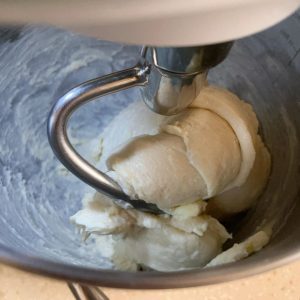
Step 1 — Mix to a Rough Membrane
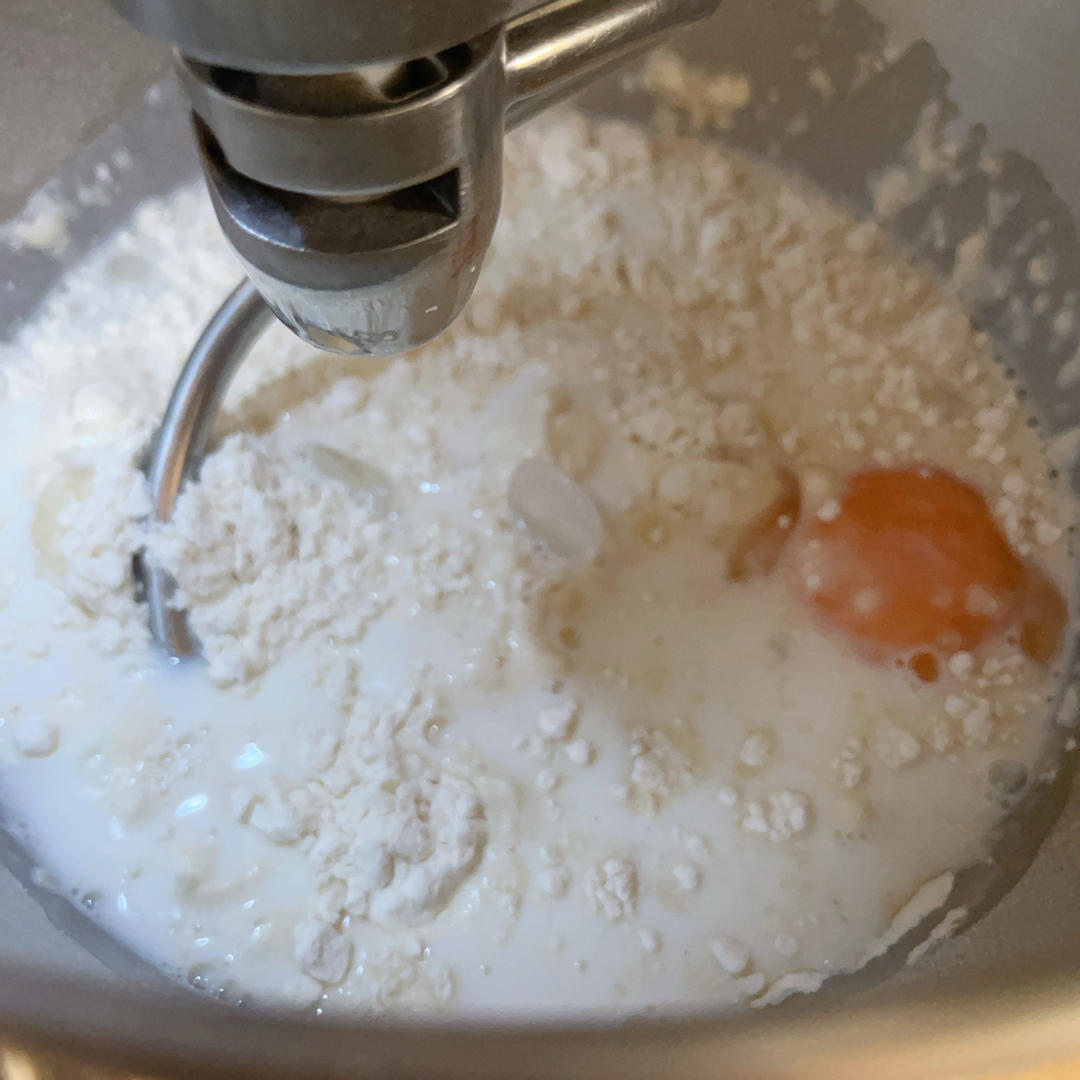
Put all the dough ingredients except the butter and salt in the mixer. Mix on low until no dry flour remains, then raise the speed and knead until a rough, slightly stretchy membrane forms.
Step 2 — Add the Butter and Salt
Add the softened dough butter and the salt once the rough membrane has formed.
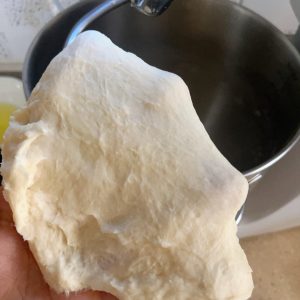
Step 3 — Knead to a Full Windowpane
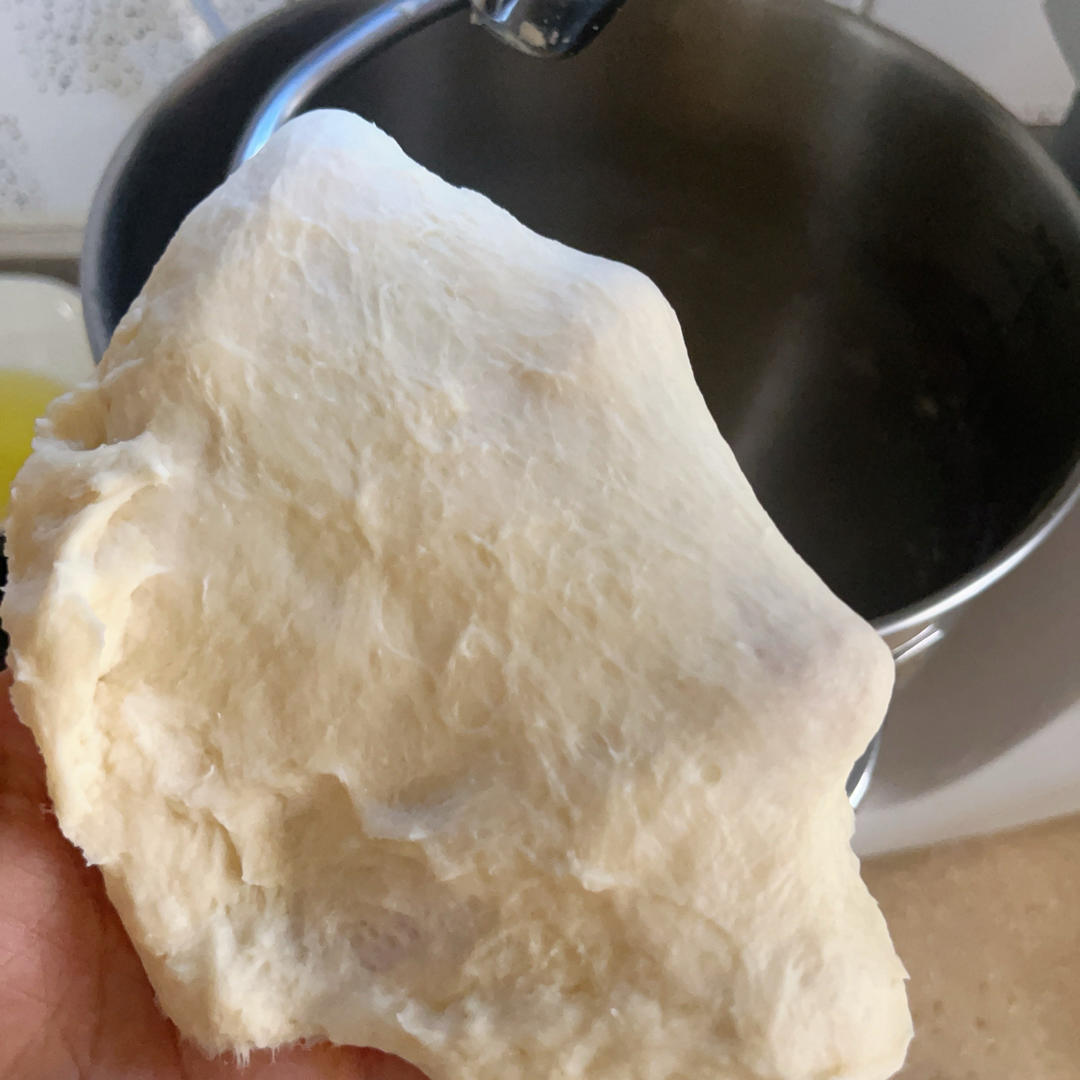
Knead on low until the butter is absorbed, then on high until the dough passes the windowpane test, stretching into a thin, elastic sheet that pulls long without breaking.
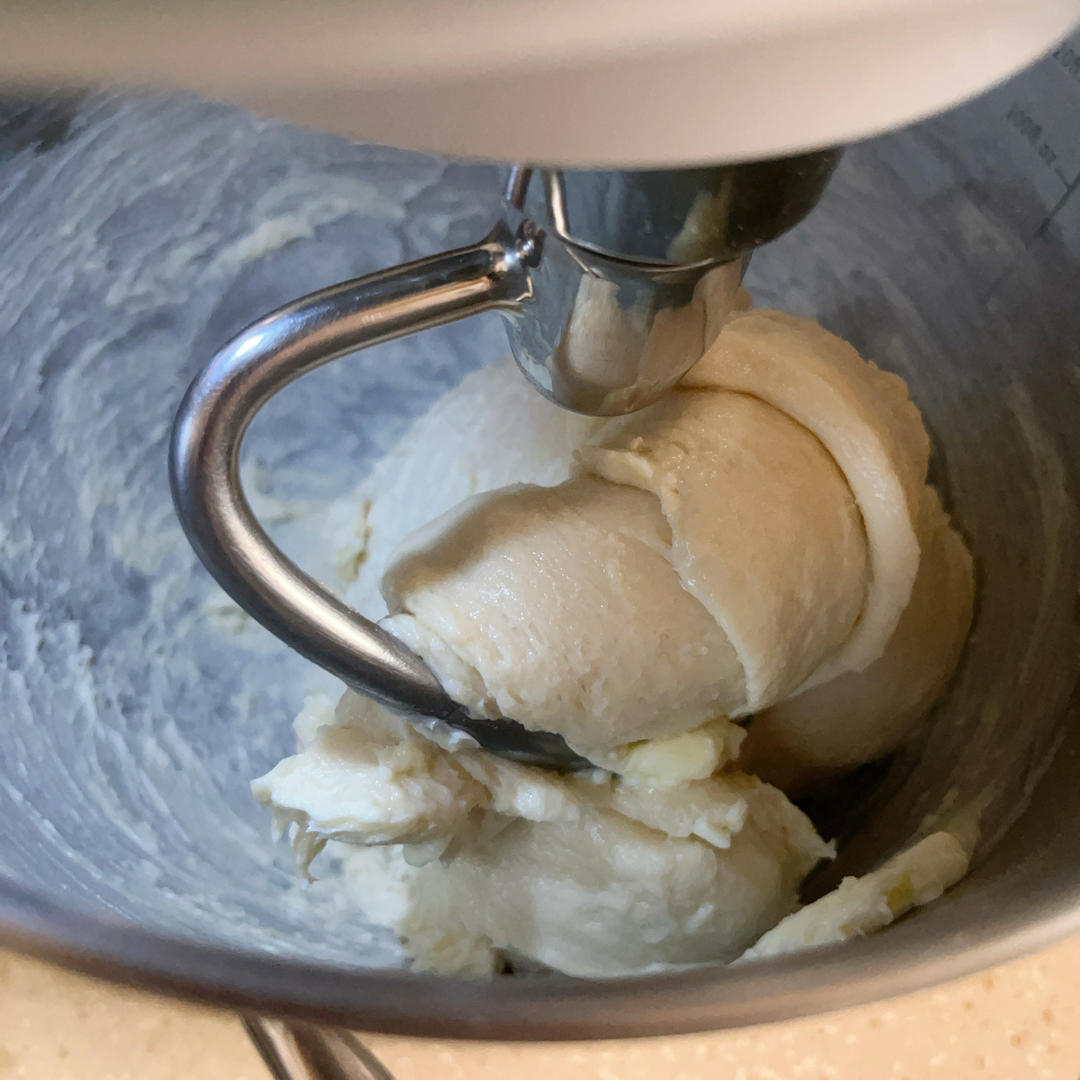
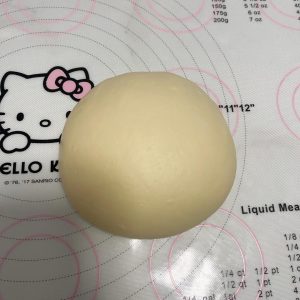
Step 4 — First Proof Until Doubled
Cover the dough and prove until doubled in volume, about 1 hour in a warm spot, or longer in a cool kitchen.
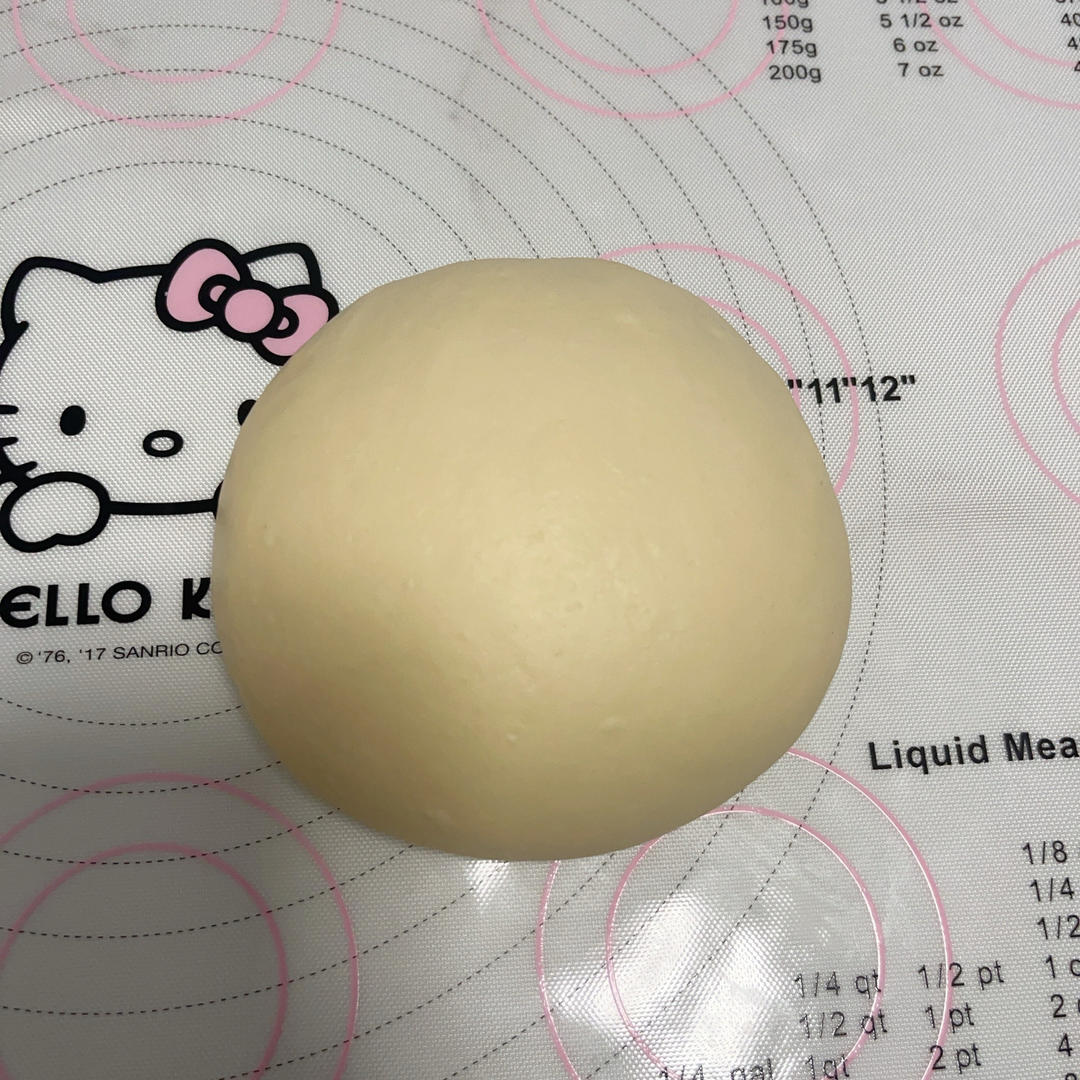
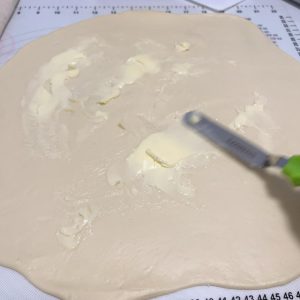
Step 5 — Roll Out and Spread With Butter
Press the proved dough flat and roll it into a large round about 30 to 35 cm (12 to 14 in) across. Spread the softened 30 g butter evenly over the surface.
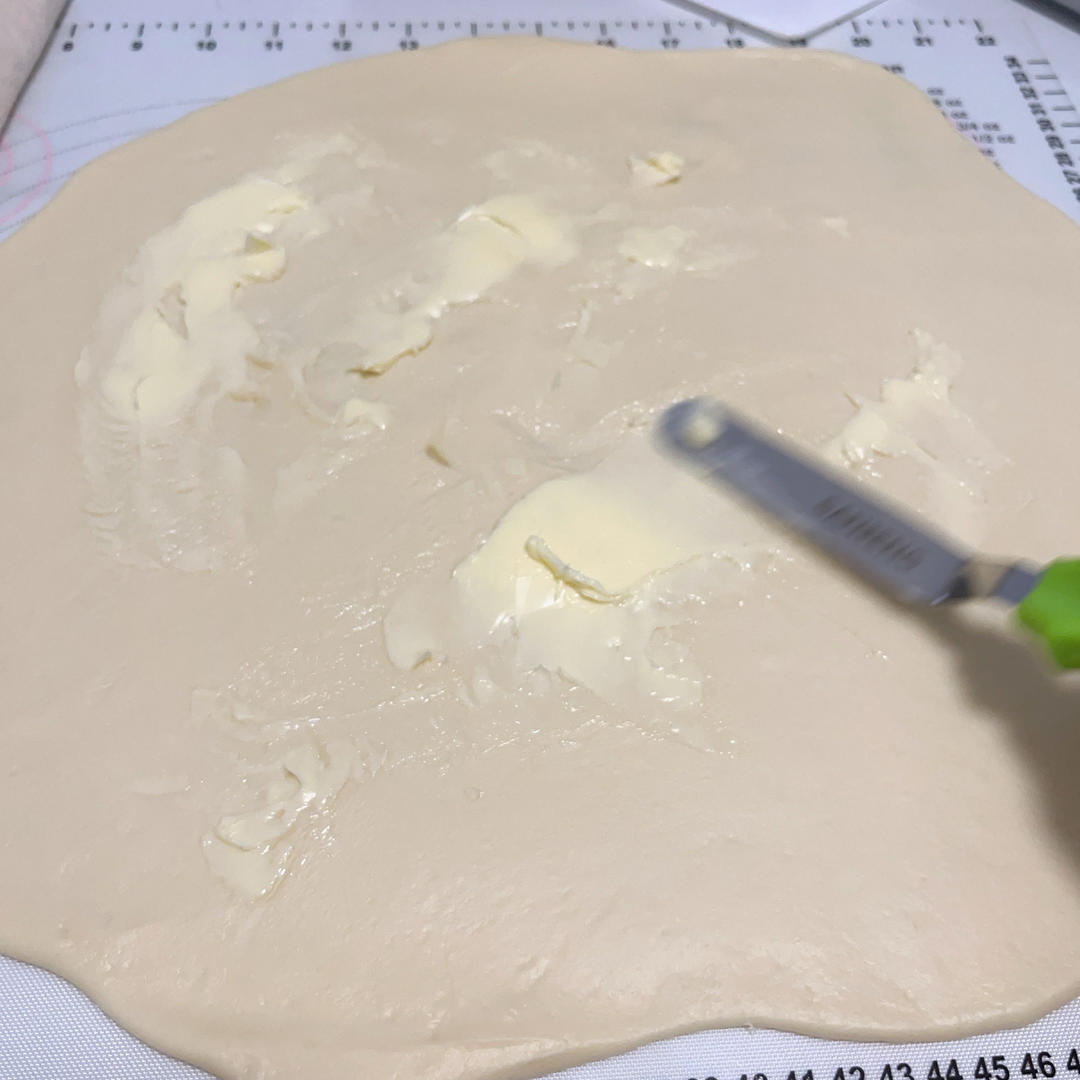
Step 6 — Cut Along the Radius
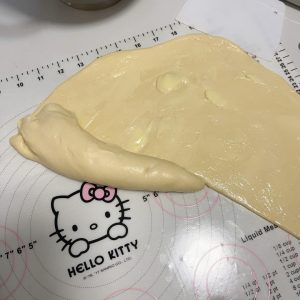
Cut the buttered round along one radius from the center to the edge, opening the circle like a cut pie.
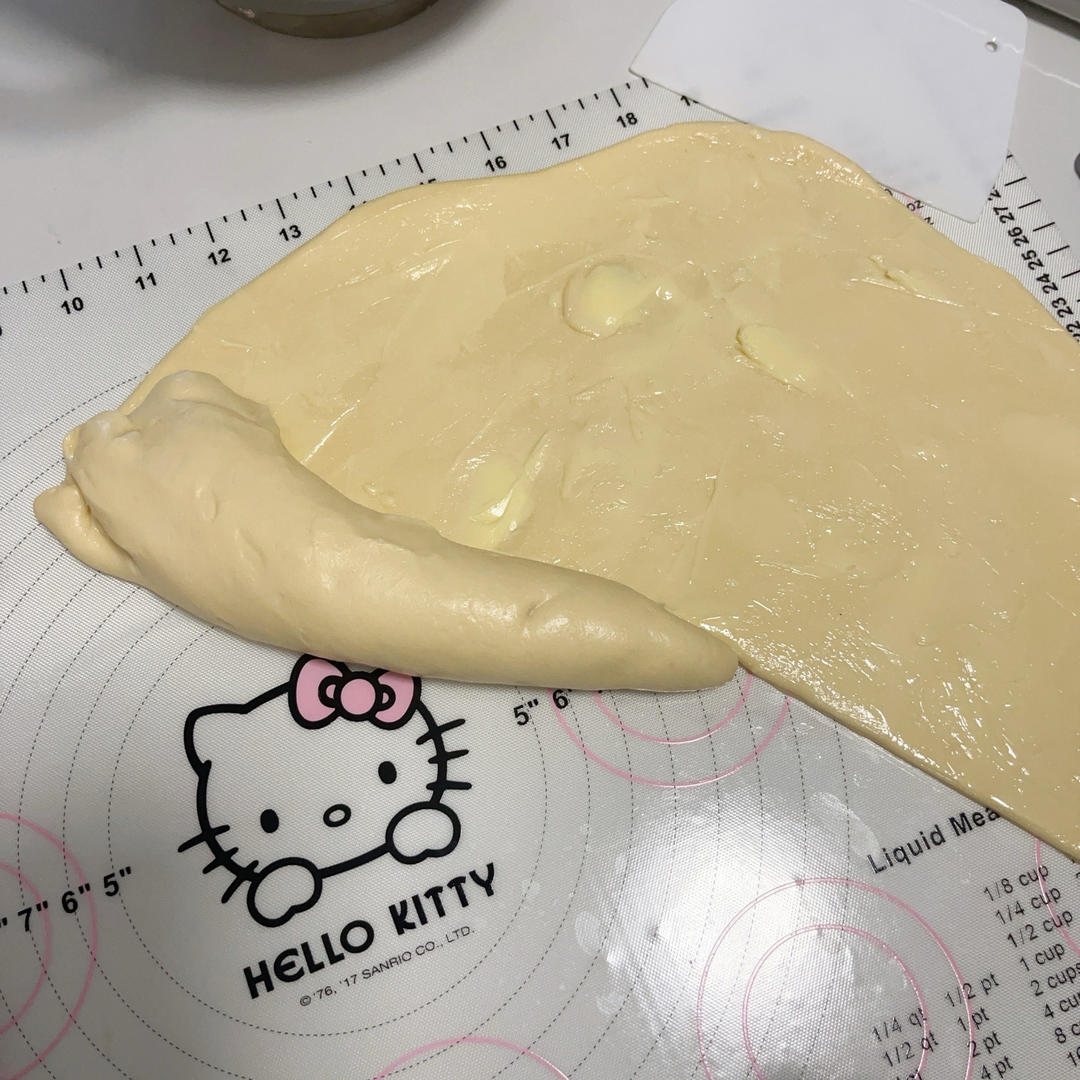
Step 7 — Roll Into a Cone
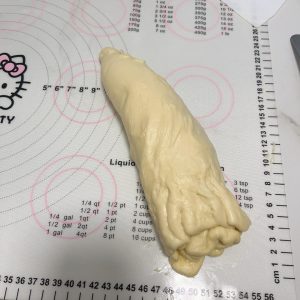
Starting at the cut edge, roll the dough around itself into a cone or spiral, wrapping around and around until the whole round becomes one thick log.
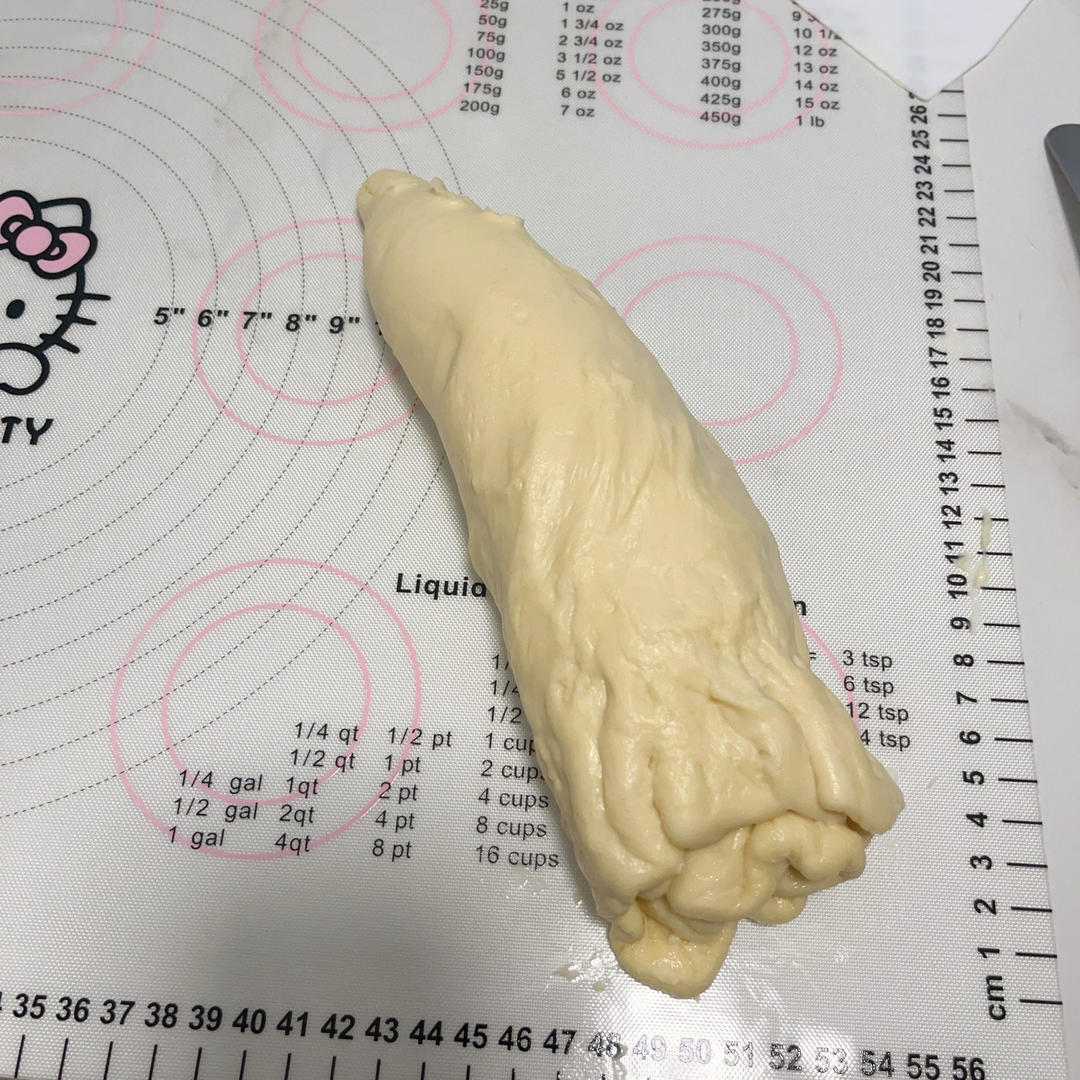
Step 8 — Shape Into a Round and Chill
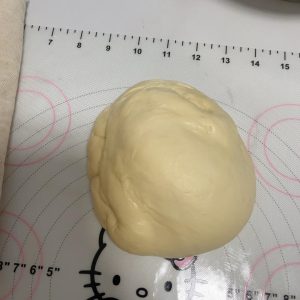
Coil the cone into a round, tucking the end underneath, then cover and refrigerate for 20 minutes to relax the dough and firm the butter.
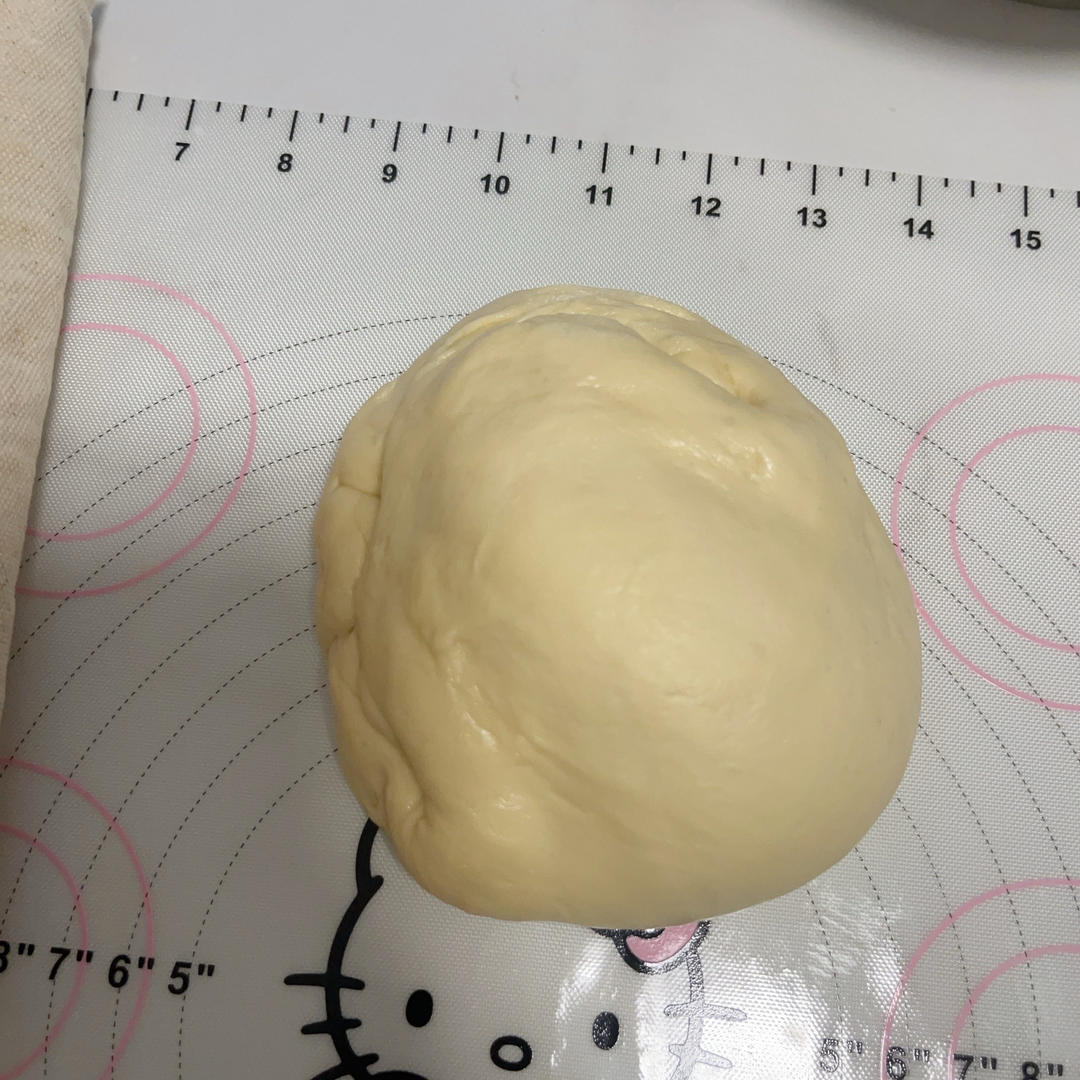
Step 9 — Press the Chilled Dough Flat
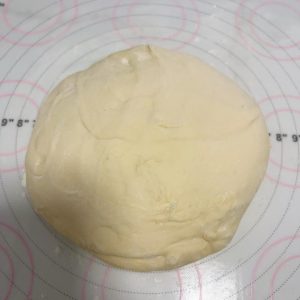
Take the chilled dough and press it into a thick disc, releasing the air gently without deflating the layers.
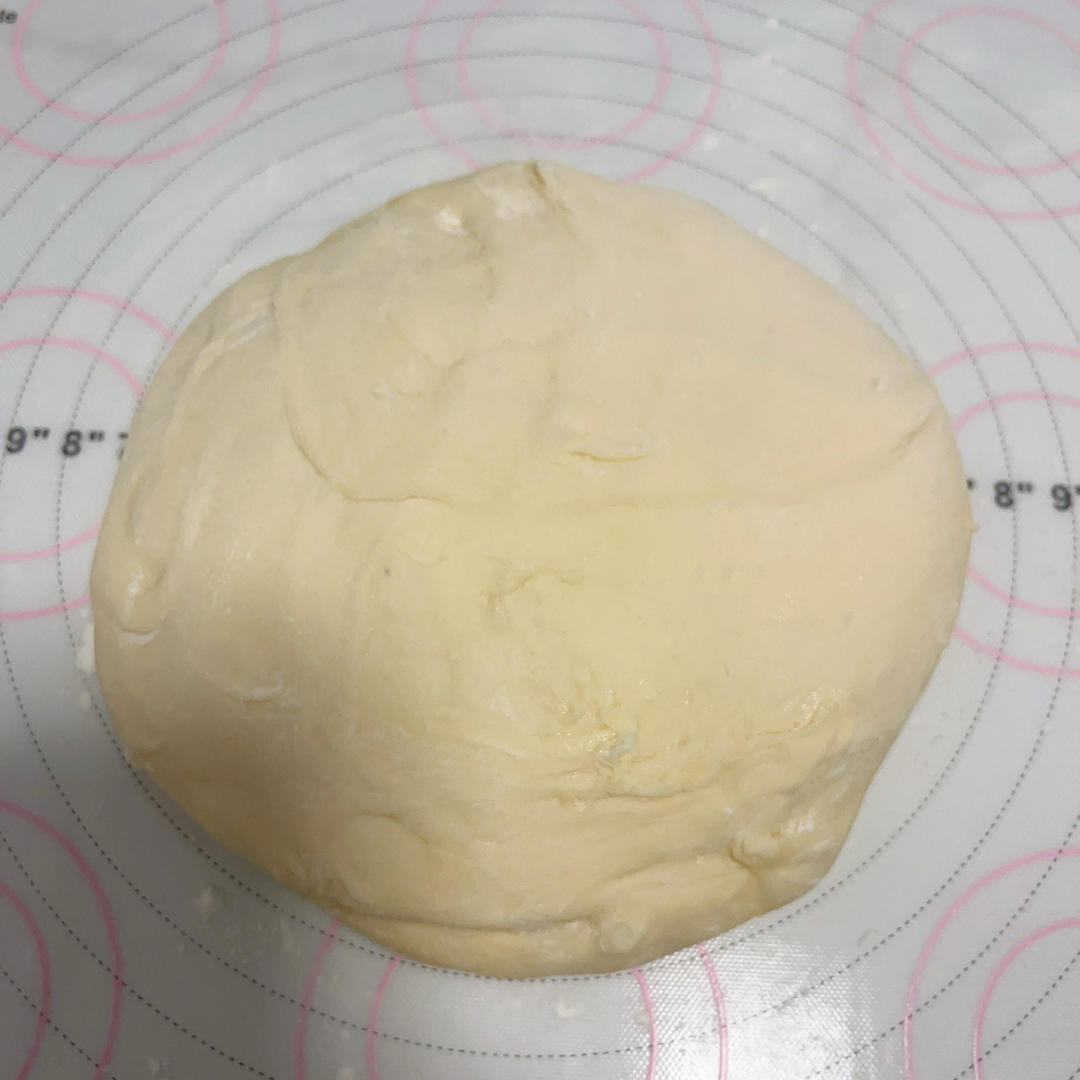
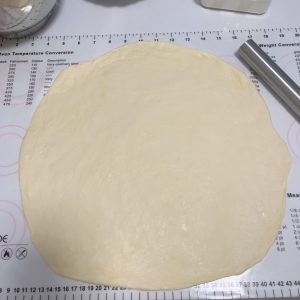
Step 10 — Roll Out to a Thin Sheet
Roll the disc into a thin sheet about 1 cm (1/3 in) thick, keeping the shape even so the buns bake uniformly.
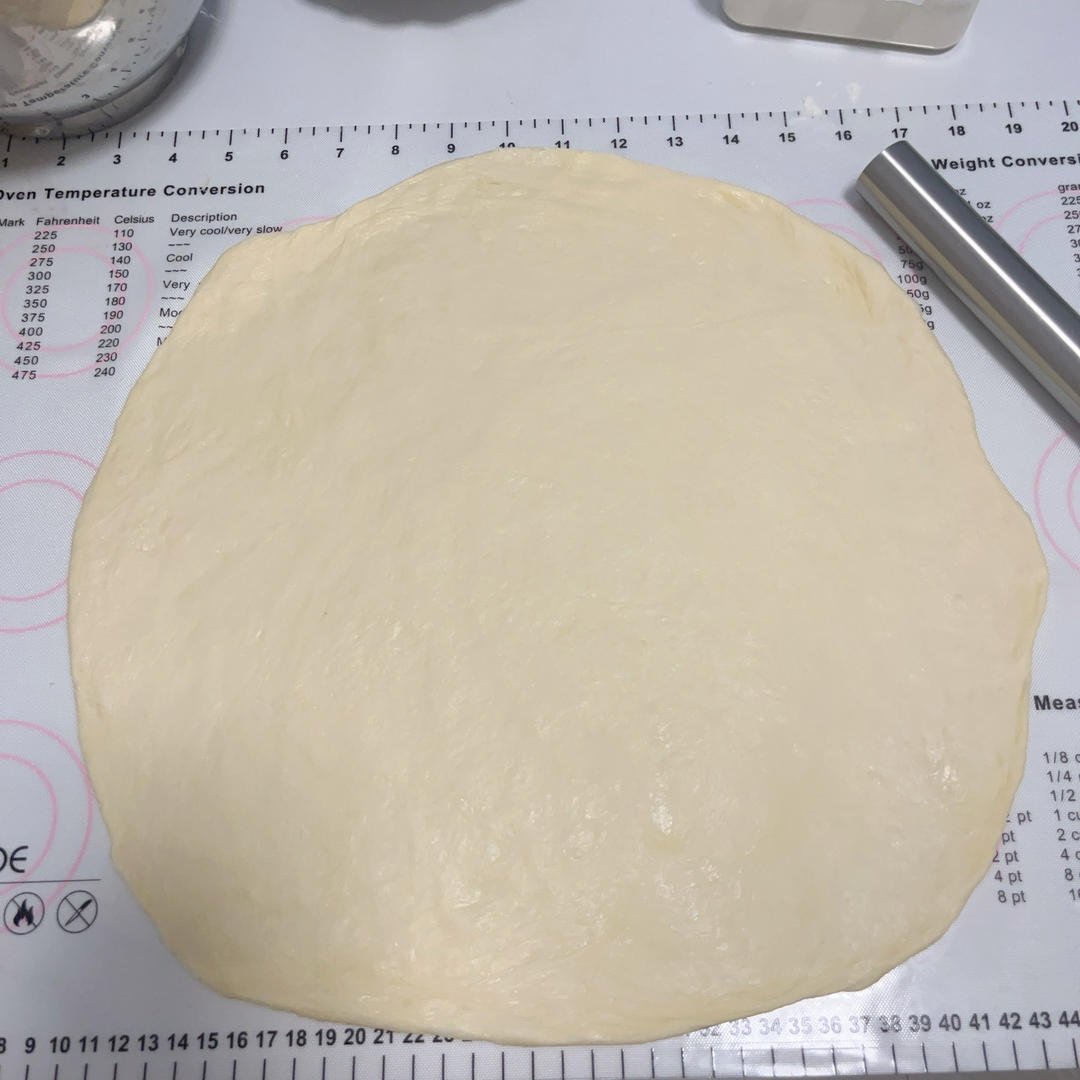
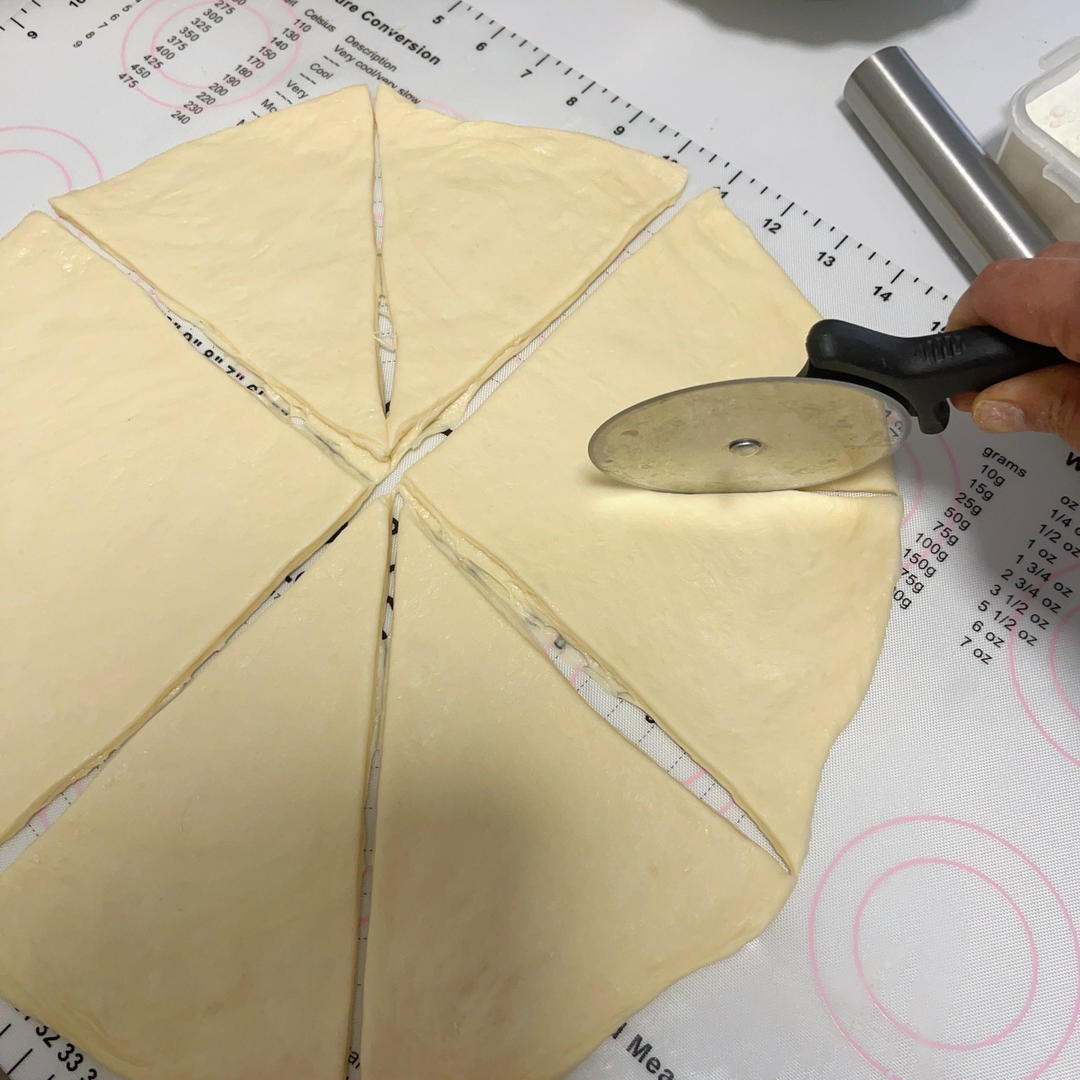
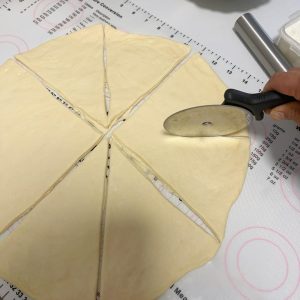
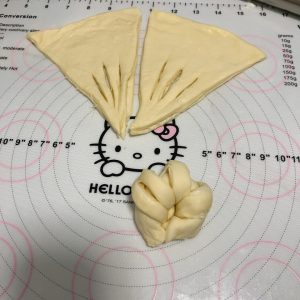
Step 11 — Cut Into Eight Wedges
Divide the sheet into eight equal wedges, like cutting a pizza, using a sharp knife.
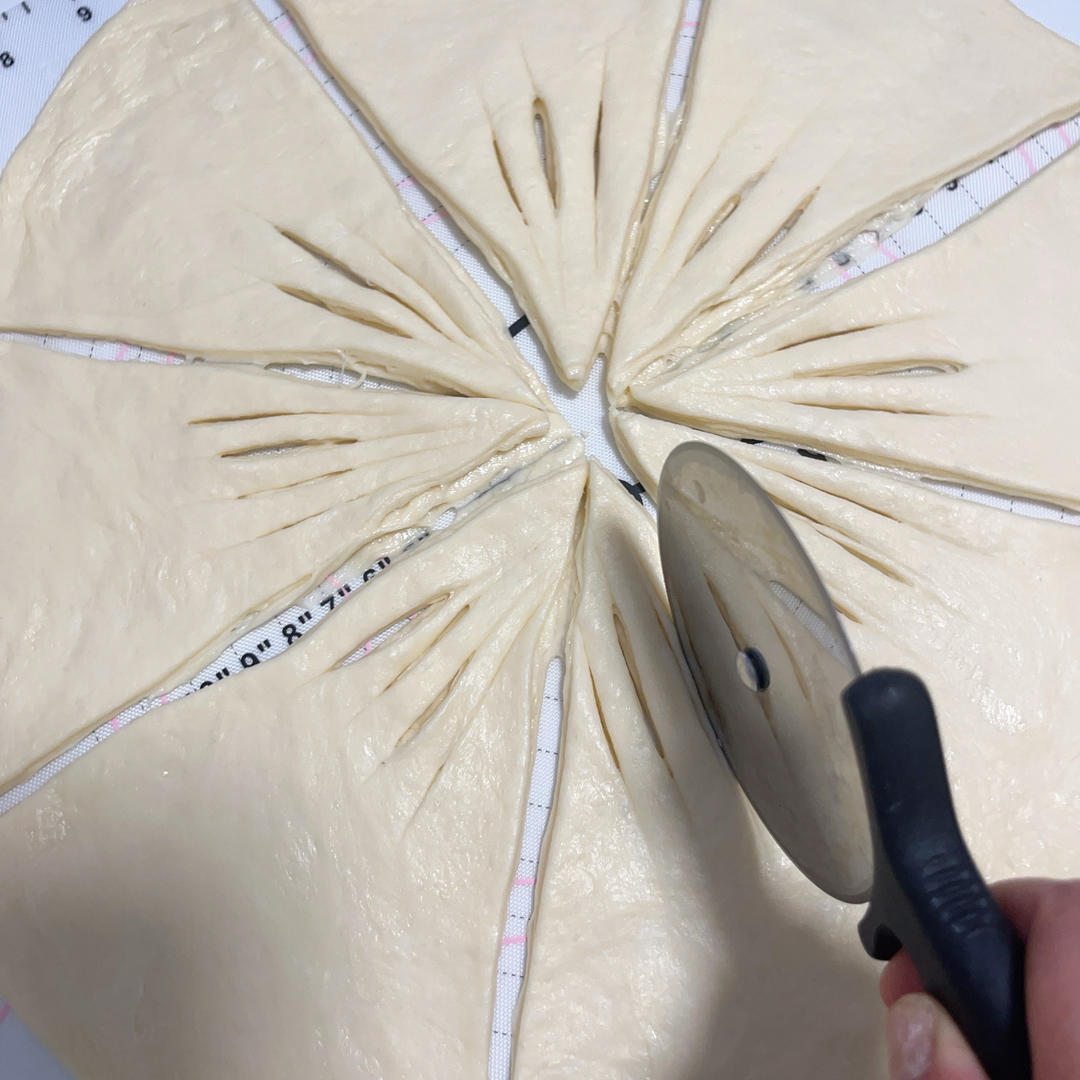
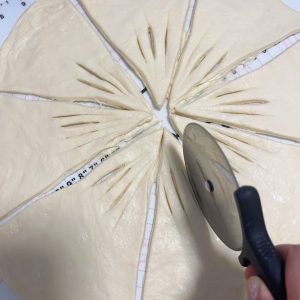
Step 12 — Snip the Wedges
Make a few shallow cuts along each wedge, as shown in the original, which helps the layers separate as the buns rise.
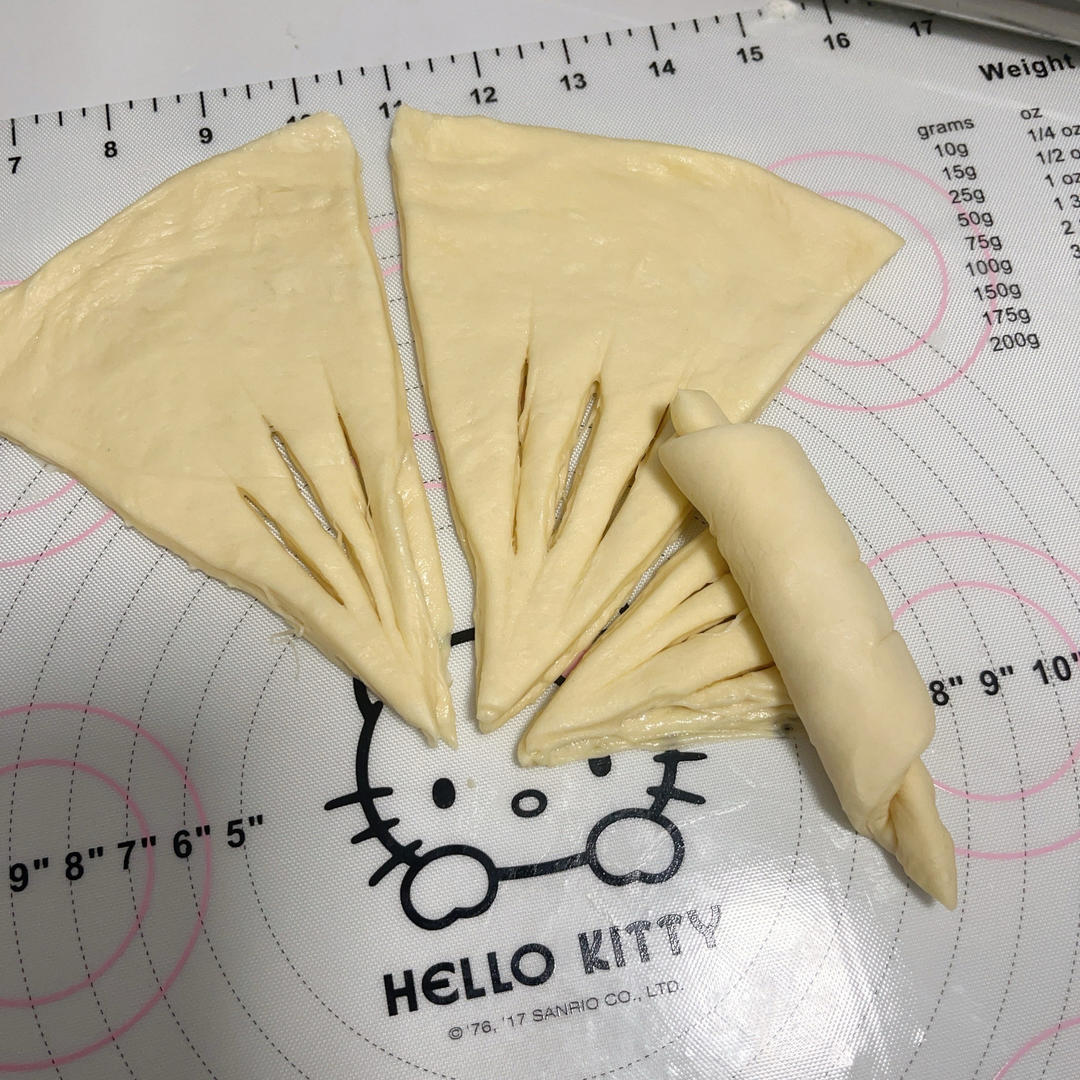
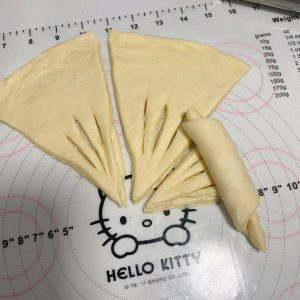
Step 13 — Roll Each Wedge From the Outside In
Take each wedge and roll it up starting from the wide outer edge toward the point, so the layers spiral through the bun.
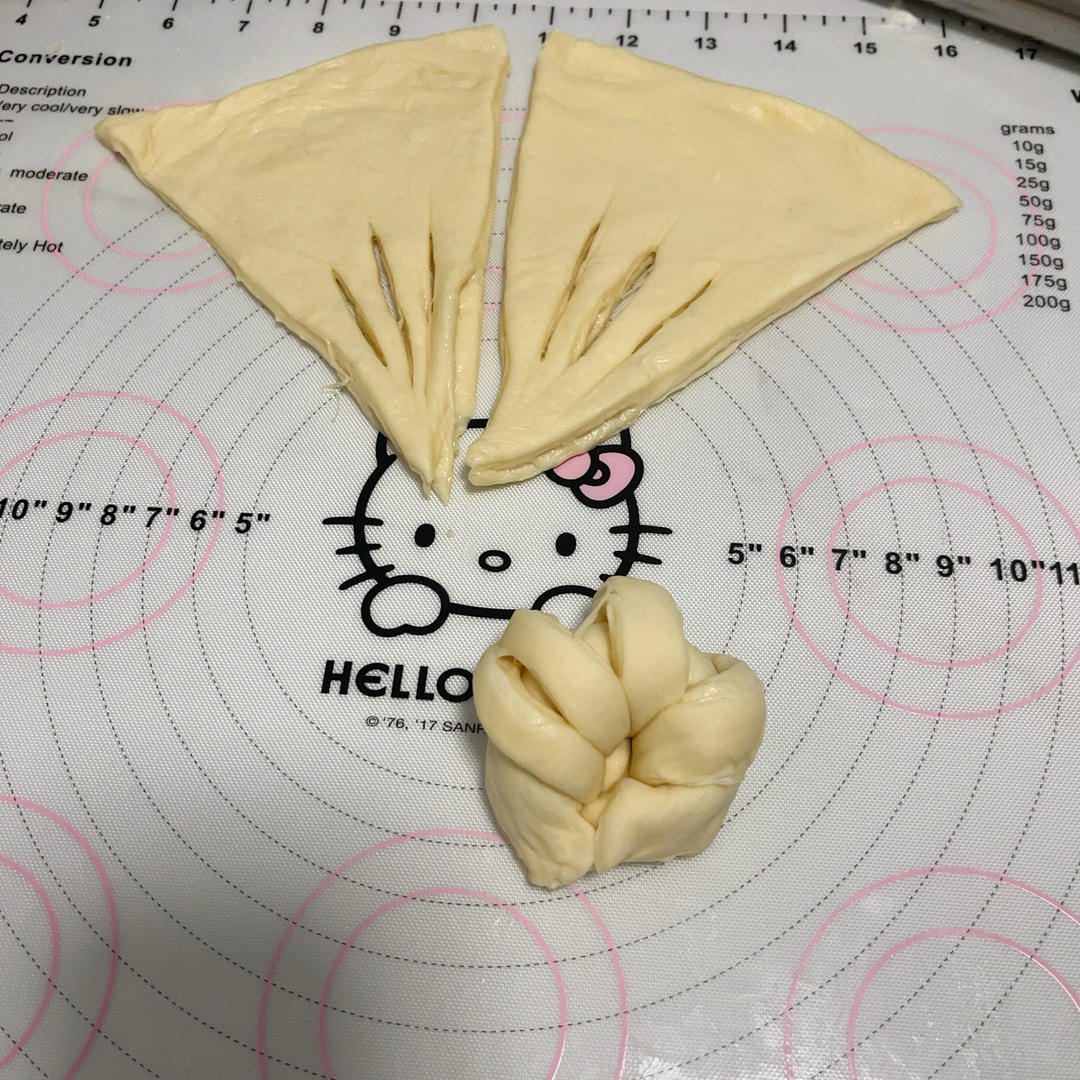
Step 14 — Pinch the Ends Into Horns
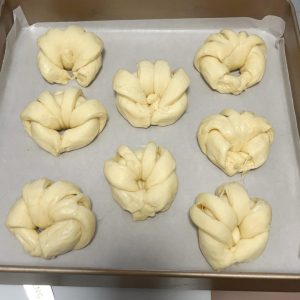
Pinch the two ends of each rolled wedge together and curve it slightly, shaping each bun like a small horn.
Step 15 — Prove in the Oven for 40 Minutes
Arrange the horns on the lined baking sheet, cover loosely, and prove in the oven (with a pan of hot water) for about 40 minutes until puffy.
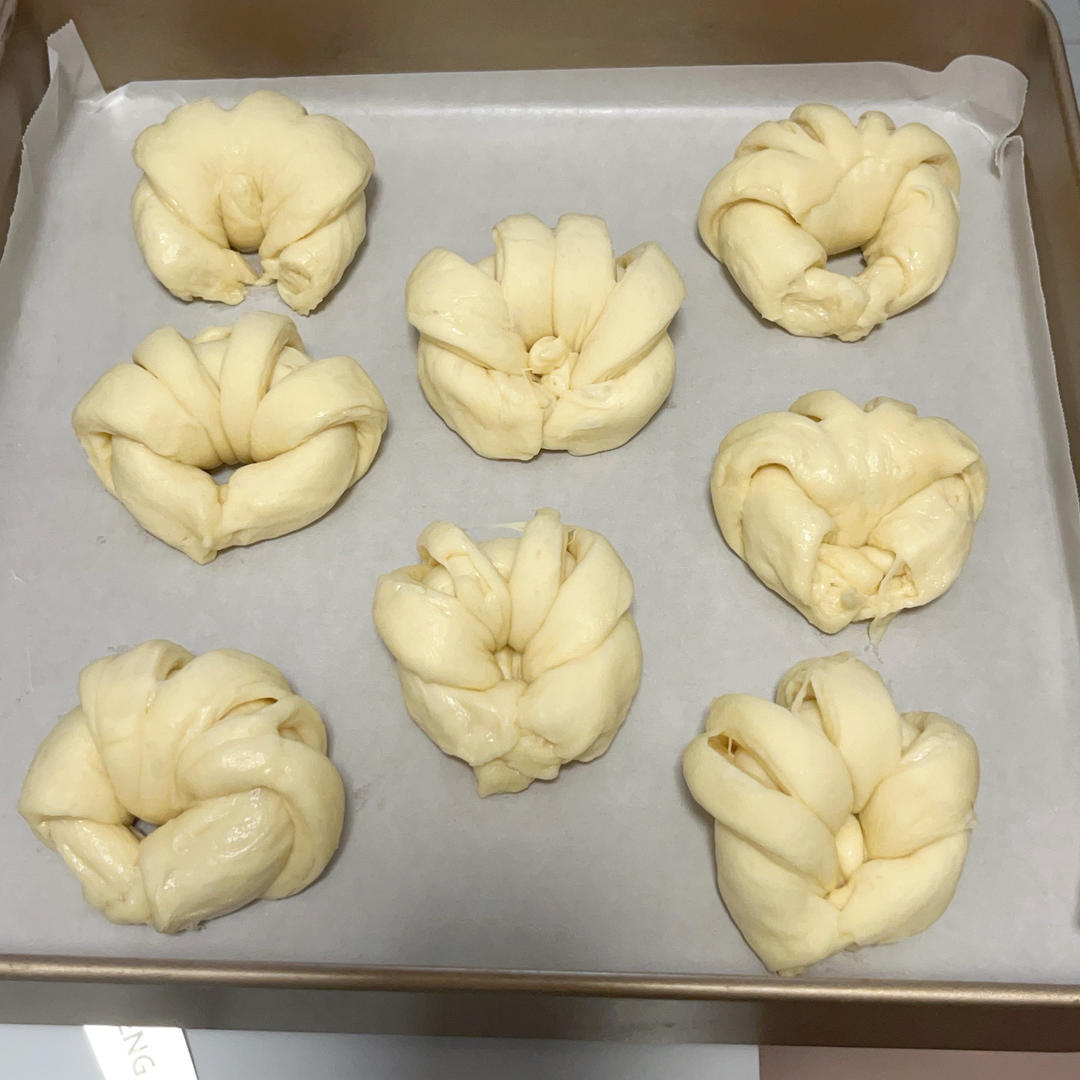
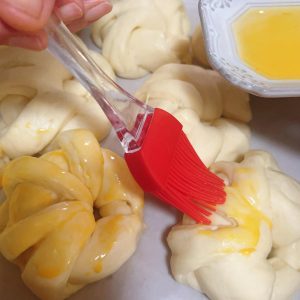
Step 16 — Brush With Egg Wash
Brush the proved buns with the egg yolk wash so they bake up glossy and deep golden.
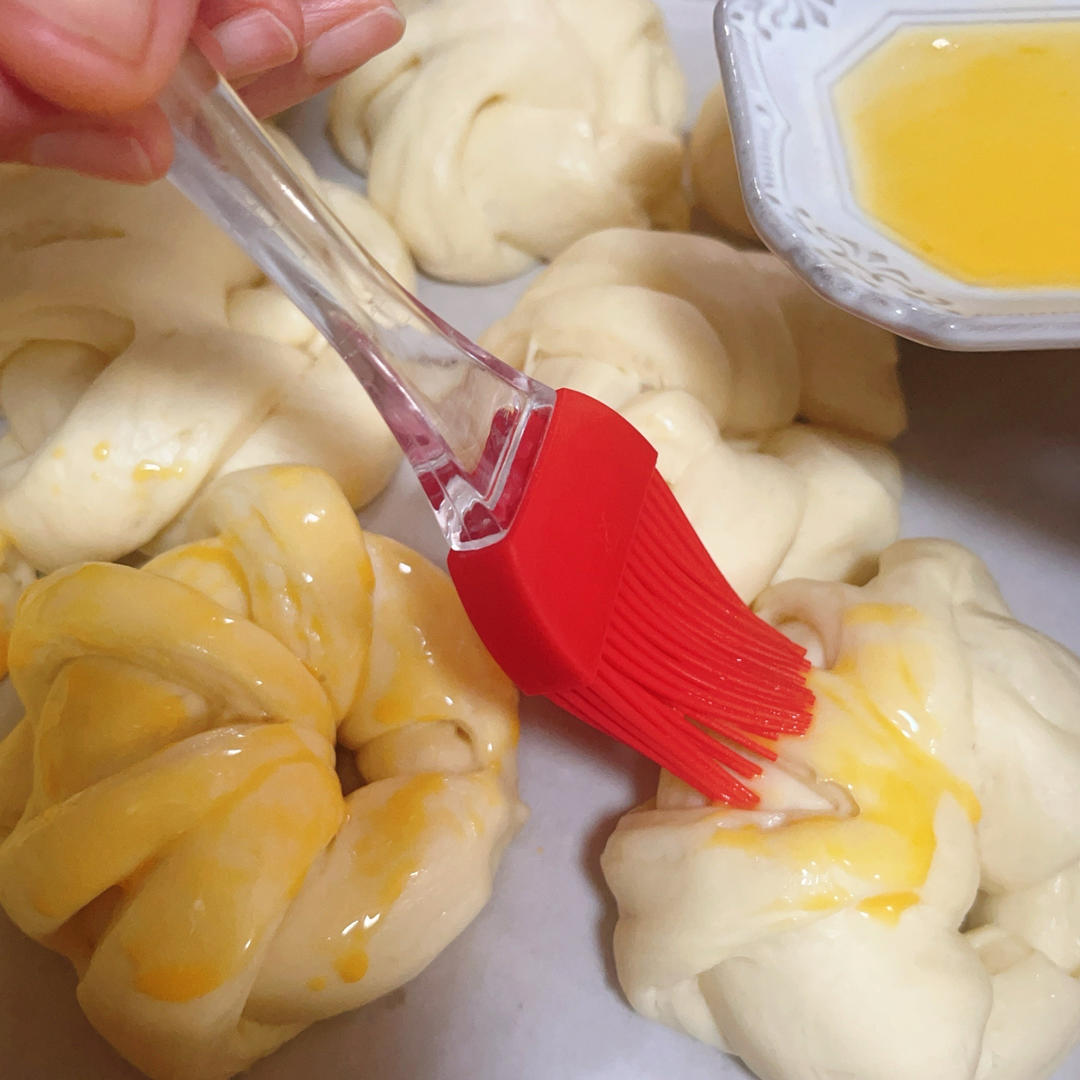
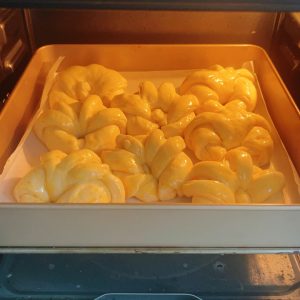
Step 17 — Bake at 355°F for 18 to 20 Minutes
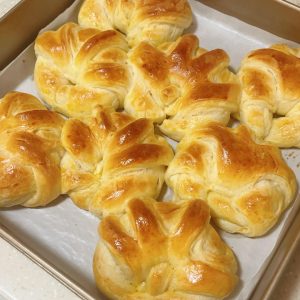
Preheat the oven to about 355°F (180°C) with the buns in the middle-lower rack, and bake for 18 to 20 minutes until deep golden. (The original used roughly 180°C top and 190°C bottom; a single 355°F setting works well at home.)
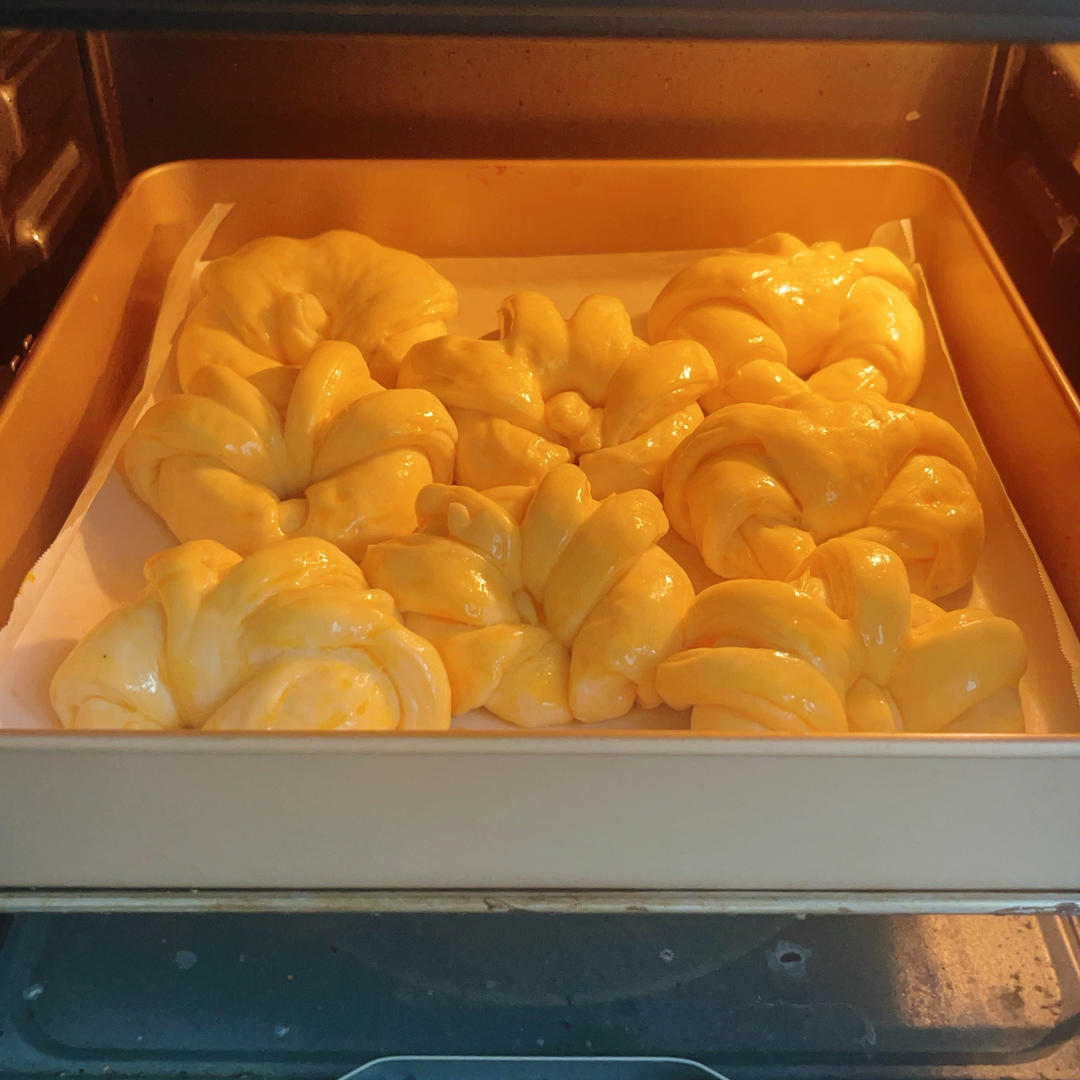
Step 18 — Drop the Pan to Release Steam
When the buns come out of the oven, drop the pan once on the counter to release the steam, then let them cool on the sheet for a few minutes.
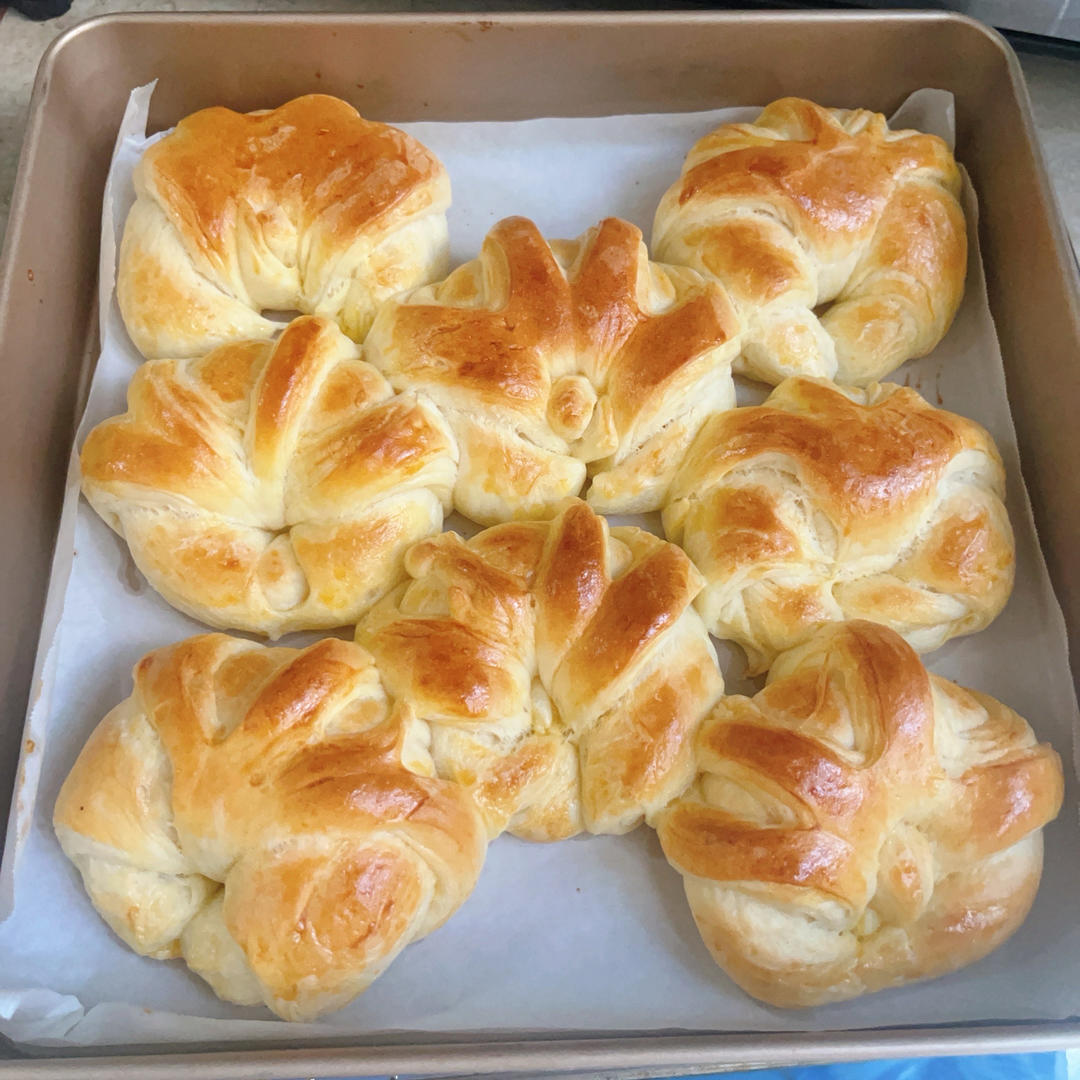
Step 19 — Split One for a Burger
Split a cooled bun, add a fried egg and a slice of luncheon meat (or your favorite patty), and you have a soft, bakery-style burger that children genuinely ask for. My tender juicy chicken steak is an excellent homemade patty for this.
Step 20 — Tear and Enjoy
Tear the warm buns apart, watch the feathery layers separate, and enjoy them plain, with butter, or as the softest sandwich bread you have made.
Common Mistakes When Making Butter Bread
1. Dense, heavy buns. Cause: the dough never reached a windowpane or the butter was added too early. Fix: knead to a rough membrane before adding fat, then to a full windowpane afterward.
2. The butter leaks out while baking. Cause: too much spreading butter or weak shaping. Fix: keep the spread thin and even, pinch the ends firmly, and chill the rolled dough before the final roll.
3. Flat, un-layered buns. Cause: the chilled rest was skipped. Fix: always refrigerate the coiled dough for 20 minutes so the butter firms and the layers stay distinct.
4. Burnt tops, raw centers. Cause: an oven that runs hot. Fix: bake on the middle-lower rack at 355°F (180°C) and check with a thermometer at 18 minutes; cover with foil if browning too fast.
5. Sticky dough that tears. Cause: the dough was too warm during kneading. Fix: use cold milk and, in hot weather, chill the bowl and ingredients before mixing.
Variations
Whole-wheat version. Replace a quarter of the flour with whole-wheat and add a splash of milk; expect a denser, nuttier bun. My whole-wheat buns show another approach if you bake with a machine.
Sweet or savory fillings. Spread a little cinnamon sugar, red bean paste, or ham before rolling the final wedges for filled horns. If you love soft sweet breads, my cloud-soft milk bread rolls, super soft milk bread, and pork floss buns are close cousins, and silky steamed egg with pork floss makes a savory topping for the same dough.
Frequently Asked Questions
Can I make the dough by hand? Yes. Mix to a shaggy dough, rest 10 minutes, then knead 10 to 12 minutes, adding the butter halfway. The dough is wetter than plain bread, so flour your hands, not the dough.
Why chill the dough before the final roll? Chilling relaxes the gluten and firms the butter layer, so the final roll creates clean, distinct layers instead of smearing them together.
Can I freeze the baked buns? Yes. Cool completely and freeze in an airtight bag for up to 2 months; reheat in a 300°F (150°C) oven for 8 to 10 minutes.
How is this different from brioche? Brioche is much higher in butter and eggs; this bread uses modest enrichment for a softer, less rich, everyday crumb that still shreds.
What is the best way to reheat? A few minutes in a warm oven revives the soft crust; the microwave makes it softer but slightly chewy.
How to Serve
Serve the buns warm, torn apart at the table, or split and filled as soft sandwich buns. They shine at breakfast with jam or a fried egg, and they make the softest burger buns, especially with a tender juicy chicken steak inside.
Storage & Reheat
Store the buns in an airtight container at room temperature for up to 2 days, or freeze for up to 2 months. Refresh in a 300°F (150°C) oven for 6 to 8 minutes. Because the bread contains milk, egg, and butter, keep it cool and dry, and reheat leftovers thoroughly before serving.
Allergen Notice
Contains gluten (bread flour), milk (milk and butter), and egg (in the dough and the wash). If you add luncheon meat for the burger suggestion, check its label for soy.
Nutrition Disclaimer
Nutrition information is calculated using an ingredient database and should be considered an estimate. In cases where multiple ingredient alternatives are given, the first listed is calculated for nutrition. Garnishes and optional ingredients are not included.
About the Author & Recipe Development
I am Lin, and after a decade in professional kitchens I have strong opinions about bread dough, most of them learned the hard way. This butter bread recipe from xiachufang taught me the horn-shaping trick that turns a plain soft dough into something that looks bakery-made, and I tested it twice: once rushing the chilled rest, which smeared the butter layers, and once following it exactly, which produced the feathery pull-apart buns in these photos. My sister’s verdict, delivered mid-tear: “This is the bakery one.”
Authoritative References
King Arthur Baking on yeast and proofing for proving guidance, and USDA Safe Temperature Chart for reheating leftovers.
Butter Bread (黄油面包): Soft Shredding Pull-Apart Buns

Equipment
- Stand Mixer with Dough Hook
- Rolling Pin
- Pastry Brush
- Baking Sheet
Ingredients
For the Dough
- 2.3 cups bread flour
- 1 large egg
- 1 tsp instant yeast
- 1.5 tbsp fine sugar
- 160 g ice-cold milk about 2/3 cup
- 1.5 tbsp unsalted butter, softened (for the dough)
- 0.5 tsp fine salt
For the Butter Layer and Finish
- 2 tbsp unsalted butter, softened (for spreading)
- 1 egg yolk beaten with 1 tsp water, for the wash optional
Instructions
- Mix all dough ingredients except butter and salt, kneading to a rough membrane.

- Add the softened dough butter and salt.
- Knead to a full windowpane, until the dough pulls long and thin without breaking.
- Cover and prove until doubled, about 1 hour.
- Roll the dough into a 30 to 35 cm round and spread the softened 30 g butter over it.
- Cut along one radius to open the round.
- Roll the dough around itself into a cone spiral.
- Coil the cone into a round and chill 20 minutes.
- Press the chilled dough into a disc.
- Roll out to a thin sheet about 1 cm thick.
- Cut the sheet into eight equal wedges.
- Make a few shallow cuts along each wedge.
- Roll each wedge from the wide outer edge toward the point.
- Pinch the ends of each roll into a horn shape.
- Prove the horns in the oven with steam for about 40 minutes until puffy.
- Brush with the egg yolk wash.
- Bake at 355°F (180°C) on the middle-lower rack for 18 to 20 minutes until deep golden.
- Drop the hot pan once to release steam, then cool briefly.
- Split a bun and fill with egg and luncheon meat for a soft burger.
- Tear the warm buns apart and serve.






Leave a Reply