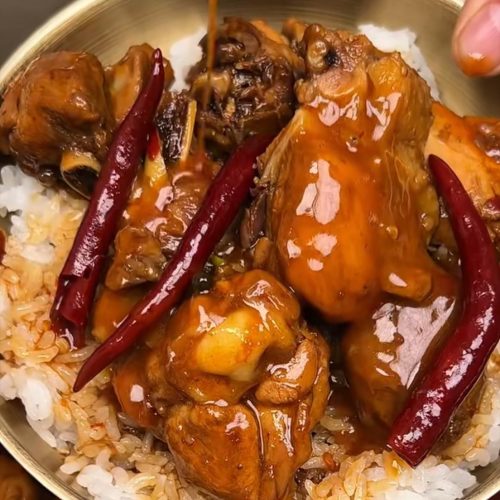
There’s a dish I keep coming back to when I want something that feels both comforting and electrifying — braised spicy chicken, or huang men la zi ji. It’s the kind of recipe that fills the kitchen with the scent of toasted chilies and garlic, and makes everyone wander in asking what’s cooking.
This version comes from a village chef’s approach, where the chicken is seared hard, then braised low and slow with a handful of whole spices and a deeply savory sauce. The result is tender meat coated in a glossy, fiery glaze that clings to every piece. If you’ve ever had a bowl of this at a small Sichuan eatery, you know exactly what I mean.
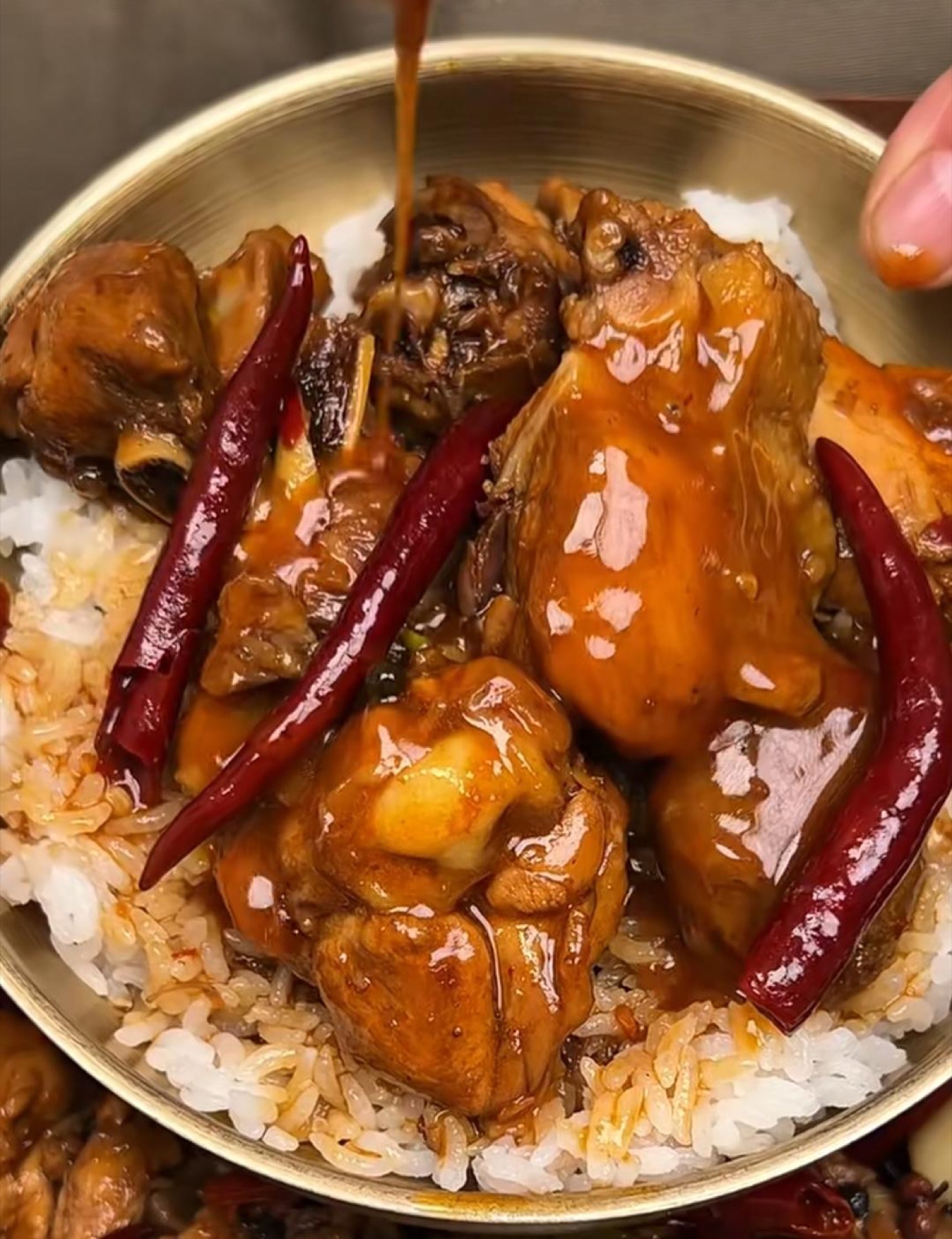
What Is Braised Spicy Chicken?
Huang men la zi ji is a Sichuan home-style dish where chicken pieces are first fried to develop color and flavor, then simmered with a concentrated sauce of fermented bean pastes, soy sauces, and a generous amount of dried chilies and Sichuan peppercorns. Unlike dry-fried la zi ji, this version is saucy and braised, which makes the meat incredibly tender and the flavors deeply integrated.
The key to this dish is patience — you’re not just cooking chicken, you’re building layers of flavor through searing, toasting spices, and slow braising.
It’s a rustic dish that originated in rural Sichuan kitchens, where cooks used whatever spices they had on hand. Over time, it became a staple in restaurants and homes alike, prized for its balance of heat, aroma, and richness.
If you love bold Sichuan flavors, this recipe is a must-try. The combination of dried chilies, fresh aromatics, and fermented sauces creates a depth that’s hard to find in quick stir-fries.
Why This Recipe Works
- Sealing the chicken first with high heat creates a flavorful crust that holds up during braising.
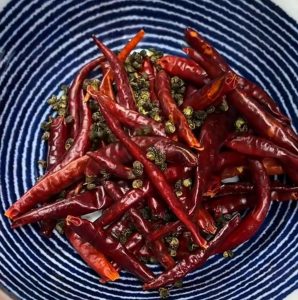
- Soaking the dried chilies and Sichuan peppercorns in warm water prevents them from burning and releases their fragrance.
- The combination of doubanjiang, yellow bean paste, and soy sauces builds a complex umami base.
- Whole spices like star anise, cinnamon, and white cardamom infuse the oil with warm, aromatic notes.
- Finishing with fresh scallions and garlic at the end adds a bright, pungent lift.
Equipment Needed
- Large wok or heavy-bottomed pot
- Kitchen paper towels
- Small bowls for prepped ingredients
- Wooden spoon or spatula
- Lid for braising
Ingredients
- 1500g chicken pieces (bone-in, skin-on)
- 30g dried chilies
- 5g green Sichuan peppercorns
- 5g red Sichuan peppercorns
- 3 bay leaves
- 2 star anise
- 1 small piece cinnamon bark
- 5 white cardamom pods (optional)
- 1 slice white angelica root (bai zhi) — essential
- 1 black cardamom shell (seeds removed)
- 1 segment scallion, about a finger long
- 9 cloves garlic
- 5 slices ginger
- 1 heaping tbsp Pixian doubanjiang
- 1 tbsp yellow bean paste
- 2 tbsp light soy sauce
- 0.5 tbsp dark soy sauce
- 1 tbsp oyster sauce
- 1 tbsp lard (optional)
- 3 tsp sugar
- 1 tsp white pepper powder
- 3 tsp chicken bouillon
- 2 tsp MSG
- 2 sprigs cilantro
Ingredient Notes
White angelica root (bai zhi) is non-negotiable here — it gives the dish its signature medicinal-herbal aroma. If you can’t find it, the flavor will be noticeably different. White cardamom is optional, but adds a lovely floral note. Use bone-in chicken for the best texture; boneless thighs will work but reduce braising time.
For the dried chilies, choose a variety that’s fragrant rather than purely hot, like er jing tiao or facing heaven chilies. Soaking them in warm water for 5 minutes softens them and prevents burning. If you want less heat, shake out some of the seeds before soaking.
Prep & Mise en Place
Before you turn on the heat, have everything ready. Rinse the chicken pieces and pat them completely dry with kitchen paper — any moisture will cause splattering and prevent proper searing.
Soak the dried chilies and both types of Sichuan peppercorns in warm water for 5 minutes, then drain well. Prepare the aromatics: slice the ginger, peel the garlic cloves (trimming the ends), and cut the scallion into segments. Measure out the whole spices and set them aside.
In a small bowl, mix the doubanjiang, yellow bean paste, light soy sauce, dark soy sauce, and oyster sauce into a smooth “chicken sauce.” This is your flavor base.
Cooking Process
Step 1: Dry the Chicken
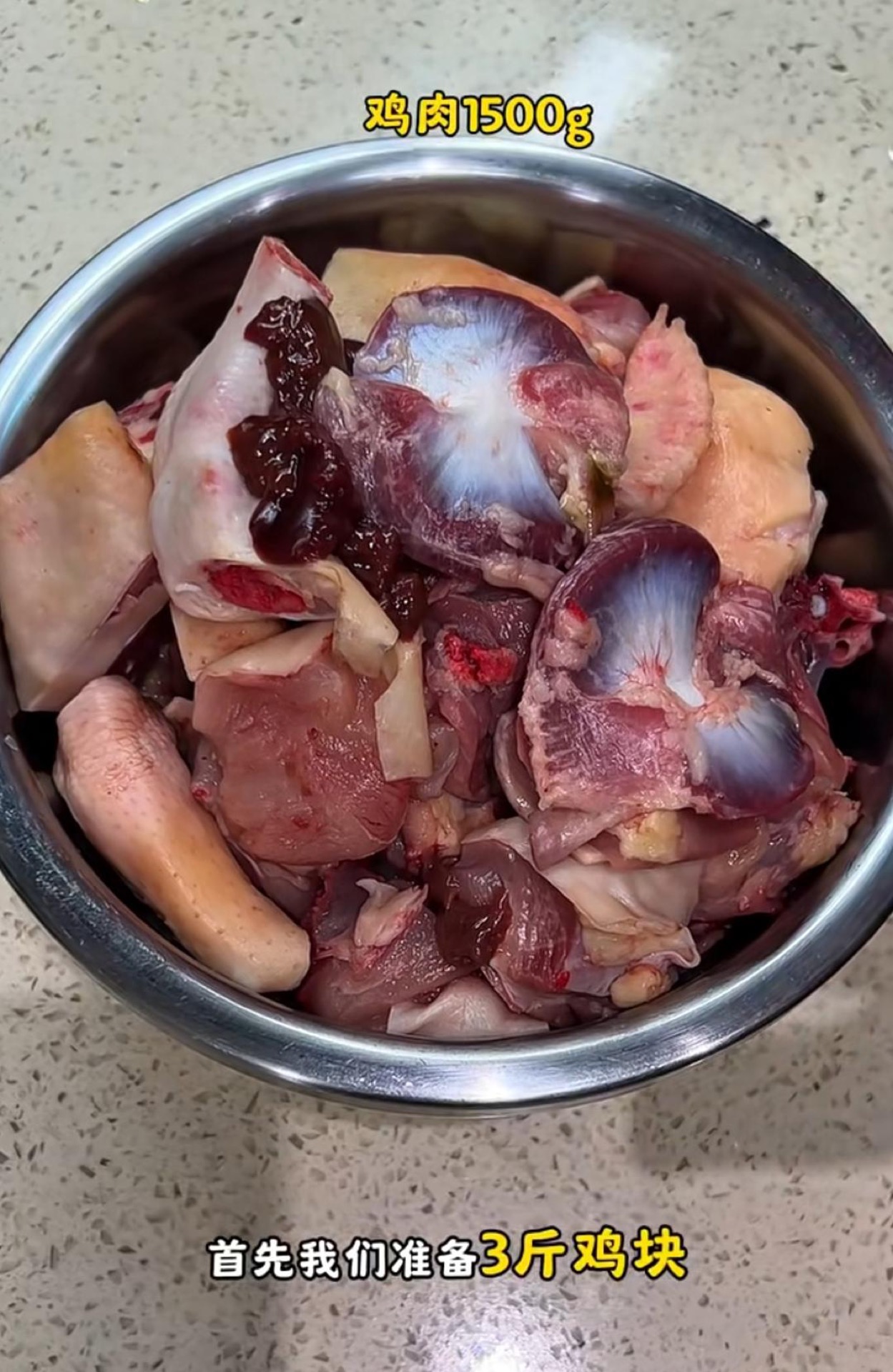
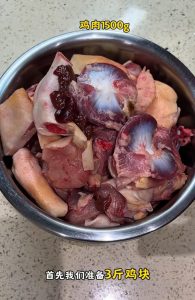
Rinse 1500g of chicken pieces and remove any stray feathers. Pat them completely dry with kitchen paper — this is crucial for a good sear.
Step 2: Soak the Chilies and Peppercorns
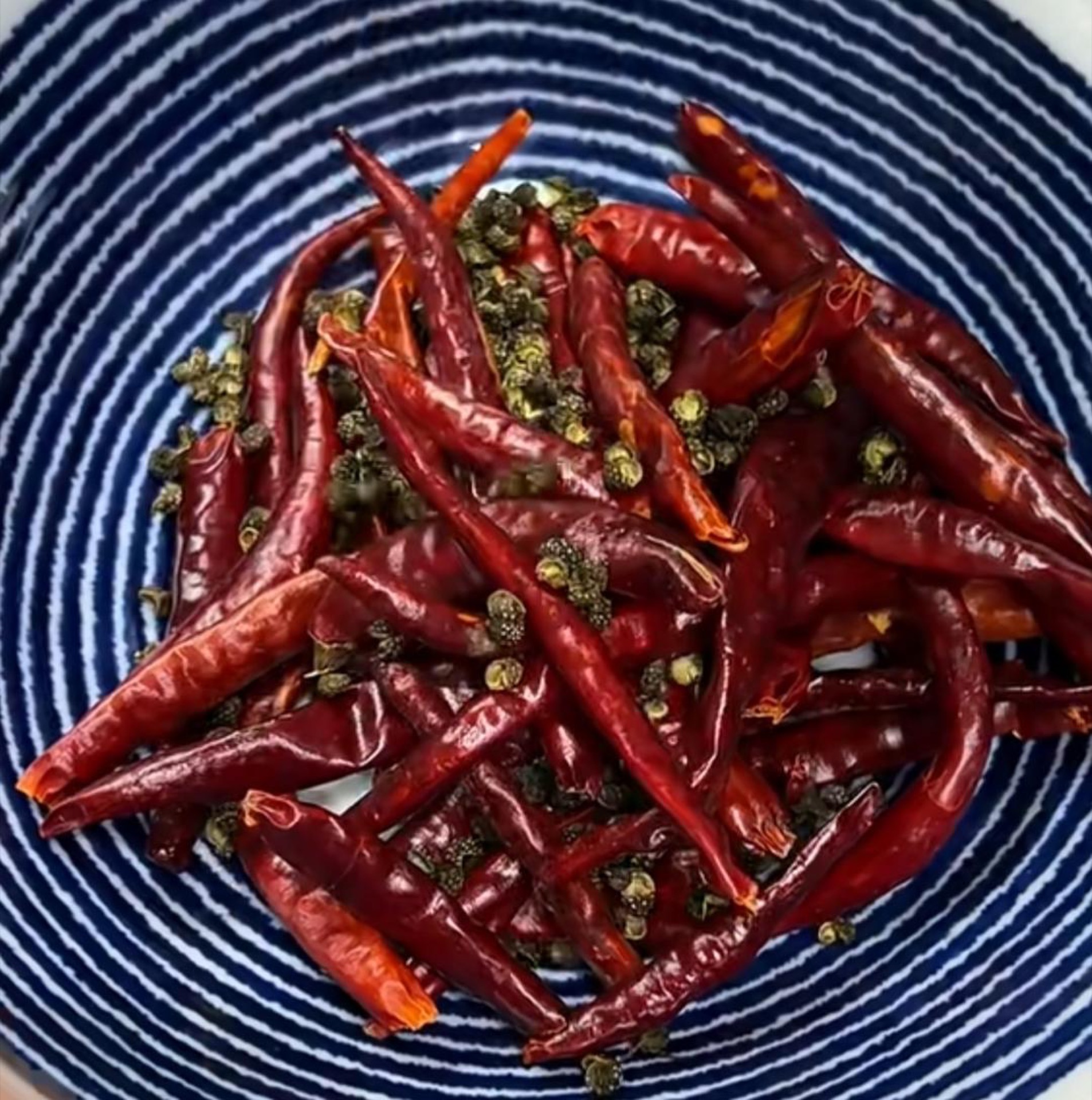
In a bowl, combine 30g dried chilies, 5g red Sichuan peppercorns, and 5g green Sichuan peppercorns. Cover with warm water and soak for 5 minutes. Drain well before using.
Step 3: Prepare the Spices and Aromatics
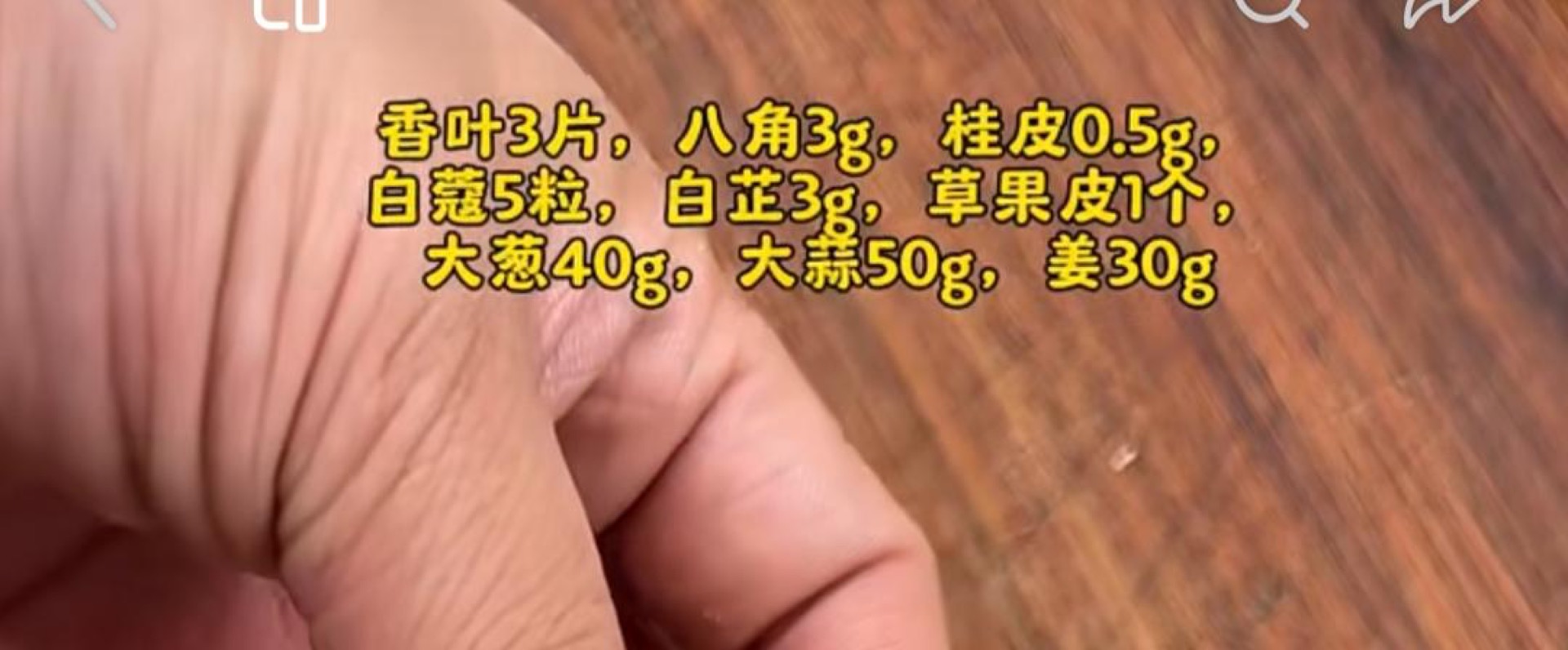
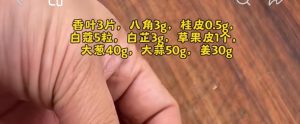
Gather your whole spices: 3 bay leaves, 2 star anise, a small piece of cinnamon (don’t overdo it), 5 white cardamom pods (optional), 1 slice of white angelica root (essential, about the size of 3 thumbnails), and 1 black cardamom shell with seeds removed. Cut a finger-length segment of scallion, peel 9 garlic cloves, and slice 5 thick pieces of ginger.
Step 4: Make the Chicken Sauce
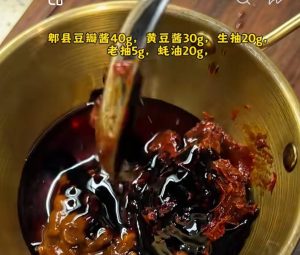
In a small bowl, combine 1 heaping tablespoon of Pixian doubanjiang, 1 tablespoon yellow bean paste, 2 tablespoons light soy sauce, 0.5 tablespoon dark soy sauce, and 1 tablespoon oyster sauce. Stir until smooth.
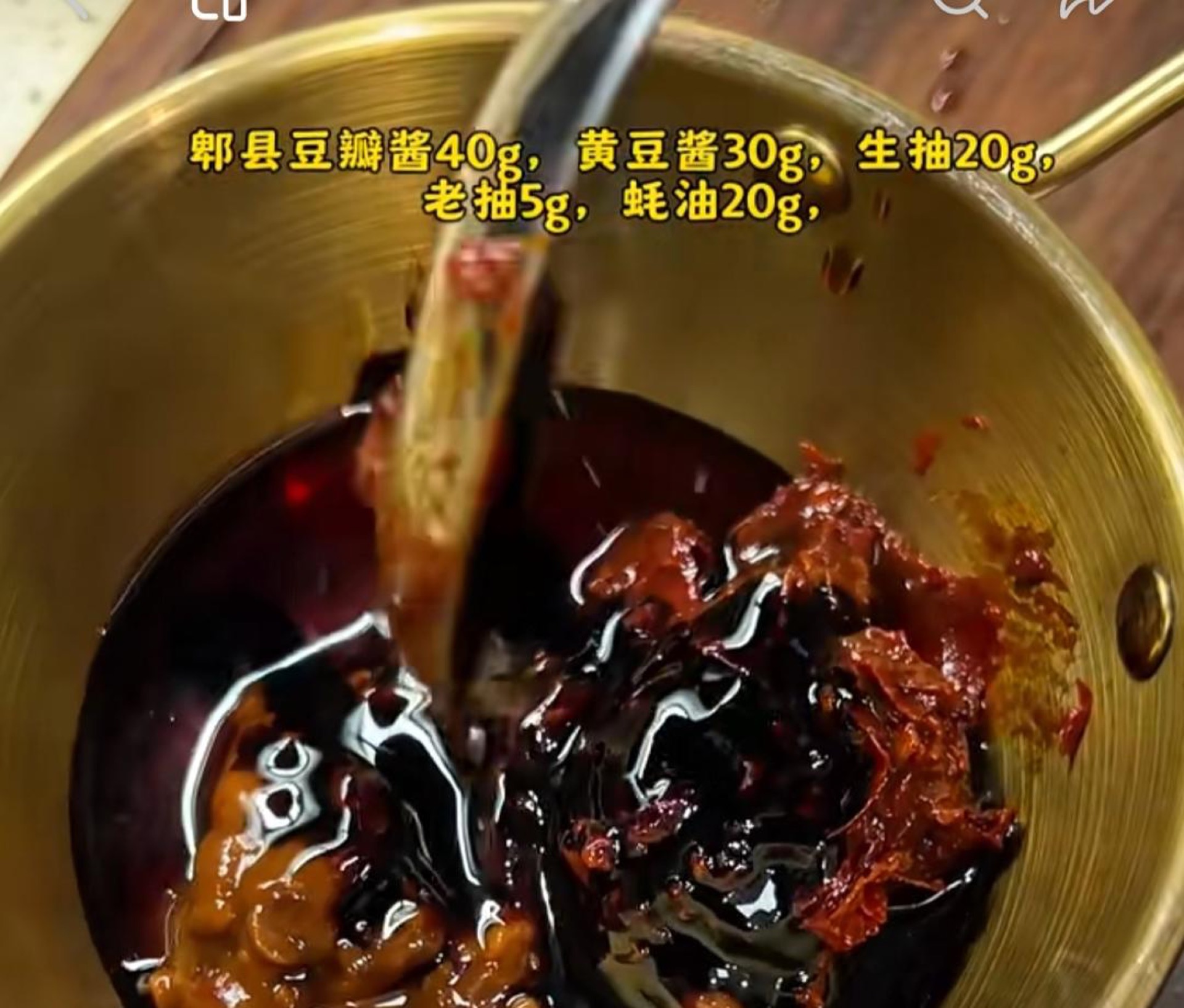
Step 5: Fry the Ginger
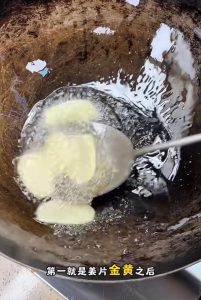
Heat a generous amount of lard and cooking oil in a wok. Add the ginger slices and fry until golden brown and fragrant. The oil should shimmer.
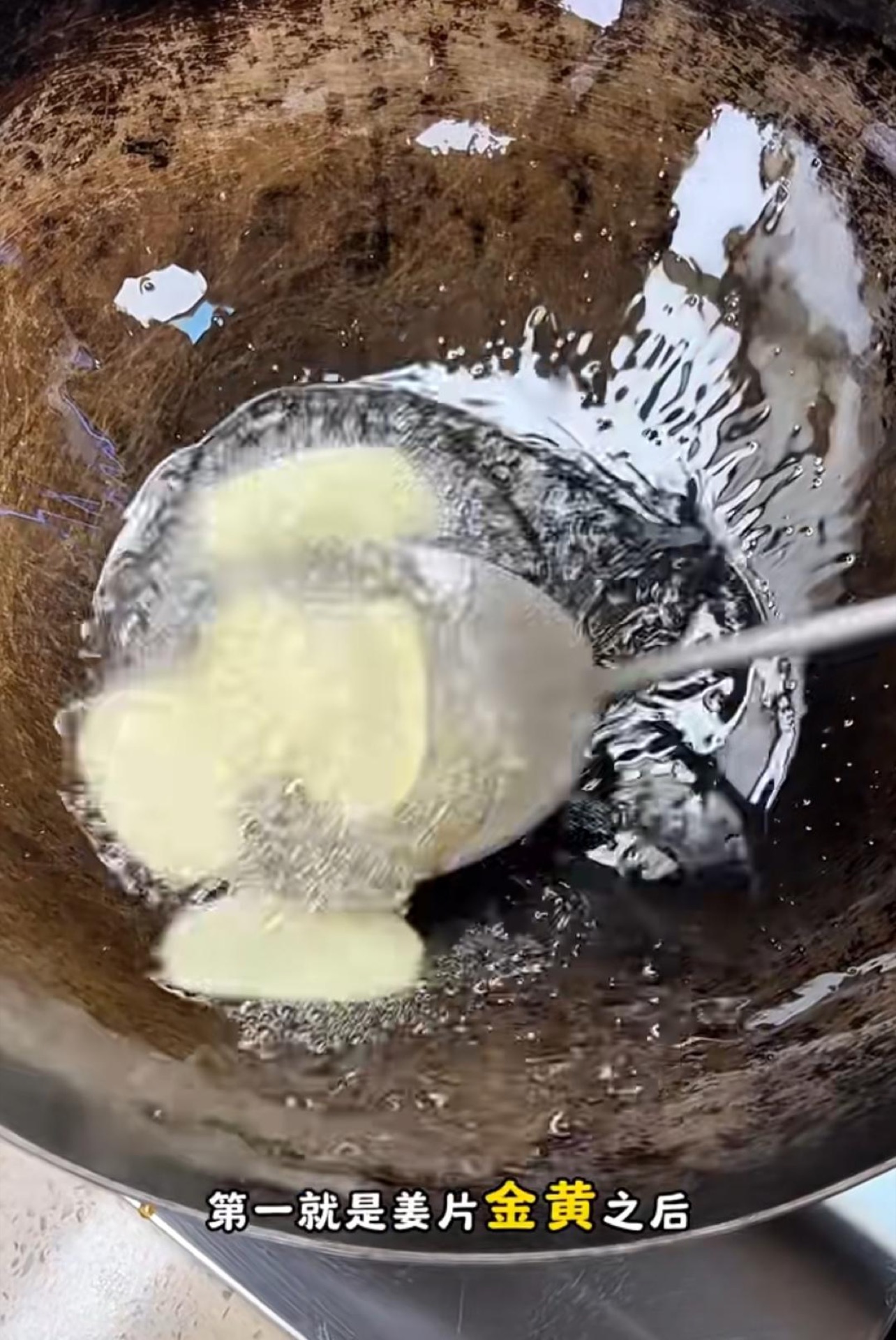
Step 6: Sear the Chicken
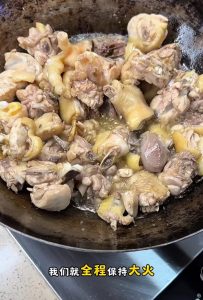
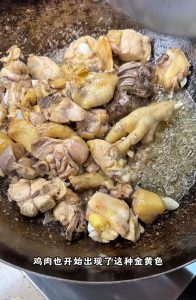
Slide the chicken pieces into the wok along the edge, then spread them into a single layer. Let them sit for 20 seconds without moving, then stir-fry over high heat for several minutes until the chicken is lightly browned and the oil turns golden.
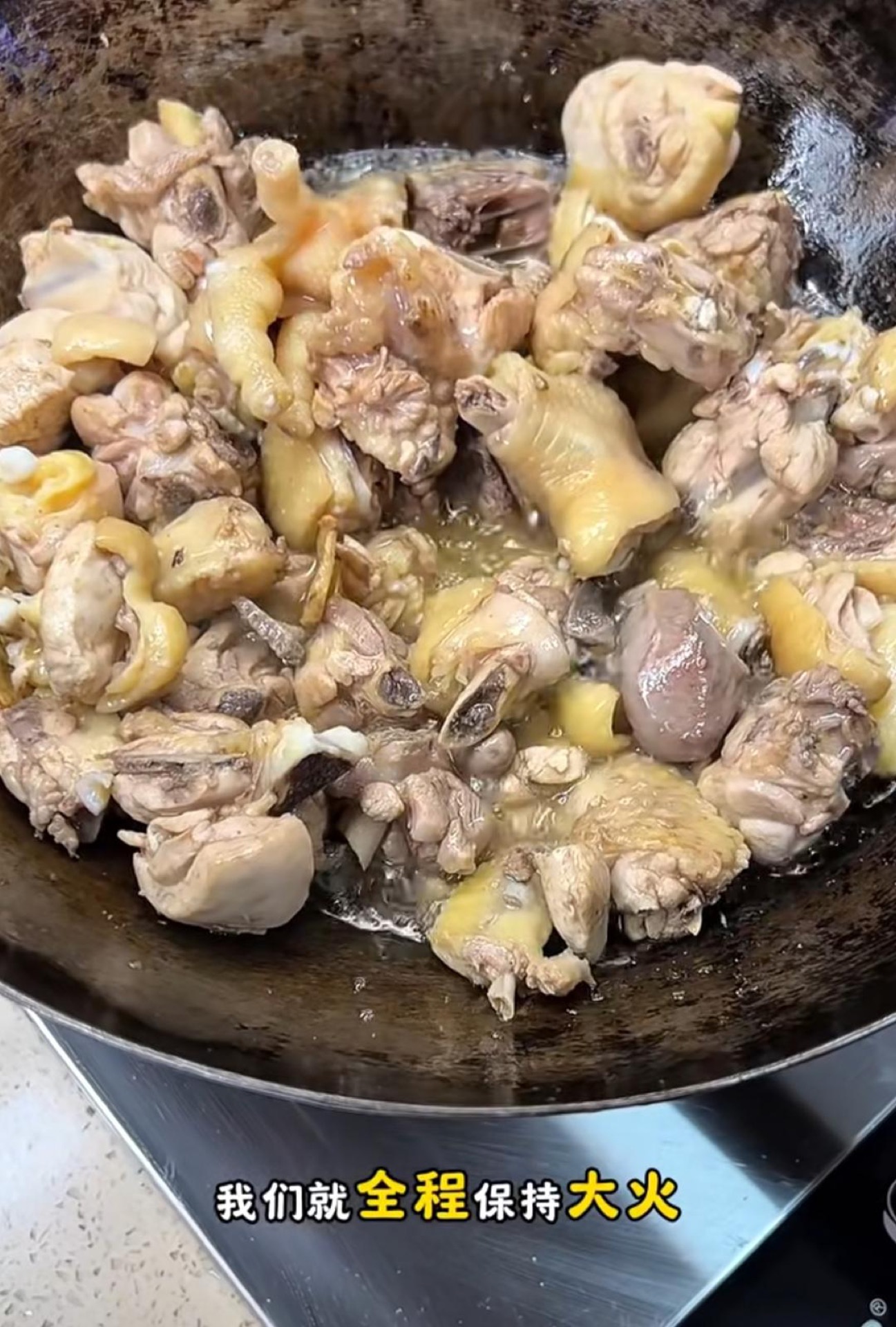
Step 7: Add Chilies and Peppercorns
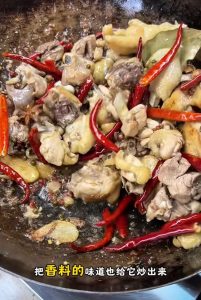
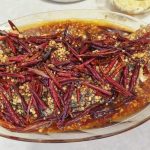
When the chicken starts to stick slightly to the wok and the oil is golden, add the drained chilies and Sichuan peppercorns. Stir-fry until very fragrant.
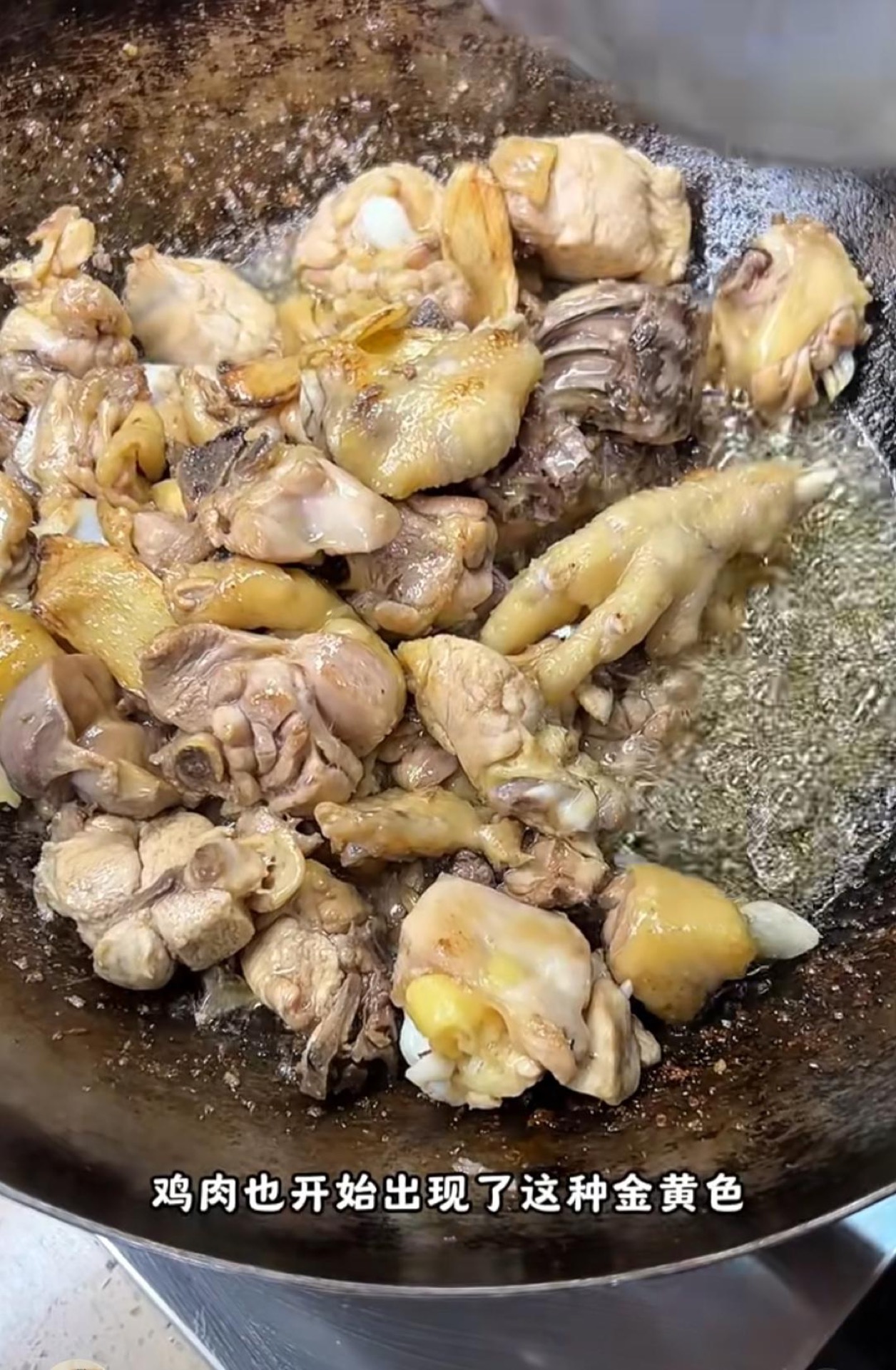
Step 8: Add the Whole Spices
Add the bay leaves, star anise, cinnamon, cardamom, angelica root, and black cardamom shell. Stir-fry until aromatic, about 30 seconds.
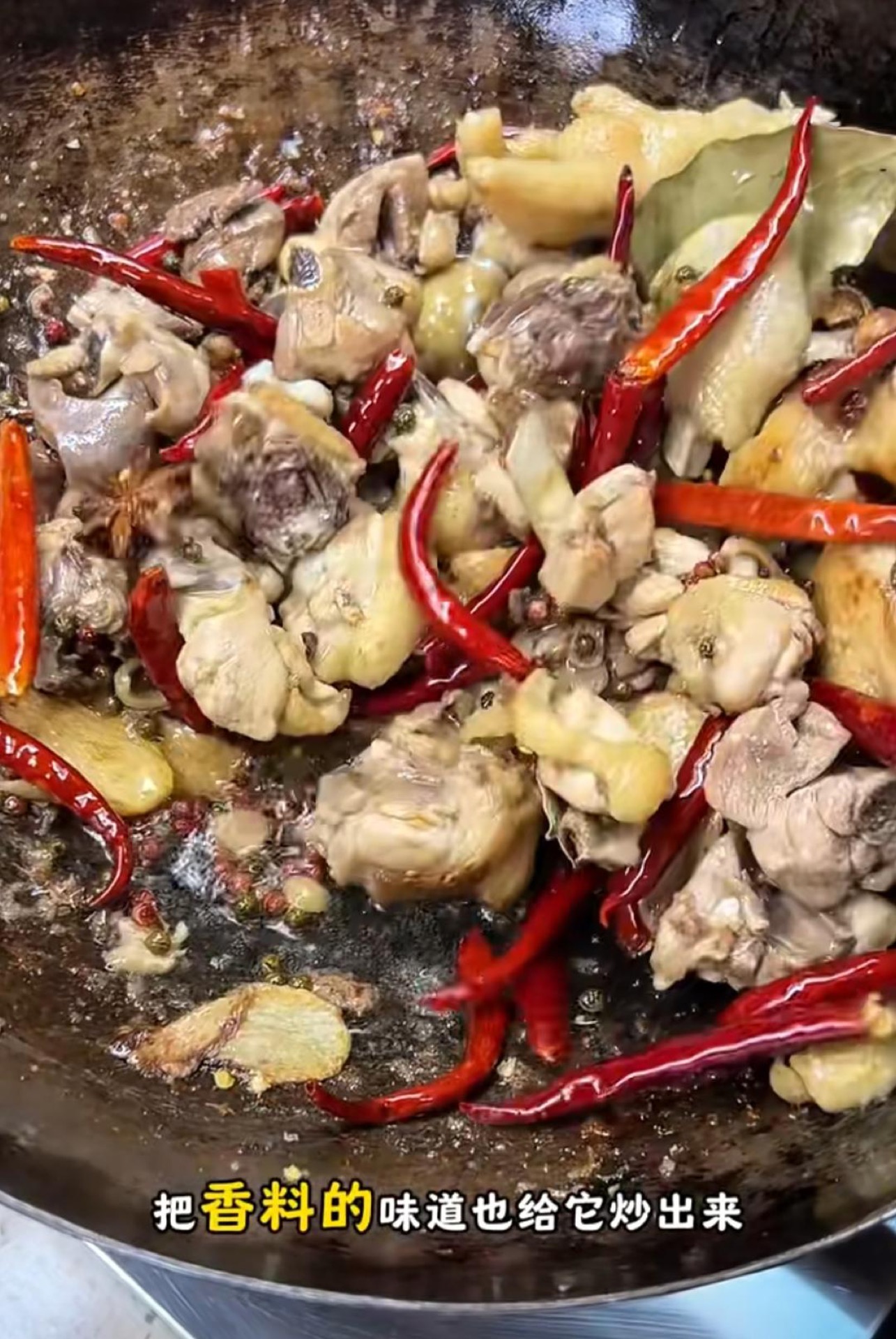
Step 9: Add the Sauce
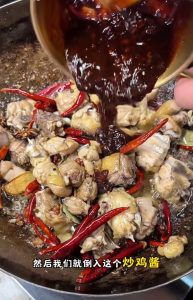
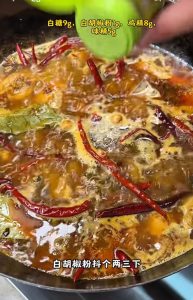
Pour in the prepared chicken sauce. Stir-fry for a good while to cook out the raw bean paste flavor — this step is important for depth.
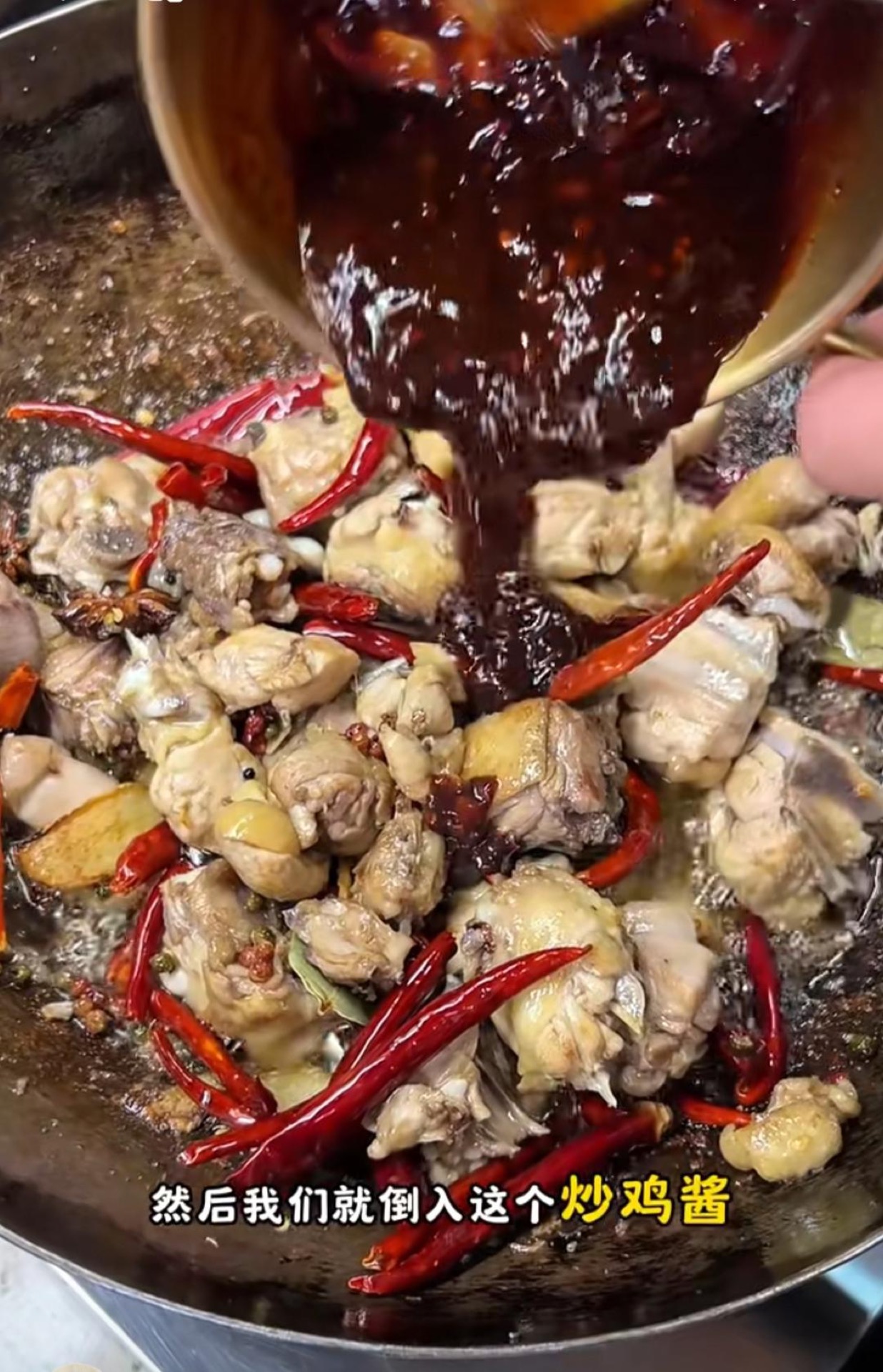
Step 10: Braise the Chicken
Spread the chicken evenly in the wok and add water to just cover. Season with 3 teaspoons sugar, a couple shakes of white pepper, 3 teaspoons chicken bouillon, and 2 teaspoons MSG.
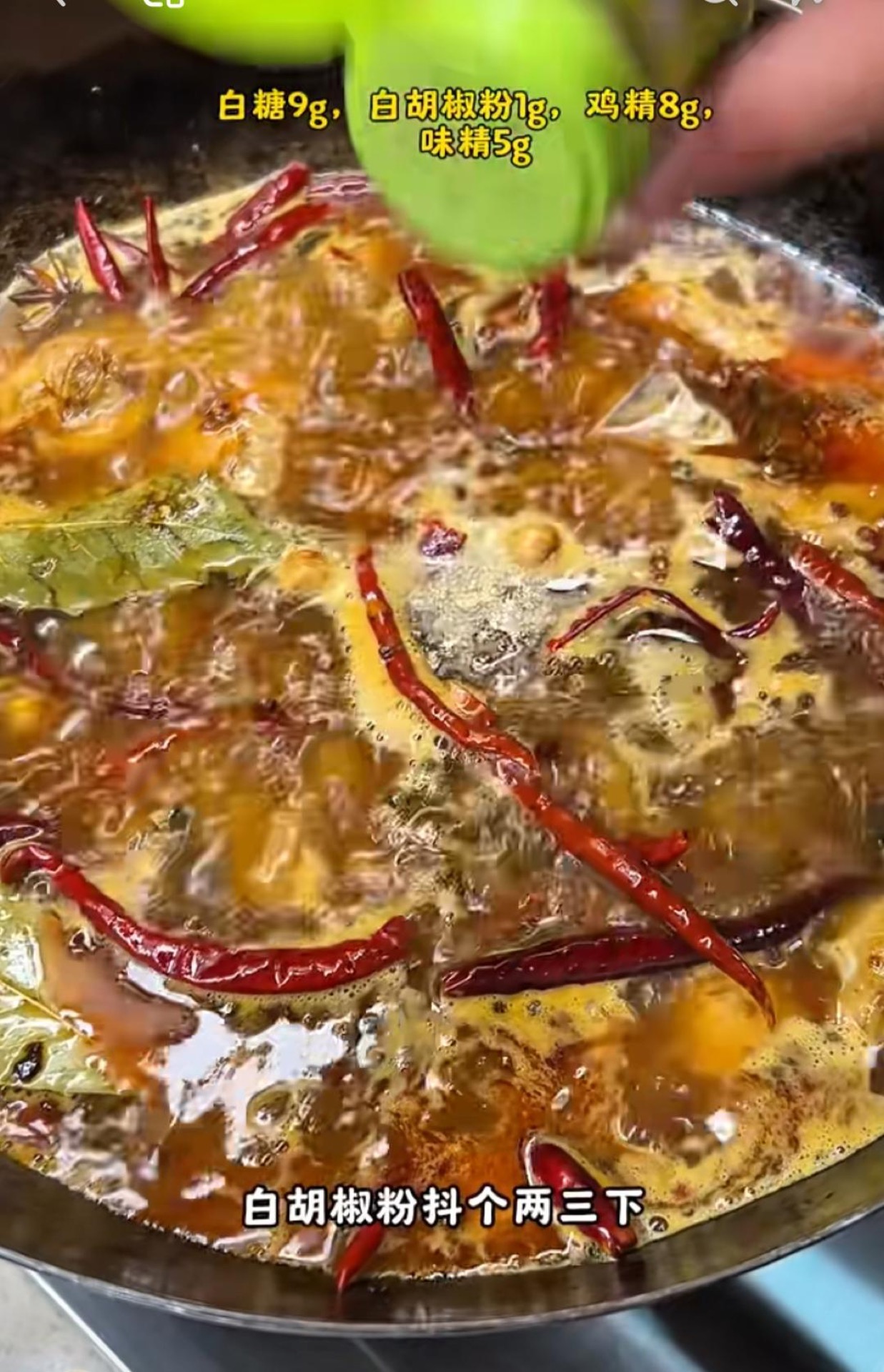
Step 11: Simmer
Bring to a boil over high heat, then reduce to low, cover, and simmer for 25 minutes. If using chicken thighs, use less water and simmer for only 15 minutes. You can add potatoes or other vegetables at this stage.
Step 12: Reduce the Sauce
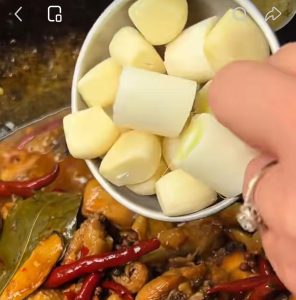
After simmering, remove the lid and turn the heat to high. Reduce the sauce until thick and glossy. Add the scallion segments and garlic cloves, stir-fry until fragrant. Taste and adjust seasoning if needed.
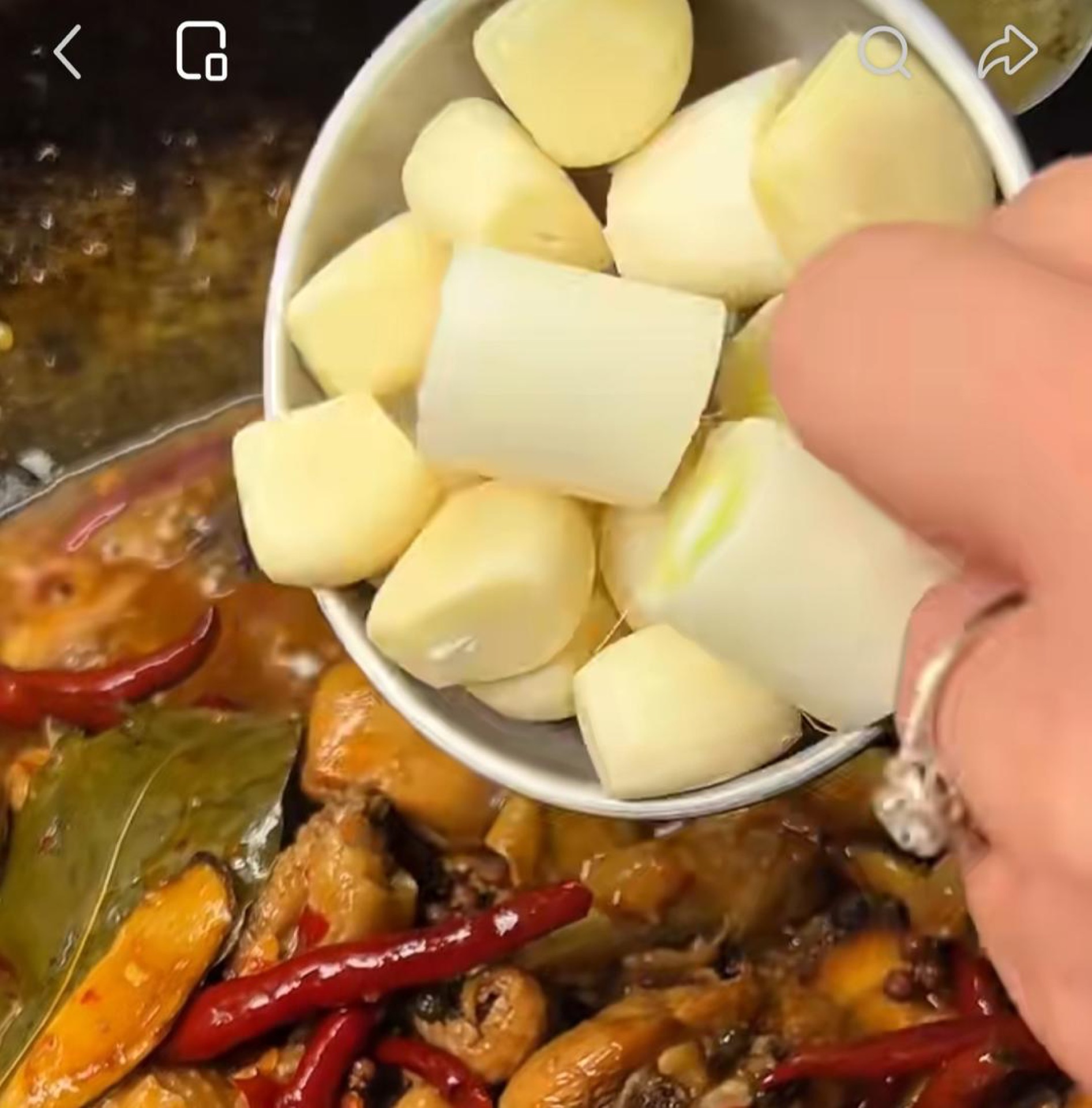
Step 13: Serve
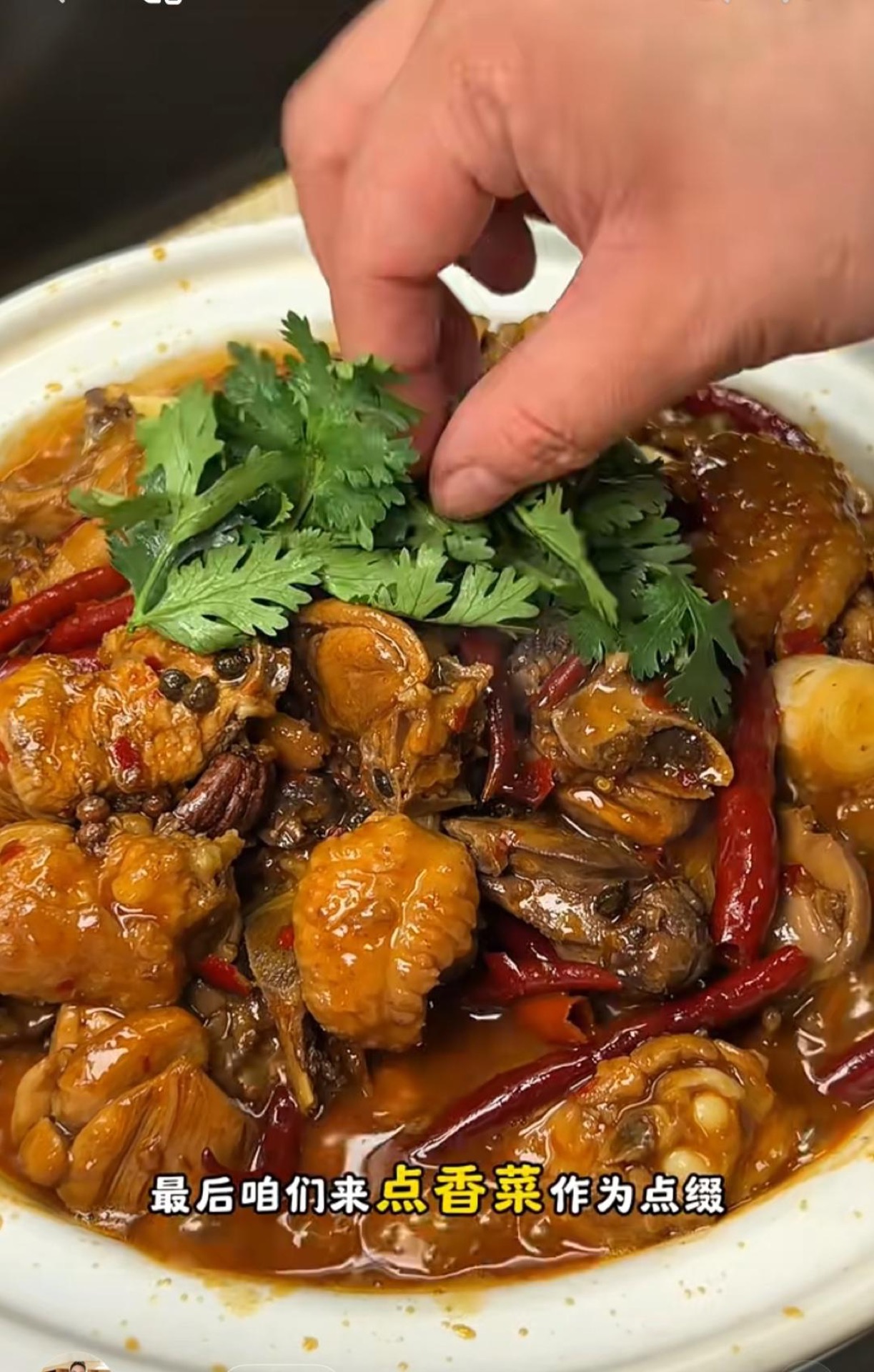
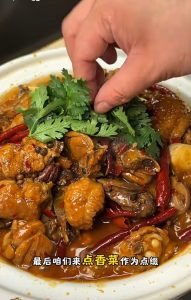
Transfer to a serving dish and garnish with fresh cilantro. Serve hot with steamed rice.
Common Mistakes When Making Braised Spicy Chicken
1. Not drying the chicken properly. Moisture on the surface steams the meat instead of searing it, resulting in pale, tough chicken.
2. Burning the chilies and spices. Keep the heat moderate when adding them and stir constantly. Burnt chilies turn bitter and ruin the sauce.
3. Skipping the soaking step for the dried chilies and peppercorns. Soaking prevents burning and helps release their fragrance evenly.
4. Using too much cinnamon. A little goes a long way; too much makes the dish taste medicinal.
5. Undercooking the bean paste. You must stir-fry the doubanjiang and yellow bean paste long enough to cook out the raw flavor, otherwise the sauce tastes flat.
Variations
Add cubed potatoes or daikon radish during the braising step for a heartier one-pot meal. For a milder version, reduce the dried chilies to 15g and remove the seeds. You can also swap the chicken for bone-in pork ribs, adjusting the braising time to 40 minutes.
Some cooks add a splash of Shaoxing wine along with the sauce for extra depth. If you prefer a drier texture, reduce the water by a third and braise uncovered for the last 10 minutes.
Frequently Asked Questions
Can I use boneless chicken? Yes, but reduce the braising time to 10-12 minutes to avoid overcooking. Bone-in chicken gives a richer flavor.
Is this dish very spicy? It’s moderately spicy. The heat comes from the dried chilies, but the sauce and aromatics balance it. Adjust the chili amount to your taste.
What if I can’t find white angelica root? It’s essential for the authentic flavor. If unavailable, the dish will still be tasty but missing a key aromatic note. You can substitute with a small piece of dried tangerine peel for a different citrusy aroma.
Can I make this ahead? Yes, it tastes even better the next day. Cool completely and refrigerate for up to 3 days. Reheat gently on the stovetop.
How do I make it less oily? Use less lard and oil, and skim off excess fat from the surface before serving. The chicken itself releases fat during braising.
How to Serve
Serve this braised spicy chicken with steamed white rice and a simple stir-fried green vegetable, like garlic bok choy. It’s also great alongside a cold cucumber salad to balance the heat. For a full Sichuan meal, pair it with Mei Cai Kou Rou and a light soup like Seaweed Winter Melon Shrimp Soup.
If you’re new to cooking with a wok, check out my guide on Chinese cooking techniques for beginners and how to control heat in stir-fry. And for choosing the right oil, see my post on best oils for stir-frying.
Storage & Reheat
Store leftovers in an airtight container in the refrigerator for up to 3 days. The flavors deepen overnight. Reheat in a wok or skillet over medium heat, adding a splash of water if the sauce is too thick. You can also freeze it for up to 2 months; thaw overnight in the fridge before reheating.
Allergen Notice
This recipe contains soy (soy sauce, doubanjiang, yellow bean paste, oyster sauce) and may contain shellfish (oyster sauce). Check labels if you have allergies. MSG is optional and can be omitted.
Nutrition Disclaimer
Nutrition information is approximate and for informational purposes only. It is not a substitute for professional dietary advice.
About the Author & Recipe Development
I’m Lin, and I grew up in my parents’ restaurant kitchen in Chengdu, where every dish on the menu had to earn its place. This braised spicy chicken is based on a village chef’s method I learned years ago — it’s the kind of recipe that rewards patience and good ingredients. I’ve tested it many times to get the balance of heat, salt, and aroma just right for home cooks.
Authoritative References
For more on Sichuan cooking techniques and ingredients, see my guides on easy Chinese home cooking, how to clean a wok, and whether you can use butter in stir-fry. Also see my recipe for Scallion Oil Squid for another bold flavor profile.
Braised Spicy Chicken (黄焖辣子鸡): Village Chef’s Fiery Sichuan Classic

Equipment
- Large wok or heavy-bottomed pot
- Kitchen Paper Towels
- Small bowls for prepped ingredients
- Wooden spoon or spatula
- Lid for braising
Ingredients
Chicken and Aromatics
- 1500 g chicken pieces bone-in, skin-on
- 30 g dried chilies soaked in warm water
- 5 g green Sichuan peppercorns
- 5 g red Sichuan peppercorns
- 3 bay leaves
- 2 star anise
- 1 small piece cinnamon bark
- 5 white cardamom pods optional
- 1 slice white angelica root (bai zhi) essential
- 1 black cardamom shell seeds removed
- 1 segment scallion finger-length
- 9 cloves garlic ends trimmed
- 5 slices ginger thick slices
Sauce and Seasonings
- 1 heaping tbsp Pixian doubanjiang
- 1 tbsp yellow bean paste
- 2 tbsp light soy sauce
- 0.5 tbsp dark soy sauce
- 1 tbsp oyster sauce
- 1 tbsp lard optional
- 3 tsp sugar
- 1 tsp white pepper powder
- 3 tsp chicken bouillon
- 2 tsp MSG
- 2 sprigs cilantro for garnish
Instructions
- Rinse 1500g of chicken pieces and remove any stray feathers. Pat them completely dry with kitchen paper.

- In a bowl, combine 30g dried chilies, 5g red Sichuan peppercorns, and 5g green Sichuan peppercorns. Cover with warm water and soak for 5 minutes. Drain well.

- Gather whole spices: 3 bay leaves, 2 star anise, a small piece of cinnamon, 5 white cardamom pods (optional), 1 slice white angelica root, and 1 black cardamom shell. Cut scallion, peel garlic, slice ginger.

- In a small bowl, combine 1 heaping tbsp doubanjiang, 1 tbsp yellow bean paste, 2 tbsp light soy sauce, 0.5 tbsp dark soy sauce, and 1 tbsp oyster sauce. Stir until smooth.

- Heat a generous amount of lard and cooking oil in a wok. Add ginger slices and fry until golden brown and fragrant.

- Slide chicken pieces into the wok along the edge, spread into a single layer. Let sit for 20 seconds, then stir-fry over high heat until lightly browned and oil turns golden.

- When chicken starts to stick slightly and oil is golden, add drained chilies and Sichuan peppercorns. Stir-fry until very fragrant.

- Add bay leaves, star anise, cinnamon, cardamom, angelica root, and black cardamom shell. Stir-fry until aromatic, about 30 seconds.
- Pour in the prepared chicken sauce. Stir-fry for a good while to cook out the raw bean paste flavor.

- Spread chicken evenly and add water to just cover. Season with 3 tsp sugar, white pepper, 3 tsp chicken bouillon, and 2 tsp MSG.
- Bring to a boil over high heat, then reduce to low, cover, and simmer for 25 minutes. If using chicken thighs, use less water and simmer for 15 minutes. Add potatoes or vegetables if desired.
- Remove lid, turn heat to high, and reduce sauce until thick and glossy. Add scallion segments and garlic cloves, stir-fry until fragrant. Taste and adjust seasoning.

- Transfer to a serving dish and garnish with fresh cilantro. Serve hot with steamed rice.









Leave a Reply