Every parent knows the struggle of packing a lunch that comes home empty. I recently faced this challenge with my own family’s midday meals. I decided to test a classic homestyle dish: Braised Pork with Potatoes (Tu Dou Dun Rou). The result? The kids said it was absolutely delicious, and the plates were licked clean.
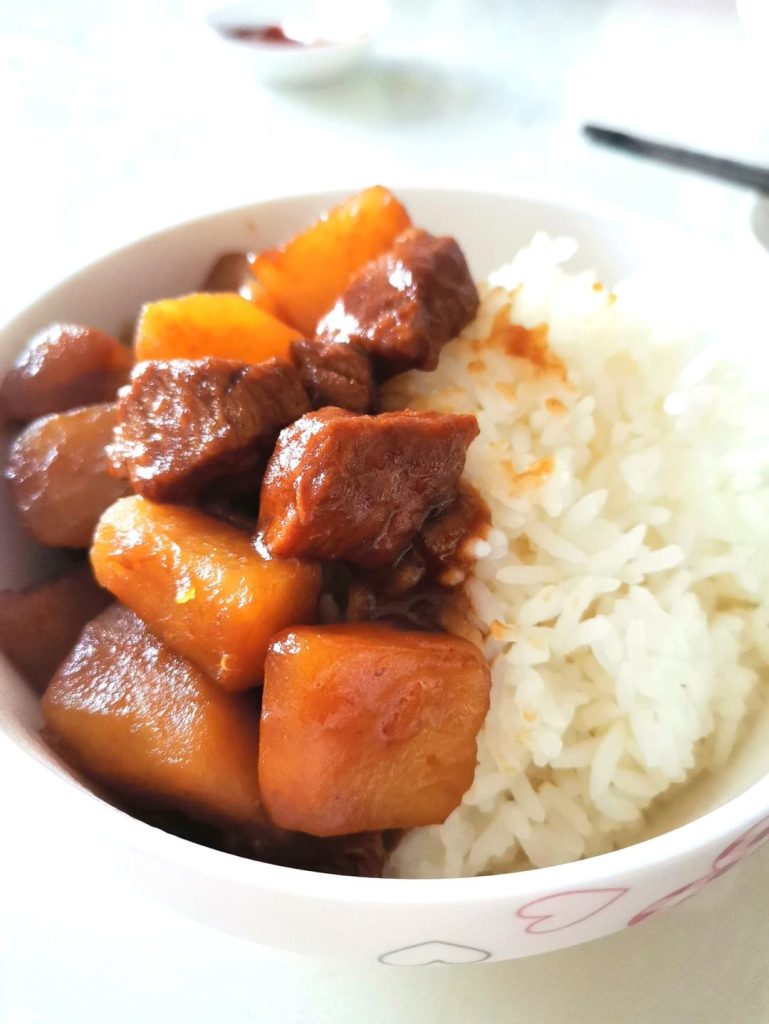
This isn’t just a meal for kids, though. It is the epitome of Chinese comfort food. Growing up in my family’s kitchen, we often made “red braised” dishes. While Braised Pork Belly is the famous banquet star, this pork and potato version is the humble, reliable weeknight hero. The starch from the potatoes naturally thickens the sauce, creating a glossy, savory gravy that clings to the rice. It is hearty, unpretentious, and deeply satisfying.
What Is Braised Pork with Potatoes?
Tu Dou Dun Rou (猪肉炖土豆) literally translates to “Pork Stewed Potatoes.” It falls under the category of “Red Braised” (Hong Shao) dishes, characterized by the use of soy sauce, caramelized sugar, and aromatics to create a reddish-brown color and a savory-sweet flavor profile.
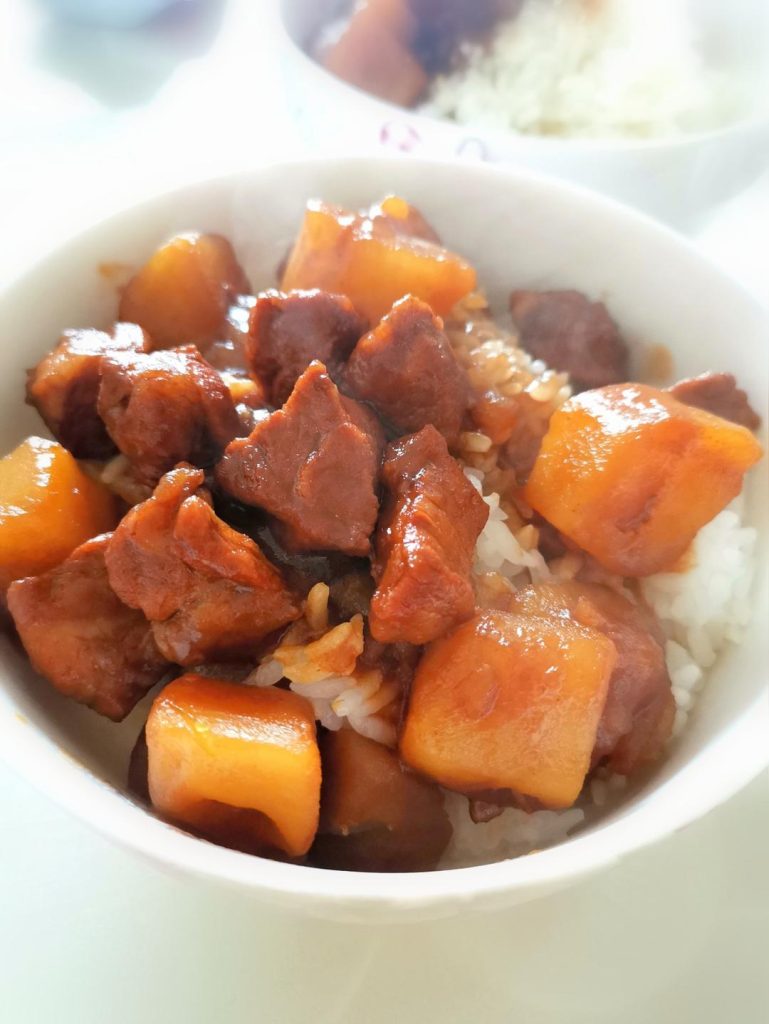
Unlike the precise, delicate dishes found in high-end Cantonese banquets, this is a rustic dish common in Northern and Northeastern China (Dongbei), though eaten widely across the country. It is similar in spirit to Braised Beef Brisket with Potatoes, but pork shoulder offers a faster cooking time and a richer, fattier mouthfeel that pairs beautifully with the earthy potatoes.
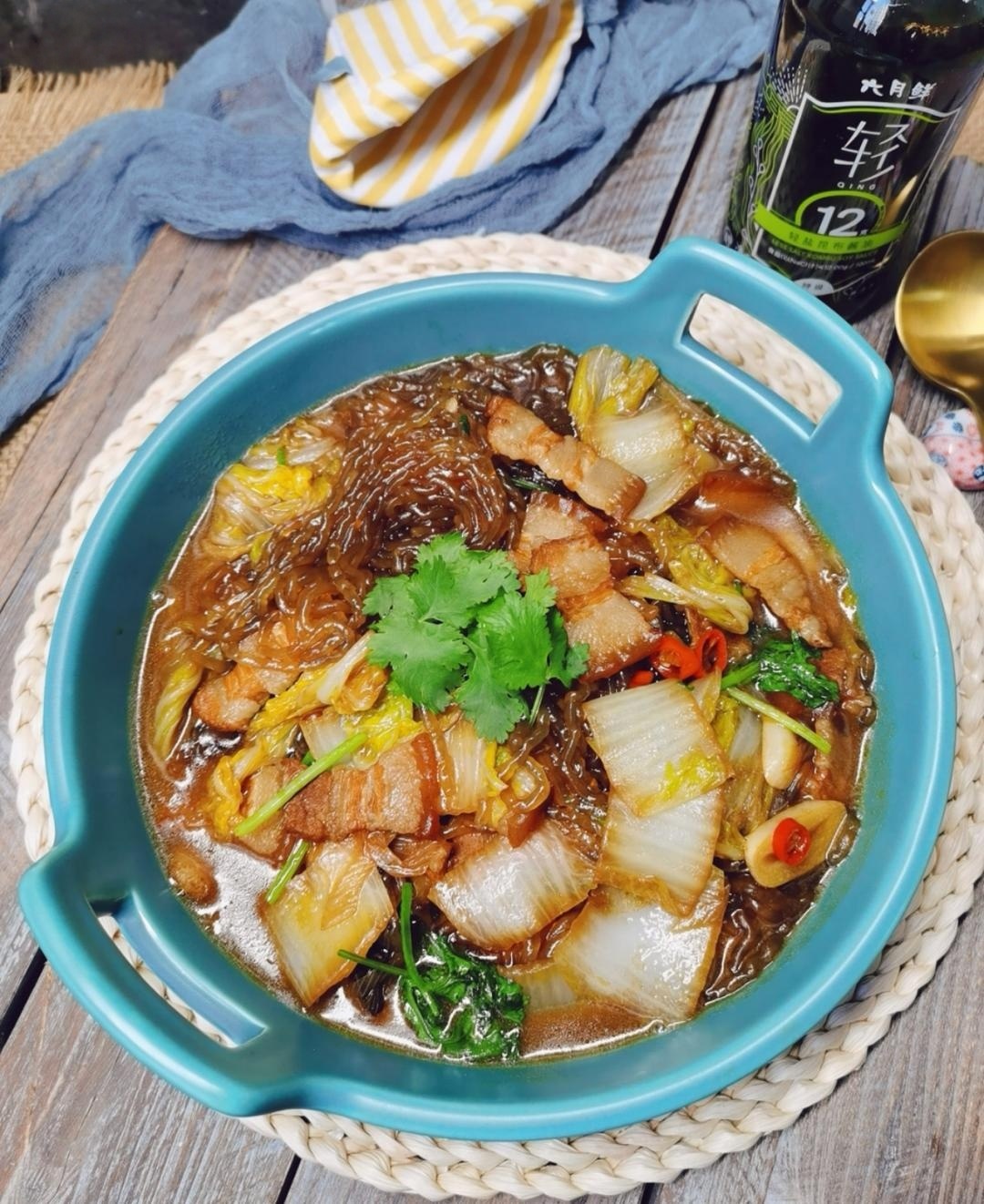
Love hearty Northern Chinese braises? If you fall in love with the rich, comforting flavors of this Braised Pork with Potatoes, you have to try another iconic Dongbei classic. Our Pork & Cabbage Stew (Zhu Rou Bai Cai Dun Fen Tiao) uses a very similar savory flavor base but swaps the starchy potatoes for melt-in-your-mouth napa cabbage and chewy sweet potato glass noodles. It is the ultimate 30-minute winter comfort food, and those glass noodles soak up absolutely every drop of the incredible pork broth!
1Pork and Cabbage Stew: Zhu Rou Bai Cai Dun Fen TiaoA comforting and authentic Dongbei-style stew featuring tender pork belly, sweet napa cabbage, and chewy sweet potato glass noodles in a rich savory broth.Check out this recipe
Why This Recipe Works
- Natural Thickening: We don’t use cornstarch slurry here. By cooking the potatoes with the pork, the edges of the potatoes break down (gelatinize), naturally thickening the soup into a rich gravy.
- The “Sugar Color” (Chao Tang Se): We use rock sugar to create a caramel base. This provides a complex, nutty sweetness and a brilliant red sheen that soy sauce alone cannot achieve.
- Layered Flavor: By combining light soy sauce (for saltiness) and dark soy sauce (for color) with oyster sauce, we create a depth of umami that penetrates both the meat and the tubers.
Key Ingredients & Substitutions
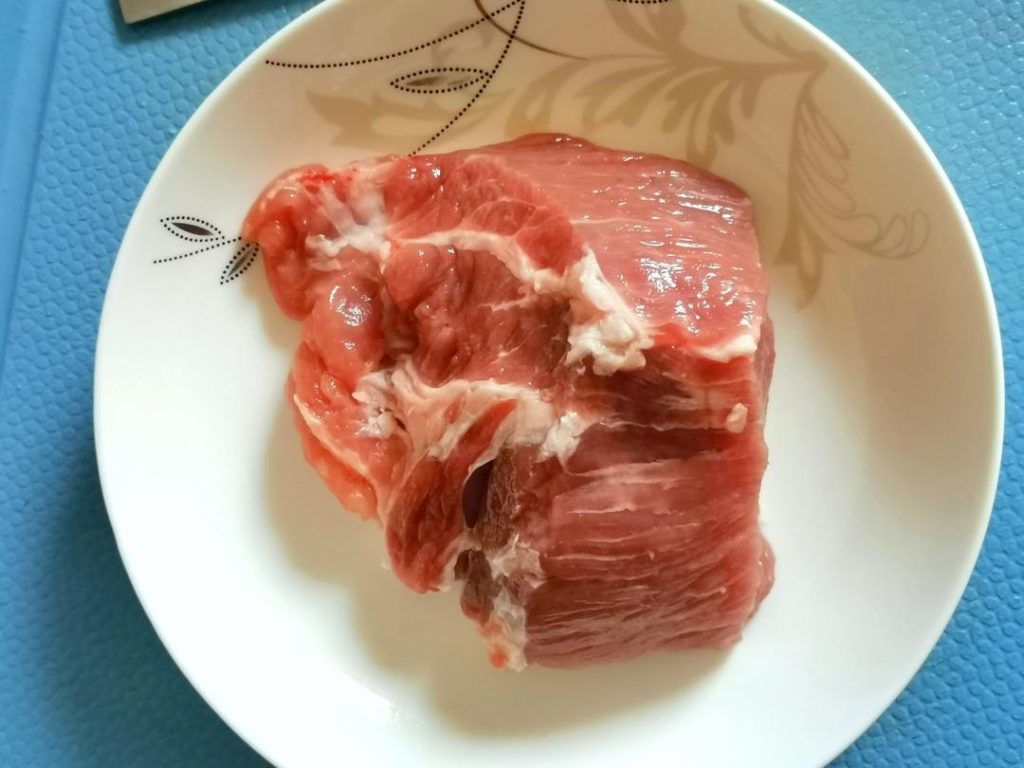
- Pork: The original recipe calls for Meihua Rou (Plum Blossom Meat), which is the upper pork shoulder or Pork Collar. It has beautiful marbling but isn’t as fatty as belly.
- Substitution: You can use Pork Shoulder/Boston Butt (readily available in US supermarkets). Pork Belly is also an excellent, more traditional choice if you prefer a richer dish.
- Potatoes: I recommend Yukon Gold potatoes for a buttery texture that holds its shape reasonably well, or Russet potatoes if you prefer them to break down and make the sauce very thick.
- Rock Sugar (Bing Tang): This gives the pork a glossy “lacquered” look.
- Substitution: Regular granulated white sugar works, but keep a close eye on it as it burns faster.
- Aromatics: Ginger, Scallion (Green Onion), Star Anise, Cinnamon Stick (Cassia Bark), and Bay Leaf. These are the holy trinity + spices of Chinese braising.
- Sauces:
- Light Soy Sauce: For salt and umami. (Try Pearl River Bridge or Kikkoman).
- Dark Soy Sauce: Crucial for that deep, caramel color.
- Oyster Sauce: Added at the end for a final savory punch.
- Shaoxing Wine: For deglazing and removing gamey flavors. (Substitute: Dry Sherry).
Ingredients
- 1 lb (450g) Pork Shoulder (Boston Butt) or Pork Belly, cut into 1-inch chunks
- 1 large Potato (approx. 300g), peeled and cut into chunks
- 7-8 small pieces Yellow Rock Sugar (about 1 tbsp)
- 1 stalk Scallion (white part), cut into 2-inch segments
- 1 inch Ginger, sliced
- 5 tbsp Light Soy Sauce
- 1 tbsp Dark Soy Sauce
- 2 tbsp Shaoxing Cooking Wine
- 1 tbsp Oyster Sauce
- 1 tsp Salt (adjust to taste)
- 1 whole Star Anise
- 1 leaf Bay Leaf
- 1 stick Cinnamon stick (approx. 2 inches)
- 2 tbsp Neutral Oil (Canola or Vegetable) for frying
- Hot Water (enough to cover ingredients)
Recipe Notes Before You Start
This recipe uses a technique called “frying sugar color”. This involves melting sugar in oil until it turns amber. It happens fast—literally seconds between “perfect caramel” and “burnt bitter mess.” If you are a beginner, have your pork ready right next to the stove to stop the cooking process immediately.
Equipment: A 12-inch flat-bottomed wok or a heavy-bottomed Dutch oven works best for this. You need a lid for the simmering stage.
Mise en Place / Prep
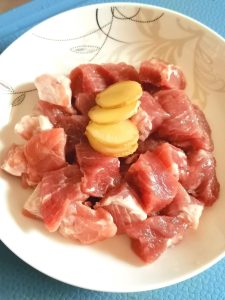
- Cut the Pork: Slice your pork shoulder into uniform 1-inch (2.5cm) cubes. Consistency ensures even cooking.
- Prep the Veg: Peel the potato and cut it into slightly larger chunks than the pork (rolling cut is best). Note: Do not soak the potatoes in water. We want that surface starch to help thicken our sauce later.
- Aromatics: Have your ginger slices, scallion segments, and dry spices (star anise, cinnamon, bay leaf) gathered in a small bowl.
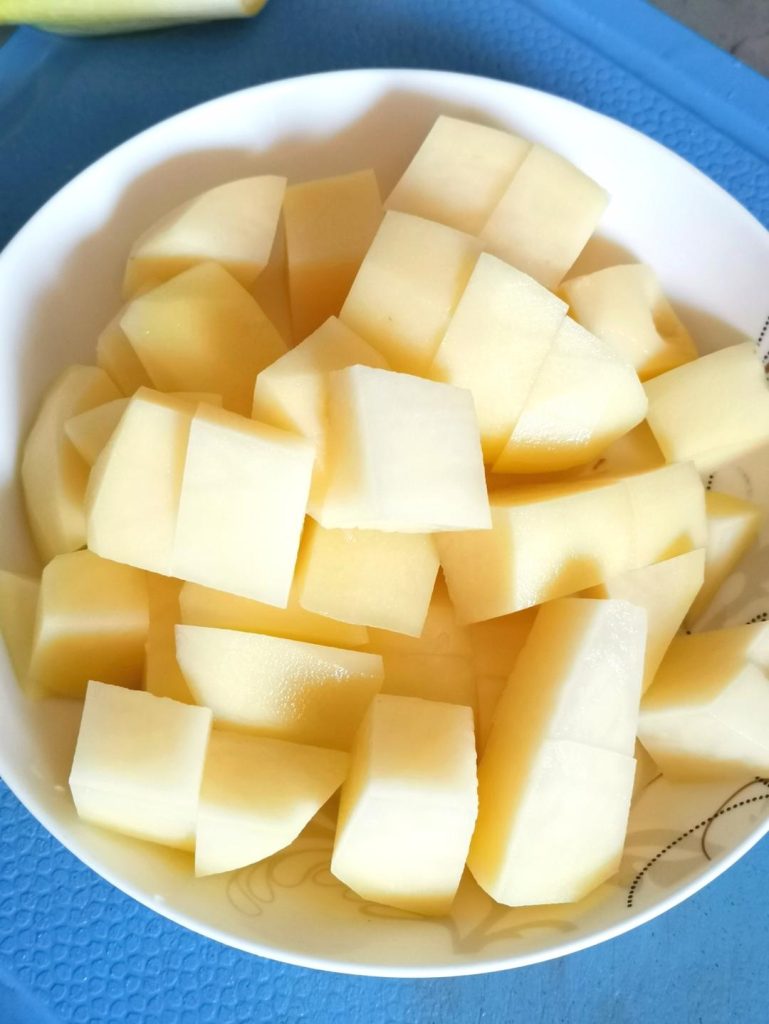
How to Make Braised Pork with Potatoes
Step 1: Blanch the Pork
Place the pork chunks in a pot of cold water. Add 1 tablespoon of Shaoxing wine. Bring to a boil over high heat. Let it boil for about 5 minutes. You will see gray foam floating on top—this is blood and impurities. Skim this off. Drain the pork and set it aside.
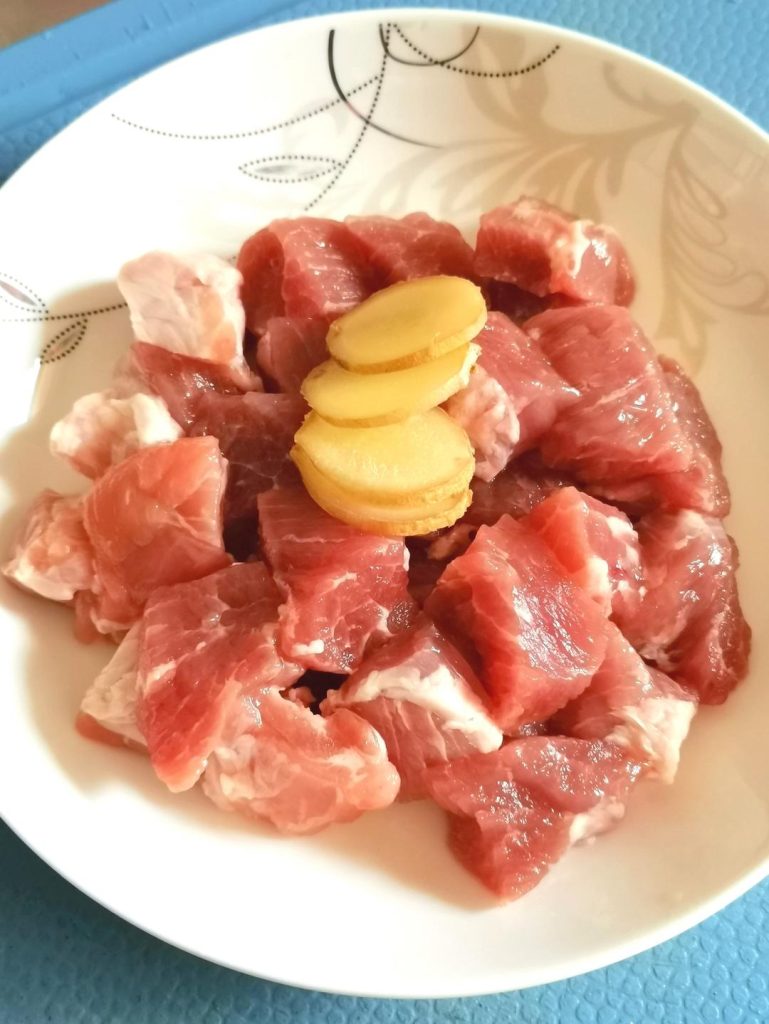
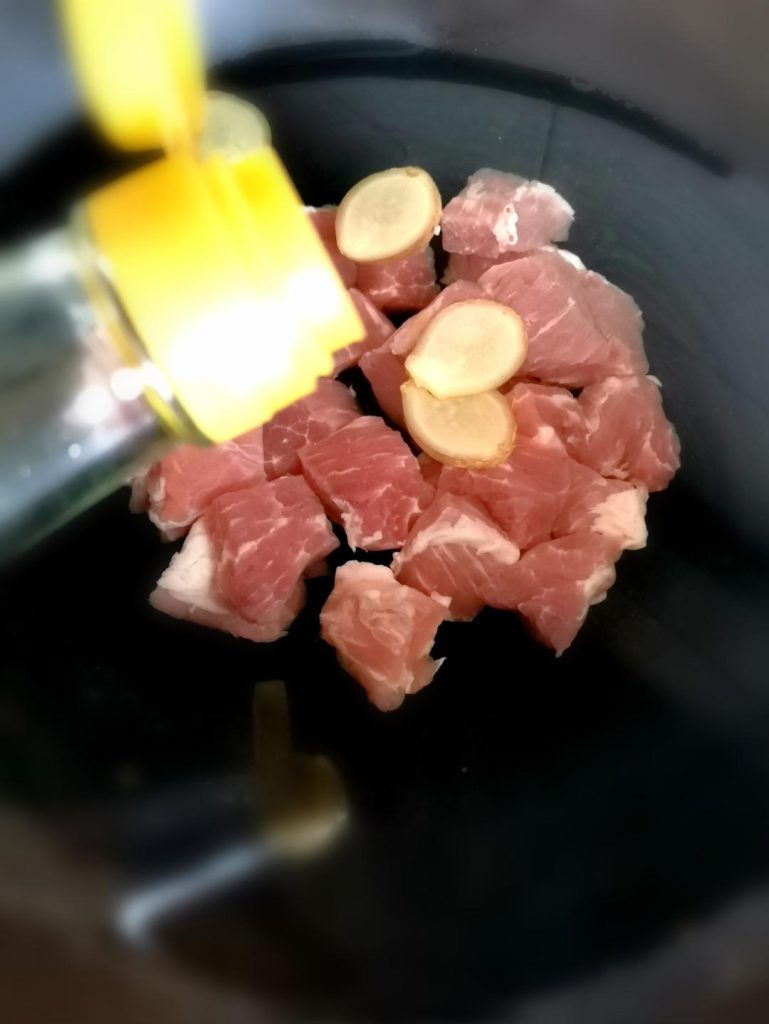
Why cold water? Starting cold allows impurities to release slowly as the temperature rises. If you drop raw meat into boiling water, the proteins seize up and trap the blood inside.
Step 2: Caramelize the Sugar (The Expert Step)
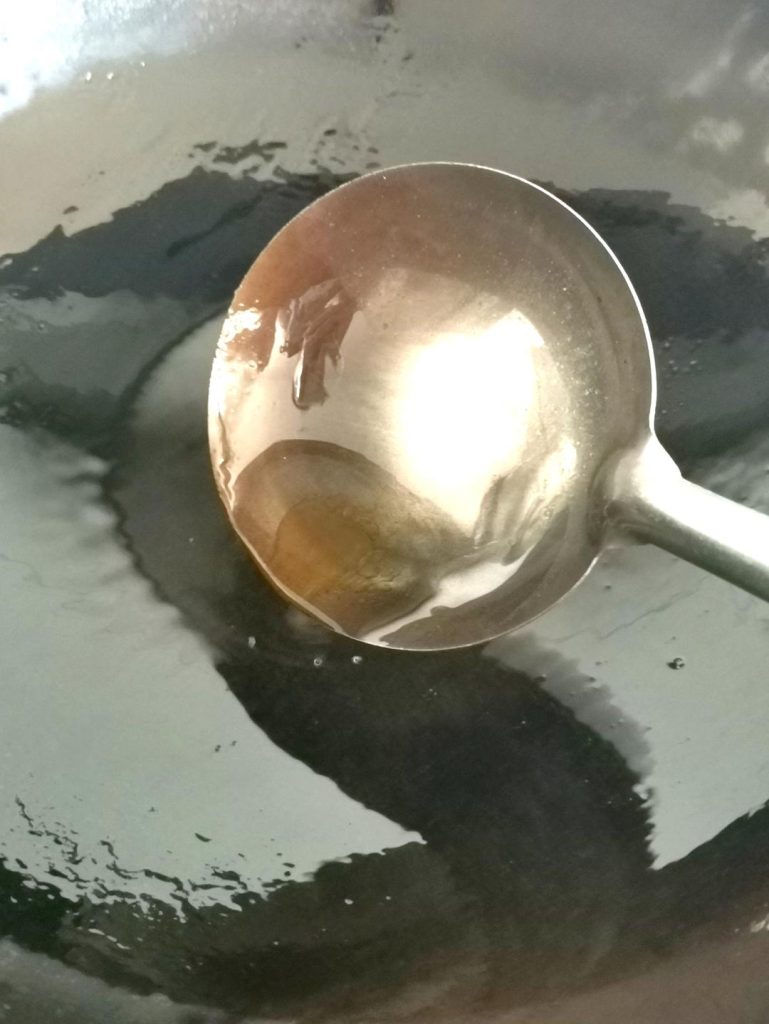
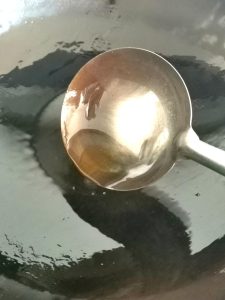
Heat your wok or pot over low heat. Add the oil and the rock sugar. Stir gently and continuously. The sugar will melt, turn light yellow, and then deepen into a golden amber color.
- Visual Cue: As soon as it turns amber and you see small bubbles, it is ready. Do not let it turn black!
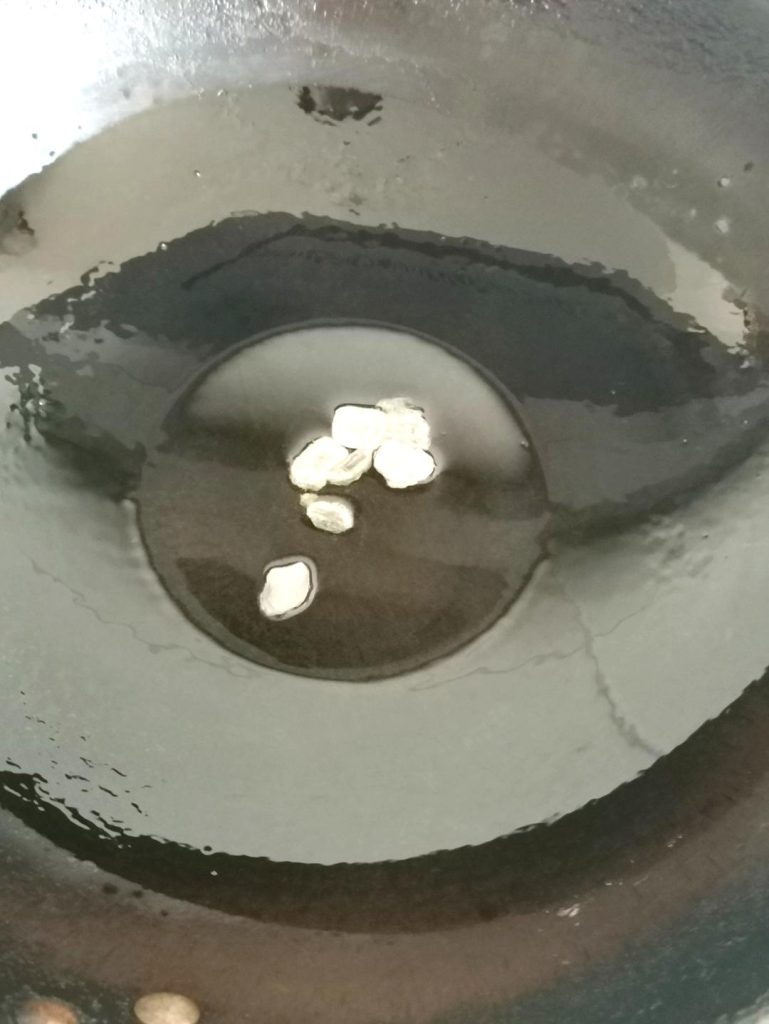
Step 3: Sear the Pork
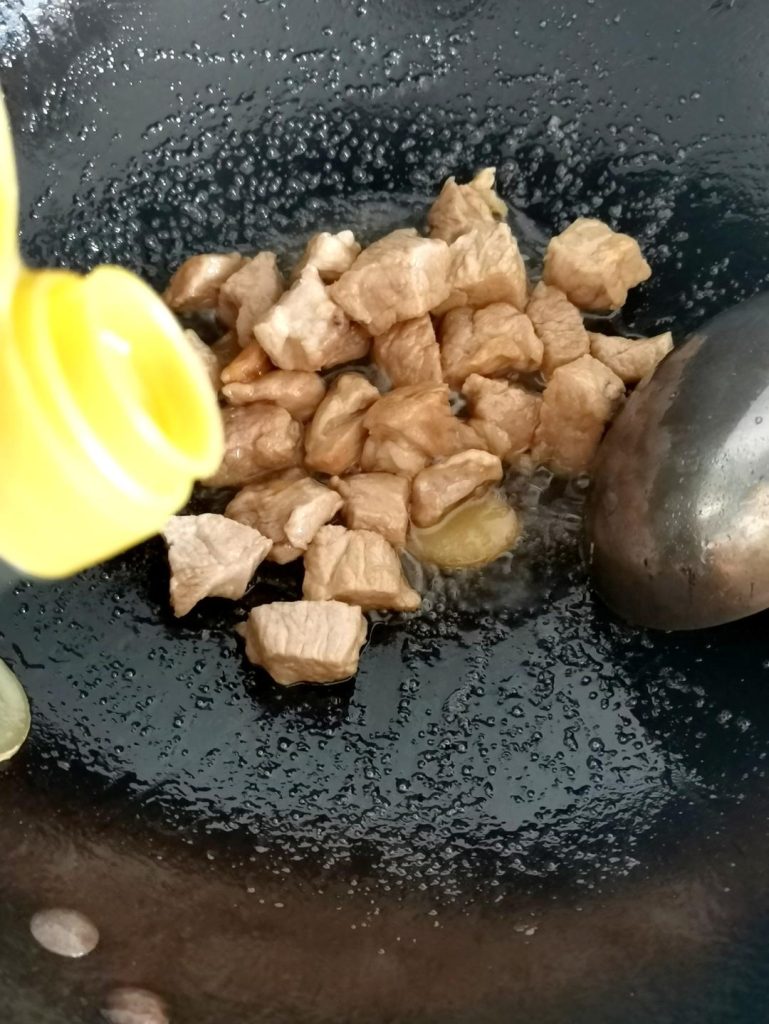
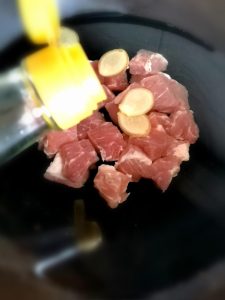
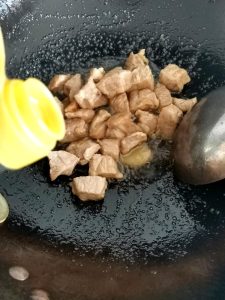
Immediately add the blanched pork to the wok. Caution: It may splatter, so stand back slightly or use a lid as a shield. Stir-fry rapidly to coat the pork in the caramel. Stir-fry for 2-3 minutes until the pork is slightly browned and some fat has rendered out.
- Flavor Science: This is the Maillard reaction meeting caramelization. It creates a complex base flavor that is far superior to just boiling meat in soy sauce.
Step 4: Deglaze and Season
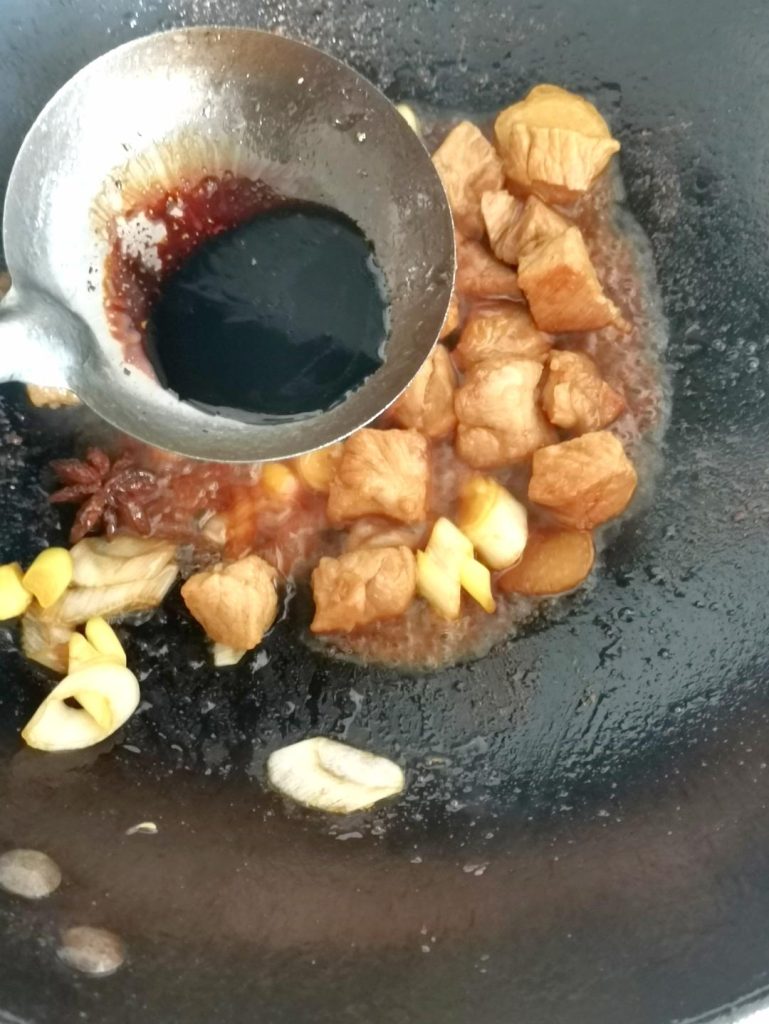
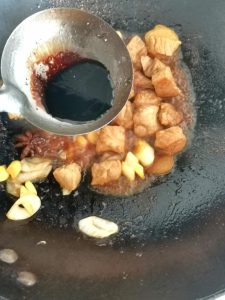
Pour in the remaining 1 tablespoon of Shaoxing wine around the edge of the wok to deglaze. Add the ginger, scallions, star anise, bay leaf, and cinnamon. Stir-fry for 30 seconds until fragrant. Then, add the Light Soy Sauce and Dark Soy Sauce. Stir well to coat the meat in that dark, rich color.
Step 5: The Braise
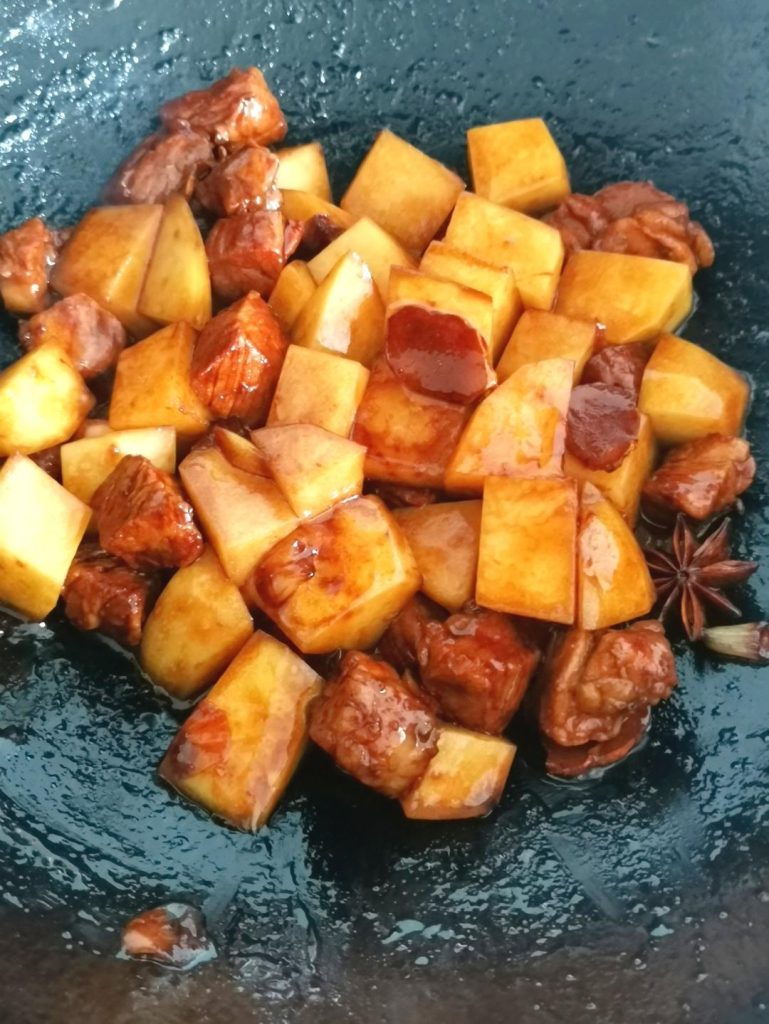
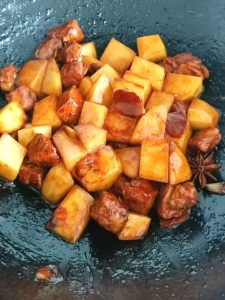
Add the potato chunks to the wok and toss briefly with the meat. Pour in hot water (not cold!) until the ingredients are just covered.
- Expert Tip: Using cold water on hot meat can make the meat tough. Always use hot water for braising.
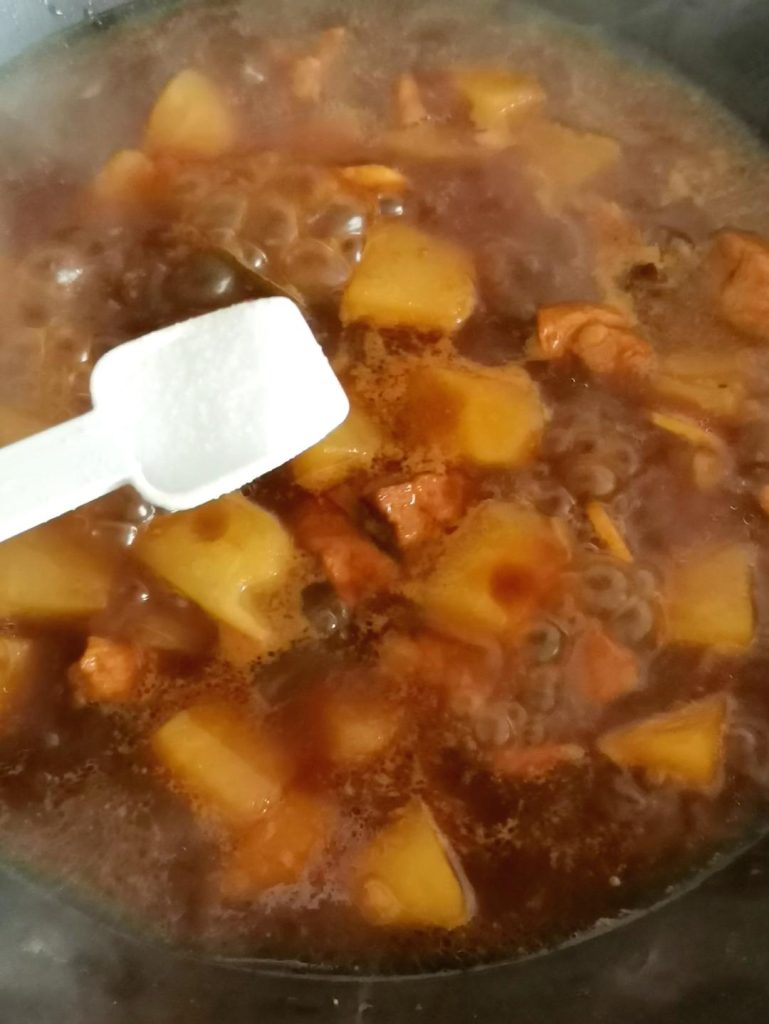
Step 6: Simmer
Cover the pot with a lid. Bring to a boil, then reduce heat to medium. Simmer for 20 minutes.
Step 7: Final Seasoning
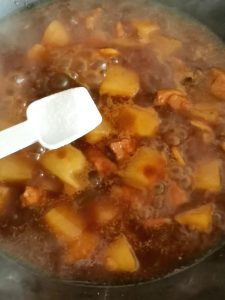
Open the lid. The potatoes should be tender but holding shape. Add the salt and oyster sauce now.
- Why salt later? Adding salt too early can draw moisture out of the meat, making it tougher. Adding it later ensures tenderness.
Step 8: Reduce the Sauce
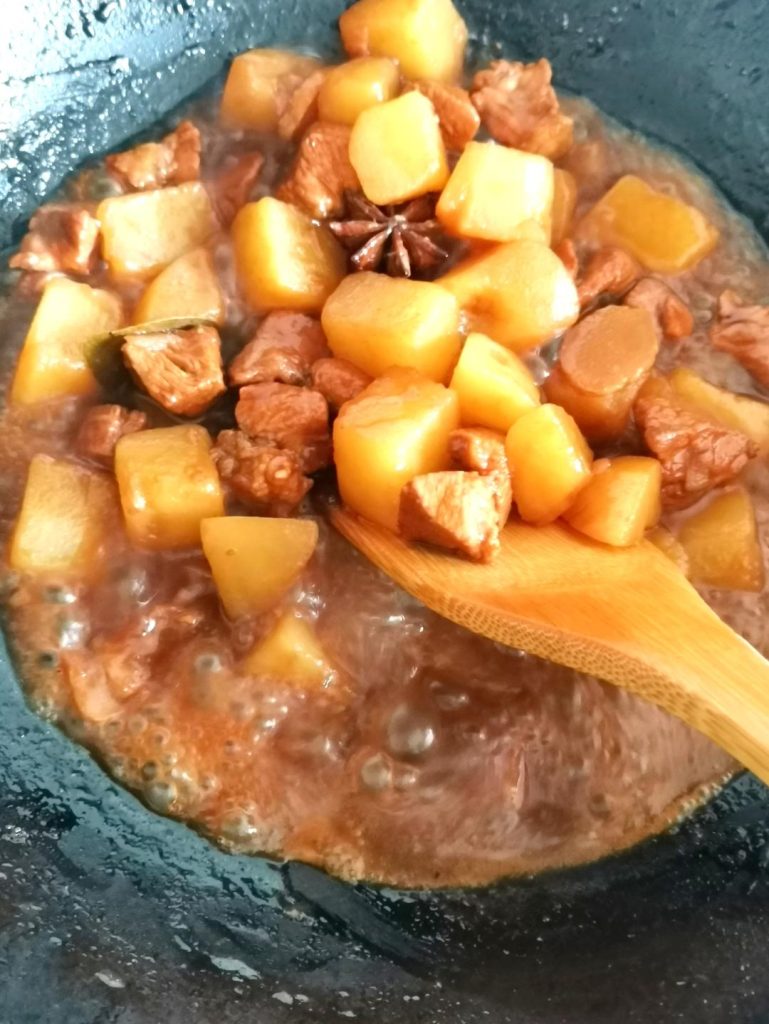
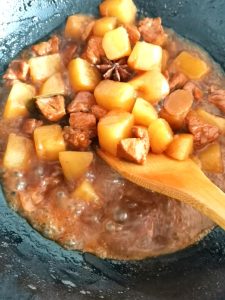
Continue cooking for another 15 minutes with the lid off or partially open. Turn the heat to medium-high. Stir frequently with a wooden spatula.
- Note: At this stage, the potatoes will be very soft (“lan” in Chinese). Be gentle so you don’t mash them completely, but allow some edges to melt into the sauce. Watch closely so the sugars don’t burn on the bottom.
Step 9: Serve
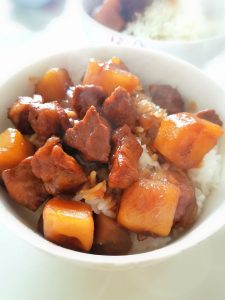
When the sauce is thick, sticky, and coating every piece of meat and potato, turn off the heat. Serve immediately over white rice.
Tips for Success
- The Wooden Spatula: As mentioned in the original recipe notes, use a wooden spatula when stirring the potatoes at the end. Metal tools can break the soft potatoes too easily.
- Don’t Rush the Sugar: If you are nervous about burning the sugar in Step 2, you can skip caramelizing it and just add the sugar with the soy sauce. The color won’t be as red, but it will still taste good.
- Potato Timing: If you prefer your potatoes to be firm cubes rather than soft and melting, do not add them in Step 5. Simmer the pork alone for 15 minutes, then add the potatoes for the final 20 minutes.
Food Safety and Preparation
- Pork Temperature: Ensure your pork reaches an internal temperature of at least 145°F (63°C), though for a braise like this, we are cooking it well past that point to break down the collagen for tenderness.
- Hot Sugar: Caramelizing sugar reaches temperatures over 350°F (175°C). It causes severe burns if it touches skin. Please be extremely careful and keep children away from the stove during this step.
Common Troubleshooting (FAQ)
Q: My sugar turned black and bitter. What happened? A: You cooked it a few seconds too long. Sugar burns very quickly. If it turns black, unfortunately, you must discard the oil/sugar mixture and start that step over, or the whole dish will taste bitter.
Q: Can I use chicken instead? A: Yes! You can use chicken thighs (bone-in or boneless). Follow the same steps, but reduce the simmering time to about 15-20 minutes total, as chicken cooks faster than pork.
Q: Why is my meat tough? A: This usually happens if the heat was too high during the braise (boiling instead of simmering) or if cold water was added to the hot meat.
How to Store & Reheat
- Storage: Store leftovers in an airtight container in the refrigerator for up to 3 days.
- Reheating: Reheat in a microwave or on the stovetop. You may need to add a splash of water, as the potatoes will have absorbed much of the moisture while sitting in the fridge.
- Freezing: I do not recommend freezing this dish. Potatoes change texture and become grainy/spongy when frozen and thawed.
Nutrition Information (Estimate)
- Calories: ~450 kcal per serving
- Protein: 25g
- Carbohydrates: 30g
- Fat: 28g
- Sodium: 1200mg (High due to soy sauce/oyster sauce)
- Allergen Note: Contains Soy and Wheat (in soy sauce). For a Gluten-Free version, use Tamari and GF Oyster Sauce.
(Disclaimer: Nutrition information is calculated using an ingredient database and should be considered an estimate. In cases where multiple ingredient alternatives are given, the first listed is calculated for nutrition. Garnishes and optional ingredients are not included.)
Recipe Notes:
- Texture Preference: This recipe yields a “soft and sticky” texture where the potatoes partially dissolve. If you like firm potatoes, add them halfway through the cooking time.
- Sodium Control: This dish is naturally salty/savory to pair with plain white rice. If eating it alone, reduce the soy sauce quantity.
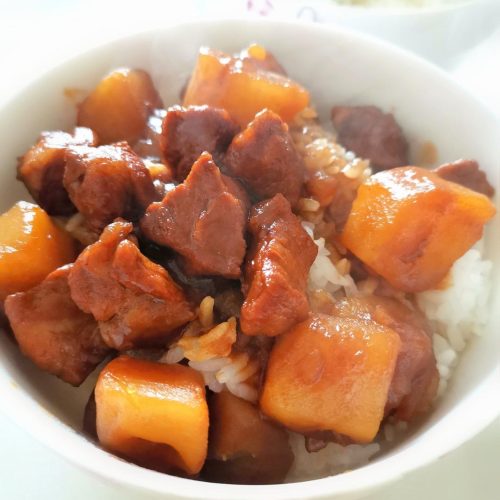
Braised Pork with Potatoes (Tu Dou Dun Rou)

Equipment
- 1 Wok or Dutch Oven 12-inch or larger with lid
- 1 Wooden Spatula Essential for handling soft potatoes
Ingredients
Main Ingredients
- 1 lb Pork Shoulder (Boston Butt) or Pork Belly cut into 1-inch cubes
- 1 large Potato (Russet or Yukon Gold) peeled and cut into chunks
Aromatics & Seasonings
- 1 tbsp Yellow Rock Sugar approx 7-8 small pieces
- 1 stalk Scallion (Green Onion) white part, cut into segments
- 1 inch Ginger sliced
- 5 tbsp Light Soy Sauce
- 1 tbsp Dark Soy Sauce
- 2 tbsp Shaoxing Cooking Wine divided usage
- 1 tbsp Oyster Sauce
- 1 tsp Salt adjust to taste
- 1 whole Star Anise
- 1 leaf Bay Leaf
- 1 stick Cinnamon Stick (Cassia Bark)
- 2 tbsp Neutral Oil Canola or Vegetable
Instructions
- Prepare the ingredients: Cut the pork into 1-inch chunks and slice the ginger. Peel and cut the potato into chunks.

- Blanch the pork: Place pork in a pot of cold water with 1 tbsp Shaoxing wine. Bring to a boil, skim off the foam, and cook for 5 minutes. Remove pork and drain well.
- Caramelize the sugar: Heat 2 tbsp oil in a wok over low heat. Add rock sugar and stir gently until it melts and turns an amber color.
- Sear the pork: Immediately add the pork to the wok and stir-fry to coat in the caramelized sugar.
- Add aromatics: Add the remaining 1 tbsp Shaoxing wine, scallions, ginger, star anise, bay leaf, cinnamon, Light Soy Sauce, and Dark Soy Sauce. Stir-fry for 1 minute.
- Braise: Add the potato chunks and enough HOT water to just cover the ingredients. Cover with a lid and simmer on medium heat for 20 minutes.
- Season: Remove the lid. Add the salt and oyster sauce.
- Reduce: Turn heat to medium-high. Cook uncovered for another 15 minutes to reduce the sauce. Stir gently with a wooden spatula to prevent burning and mashing the potatoes too much.
- Serve immediately over steamed rice.
Notes
- Texture Preference: This recipe yields a “soft and sticky” texture where the potatoes partially dissolve. If you like firm potatoes, add them halfway through the cooking time.
- Sodium Control: This dish is naturally salty/savory to pair with plain white rice. If eating it alone, reduce the soy sauce quantity.




Leave a Reply