There is a reason braised pork intestines are the dish that divides dinner tables: half the people love them, and the other half are afraid of them. The fear is almost always about cleaning, not flavor. Braised properly, pork intestines turn into something extraordinary – tender, bouncy, and deeply savory, every bite soaking up the spiced soy liquid they simmer in. And the cleaning, as this home recipe demonstrates, is just a flour scrub and a rinse away.
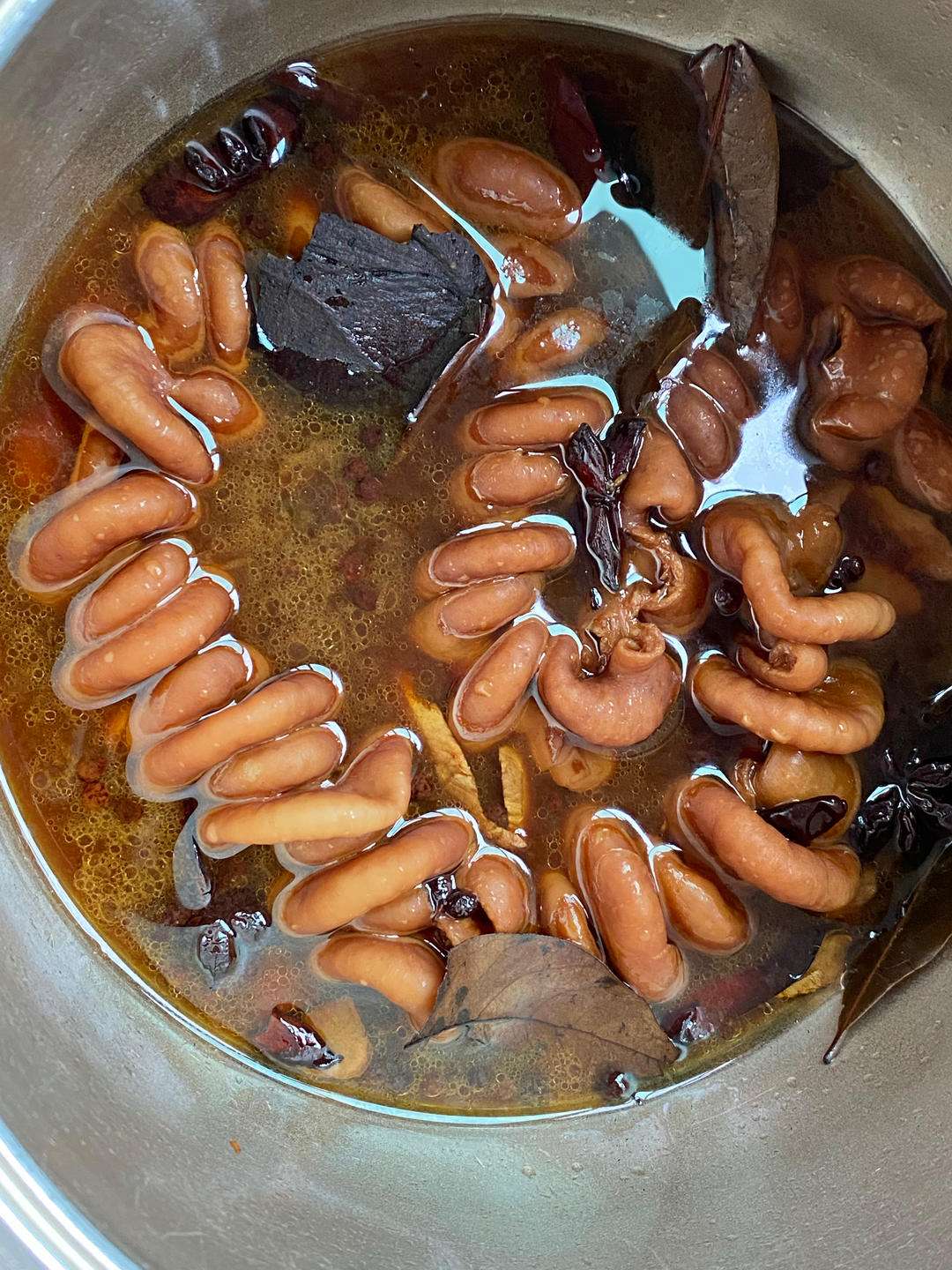
Lu wei zhu da chang (卤味猪大肠) is Chinese braised pork intestines – a deli-counter and home-cooking classic where cleaned intestines simmer for an hour in a soy-based master braise with star anise, cassia bark, and bay leaves. This version comes from a Chinese home cook who sums up the whole appeal in the title: “if you have hands, you can make this.” The recipe is generous with its tricks – the sugar caramel for color, the secret spoonful of fermented bean curd – and honest about the one-hour simmer that turns it all into gold.
What Are Braised Pork Intestines (Lu Wei Zhu Da Chang)?
Lu wei zhu da chang (卤味猪大肠) are pork intestines cooked in lu (卤) – a soy-based braising liquid that is one of the cornerstones of Chinese cooking. The intestines are cleaned, simmered for about an hour in a spiced soy broth, and served sliced, often with a drizzle of the braising liquid. Lu wei (卤味) literally means “braised flavor” and covers everything from eggs to beef shank to this dish; the braising liquid itself is a treasured thing, kept and refreshed across many batches.
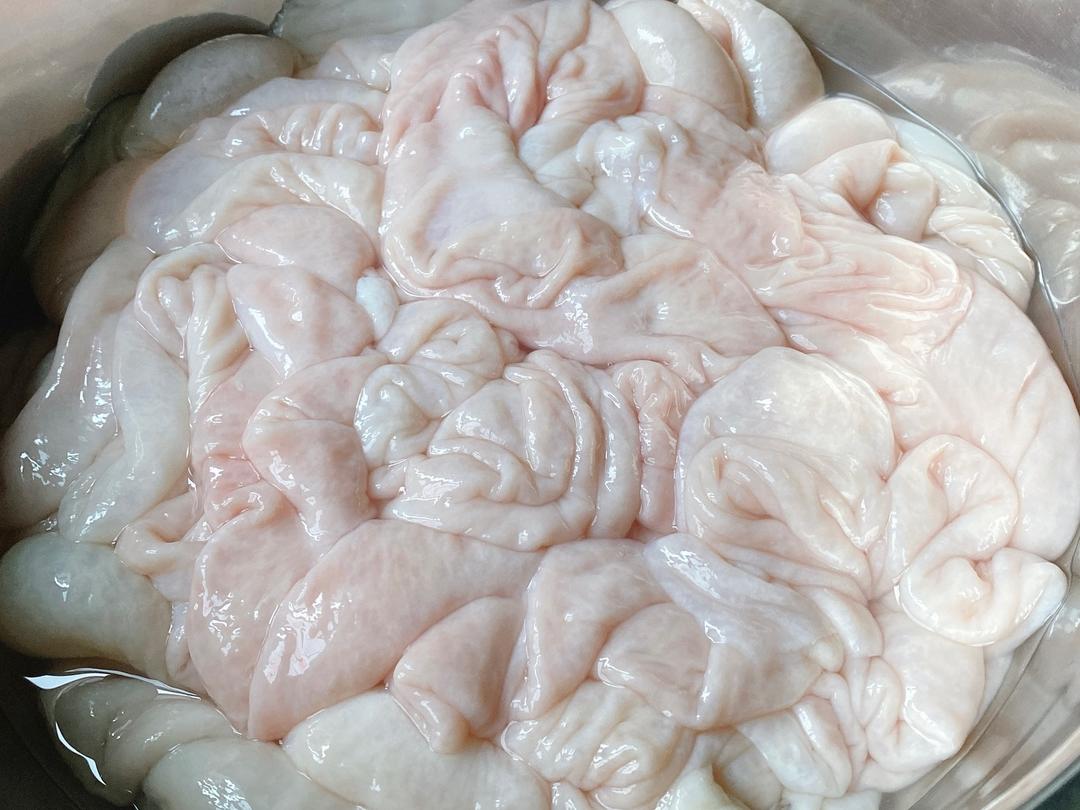
In Chinese food culture, intestines and other offal are not budget cuts to be hidden – they are delicacies prized for texture and flavor. The cleaning is the only real work: rinsing, soaking in wine and ginger, and rubbing with flour to lift away the slime and excess fat. After that, the lu does the rest. This version adds two home-cook flourishes: rock sugar caramelized for a deep mahogany color, and a spoonful of doubanjiang or fermented bean curd for an extra layer of savory depth.
If the cleaning step is what has been holding you back, my complete guide to cleaning pork intestines walks through every step in detail.
1How to Clean Pork IntestinesLearn the professional Sichuan chef’s method for perfectly cleaning pork intestines at home using flour, salt, and wine.Check out this recipe
Why This Recipe Works
- The flour scrub is the whole secret. Rubbing the intestines with flour lifts off the slime and excess fat that cause off-flavors – no chemical cleaners, no hours of scrubbing.
- A wine-and-ginger soak starts the aroma. The intestines rest in Shaoxing wine and ginger before cleaning, cutting any raw porkiness from the inside out.
- The sugar caramel builds real color. Rock sugar melted slowly into caramel gives the lu a deep mahogany glow that soy alone cannot match – the restaurant look, at home.
- The lu is a balanced formula. Salt, light soy, soy sauce, dark soy, and oyster sauce in the author’s standard proportions – plus an optional spoon of doubanjiang or fermented bean curd for depth.
- One hour at a gentle simmer. Low and slow turns tough intestines tender and lets the spices penetrate fully – rush it and they stay rubbery.
Equipment Needed
- A large bowl for cleaning and soaking
- A heavy pot or Dutch oven for the braise
- A wooden spoon for the caramel and the stirs
- A fine sieve or skimmer for the braising liquid
- A sharp knife for slicing
Ingredients
- 500 g (1.1 lb) pork intestines (about 1 jin)
- 1/2 cup (60 g) all-purpose flour, for scrubbing
- 3 slices fresh ginger, plus more for the soak
- 5 tbsp (75 ml) Shaoxing cooking wine
- 4-5 star anise
- 10 Sichuan peppercorns
- 3 dried chilies
- 1 piece cassia bark (about 5 cm / 2 in)
- 4 bay leaves
- 3 cloves garlic, smashed
- 1 tbsp (15 g) rock sugar, for the caramel
- 1 tbsp (15 g) salt
- 2 tbsp (30 ml) light soy sauce
- 2 tbsp (30 ml) soy sauce
- 2 tbsp (30 ml) dark soy sauce
- 1 tbsp (15 ml) oyster sauce
- 1 tbsp (15 g) doubanjiang or fermented bean curd (optional)
- Water, for the braise
Ingredient Notes
Pork intestines: Sold fresh or frozen in Asian grocers, usually as long, coiled tubes. The cleaning routine in this recipe – rinse, soak in wine and ginger, then scrub with flour – is essential and worth doing properly. My cleaning guide covers the whole process if you want more detail.
The lu formula: The author’s standard braise is 1 spoon salt, 1 spoon dark soy, 2 spoons light soy, 2 spoons soy sauce, and 1 spoon oyster sauce. The optional doubanjiang or fermented bean curd adds an umami layer that many home cooks swear by – the original says it is fine either way.
Rock sugar: Chunks of crystallized sugar used for the caramel color step. Granulated sugar works if you dissolve it slowly and watch it carefully – it caramelizes faster.
Cassia bark: The wide, rolled, cinnamon-like bark of the braise family. If you only have cinnamon sticks, use one and expect a slightly sweeter note.
Prep & Mise en Place
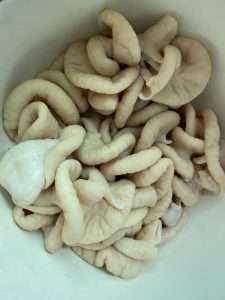
Cleaning comes first, always: rinse the intestines under cold water, then soak them in Shaoxing wine and ginger slices for a while. Drain, then rub them thoroughly with the flour – massaging every surface to lift the slime – and rinse again until the water runs clear. This is the difference between a clean-tasting braise and a disappointing one.
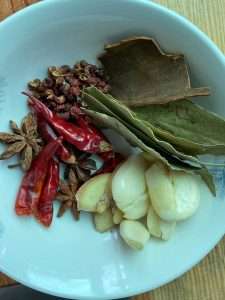
Have the spice mix measured (star anise, peppercorns, chilies, cassia, bay leaves, garlic) and the lu sauce mixed in one bowl before the pot heats. The sequence – caramel, spices, sauce, water – moves fast once it starts.
Cooking Process
Step 1 – Clean the Intestines
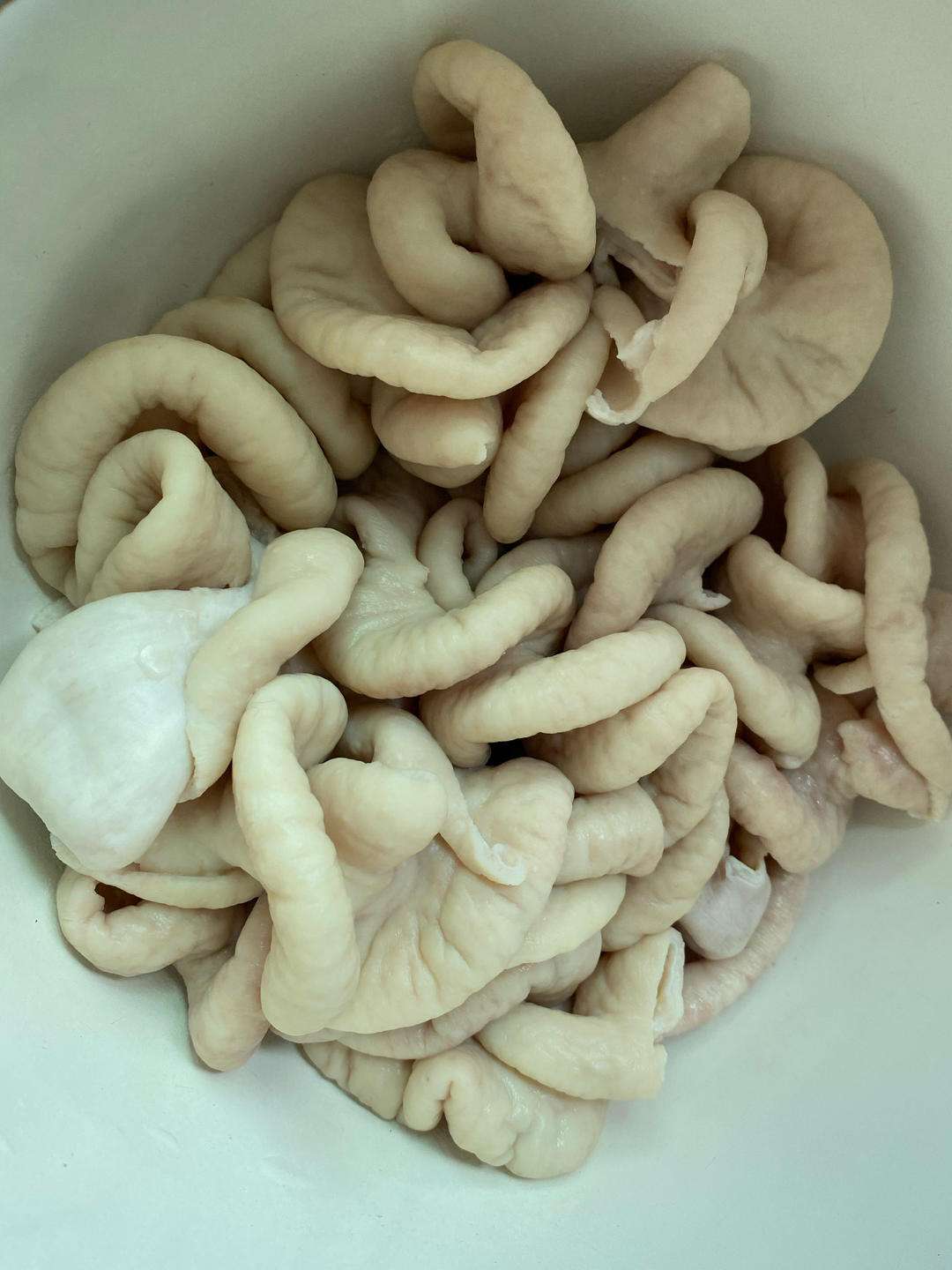
Rinse the intestines thoroughly under cold running water. Soak them in Shaoxing wine and ginger slices for a while to cut any raw odor, then rub them with the flour – massaging every surface to lift the slime and excess fat – and rinse again until the water runs clear. Do not skip this; it is the entire difference between a clean braise and a gamey one.
Step 2 – Prep the Spice Mix
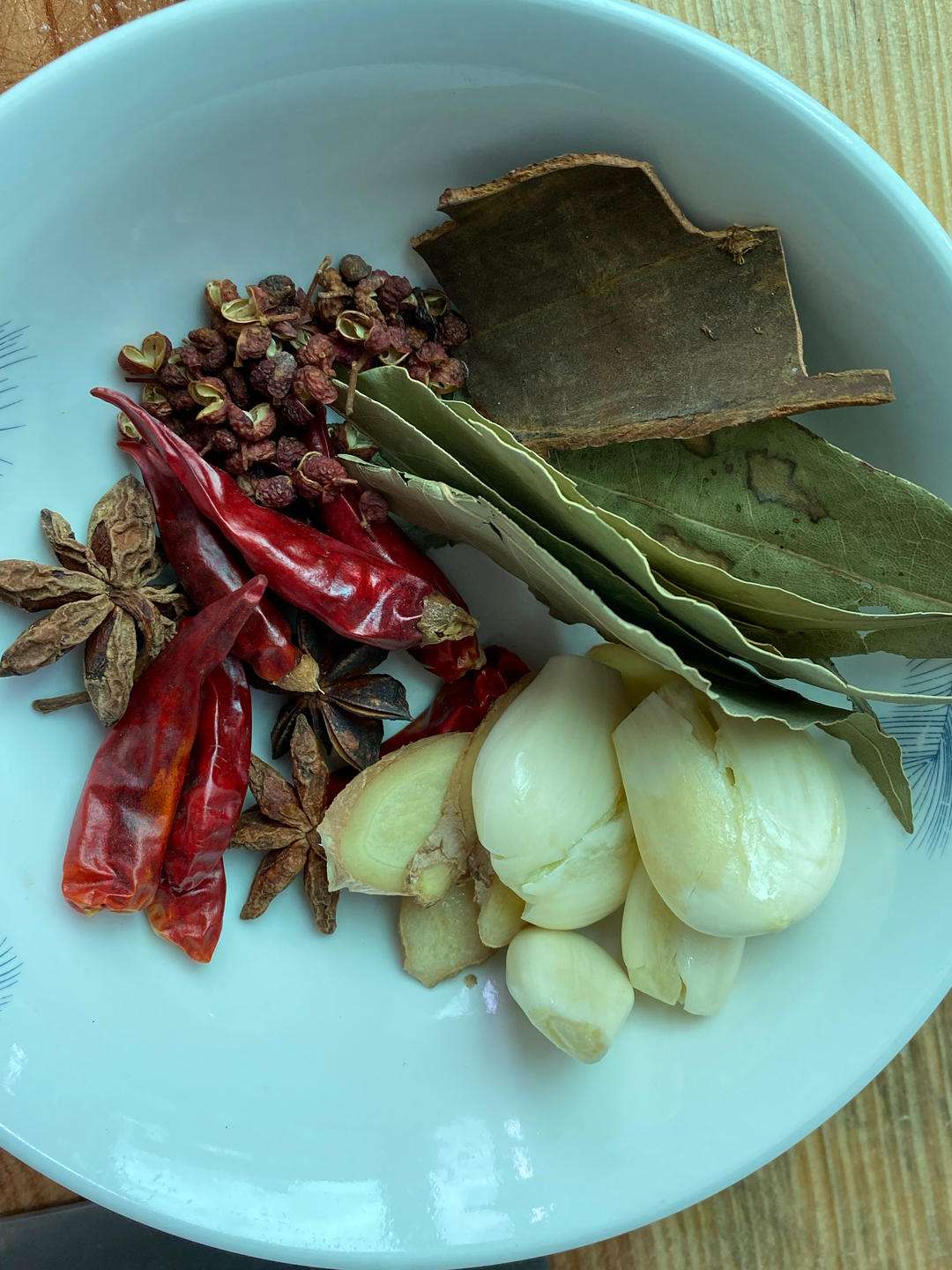
Set out the star anise, Sichuan peppercorns, dried chilies, cassia bark, bay leaves, and smashed garlic. These go into the pot in a specific order – the caramel first, then the dry spices toasted in the hot oil, then the sauce.
Step 3 – Mix the Braising Sauce
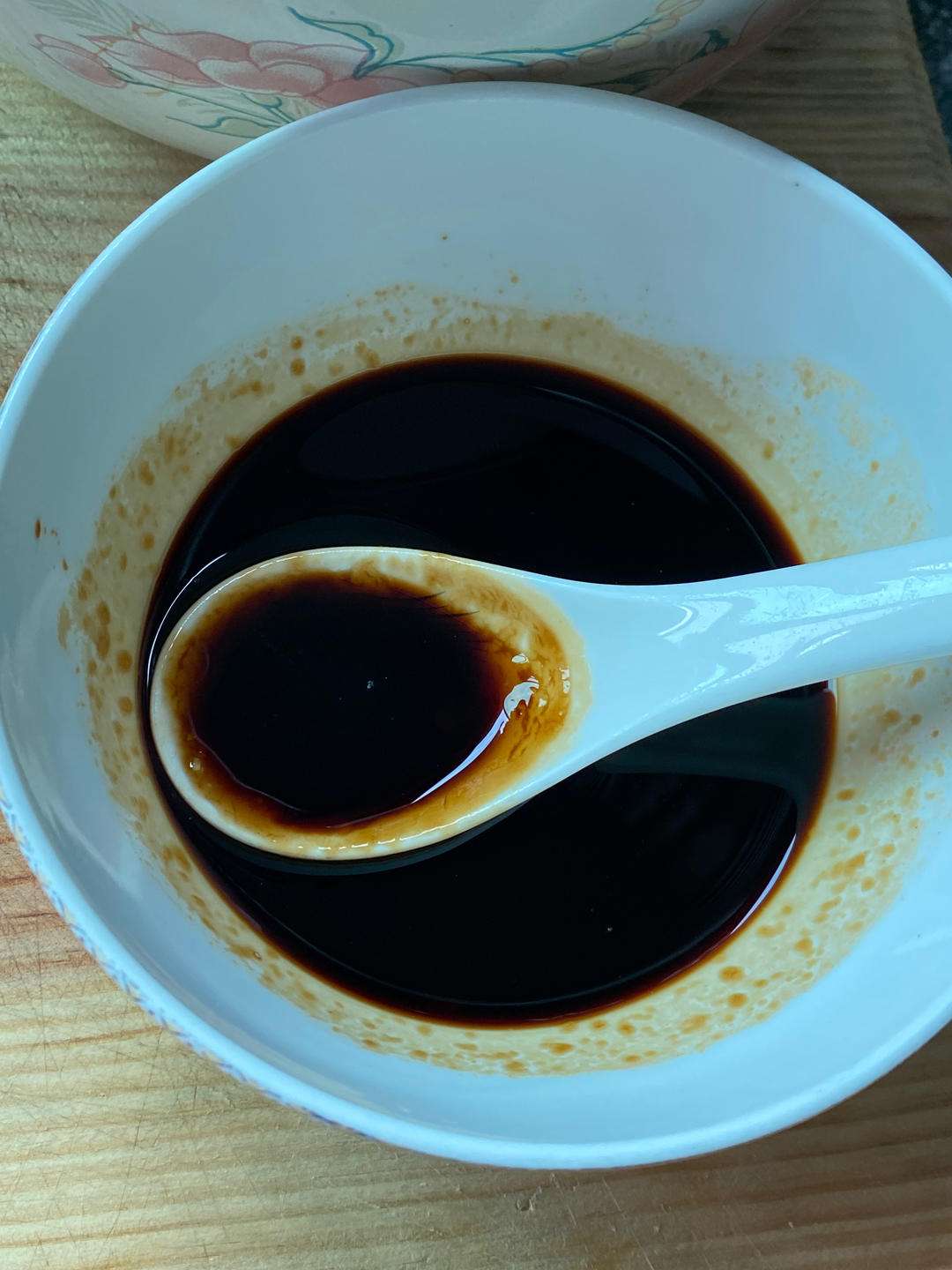
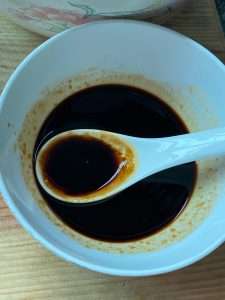
In a bowl, combine 1 tbsp (15 g) salt, 1 tbsp (15 ml) dark soy sauce, 2 tbsp (30 ml) light soy sauce, 2 tbsp (30 ml) soy sauce, and 1 tbsp (15 ml) oyster sauce. Add the spoonful of doubanjiang or fermented bean curd if you are using it – the author notes it is optional but adds a lovely depth.
Step 4 – Caramelize the Sugar for Color
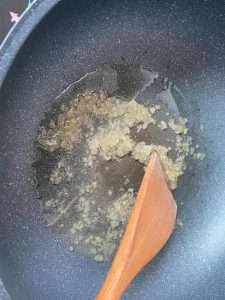
Heat a little oil in the pot over low heat and add the rock sugar. Stir slowly as it melts and darkens into amber caramel – this is the color base of the entire dish. Do not let it go past deep amber into bitter; the caramel should smell nutty, not burnt.
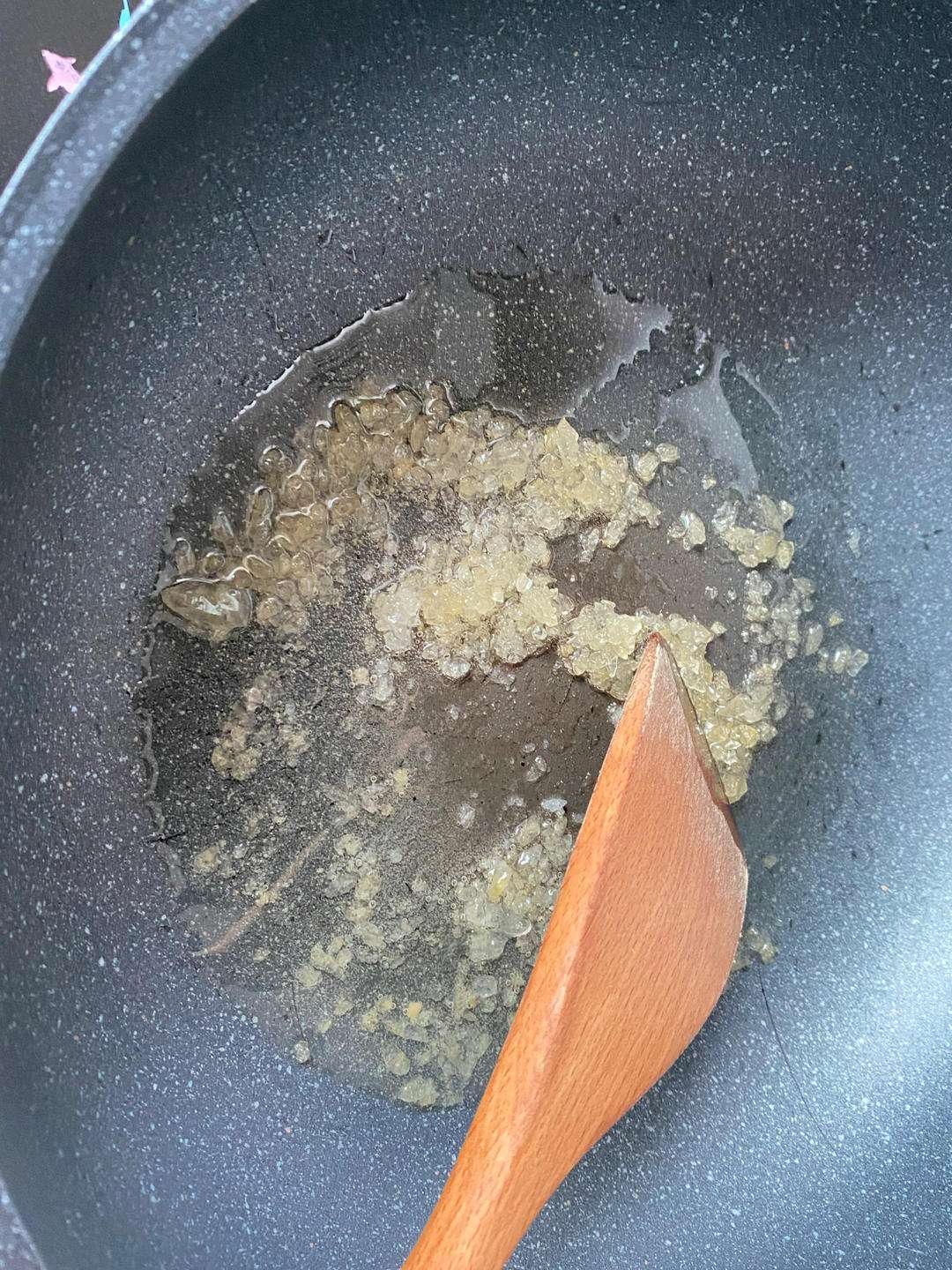
Caramelizing sugar is the same chemistry behind dark soy’s color, taken further: sugar heated past its melting point dehydrates and polymerizes into amber compounds that stain food a deep mahogany. This is why the lu gets its restaurant gloss – the caramel is doing the coloring that soy alone cannot.
Step 5 – Toast the Spices, Add the Sauce, and Build the Lu
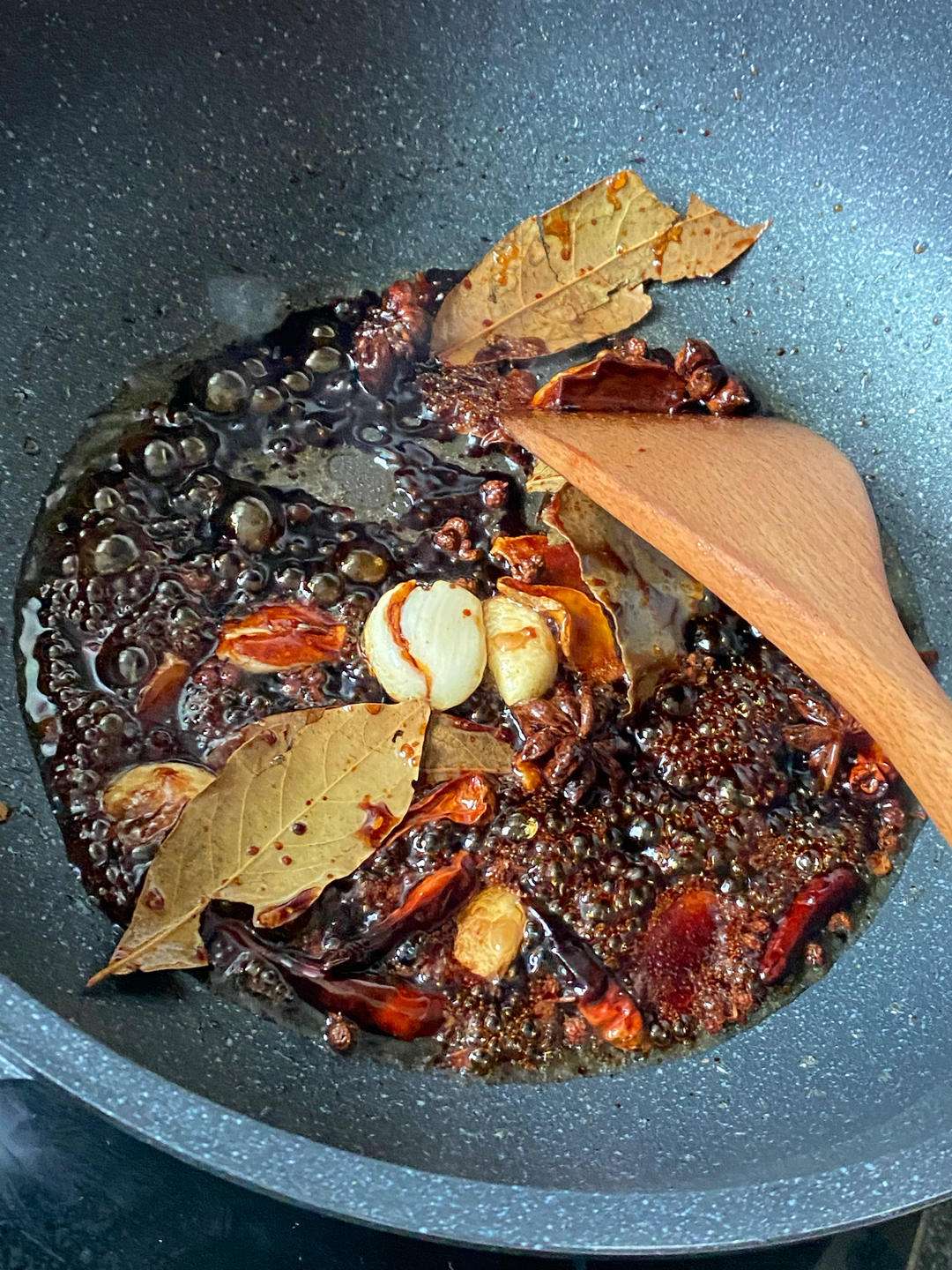
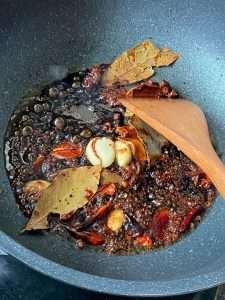
Add the dry spices (star anise, peppercorns, chilies, cassia, bay leaves, garlic) to the pot and stir-fry slowly until fragrant, about 30 seconds. Pour in the braising sauce and stir until it bubbles evenly – the author’s cue is “see the sauce bubbling uniformly.” Then add water, turn the heat to high, and bring to a boil.
Step 6 – Add the Intestines and Simmer One Hour
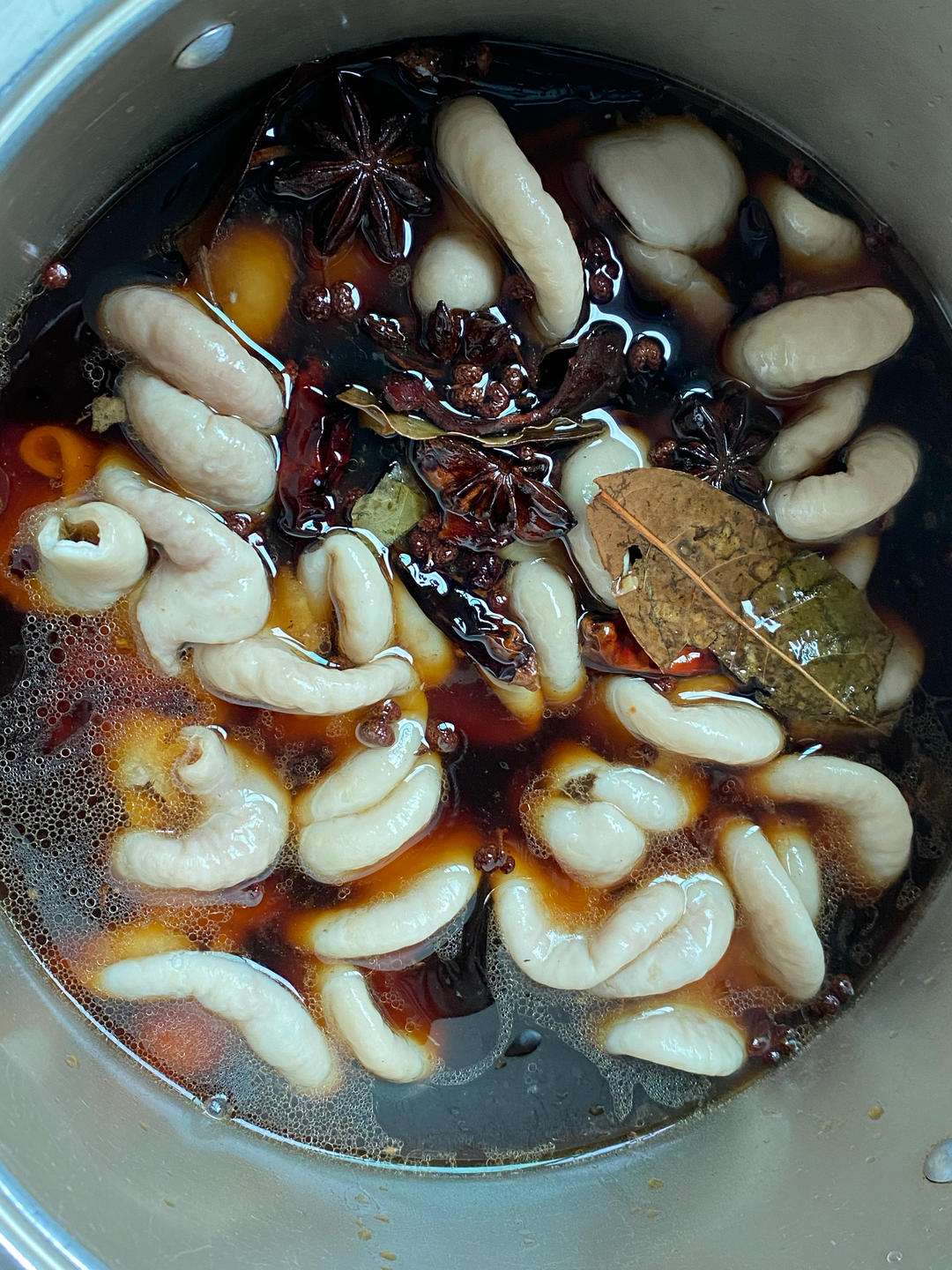
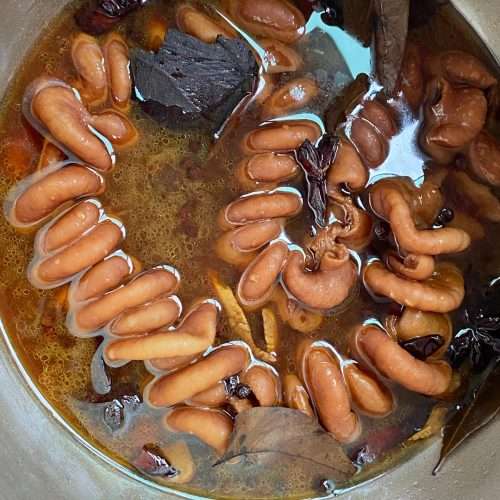
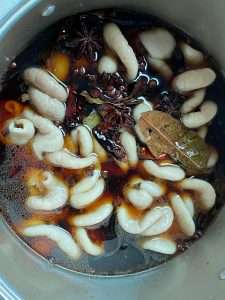
Add enough water in one go so it comes level with the intestines. Add the cleaned intestines, bring back to a boil over high heat, then drop to low, cover, and simmer for about one hour. The long, gentle simmer is what turns the intestines tender and lets every spice penetrate.
Step 7 – Slice and Store in the Lu
After an hour, the intestines should be glossy and deep mahogany. Slice only what you plan to eat, and keep the rest whole, submerged in the braising liquid, in the fridge – the lu continues to season and preserve the intestines. Serve slices with a spoonful of the lu drizzled over, or with a chili-vinegar dip.
Common Mistakes When Making Braised Pork Intestines
1. Gamey, unpleasant flavor. Cause: rushing the cleaning. Fix: soak in wine and ginger, then scrub thoroughly with flour and rinse until the water runs clear – this is the step that separates the dish from disaster.
2. Rubber-textured intestines. Cause: simmering too short or over too-high heat. Fix: one full hour at a gentle simmer on low heat; high heat toughens the connective tissue instead of melting it.
3. Bitter, burnt caramel. Cause: letting the sugar go past amber into dark brown. Fix: watch the caramel closely and pull it off the heat as soon as it reaches a deep amber with a nutty smell.
4. A muddy, dull color. Cause: skipping the caramel and relying on soy alone. Fix: the sugar caramel is the color engine – do not skip step 4.
5. Oversalted lu. Cause: adding salt before considering the soy sauces’ saltiness. Fix: the soy sauces already carry salt – taste the lu before the final salt adjustment and add water if it is too strong.
6. Intestines that dry out in storage. Cause: storing them outside the lu. Fix: always keep leftovers submerged in the braising liquid in the fridge – the lu both preserves and deepens the flavor.
Variations
Extra depth: The optional spoon of doubanjiang or fermented bean curd is the author’s secret-weapon move; both add a fermented umami that deepens the lu. See my red braised pork belly (nanru rou) for another dish built on fermented bean curd.
Lu wei eggs: Add a few peeled hard-boiled eggs to the lu for the last 20 minutes – they soak up the liquid and become a classic deli side. The same lu handles red braised pork trotters too.
Spicier lu: Double the dried chilies and add a spoonful of chili oil with the sauce for a fiery version.
Less soy, more clear: For a lighter lu, reduce the dark soy and skip the caramel, simmering with just the spices and salt – a cleaner, paler style some regions prefer.
Frequently Asked Questions
How long do braised intestines keep? Submerged in the lu and refrigerated, they keep for 3-4 days – many cooks say they taste even better the next day as the flavors settle.
Can I freeze them? Yes – freeze sliced intestines in a portion of the lu for up to 2 months. Thaw in the fridge and reheat gently in the liquid.
Do I have to use rock sugar? No – granulated sugar works, but dissolve it slowly over low heat and watch it, as it caramelizes faster and burns more easily.
Can I reuse the braising liquid? Absolutely – the lu improves with use and is the heart of the lu wei tradition. Strain it, refrigerate, and refresh with more soy and spices for the next batch.
Why are my intestines still tough after an hour? Either the heat was too high (which toughens rather than tenderizes) or the intestines were from an older animal. Simmer gently for another 30 minutes and test again.
How to Serve
Serve the intestines sliced, drizzled with a spoonful of the lu, with steamed rice or as a cold-appetizer platter with a chili-vinegar dip. They are a classic companion to a bowl of braised pork belly (hong shao rou) for a braised-pork feast, or alongside Wenzhou braised pork belly and homestyle braised pork belly for a table of lu classics. For the sweet-savory contrast, a plate of Dongpo pork keeps the braise theme going beautifully.
Storage & Reheat
Keep leftovers whole and submerged in the braising liquid in a sealed container in the fridge for 3-4 days. Reheat gently in the lu over low heat until piping hot (at least 74°C / 165°F). Freeze sliced portions in lu for up to 2 months; thaw overnight in the fridge before reheating. Never leave the pot out for more than 2 hours. The strained, cooled lu itself keeps refrigerated for a week and is the start of every future lu wei batch.
Allergen Notice
This recipe contains soy (light soy, dark soy, soy sauce, oyster sauce) and gluten (soy sauces and oyster sauce may contain wheat – check labels). It is free of nuts, eggs, dairy, and shellfish unless your oyster sauce contains shellfish derivatives – verify the label.
Nutrition Disclaimer
Nutrition information is calculated using an ingredient database and should be considered an estimate. In cases where multiple ingredient alternatives are given, the first listed is calculated for nutrition. Garnishes and optional ingredients are not included.
About the Author & Recipe Development
I am Lin, a professional Chinese chef and food writer with a decade in restaurant kitchens before turning to recipes. Offal was never an afterthought in the kitchens where I trained – the braise pot was sacred, and the lu was guarded like a family recipe. This xiachufang home recipe captured everything I love about the genre: the flour-scrub honesty, the caramel-for-color trick, and the optional fermented bean curd that the author offers with a wink. I tested the one-hour simmer with a stovetop pot and kept every detail, because when a dish this simple tastes this good, the recipe deserves to be followed as written.
Authoritative References
USDA Food Safety and Inspection Service – Safe Temperature Chart for pork offal handling and storage guidance.
Homemade Braised Pork Intestines (Lu Wei Zhu Da Chang)

Equipment
- Large Bowl
- Heavy pot or Dutch oven
- Wooden Spoon
Ingredients
For the Intestines
- 500 g pork intestines about 1 jin / 1.1 lb
- 1/2 cup all-purpose flour, for scrubbing 60 g
- 5 tbsp Shaoxing cooking wine 75 ml, for soaking and braise
- 3 slices fresh ginger
For the Lu
- 4-5 star anise
- 10 Sichuan peppercorns
- 3 dried chilies
- 1 piece cassia bark about 5 cm / 2 in
- 4 bay leaves
- 3 cloves garlic, smashed
- 1 tbsp rock sugar 15 g, for the caramel
- 1 tbsp salt 15 g
- 2 tbsp light soy sauce 30 ml
- 2 tbsp soy sauce 30 ml
- 2 tbsp dark soy sauce 30 ml
- 1 tbsp oyster sauce 15 ml
- 1 tbsp doubanjiang or fermented bean curd 15 g, optional
Instructions
- Rinse the intestines, soak in wine and ginger, then rub with flour to lift the slime and rinse until the water runs clear.

- Set out the star anise, peppercorns, chilies, cassia bark, bay leaves, and garlic.
- Mix the lu: 1 tbsp salt, 1 tbsp dark soy, 2 tbsp light soy, 2 tbsp soy sauce, 1 tbsp oyster sauce, and optional doubanjiang or fermented bean curd.
- Heat oil over low heat and melt the rock sugar into amber caramel, watching so it does not burn.
- Add the dry spices and toast until fragrant, then pour in the lu and stir until it bubbles evenly. Add water and bring to a boil.
- Add water to come level with the intestines, add them to the pot, boil, then simmer covered on low for one hour.
- Slice only what you will eat; keep the rest submerged in the lu in the fridge. Serve slices with a drizzle of lu or a chili-vinegar dip.




Leave a Reply