There is a particular smell that fills a kitchen when pork belly meets dried greens — sweet soy, toasted garlic, and that deep, almost tea-like aroma the rehydrated greens give off as they drink up the braising liquid. I grew up with this dish on the table in Chengdu, but it belongs to the Hakka kitchen first: a way of stretching a small piece of pork across a whole winter with nothing but a bundle of sun-dried mustard greens.
If you have ever wondered what to do with a bag of 菜干 sitting in the pantry, this is the recipe. It is not fast, but it is almost entirely hands-off, and the payoff is a pot of pork so tender it gives way under a spoon while the greens stay pleasantly chewy rather than mushy. For a related technique, see how we build layered flavor in our steamed pea, carrot and pork bowl.
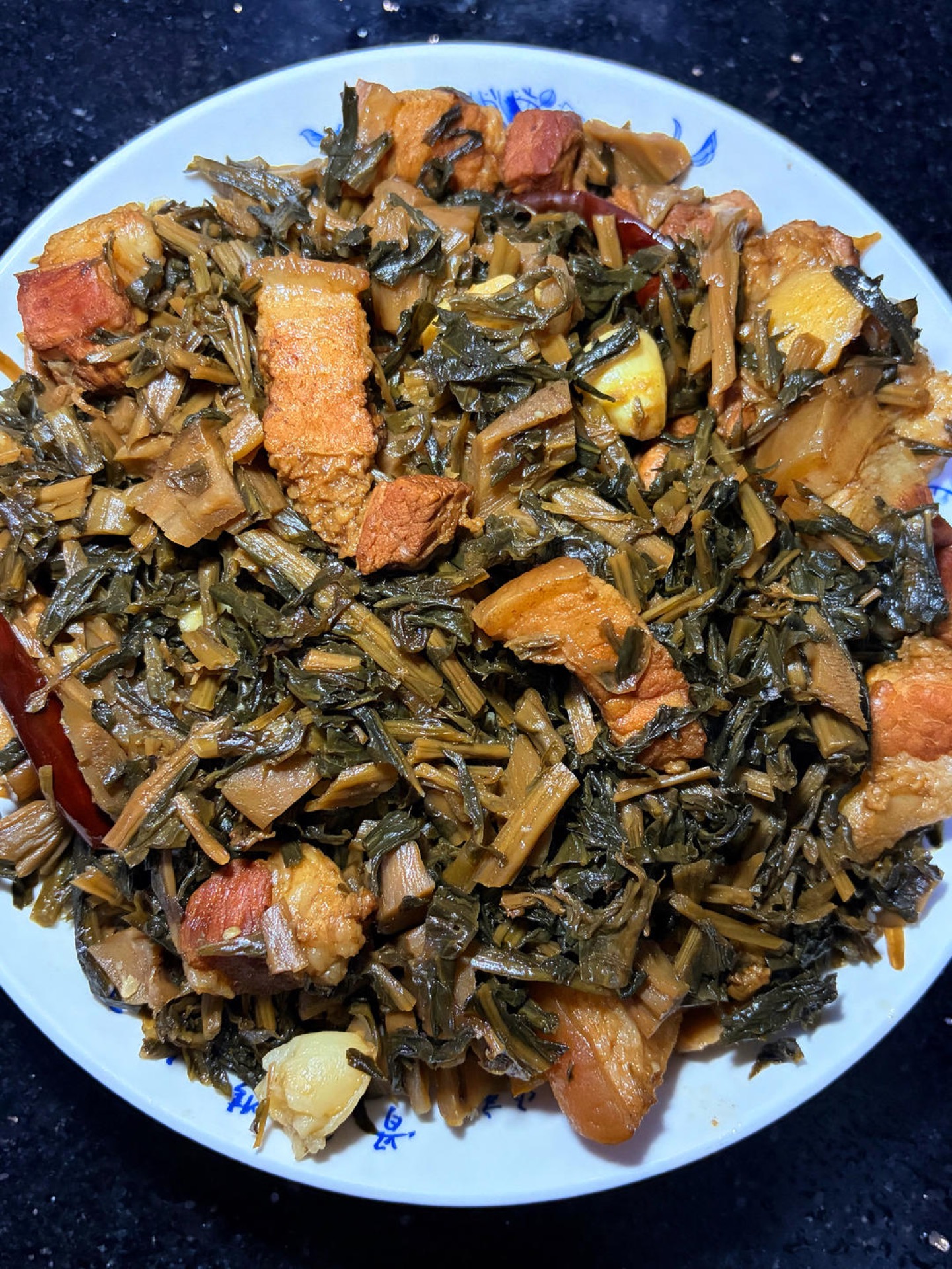
What Is Braised Pork Belly with Dried Greens?
菜干焖五花肉 is a Hakka braise built on two humble ingredients: skin-on pork belly and 菜干, mustard greens (often the radish or mustard tops) that have been salted and sun-dried until they are leathery and intensely savory. The greens are soaked, squeezed, and then simmered with the pork until they turn silky and absorb the meat juices.
Dried greens are not a substitute for fresh vegetables — they are their own ingredient. What they lose in crunch they gain in concentrated, almost fermented depth that fresh greens simply cannot deliver.
Unlike a red-braised pork belly, this dish leans on the greens to carry the seasoning, so the sauce ends up less sweet and more savory. If you enjoy the balance of soy and aromatics here, our Gong Cai pork stir-fry uses a similar pantry-driven logic.
Why This Recipe Works
- Soaking and squeezing the greens twice removes grit and the harsh edge of the drying salt, leaving only clean umami.
- Dry-toasting the greens in a bare pan before braising wakes up their aroma — the same principle behind toasting spices.
- Rendering the pork belly first gives you free fat to bloom the garlic, ginger, chilies and star anise.
- Laying the greens on the bottom of the clay pot means they catch every drop of fat and sauce that runs down.
- Boiling water, not cold, goes in at the end so the pork does not seize and turn tough.
Equipment Needed
A heavy clay pot or Dutch oven is ideal here, since it holds and radiates heat gently. You will also want a wide skillet or wok for the initial rendering, a colander, a clean kitchen towel for squeezing the greens, and a slotted spoon. If you are working with a carbon steel wok for the first stage, our guide to cleaning and seasoning a wok will keep it in good shape.
Ingredients
- 500 g (1 jin) skin-on pork belly, cut into 2.5 cm chunks
- 1 large handful dried mustard greens (菜干), about 60–80 g dry
- 3 cloves garlic, smashed
- 4 slices fresh ginger
- 3 bay leaves
- 4 dried red chilies
- 1 whole star anise
- 3 tbsp light soy sauce
- 1 tbsp dark soy sauce
- 2 tsp salt, plus more to taste
- About 800 ml boiling water
- 1 tbsp neutral oil, for the clay pot
Ingredient Notes
Dried greens vary enormously in saltiness depending on who dried them. Taste a shred after soaking; if it is aggressively salty, soak a second round and reduce the salt in the braise. Pork belly should be skin-on and ideally a slab you can cut yourself so you control the fat-to-lean ratio — look for a piece with distinct layers rather than a thick cap of fat.
Dark soy is for color, light soy for salt and freshness; do not swap one for the other. If you are avoiding standard soy sauce, our notes on a vegan oyster sauce substitute are also useful for the broader pantry. And if your garlic ever tastes sharp and bitter rather than sweet, the reason is almost always heat — see why garlic turns bitter.
An honest caveat: dried greens are chewy by nature. If you or your family prefer a softer texture, extend the braise by 15 minutes — but past about an hour they start to lose their character and turn to mush.
Prep & Mise en Place
Soak the greens in warm water for at least 30 minutes, then rinse them three or four times in fresh water, agitating with your fingers each time, until the water runs clear and no grit settles at the bottom of the bowl. Squeeze them hard — really hard — in a clean towel until no more water drips out, then trim away the tough old stems and cut the rest into 5 cm lengths. Have the ginger, garlic, chilies, star anise and bay leaves ready in a small dish, and the soy sauces and salt measured out, because once the pork starts rendering you will not have time to hunt for anything.
Cooking Process
Step 1: Soak and Rinse the Dried Greens
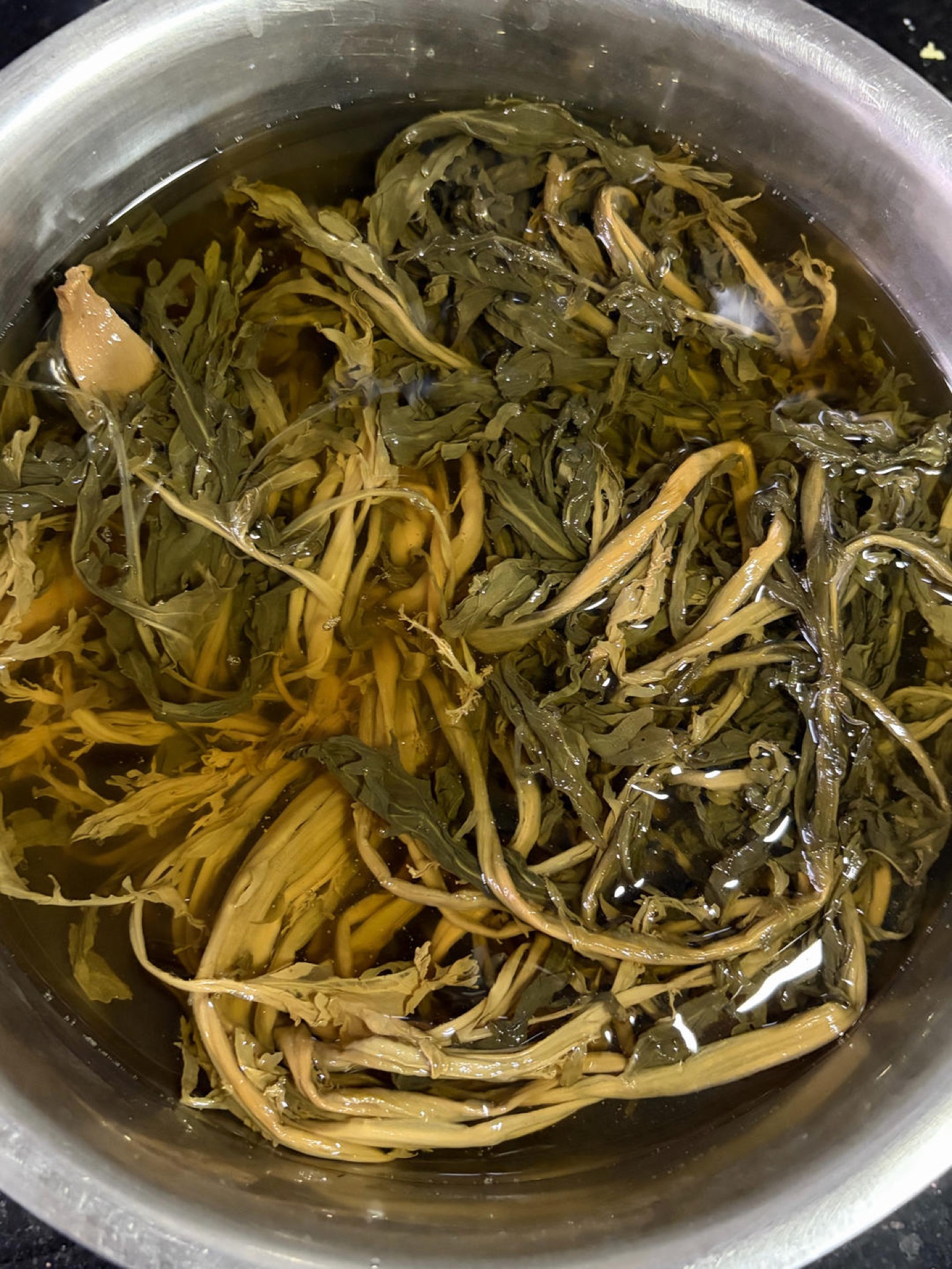
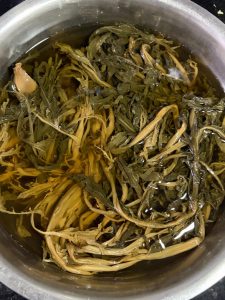
Dried radish or mustard tops have a flavor all their own — the older generation really did know what they were doing. Soak the greens in warm water for at least 30 minutes, then wash them repeatedly, changing the water several times, until it stays clean.
Step 2: Squeeze Dry and Trim
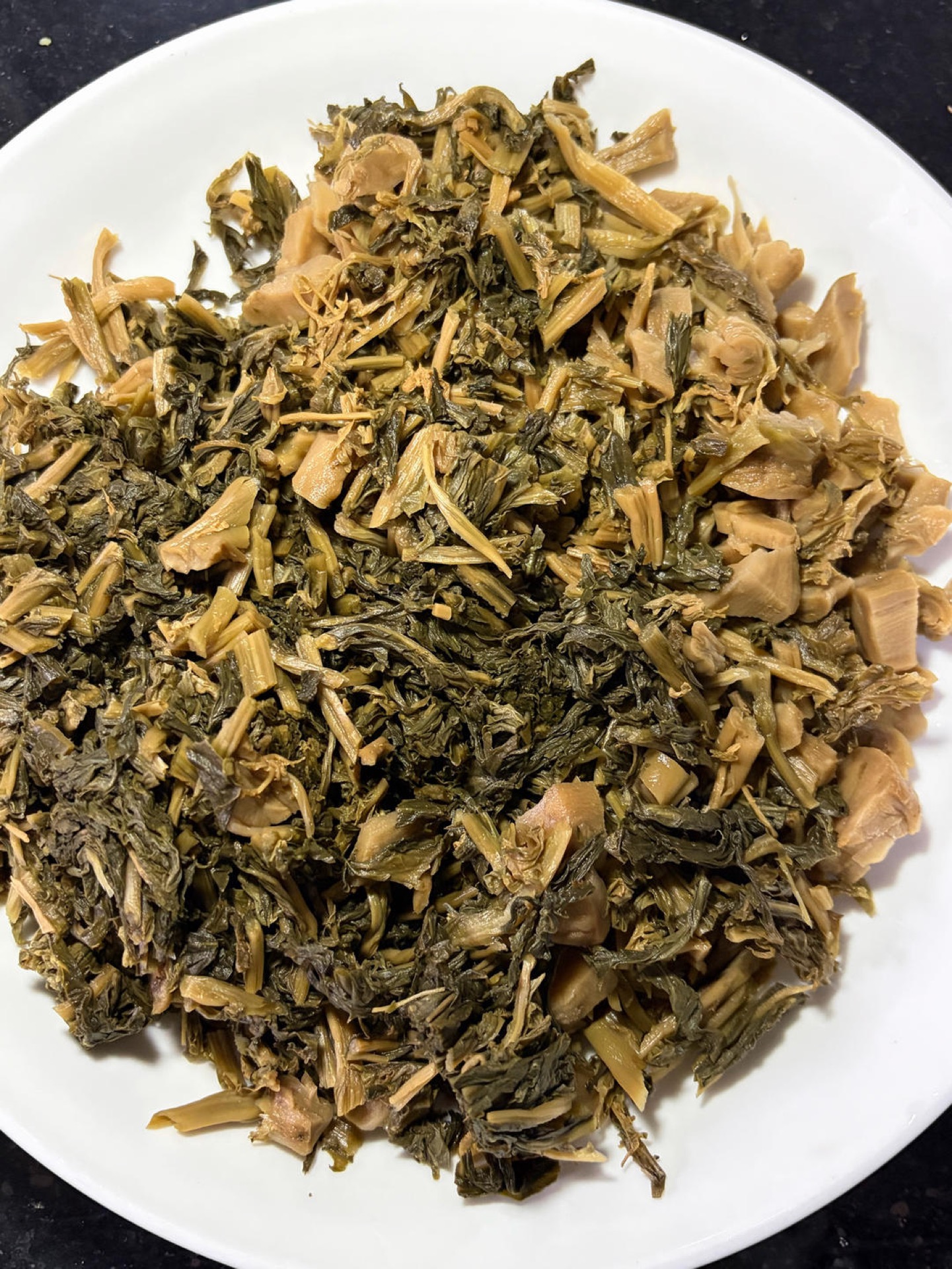
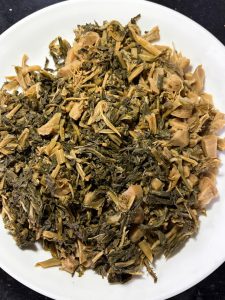
Squeeze out as much water as you possibly can, then cut away the tough stem sections and set them aside. Getting the greens properly dry matters: it is what lets the aroma come through during braising and keeps the texture from turning watery.
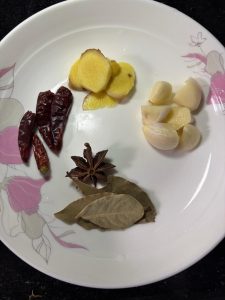
Step 3: Gather the Aromatics
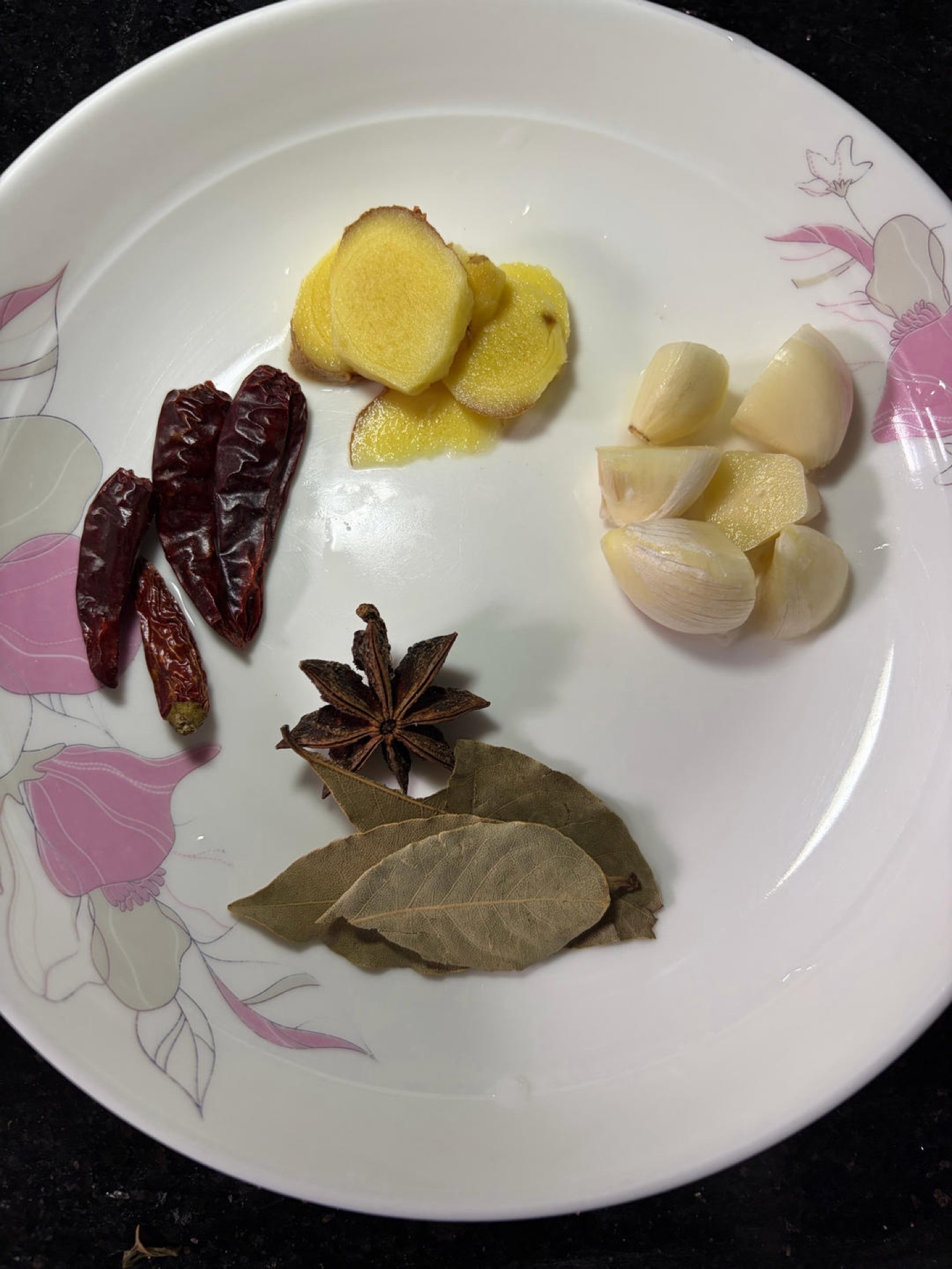
Prepare the ginger slices, garlic, dried chilies, star anise and bay leaves.
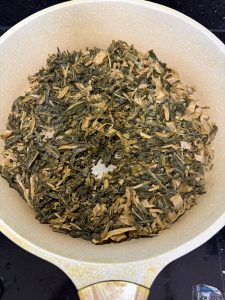
Step 4: Toast the Greens in a Dry Pan
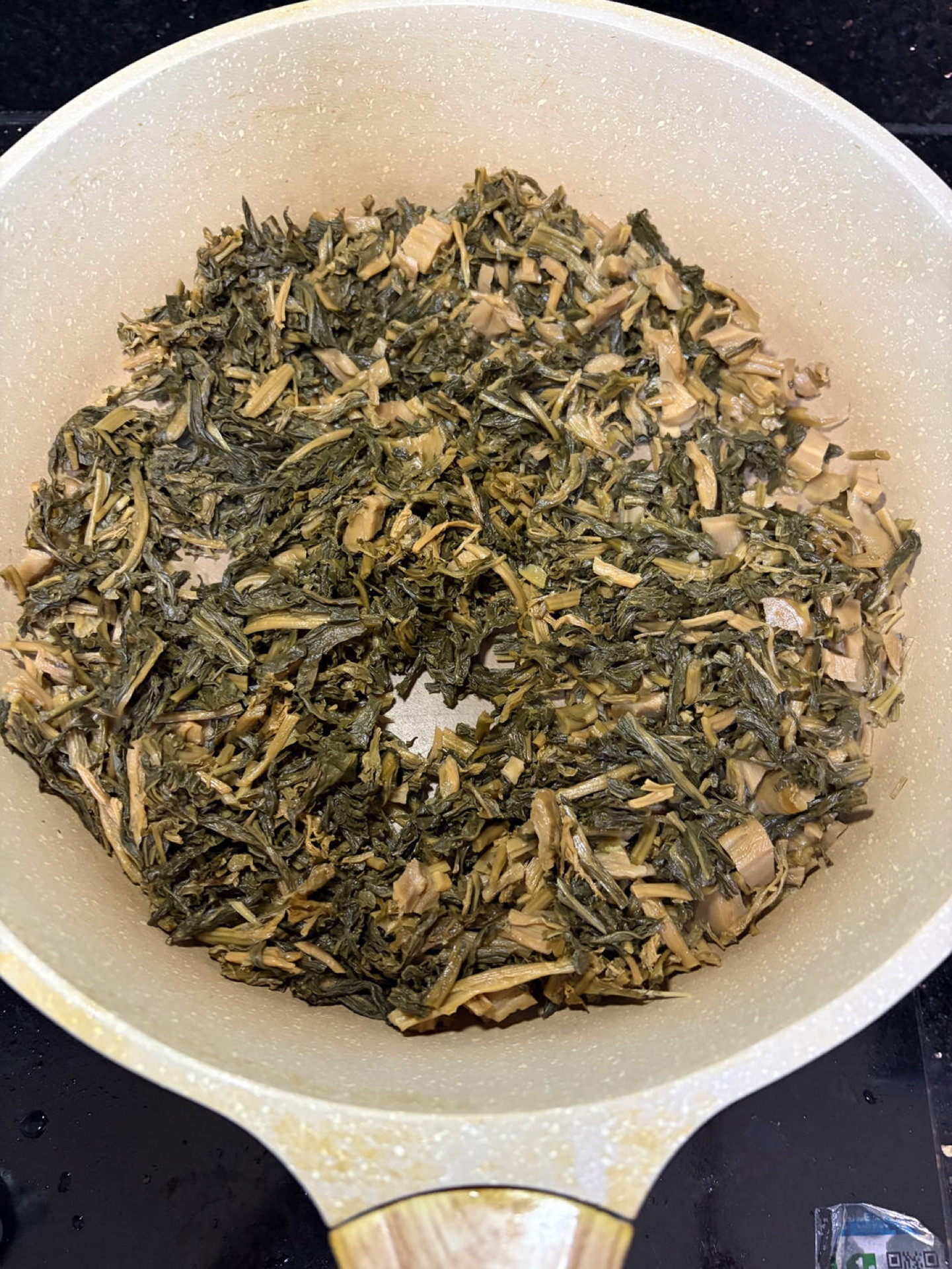
Heat a wok with no oil at all, add the greens, and cook over medium-low heat, stirring, until the moisture is driven off. Toasted greens smell noticeably more fragrant.
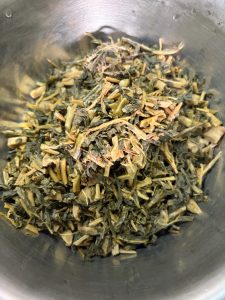
Step 5: Set the Greens Aside
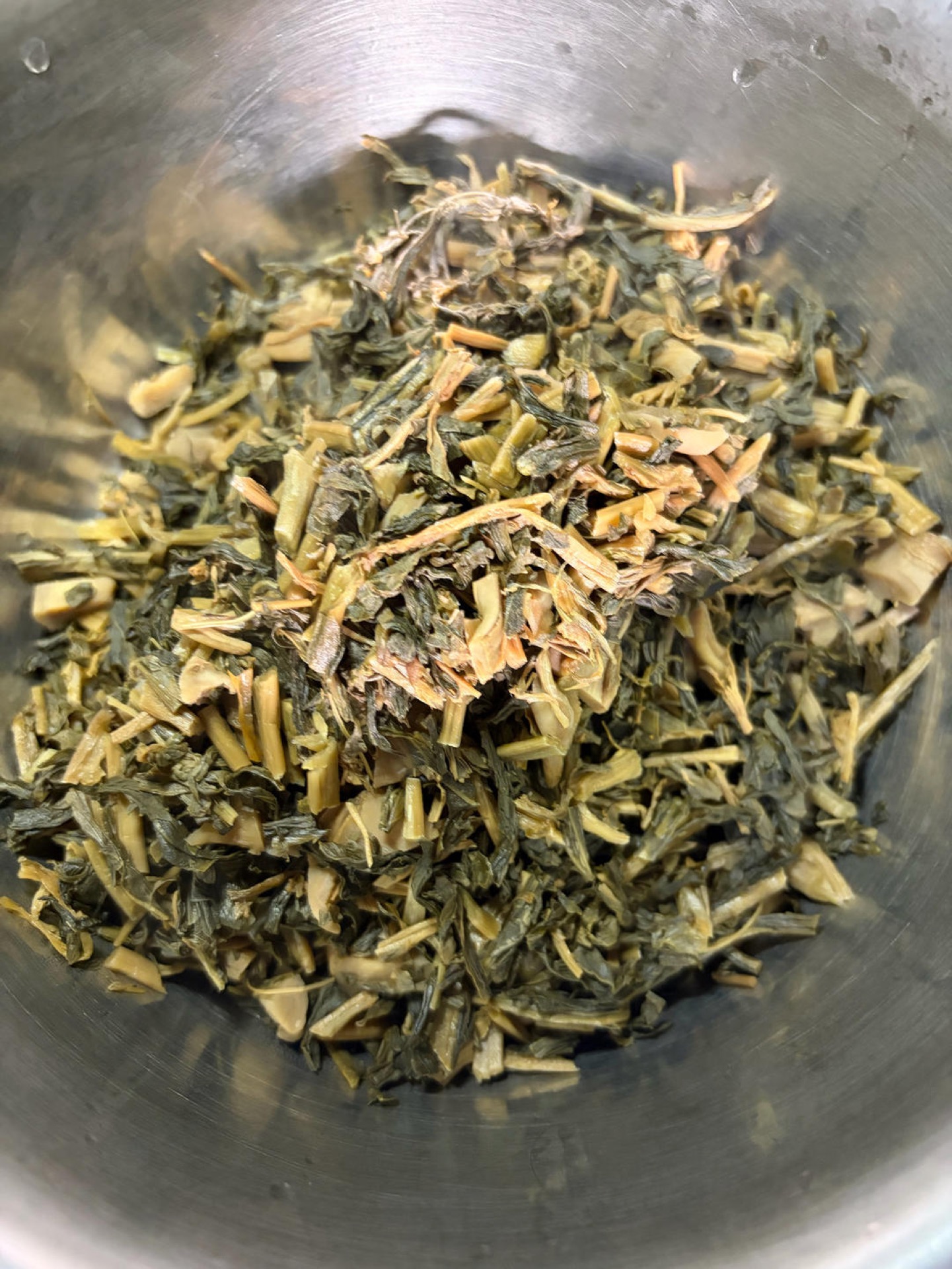
Tip them onto a plate and set aside.
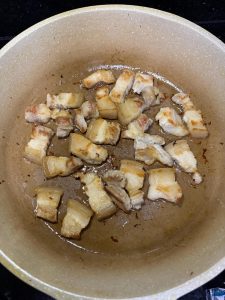
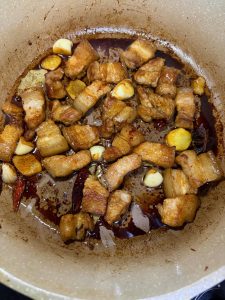
Step 6: Render the Pork Belly with the Aromatics
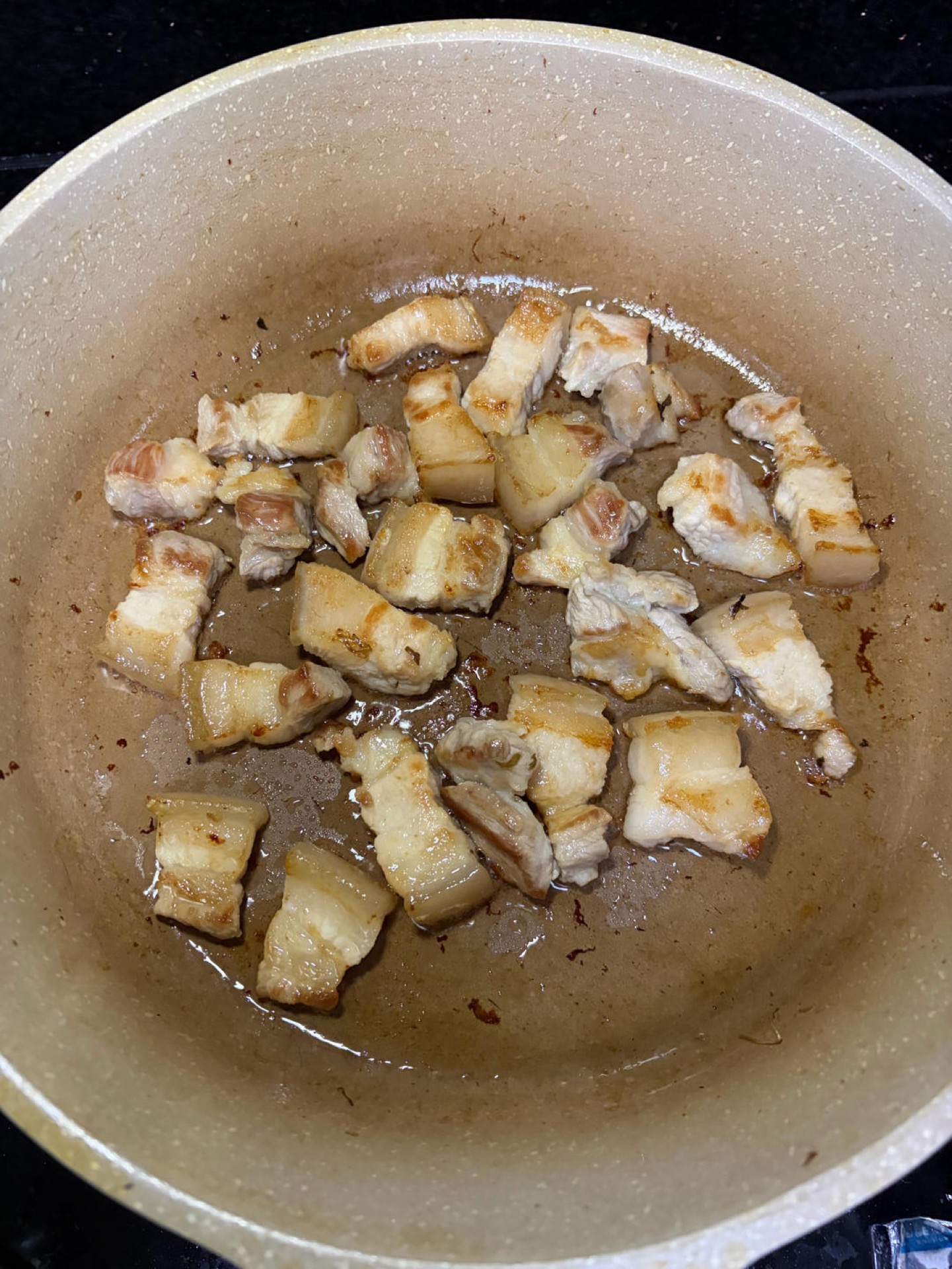
Add all the aromatics to the pan and let the fat that renders from the pork belly fry them until they smell sweet and the pork edges are lightly golden.
Step 7: Season and Color the Pork
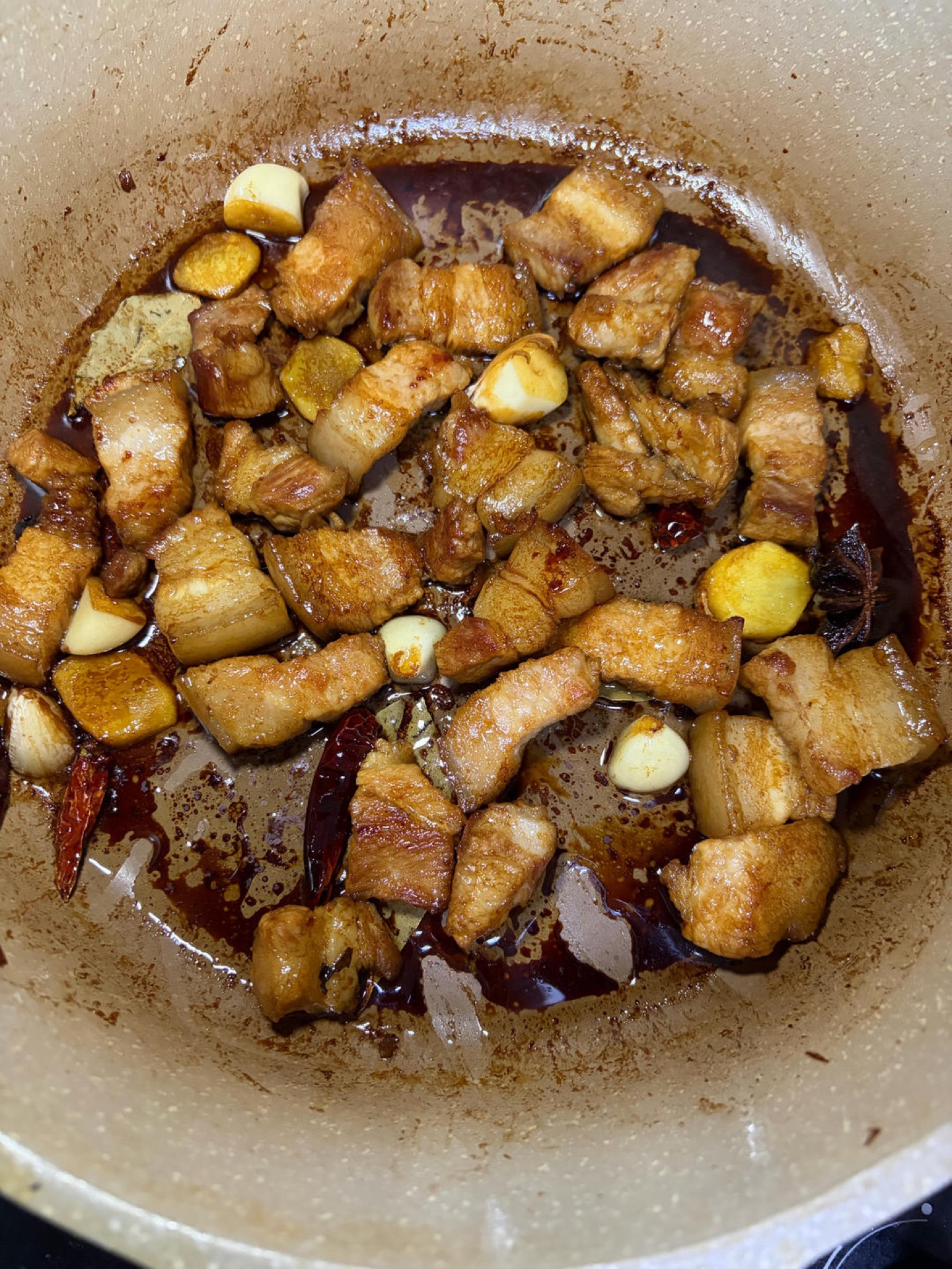
Add the light soy sauce, dark soy sauce and salt, and toss for a minute or two until every piece of pork is evenly coated and glossy.
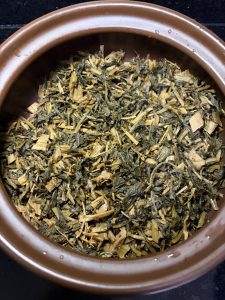
Step 8: Line the Clay Pot
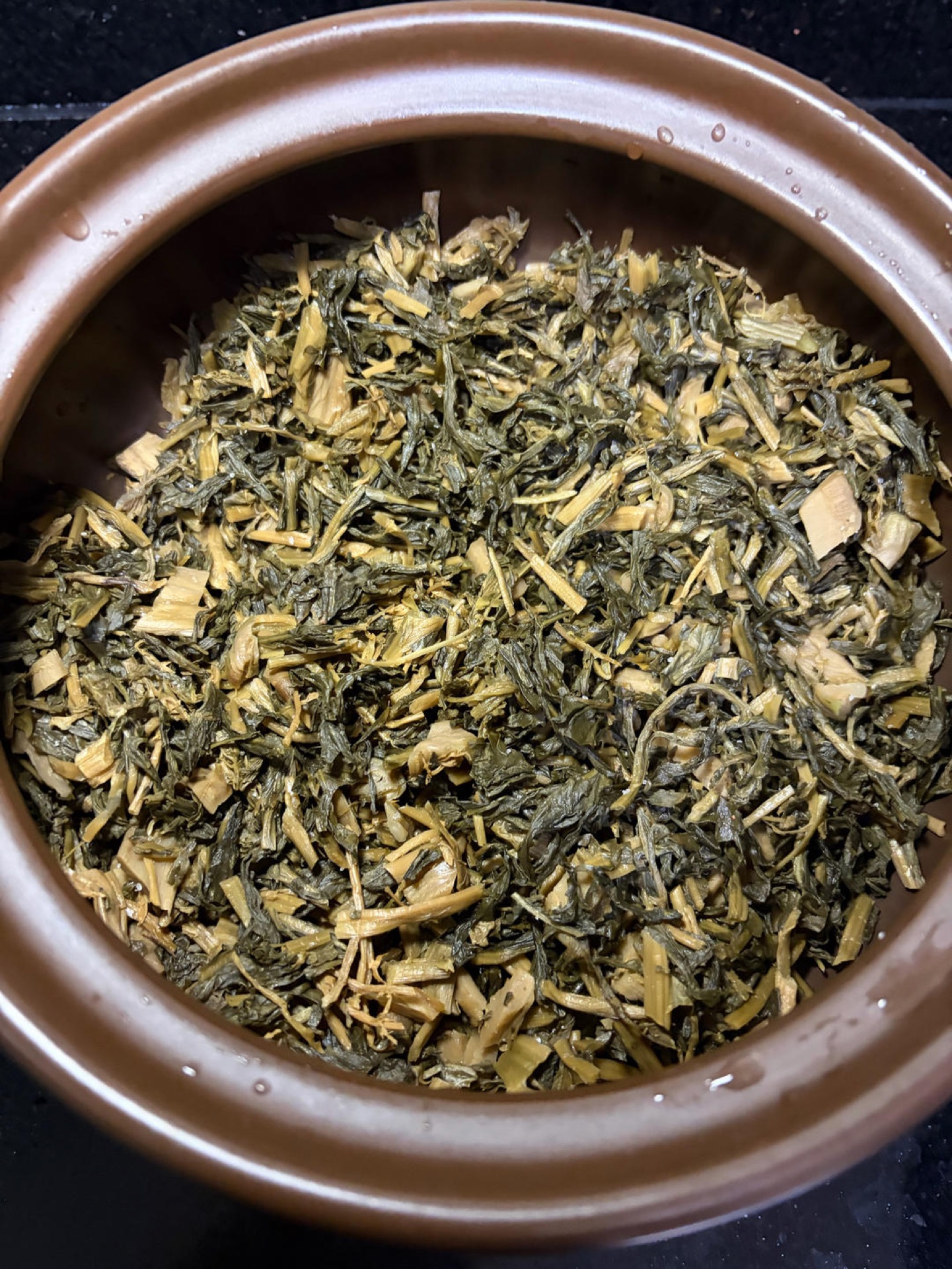
Preheat the clay pot, add the cooking oil, and spread the greens in an even layer across the bottom.
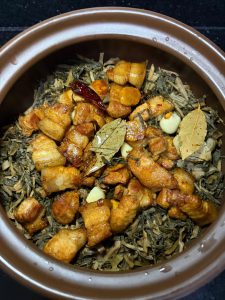
Step 9: Add the Pork
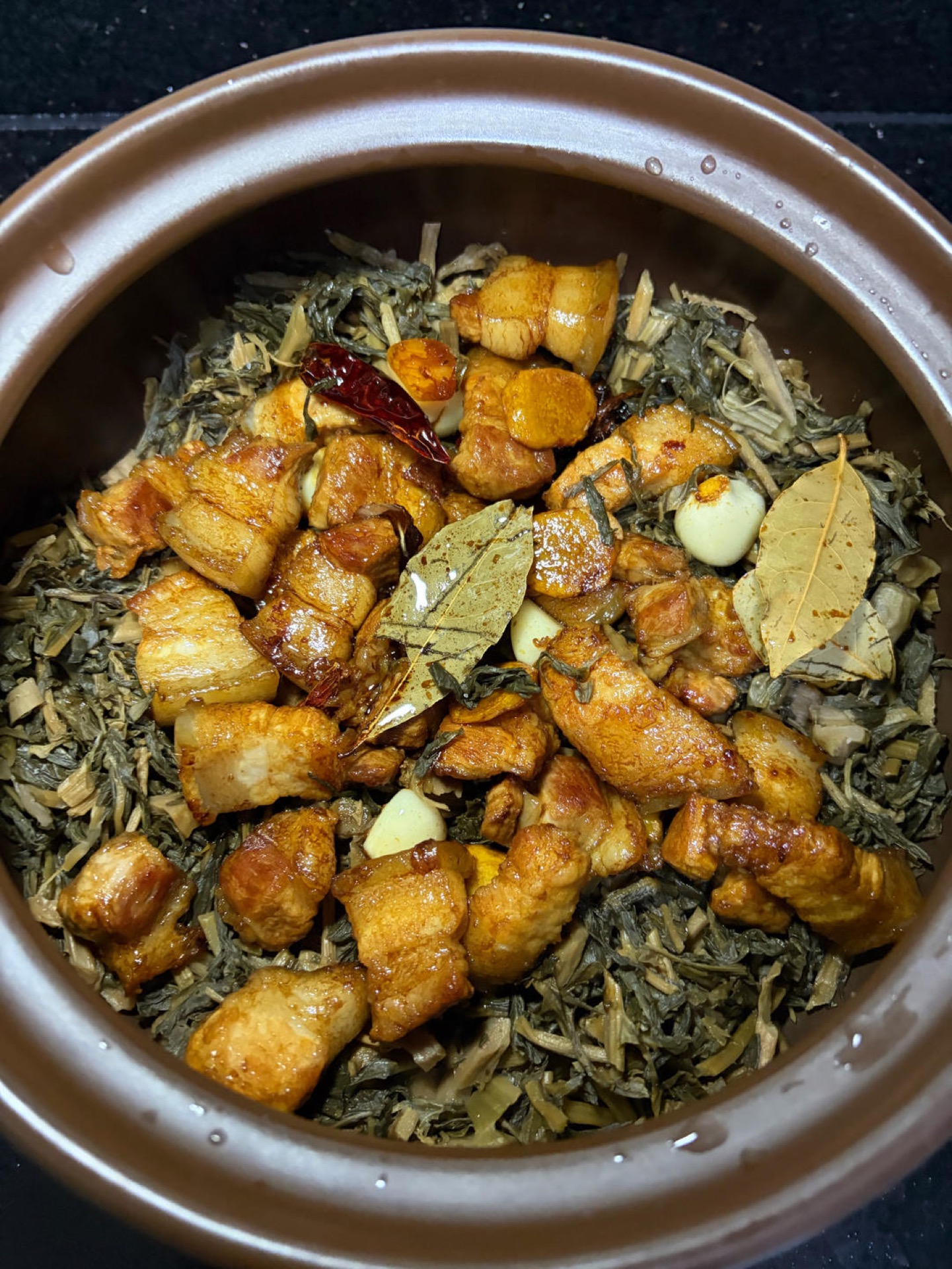
Pour the pork and all its pan juices over the greens.
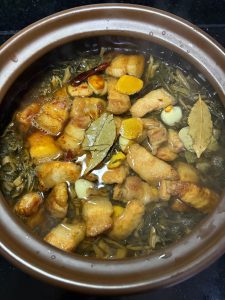
Step 10: Add Boiling Water and Braise
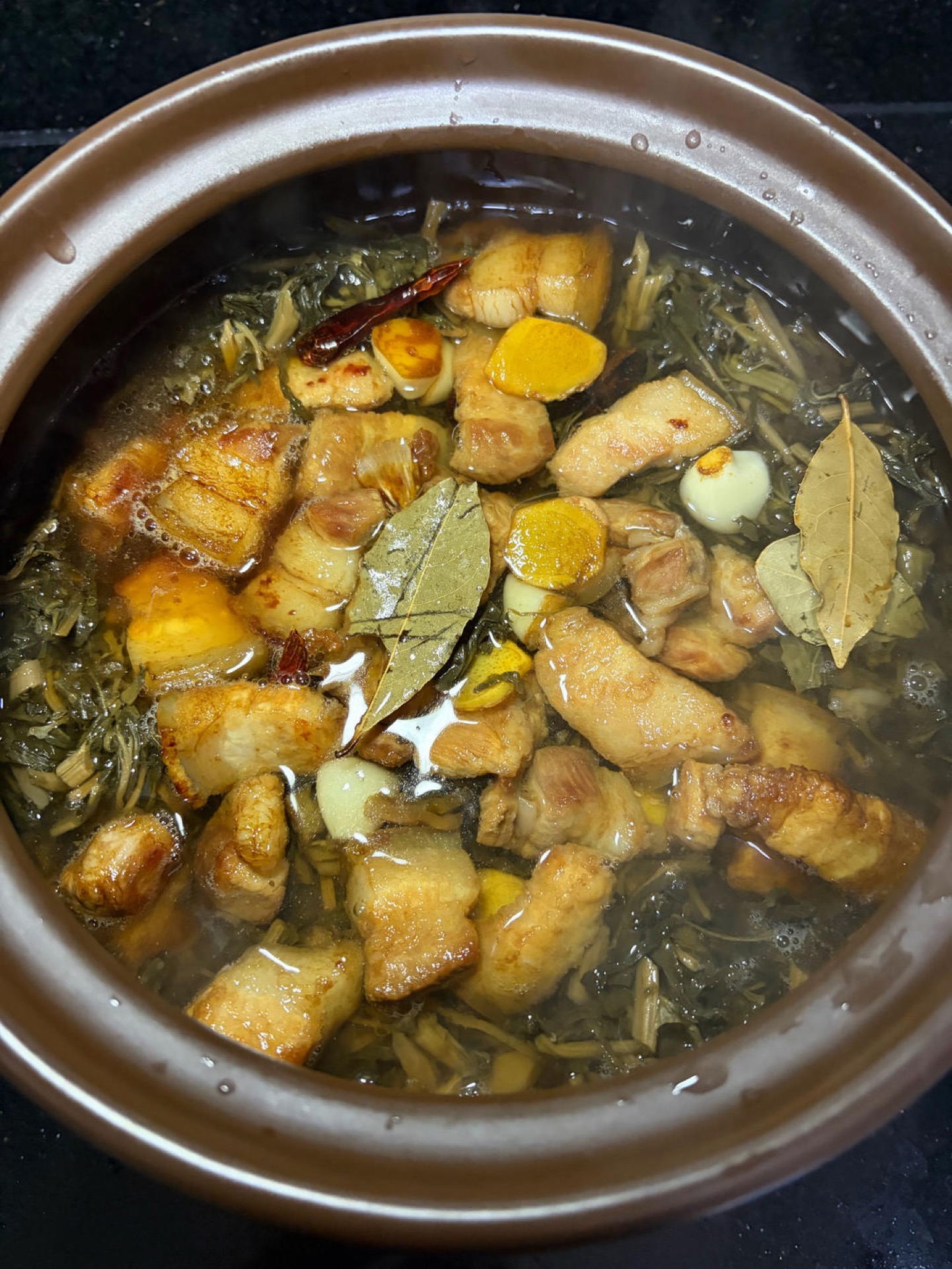
Pour in boiling water to just cover the ingredients, bring to a rolling boil over high heat, then drop to low, cover, and braise for 40 minutes. Resist lifting the lid too often — every peek lets heat and aroma escape.
Step 11: Serve
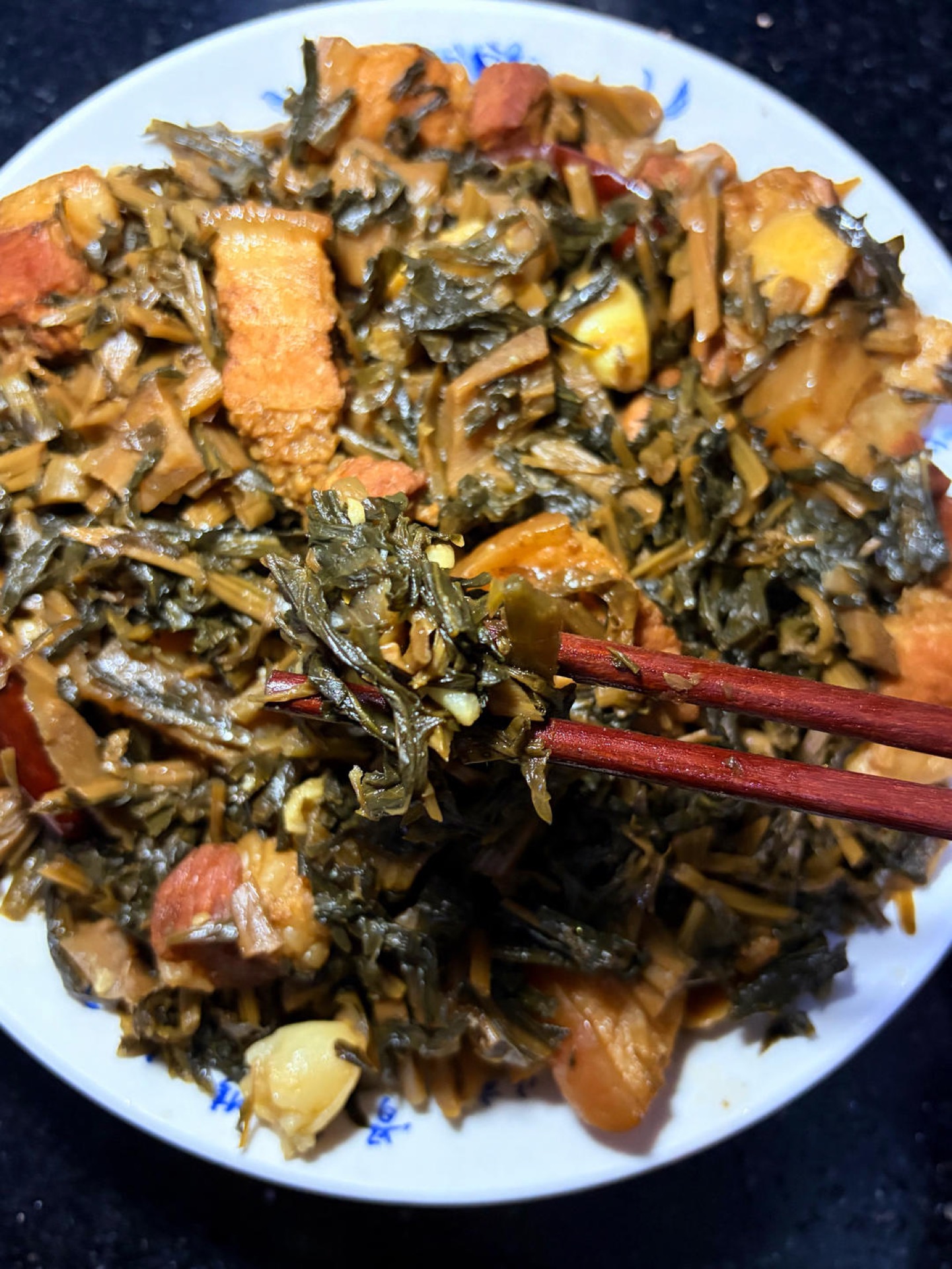
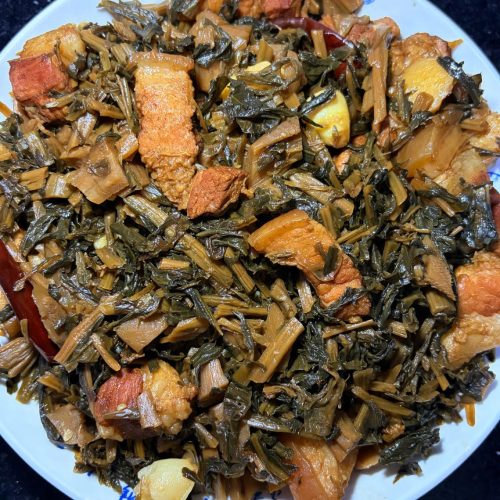
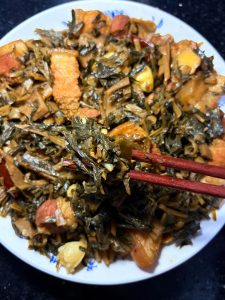
The greens are saturated with the salty savor of the meat juices, and the pork is tender without falling apart — the fat has been drawn into the greens, so it eats rich but not greasy. The two really do merge into one another, and it is seriously good over rice. Boil a bowl of rice noodles and spoon the pork and greens over the top and you have another excellent combination.
Common Mistakes When Making Braised Pork Belly with Dried Greens
1. Not soaking the greens long enough. Thirty minutes is the floor, not the target. Grit hides deep in the folds, and under-soaked greens stay tough no matter how long you braise.
2. Skipping the squeeze. Greens that still hold water will steam rather than braise, and the finished dish tastes thin and washed out.
3. Adding cold water to the pot. Cold water shocks the pork and tightens the muscle fibers. Always use boiling water, and always enough to cover.
4. Boiling hard instead of simmering. A rolling boil for 40 minutes will shred the pork and leave the greens disintegrating. You want lazy bubbles, not a churn.
5. Oversalting before tasting the greens. Dried greens carry their own salt. Start with less salt than you think you need, then adjust at the end once the liquid has reduced.
Variations
Swap the pork belly for pork shoulder if you want a leaner pot, though you will lose some of the unctuousness that makes this dish what it is. Add a tablespoon of fermented bean paste for a deeper, more pungent braise, or a small piece of rock sugar if your greens are particularly bitter. Some Hakka cooks add a few slices of dried squid for extra savoriness, and others finish with a splash of Shaoxing wine just before covering. For a different route into clay-pot cooking, our Moo Goo Gai Pan shows how mushrooms behave in a similar soy-forward braise.
Frequently Asked Questions
Can I use fresh mustard greens instead? You can, but the dish will be quite different — fresh greens release water and lack that concentrated depth. Reduce the braising time to about 20 minutes.
How do I know the greens are clean? After the final rinse, let the water settle in the bowl. If there is no grit at the bottom, you are done.
My pork belly is tough. What went wrong? Almost always cold water, high heat, or too short a braise. Return it to a low simmer with a little boiling water and give it another 20 minutes.
Can I make this ahead? Yes, and it is arguably better the next day. Cool it quickly, refrigerate, and lift off the solidified fat before reheating.
Is this dish very salty? It is savory, but not overwhelmingly so if you control the soy and taste the greens first. Serve it with plain rice to balance.
How to Serve
Steamed white rice is the classic partner, and a bowl of plain congee works beautifully for a lighter meal. Add a simply cooked green vegetable — blanched bok choy or a quick garlicky stir-fry — to cut the richness, and if you like a little heat, a spoonful of chili oil on the side. The braising liquid is gold; spoon it over the rice. A tangy pickle on the side, like our sweet and sour pickled ginger, does the same job.
Storage & Reheat
Store leftovers in an airtight container in the refrigerator for up to 4 days. The fat will solidify on top — lift it off if you prefer a lighter dish, or stir it back in for flavor. Reheat gently in a covered pot over low heat with a splash of water, or in the microwave in short bursts, until steaming hot throughout. Freezing works but softens the greens further, so I only freeze it if I know I will eat it within a month.
Allergen Notice
This recipe contains soy (soy sauce) and may contain gluten depending on the brand of soy sauce used. Check labels carefully if you are cooking for someone with a soy or wheat allergy, and choose a certified gluten-free soy sauce if needed.
Nutrition Disclaimer
Nutrition figures are estimates calculated from typical ingredient values and will vary with the fat trim on your pork belly, the brand of soy sauce, and how much braising liquid you actually consume. They are provided for general guidance only and are not medical or dietary advice.
About the Author & Recipe Development
I am Lin, and I grew up in my parents’ restaurant kitchen in Chengdu, where every dish on the menu had to earn its place. This braise is one of the ones that did — my mother made it with greens a relative brought down from the countryside, and I still measure the soaking time by feel rather than by clock. I tested this version with supermarket dried mustard greens as well as a home-dried batch, and the times below reflect the tougher, more common store-bought kind.
Authoritative References
For background on Hakka preserved vegetables and braising technique, see general references on Chinese regional cooking and food preservation methods, along with USDA guidance on safe handling and reheating of cooked pork.
Braised Pork Belly with Dried Greens (菜干焖五花肉): Hakka Comfort

Equipment
- Clay Pot or Dutch Oven
- Wok or wide skillet
- Colander
- Clean kitchen towel
- Slotted Spoon
Ingredients
Main Ingredients
- 500 g skin-on pork belly cut into 2.5 cm chunks
- 60 g dried mustard greens (菜干) about one large handful
- 3 cloves garlic smashed
- 4 slices fresh ginger
- 3 leaves bay leaves
- 4 pieces dried red chilies
- 1 whole star anise
- 3 tbsp light soy sauce
- 1 tbsp dark soy sauce
- 2 tsp salt plus more to taste
- 800 ml boiling water enough to cover the ingredients
- 1 tbsp neutral cooking oil for the clay pot
Instructions
- Soak the dried greens in warm water for at least 30 minutes, then wash them repeatedly in fresh water until the water runs clear.

- Squeeze the greens dry with your hands or a clean towel, trim away the tough stems, and set aside. Removing all the water is what lets the aroma come through and keeps the texture from turning watery.
- Prepare the ginger slices, garlic, dried chilies, star anise and bay leaves.
- Heat a wok with no oil, add the greens, and cook over medium-low heat until the moisture is driven off. Toasted greens are noticeably more fragrant.
- Transfer the toasted greens to a plate and set aside.
- Add all the aromatics to the pan and fry them in the fat rendered from the pork belly until fragrant.
- Add the light soy sauce, dark soy sauce and salt, and toss until the pork is evenly colored.
- Preheat the clay pot, add the cooking oil, and spread the greens in an even layer over the bottom.
- Pour the pork and its pan juices over the greens.
- Pour in boiling water to cover, bring to a boil over high heat, then reduce to low, cover, and braise for 40 minutes.
- Serve hot. The greens are saturated with the savory meat juices and the pork is tender without falling apart — rich but not greasy. Excellent over rice, or spooned over a bowl of rice noodles.






Leave a Reply