Growing up in my family’s restaurant in Sichuan, winter menus always shifted toward “warming” foods. My father, a chef with decades of experience, firmly believed in the Traditional Chinese Medicine concept that lamb expels cold and warms the body.

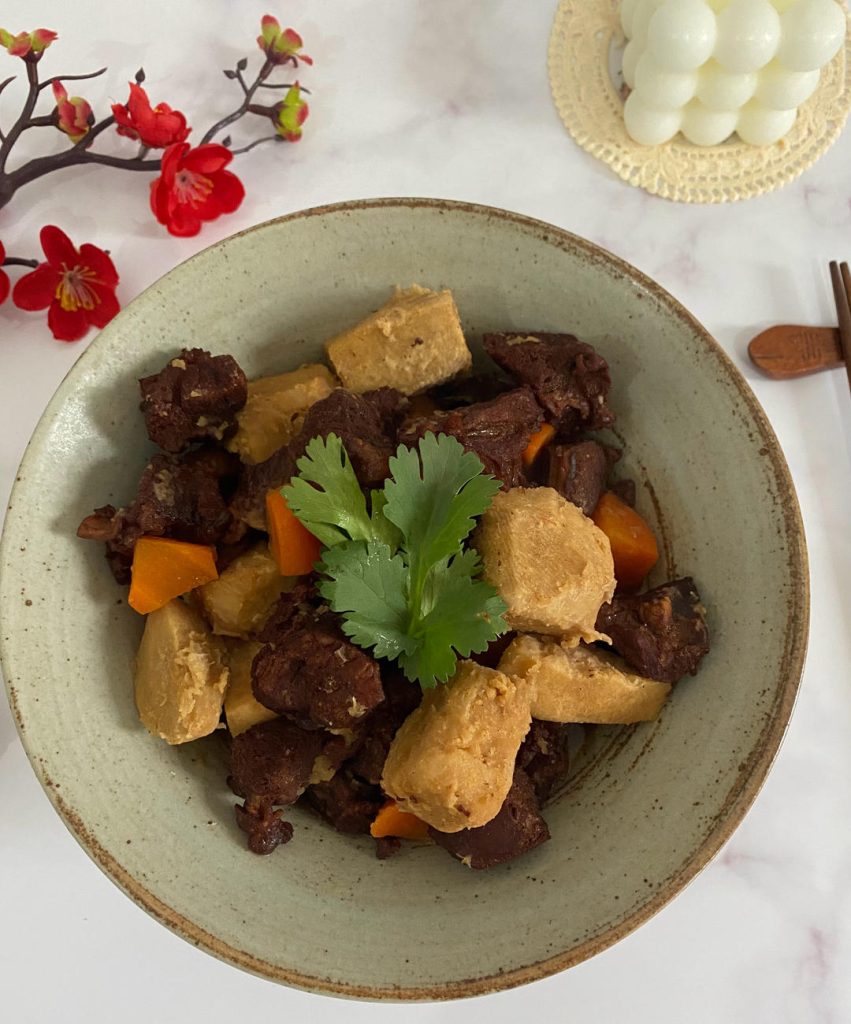
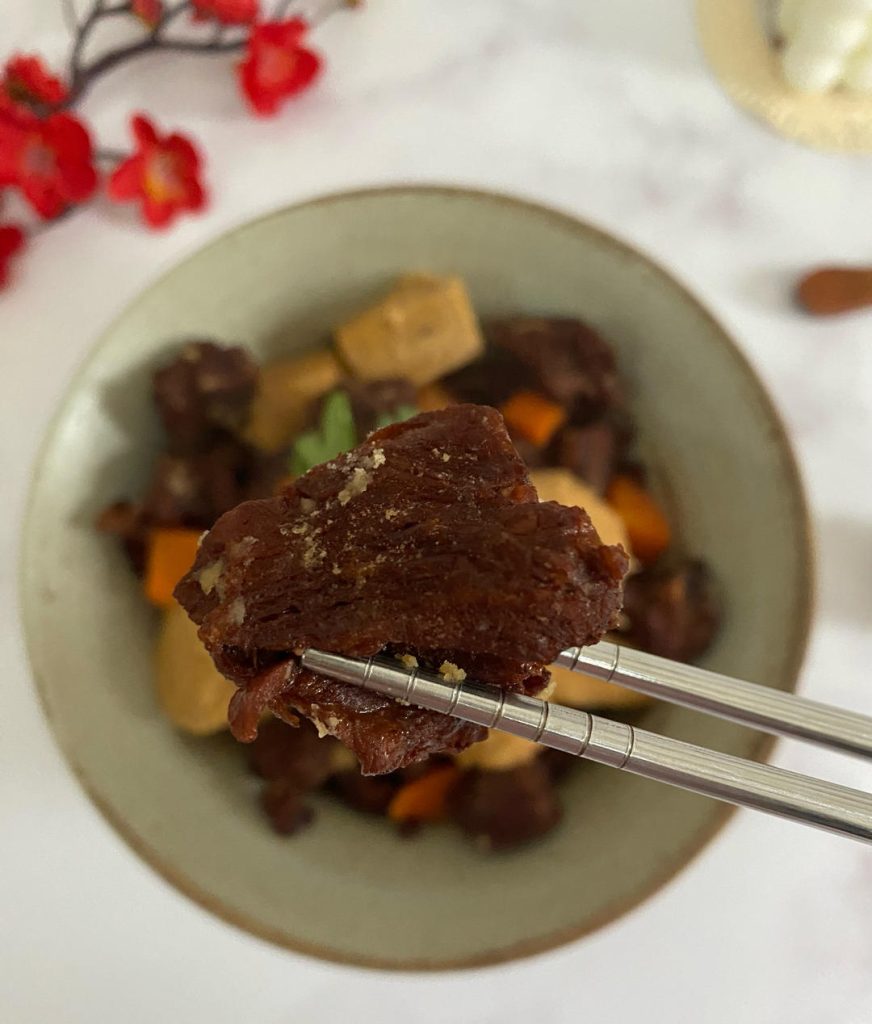
While spicy hot pots are famous in our region, this Braised Lamb with Taro (Xiang Yu Hong Men Yang Rou) was our family’s quiet comfort food. The magic lies in the texture contrast: the lamb becomes savory and tender, while the taro absorbs all that rich, meaty sauce, becoming soft, powdery, and melt-in-your-mouth creamy.
This recipe uses a pressure cooker to speed up the process without sacrificing flavor, a technique we adopted in our busy restaurant kitchen to keep up with demand. It’s hearty, nutritious, and tastes even better the next day.
Why This Recipe Works
- Texture Harmony: The starch from the taro naturally thickens the sauce, coating the lamb in a glossy, flavorful glaze without needing a heavy cornstarch slurry.
- Pressure Cooking: By using a pressure cooker for the initial braise, we cut the cooking time significantly while breaking down the connective tissue in the lamb leg, ensuring it isn’t chewy.
- Two-Stage Cooking: We cook the meat first, then transfer to a wok (or pot) to simmer with the vegetables. This prevents the taro and carrots from turning into mush before the meat is tender.
What is Red Braised Lamb with Taro?
“Red Braising” (Hong Men or Hong Shao) is a classic Chinese cooking technique where meat is simmered in soy sauce, sugar, and aromatics, giving it a reddish-brown color.
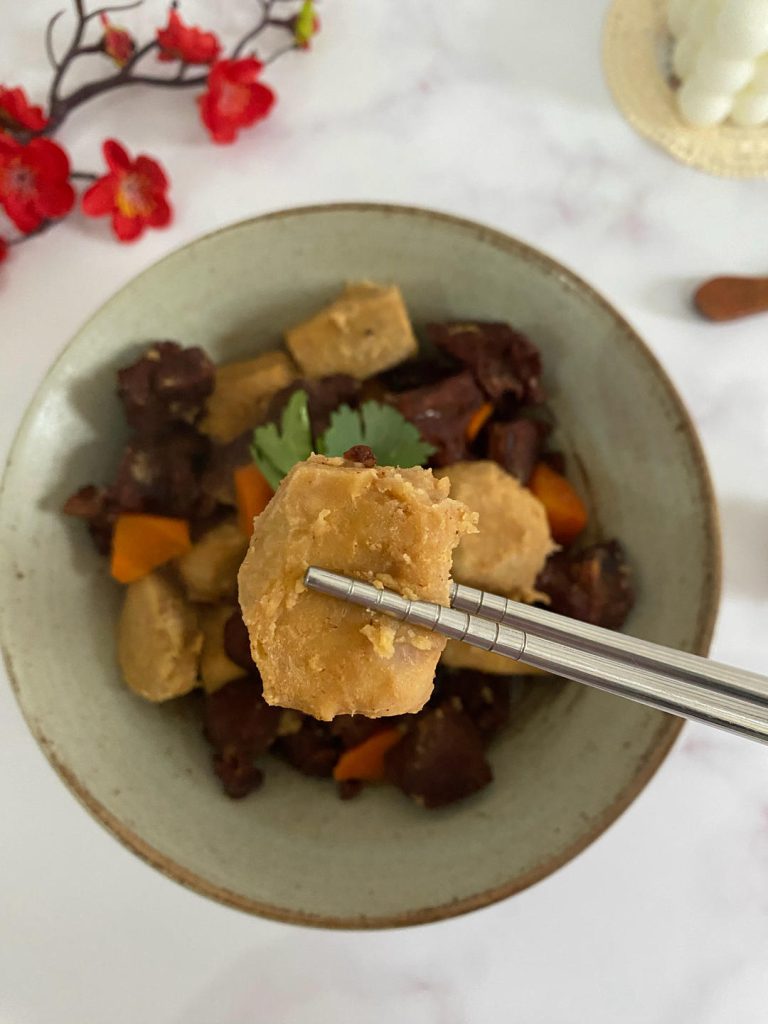
In this specific dish, we pair lamb leg meat with Taro (Xiang Yu). If you haven’t cooked with taro before, think of it as a potato’s creamier, nuttier cousin. When braised, it acts like a sponge, soaking up the savory lamb fat and soy seasonings. It is a classic farmhouse-style dish often served to gather the family around the table during chilly months.
Key Ingredients & Substitutions
- Lamb Leg Meat: The recipe calls for lamb leg meat. It has a good balance of lean meat and connective tissue.
- Substitute: You can use lamb shoulder or boneless lamb stew meat. If you prefer bone-in flavor, lamb riblets work, but require more effort to eat.
- Taro (Xiang Yu): We use large taro root (often sold as Lipu Taro or corm). It has a purple-speckled white interior.
- Substitute: If you can’t find fresh taro, potatoes are a decent substitute, though the flavor profile will be less nutty.
- Note: Raw taro can irritate skin. Wear gloves when peeling!
- Asian Aromatics: Ginger, scallions, star anise, and Sichuan peppercorns are essential for neutralizing the “gamey” odor of the lamb.
- Substitute: If you don’t have Sichuan peppercorns, you can omit them, but they add a subtle citrusy note that cuts through the richness.
- The Sauces: We use a combination of Light Soy Sauce (for saltiness/umami), Dark Soy Sauce (for color), and Oyster Sauce (for depth).
- Recommendation: I use brands like Lee Kum Kee or Pearl River Bridge.
- Cooking Wine: Shaoxing Wine is standard.
- Substitute: Dry sherry is the best Western alternative.
Ingredients
Main Components:
- 0.9 lb (400g) Lamb leg meat, cut into chunks
- 0.7 lb (300g) Taro root, peeled and cut into chunks
- 1/2 Carrot, peeled and cut into chunks
Aromatics & Spices:
- 3 slices Ginger (divided for blanching and braising)
- 1/2 stalk Scallion (cut into sections)
- 2 whole Star Anise
- 1 small piece Cassia bark (Cinnamon) & 1 Bay leaf (Optional, but recommended for step 3)
- 1/2 tsp Sichuan Peppercorns
Seasonings:
- 1 tbsp Cooking wine (Shaoxing wine) – for blanching
- 2 tbsp Light soy sauce
- 1 tbsp Dark soy sauce
- 1 tbsp Oyster sauce
- 1 tbsp Sugar (white sugar or rock sugar)
- 1 tsp Salt (adjust to taste)
- 1 1/2 cups Water (approximate, enough to cover meat in pressure cooker)
Recipe Notes Before You Start
- Defrosting: If using frozen lamb, ensure it is fully thawed in the refrigerator overnight before cooking to ensure even heating.
- Equipment: You will need a pot for blanching, a pressure cooker (Instant Pot works great) for the meat, and a wok or dutch oven for the final simmering.
- Safety: Always handle raw lamb separately from ready-to-eat foods to prevent cross-contamination.
Instructions
Step 1: Prep and Blanch the Lamb
First, wash the lamb leg meat thoroughly to remove any surface blood. Cut it into uniform bite-sized chunks (about 1.5 inches).
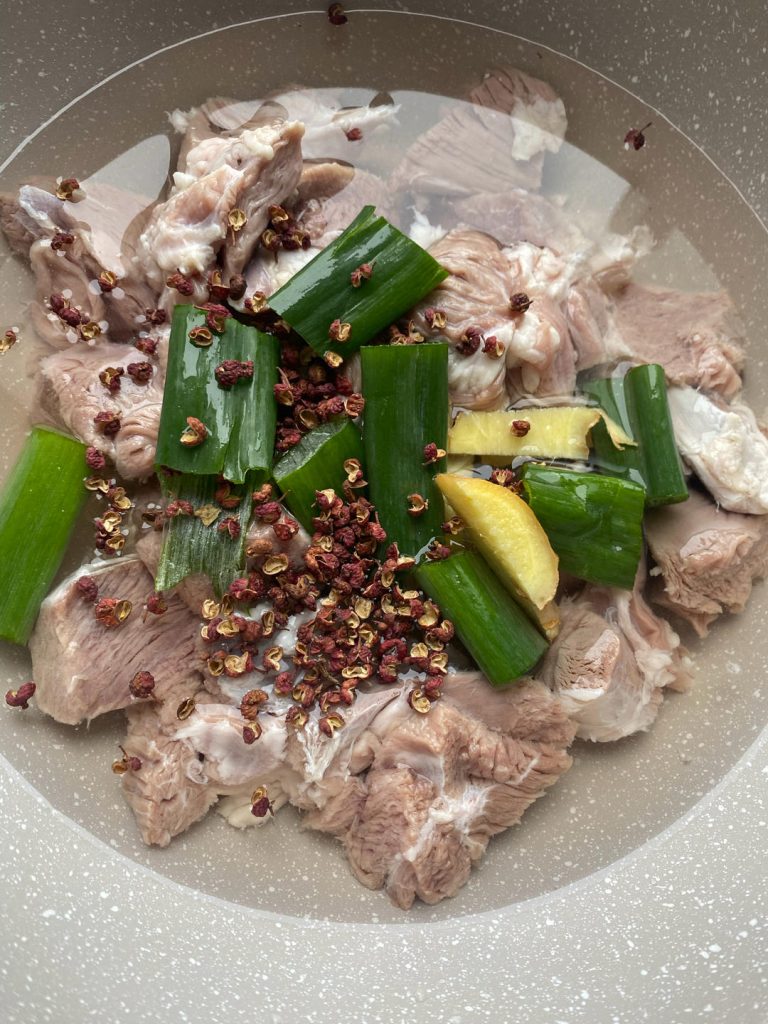
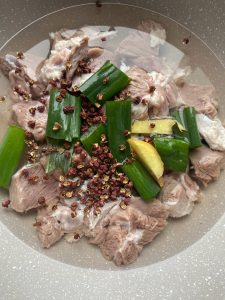
Place the lamb in a pot and cover with cold water. Add a few sections of scallion, ginger slices, a pinch of Sichuan peppercorns, and 1 tablespoon of cooking wine. Bring to a boil over high heat. Skim off the gray foam that floats to the top. Boil for 2-3 minutes.
Why cold water? Starting with cold water allows the blood and impurities to release slowly from the meat as the temperature rises. If you drop meat into boiling water, the proteins seize up, trapping the impurities inside.
Step 2: Pressure Cook the Meat
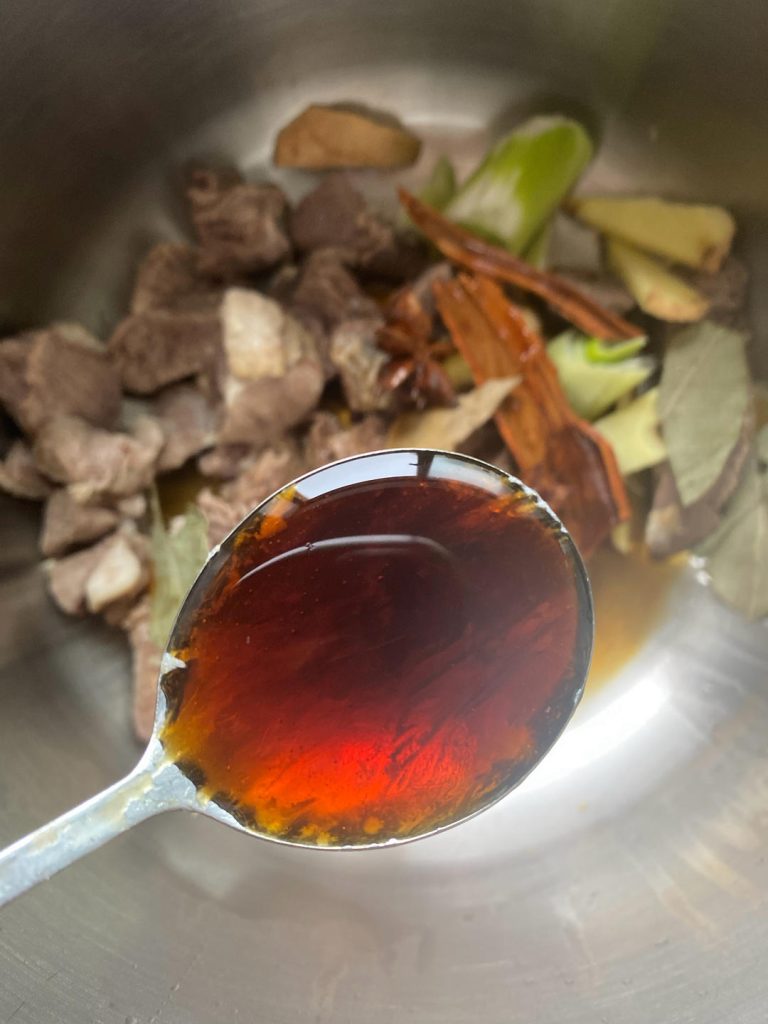
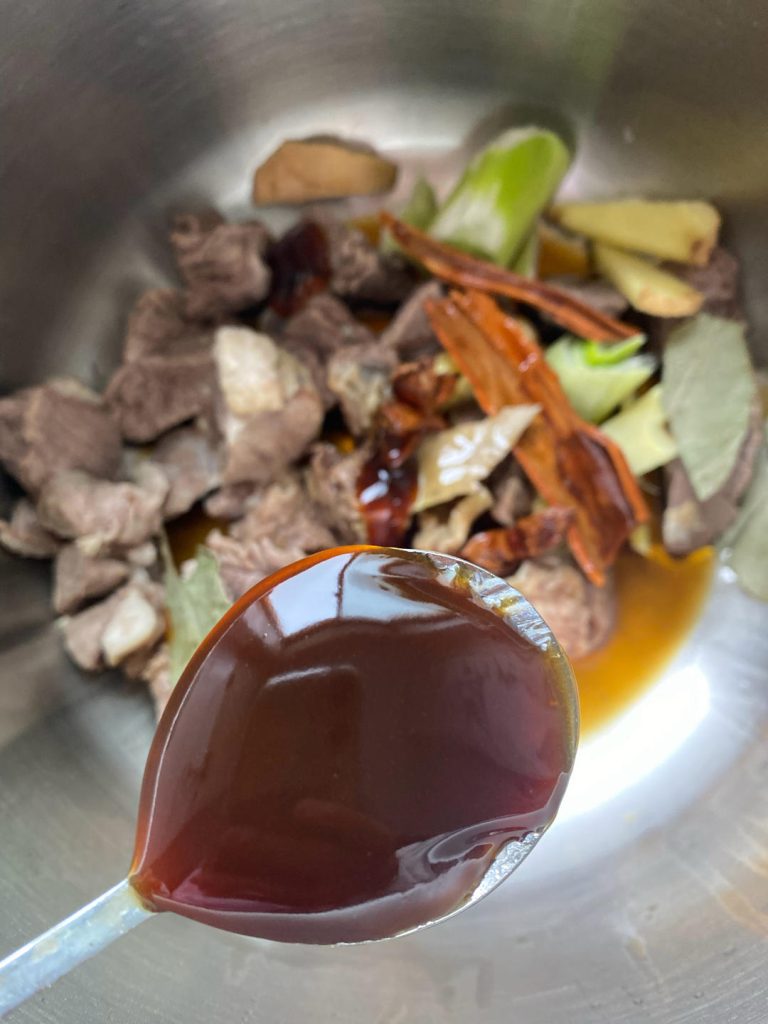
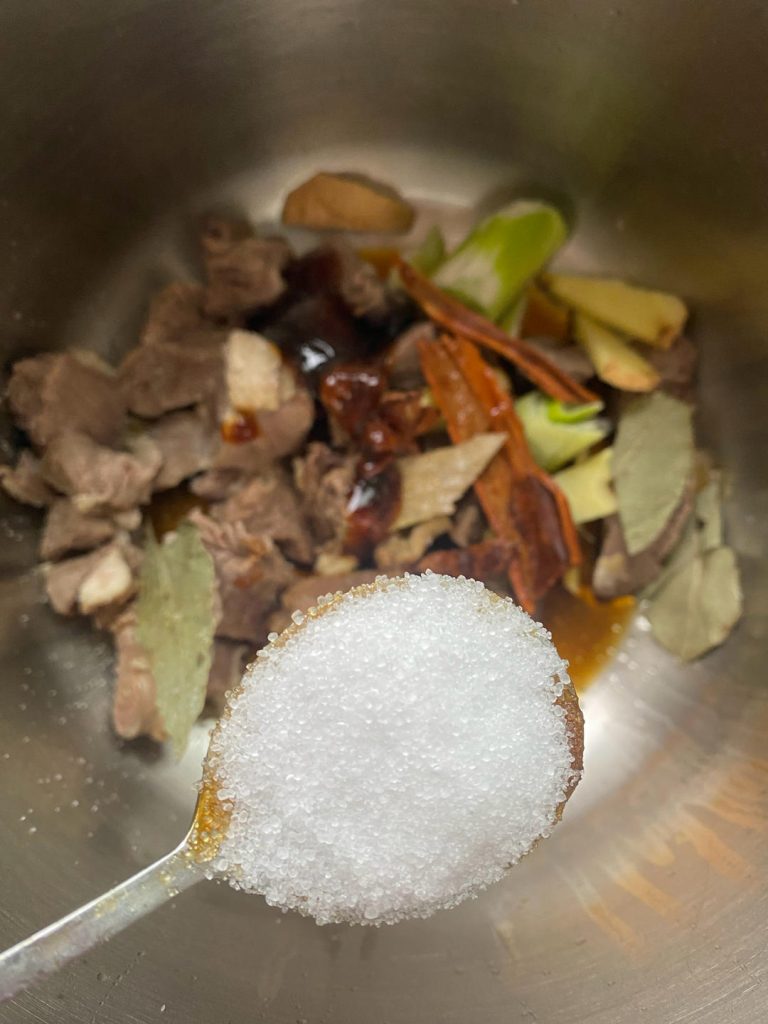
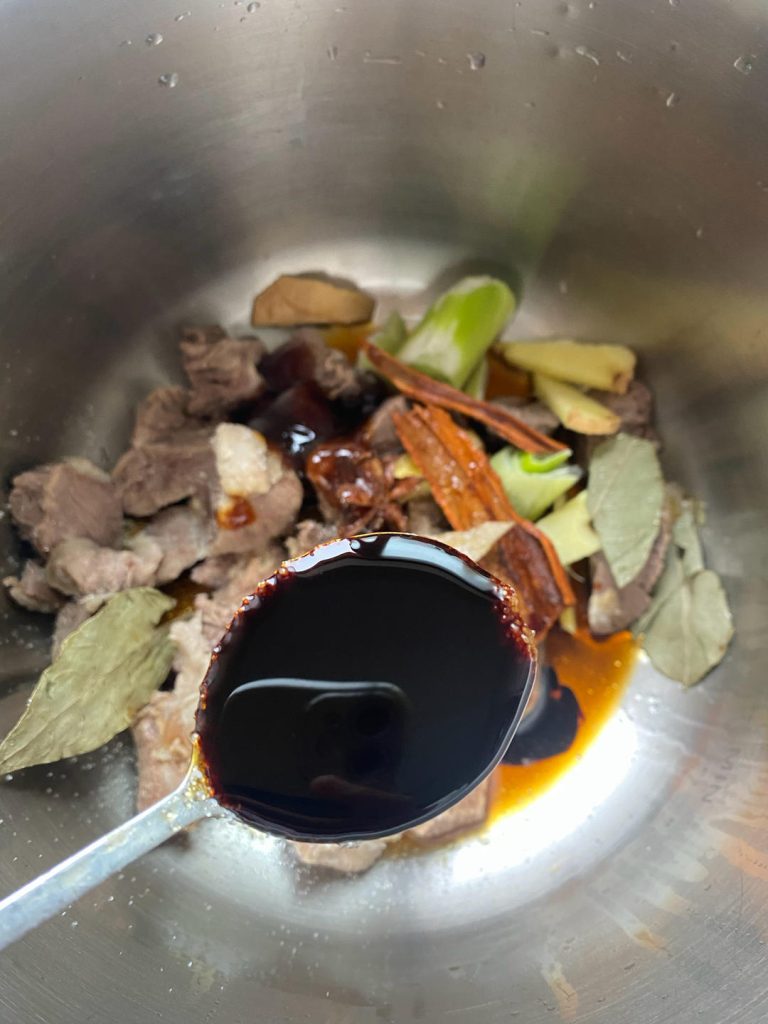
Drain the lamb and rinse it under warm water. Place the clean lamb into your pressure cooker. Add the remaining scallion sections, fresh ginger slices, star anise, (and cinnamon/bay leaf if using).
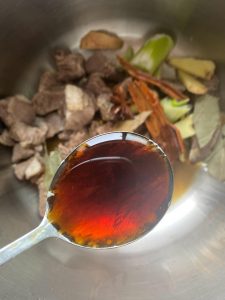
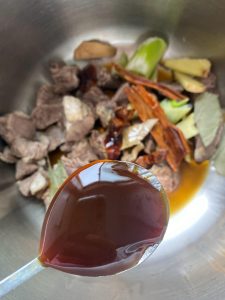
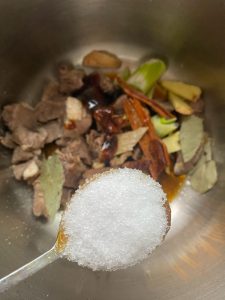
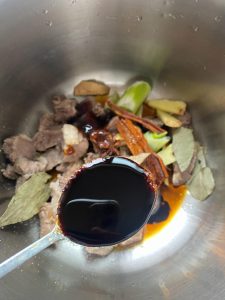
Season with 2 tablespoons light soy sauce, 1 tablespoon oyster sauce, 1 tablespoon sugar, and 1 tablespoon dark soy sauce. Add enough water to just cover the meat (or slightly less, as pressure cookers don’t lose moisture).
Seal the lid. Cook on high pressure for 10 minutes.
Note: If you don’t have a pressure cooker, you can simmer this in a heavy-bottomed pot (like a Dutch oven) on the stove for 45-60 minutes until the lamb is fork-tender.
Step 3: Prepare Vegetables
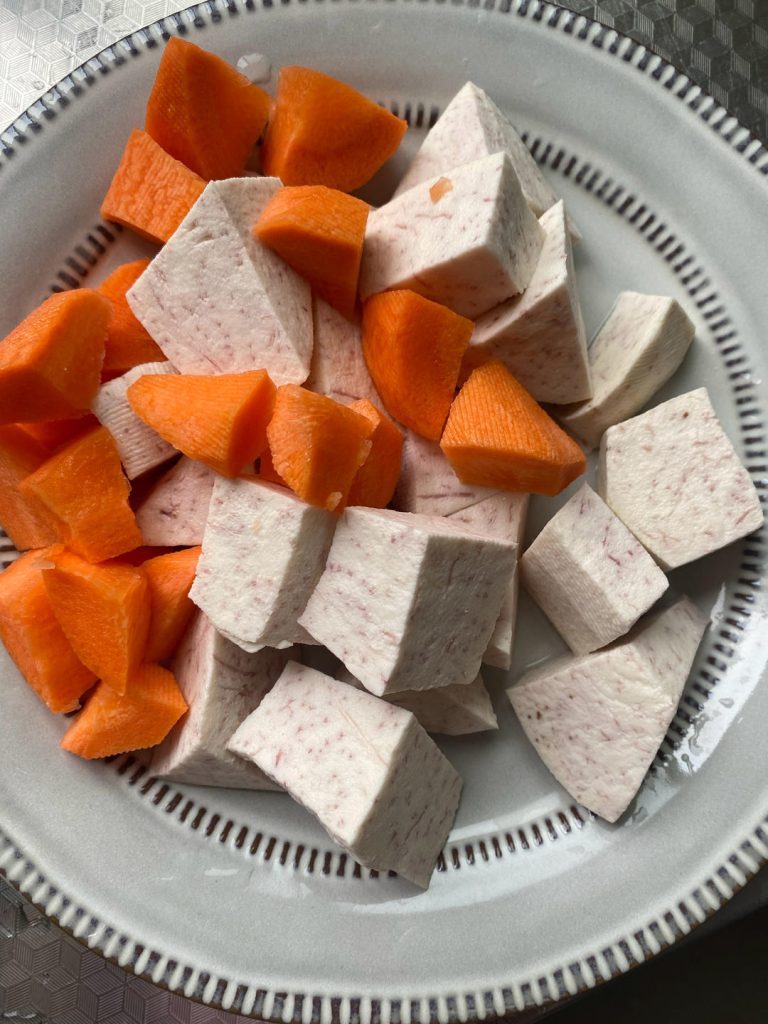
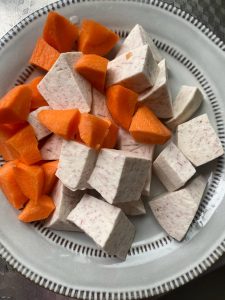
While the lamb cooks, peel the taro and carrot. Cut them into chunks similar in size to the lamb.
Safety Tip: Taro contains calcium oxalate which can cause itchy skin. I highly recommend wearing gloves when peeling and cutting it.
Step 4: Combine and Simmer
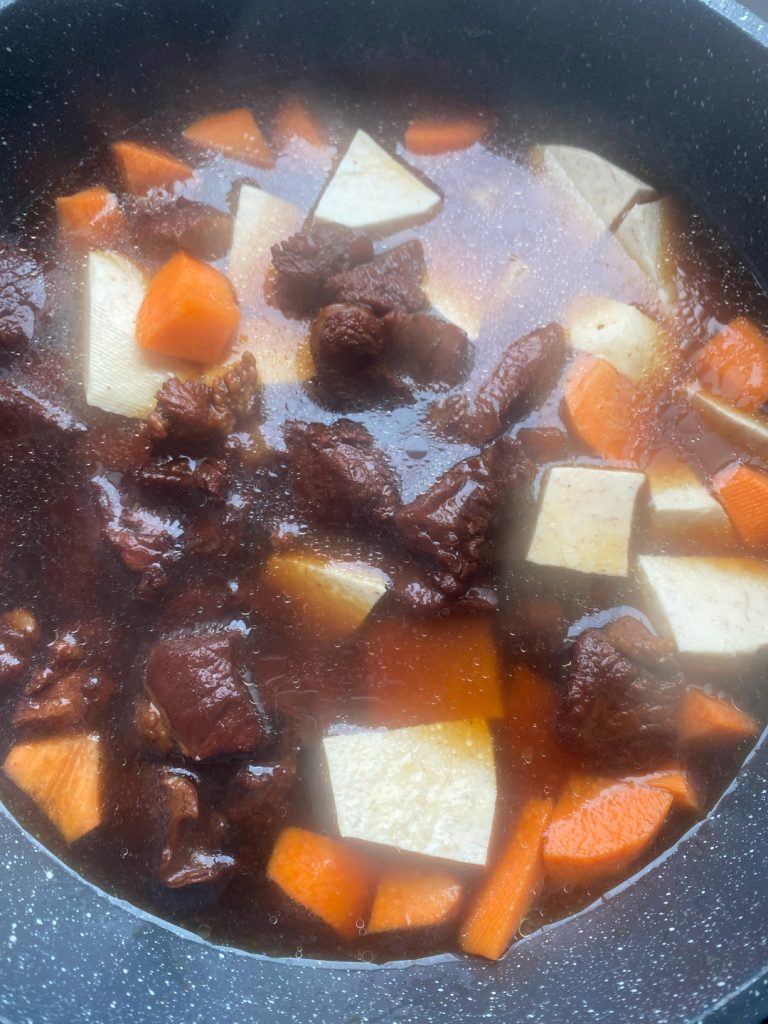
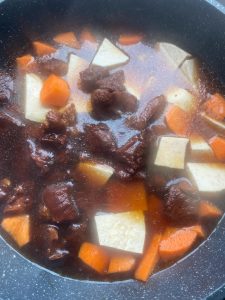
Once the pressure cooker cycle is done and pressure is released, transfer the lamb and the soup liquid into a wok or wide pan. Fish out the star anise, ginger, and scallion pieces—their job is done.
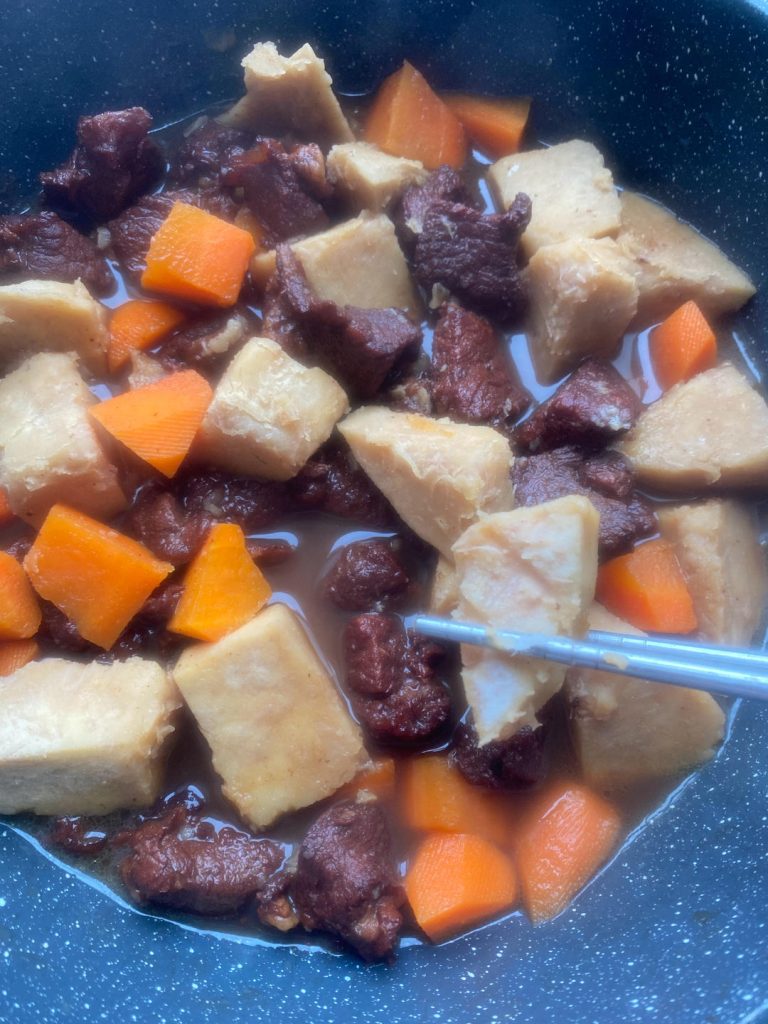
Add the taro and carrot chunks to the wok. Bring to a boil, then reduce heat to medium-low. Simmer, covered, until the taro and carrots are cooked through (usually 15-20 minutes).
Step 5: Reduce and Serve
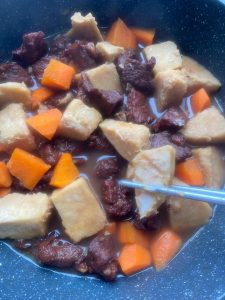
When the vegetables are soft (the taro should be floury and tender), taste the sauce. Add 1 teaspoon of salt (adjust based on your preference).
Increase the heat to medium-high to reduce the sauce slightly if it’s too thin. The starch from the taro will naturally thicken it. Serve immediately.
Serving Suggestions
This dish is rich and savory, so it pairs best with a neutral starch.
- Steamed Rice: The sauce is incredible over white rice.
- Greens: Serve with a simple Stir-fried Lettuce with Garlic or blanched bok choy to cut through the richness.
- Similar Dish: If you enjoy this, you might also like Braised Pork with Potatoes for a similar comfort food experience.
Test Kitchen Notes & Troubleshooting
- My Taro Melted! If your taro disappears into the sauce, it was likely cut too small or cooked too long. Next time, cut the chunks larger or add them 5 minutes later.
- Lamb Smell: If you find the lamb smell too strong, don’t skip the blanching step. You can also add a dried tangerine peel to the braise, a trick my dad used in the restaurant.
- Stove Top Method: If cooking entirely on the stovetop without a pressure cooker, you will need to add more water initially (about 1-2 cups extra) to account for evaporation during the hour-long braise.
FAQ
Q: Can I make this with beef? A: Absolutely. Beef brisket works wonderfully here. The cooking time and method remain exactly the same. You can check out our Red Wine Braised Beef for inspiration.
Q: Is this dish gluten-free? A: Traditional soy sauce contains wheat. To make this gluten-free, use Tamari or a certified Gluten-Free soy sauce and oyster sauce.
Q: How do I store leftovers? A: Store in an airtight container in the fridge for up to 3 days. The taro will absorb more sauce as it sits, so the dish might be “drier” the next day. Add a splash of water when reheating on the stove.
Nutrition Information (Estimate)
- Calories: ~450 kcal per serving
- Protein: 25g
- Carbohydrates: 30g
- Fat: 28g
- Allergens: Soy, Wheat (Gluten), Shellfish (Oyster Sauce)
(Disclaimer: Nutrition information is calculated using an ingredient database and should be considered an estimate. Garnishes and optional ingredients are not included. Actual values vary based on specific brands used.)
Food Safety and Preparation:
- Lamb should be cooked to an internal temperature of at least 145°F (63°C), though for braising we cook it well past this point to break down collagen for tenderness.
- Do not eat undercooked taro; raw taro contains calcium oxalate crystals that can cause severe mouth irritation. It must be fully cooked.
Recipe Notes
💡 Safety First – Handling Taro: Raw taro contains calcium oxalate crystals which can cause skin irritation and itchiness. I strongly recommend wearing gloves when peeling and cutting the taro. If your hands do get itchy, washing them with vinegar can help neutralize the sensation. Also, taro must be fully cooked before eating to break down these crystals.
🥘 Stovetop Alternative: No pressure cooker? No problem. Use a heavy-bottomed pot or Dutch oven. Increase the water by about 1 cup to account for evaporation. Simmer the lamb for 45-60 minutes until tender before adding the taro and carrots, then simmer for another 20 minutes.
🧊 Storage & Reheating: Leftovers can be stored in an airtight container in the refrigerator for up to 3 days. The taro will continue to absorb the sauce, so the stew may thicken. Add a splash of water or stock when reheating on the stove to loosen the sauce.
📉 Nutrition Disclaimer: Nutrition information is calculated using an ingredient database and should be considered an estimate. Garnishes and optional ingredients are not included. Actual values vary based on specific brands used.
Authoritative References
For more information on the ingredients and food safety practices mentioned in this recipe, please refer to the following authoritative sources:
- Lamb Cooking Safety: USDA Food Safety and Inspection Service. “Roasting Those ‘Other’ Holiday Meats.” (Safe minimum internal temperatures for lamb). Available at: USDA.gov
- Taro Root Safety: Centre for Food Safety. “Natural Toxins in Food.” (Information on Calcium Oxalate in taro and proper preparation). Available at: cfs.gov.hk
Braised Lamb with Taro (Xiang Yu Hong Men Yang Rou)

Equipment
- 1 Pressure Cooker or Instant Pot For tenderizing meat quickly
- 1 Wok or large skillet For the final simmer with vegetables
Ingredients
Main Ingredients
- 400 g lamb leg meat cut into 1.5 inch chunks (approx. 0.9 lb)
- 300 g taro root peeled and cut into chunks (wear gloves!)
- 0.5 carrot cut into chunks
For Blanching
- 1 tbsp Shaoxing cooking wine
- 1 slice ginger
- 1 tsp Sichuan peppercorns optional
- 2 sections scallion white parts
For Braising
- 2 tbsp light soy sauce
- 1 tbsp dark soy sauce
- 1 tbsp oyster sauce
- 1 tbsp sugar
- 1 tsp salt adjust to taste
- 2 whole star anise
- 2 slices ginger
- 2 sections scallion
Instructions
- Clean the lamb leg meat thoroughly to remove blood water.
- Place lamb in a pot with cold water. Add scallion sections, ginger slices, Sichuan peppercorns, and cooking wine. Bring to a boil to blanch and remove odors.

- Transfer washed lamb to a pressure cooker. Add scallion, ginger, star anise, cinnamon/bay leaf (optional). Season with 2 tablespoons light soy sauce.
- Add 1 tablespoon oyster sauce.
- Add 1 tablespoon sugar.
- Add 1 tablespoon dark soy sauce and enough water to cover meat. Pressure cook for 10 minutes until lamb is cooked through.
- Peel and cut taro and carrot into chunks. (Wear gloves for taro!).
- Transfer the lamb and soup to a wok/pan. Remove the spices. Add taro and carrot. Simmer until vegetables are soft.
- Add 1 teaspoon salt to taste. Serve when taro is powdery and soft.
Notes
Authoritative References
- Lamb Cooking Safety: USDA Food Safety and Inspection Service. “Roasting Those ‘Other’ Holiday Meats.”
- Taro Root Safety: Centre for Food Safety. “Natural Toxins in Food.”




Leave a Reply