The other day, I was staring at two lonely eggplants in my fridge, wondering what to do with them. It’s a classic kitchen problem, isn’t it? It instantly brought me back to my childhood, growing up in my parents’ restaurant in Sichuan.
My mom and dad, who met in the kitchen and ran their spot for over 20 years, were masters of turning “a few lonely ingredients” into magic. My dad, a chef for over 30 years, would see scraps and leftovers and, in minutes, whip up a xiàfàn cài (下饭菜). That’s a “rice-killer” dish—something so delicious you just can’t stop shoveling rice into your bowl.

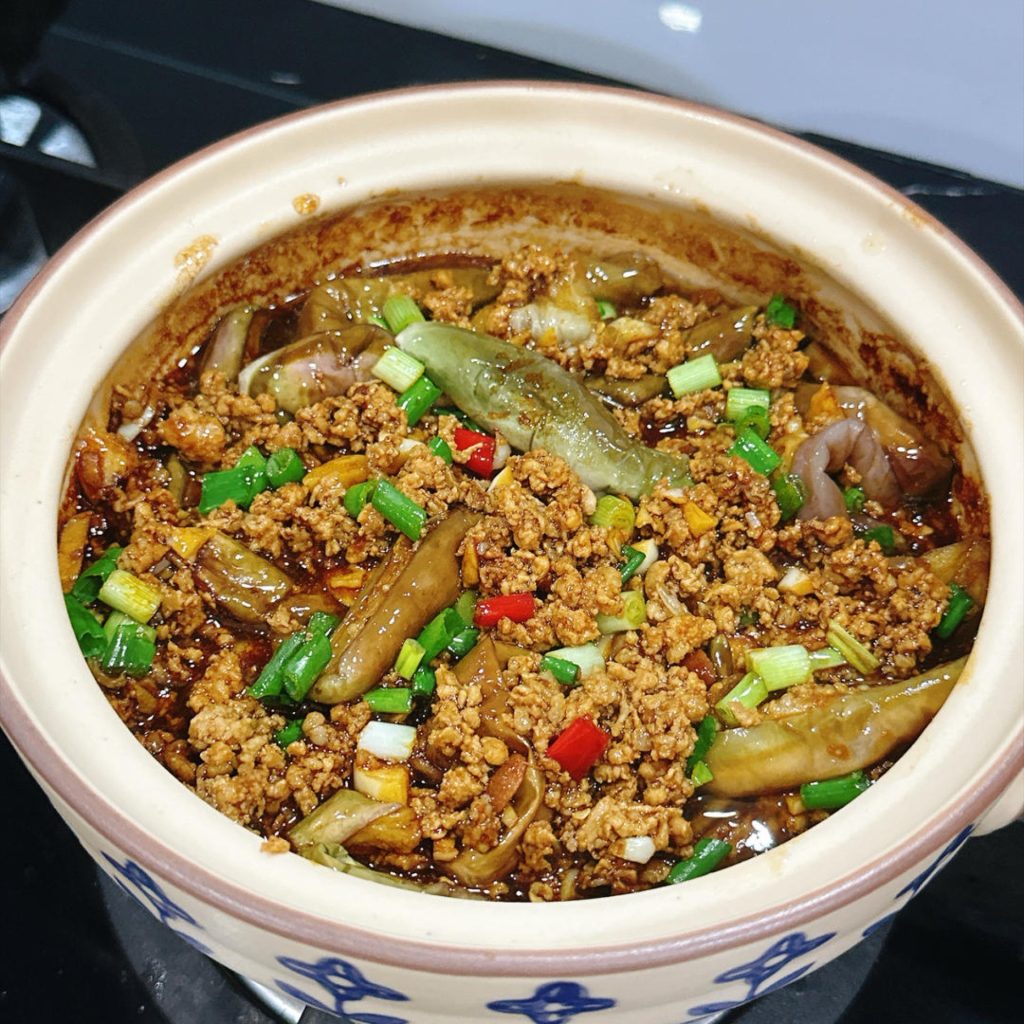
This Braised Eggplant with Tomato (番茄烧茄子, Fānqié Shāo Qiézi) is exactly that. It’s not fancy, but it’s the pinnacle of homestyle comfort. The eggplant is fried until crispy, then tossed in a bright, sweet-and-savory tomato-garlic sauce. It’s the dish I make when I want something satisfying, fast, and better than any takeout I can order.
What is Braised Eggplant with Tomato (Fanqie Shao Qiezi)?
This is a classic homestyle Chinese dish. The name “Shao” (烧) means “to braise” or “red-cook.” While some “shao” dishes simmer for hours, this is a “quick-braise,” where the main ingredient (eggplant) is first deep-fried and then quickly tossed in a glossy, thickened sauce.
The magic is in the balance. The tomato and green pepper provide a bright, fresh acidity that cuts through the richness of the fried eggplant, while the sauce, built on soy sauce and oyster sauce, brings a deep savory (umami) flavor.
Why This Recipe Works
The biggest challenge with eggplant is that it’s a sponge. It soaks up oil and can easily turn into a greasy, gray mush. This recipe solves that problem with a “restaurant secret” I learned from my dad.
- The Ultimate Crispy Coating: We use a two-step coating method. First, a light dusting of dry cornstarch to absorb surface moisture. Second, a thin wet batter. This combination creates a light, crispy shell when fried.
- A Protective “Raincoat”: That crispy shell acts like a raincoat. It keeps the eggplant inside creamy and tender while preventing it from immediately soaking up all the sauce and becoming soggy.
- Perfect Flavor Balance: The sauce is a perfect harmony of sweet (sugar), sour (tomato), and savory (soy/oyster sauce). It’s incredibly simple but hits all the right notes.
A Quick Note on the Cooking Technique: “Shao” (烧)
In the Chinese cooking lexicon, “Shao” (烧) is a massive category of techniques. It generally translates to “braising” or “red-cooking.” You might know it from Hong Shao Rou (Red-Braised Pork Belly), where meat is simmered for a long time in soy sauce and spices.
This recipe uses a faster variation, often called “Quick-Shao.” The ingredients are cooked separately (the eggplant is fried, the veggies are stir-fried) and then brought together at the last second with a thickened sauce. This method is all about preserving individual textures—crispy eggplant, tender-crisp peppers—while coating everything in that signature glossy “shao” sauce.
Ingredients Deep Dive & Substitutions
A great dish starts with the right ingredients. Here’s what you’ll need and why.
For the Eggplant & Coating
- Eggplant: I highly recommend using Chinese or Japanese eggplant. They have thinner skin, fewer seeds, and a sweeter, less-bitter flavor. They also hold their shape better. If you can only find a large Globe eggplant (the common purple one in US stores), it will work, but the texture will be a bit mushier and the skin tougher.
- Cornstarch: This is our workhorse. We use it three ways: a dry dredge, in the batter, and in the sauce. It creates a lighter, crispier crust than flour alone. Potato starch is also an excellent substitute.
- All-Purpose Flour: We add a little flour to the batter for structure. It gives the crust a bit more body.
- Egg: This adds richness and flavor to our batter and helps it brown beautifully.
For the Sauce & Stir-Fry
- Tomato & Green Bell Pepper: These are our core aromatics, providing the “vegetable” flavor, color, and acidity.
- Garlic: Absolutely essential. Don’t skimp on it!
- Light Soy Sauce: This is for saltiness and umami. I use Kikkoman or Pearl River Bridge. You can use tamari for a gluten-free option.
- Oyster Sauce: This adds a unique, savory-sweet, and rich umami flavor. You can find excellent vegetarian mushroom-based “oyster” sauces at most Asian markets.
- Sugar & Salt: The sugar is crucial for balancing the acidity of the tomato and the saltiness of the soy sauce.
⚠️ Allergy & Food Safety Information
- Allergens: This recipe contains gluten (flour, soy sauce), soy (soy sauce), and egg.
- Gluten-Free Option: To make this gluten-free, use a gluten-free all-purpose flour blend, tamari (instead of soy sauce), and a certified gluten-free oyster sauce.
- Frying Safety: Hot oil is dangerous. Use a deep, heavy-bottomed pot (like a Dutch oven or wok) and fill it no more than 1/3 full. Use a thermometer to monitor the oil temperature. According to the USDA, it’s crucial to never leave hot oil unattended and to pat ingredients dry to prevent splattering.
What You Will Need: Kitchen Tools
- Wok or Deep Pot: For deep-frying.
- Wire Rack & Baking Sheet: This is key! Draining the fried eggplant on a wire rack allows air to circulate, keeping the bottom crispy. Draining on paper towels traps steam and makes it soggy.
- Slotted Spoon or Spider Strainer: For safely removing the eggplant from the hot oil.
How to Make Braised Eggplant with Tomato
My dad’s number one rule in the restaurant kitchen was mise en place—”everything in its place.” This entire dish cooks in less than 5 minutes once you start, so you must have every single component prepped and ready by the stove before you turn on the heat.
Step 1: Mise en Place (Get Ready)
- Prep Veggies: Cut the eggplant into 1.5-inch (4cm) chunks or thick sticks. Cut the tomato and green pepper into 1-inch (2.5cm) chunks. Mince the garlic.
- Mix the Sauce: In a small bowl, whisk together all the sauce ingredients: 2 tbsp light soy sauce, 1 tbsp oyster sauce, 1 tbsp sugar, 1/2 tsp salt, 1 tbsp cornstarch, and 3 tbsp water. Set it right next to your stove.
- Mix the Batter: In a separate medium bowl, whisk the egg. Add 3 tbsp all-purpose flour and 1 tbsp cornstarch. Whisk in 2-3 tbsp of water, one tablespoon at a time, until you have a smooth, thin batter—about the consistency of pancake batter.
- Prep Eggplant: Place the cut eggplant in a large bowl. Sprinkle the 2 tbsp of dry cornstarch over the pieces and toss with your hands until every piece has a light, powdery coating. This dry layer helps the wet batter stick.

Step 2: The Cooking Process
- Coat the Eggplant: Pour the wet batter over the dry-dusted eggplant pieces. Toss gently until every piece has a thin, even coating.

- Heat the Oil: In your wok or deep pot, heat 3-4 cups of frying oil to 350°F (175°C). Use a thermometer—the temperature is crucial.
- Fry the Eggplant: Working in two or three batches, carefully lower the battered eggplant into the hot oil. Don’t crowd the pan! If you add too much, the oil temperature will drop and you’ll get greasy, soggy eggplant. Fry each batch for 3-5 minutes, turning occasionally, until the coating is light golden brown and crispy.

- Drain: Use a slotted spoon to transfer the fried eggplant to your wire rack set over a baking sheet.
- Start the Sauce: Carefully pour the hot oil into a heatproof container, leaving about 1 tbsp of oil in the wok. (Or, use a separate, clean wok/skillet). Heat the wok over medium-high heat.
- Sauté Aromatics: Add the minced garlic and stir-fry for 30 seconds until fragrant (this is called 爆香, bào xiāng). Add the tomato and green pepper chunks and stir-fry for 1-2 minutes, just until the pepper is crisp-tender and the tomato starts to soften.

- Thicken the Sauce: The cornstarch in your sauce bowl will have settled. Give it a quick re-stir to mix it up, then pour it into the wok. Cook, stirring constantly, for 30-60 seconds. The sauce will bubble, thicken, and turn beautifully glossy.
- Combine and Serve: As soon as the sauce is thick, add the fried eggplant back into the wok. Toss everything quickly for 30 seconds. You just want to coat the pieces, not cook them. Serve immediately!


A Chef’s Note on Frying: The Temperature Secret
Growing up in my dad’s kitchen, and later during my formal training at culinary school, the biggest lesson we learned about frying was this: temperature is not a suggestion, it’s the recipe.
This is what separates a professional, crispy result from a soggy, greasy home attempt. When you drop the battered eggplant into the oil, the oil’s temperature will immediately plummet.
- If your oil is too low (below 325°F / 165°C): The batter won’t seal fast enough. The eggplant will just sit there, boiling in the oil, soaking it all up before the crust can even form. This is the #1 cause of “greasy” eggplant.
- If your oil is too high (above 375°F / 190°C): The batter will burn before the eggplant inside has time to cook and become creamy.
- The “Magic” Zone (350°F / 175°C): This is the sweet spot. The high heat instantly gelatinizes the starch in the batter, creating a sealed, crispy shell. This shell locks out the excess oil while trapping steam inside, which perfectly “steams” the eggplant to a creamy, tender finish. This is why frying in batches is non-negotiable—it helps the oil recover to 350°F before the next batch goes in.
Tips for Success (Troubleshooting)
- “My eggplant got soggy!” This is the most common problem. It’s almost always one of two things:
- Your oil wasn’t hot enough (it must be 350°F / 175°C).
- You let it sit in the sauce too long. This dish must be eaten right away. The clock starts ticking the second the eggplant hits the sauce.
- “Can I air-fry the eggplant?” You can, but it won’t be the same. The texture will be drier and less “creamy” on the inside. To try it: toss the battered eggplant in a good amount of oil spray and air-fry at 400°F (200°C) for 10-15 minutes, shaking halfway, until crispy.
A Simplified, No-Fry Version
If you’re really against deep-frying, here’s a rustic homestyle alternative:
- Cut the eggplant and toss it with 1 tsp of salt. Let it sit in a colander for 20 minutes to draw out water.
- Squeeze the eggplant very well with your hands to remove as much liquid as possible.
- In a wok or skillet, pan-fry the eggplant in 2-3 tbsp of oil (it will still soak up a lot) until browned and tender.
- Remove the eggplant. Make the sauce (Step 6-7) and add the pan-fried eggplant back at the end.
- The texture will be much softer and more “braised,” but still delicious!
How to Serve (Serving Suggestions)
This is the definition of a xiàfàn cài (下饭菜), a “rice-killer” dish. You must serve it with a big bowl of fluffy, steamed white rice to catch all that glorious sauce.
It’s a fantastic vegetarian main dish. If you’re building a full family-style meal, it pairs wonderfully with a simple soup like my Seaweed Egg Drop Soup or a savory meat dish like Homestyle Kung Pao Chicken. For a truly classic pairing, it’s amazing alongside a rich, savory braised pork, like this Hong Shao Rou (Braised Pork Belly) recipe from our friends at The Woks of Life.
How to Store and Reheat
- Storage: Honestly, this dish is best eaten fresh. The crispy crust will be lost. If you do have leftovers, store them in an airtight container in the fridge for up to 3 days.
- Reheating: Reheat in the microwave or a pan. The eggplant will be soft, but the flavor will still be fantastic.
Food Safety and Preparation
Working with hot oil and raw batter requires attention to safety. Here are a few critical guidelines to ensure your cooking is both delicious and safe.
- Hot Oil Safety: Deep-frying carries an inherent risk of burns and fires. According to the U.S. Department of Agriculture (USDA), you should always use a heavy, deep pot and never fill it more than halfway with oil. Use a thermometer to monitor the temperature, as oil can ignite if it gets too hot (smoke point). Always lower food gently into the oil to prevent splattering, and never use water to put out an oil fire—use a lid or a fire extinguisher.
- Batter Handling: The batter for this recipe contains a raw egg. It’s important to treat it like any other raw ingredient. Wash your hands thoroughly after tossing the eggplant in the batter. Do not let the raw-battered eggplant sit at room temperature for an extended period. Fry it immediately after coating.
- Cross-Contamination: Use separate cutting boards and utensils for your fresh vegetables (tomato, pepper) and the raw-battered eggplant to avoid any potential cross-contamination.
Authoritative References (Authority)
For best practices on cooking safety, especially concerning hot oil and raw ingredients, we refer to and recommend the guidelines set by established food safety authorities.
USDA (U.S. Department of Agriculture) – “Frying and Food Safety” Guidelines. These provide a foundational understanding of safe handling practices for deep-frying at home. (Link:
https://www.fsis.usda.gov/food-safety/safe-food-handling-and-preparation/cooking/frying-and-food-safety)
Frequently Asked Questions (FAQ)
1. Can I make this vegan?
Yes, easily! The egg in the batter can be omitted (you may need a splash less water). The only other ingredient to check is the oyster sauce. Just use a “vegetarian oyster sauce,” which is made from mushrooms and widely available.
2. Can I use other vegetables?
Absolutely. Zucchini (use the same frying method), onions, or red bell peppers would all be wonderful additions.
3. My batter seems too thick/thin.
It should be the consistency of thin pancake batter—just thick enough to coat the eggplant. If it’s too thick (like paste), add more water 1 tsp at a time. If it’s watery, add 1 tsp of flour and 1 tsp of starch.

Braised Eggplant with Tomato (番茄烧茄子)

Equipment
- Wok or deep pot (for frying)
- wire rack set over a baking sheet
- Slotted Spoon or Spider Strainer
Ingredients
For the Eggplant
- 1 large Chinese eggplant (or 2 small), approx. 1 lb / 450g, cut into 1.5-inch chunks
- 2 tbsp cornstarch for dredging
For the Batter
- 3 tbsp all-purpose flour
- 1 tbsp cornstarch
- 1 large egg
- 2-3 tbsp water or as needed
For the Sauce Slurry
- 2 tbsp light soy sauce
- 1 tbsp oyster sauce or vegetarian oyster sauce
- 1 tbsp granulated sugar
- 1/2 tsp salt approx. 2g
- 1 tbsp cornstarch
- 3 tbsp cold water
For Stir-Frying
- 1 medium tomato cut into 1-inch chunks
- 1 medium green bell pepper cut into 1-inch chunks
- 3 cloves garlic minced
- 3-4 cups neutral oil for frying (e.g., canola, vegetable)
- 1 tbsp neutral oil for stir-frying
Instructions
- Mise en Place: Have all your ingredients prepped and ready by the stove. Cut the eggplant, tomato, and green pepper. Mince the garlic.
- Mix Sauce Slurry: In a small bowl, whisk together all "For the Sauce Slurry" ingredients (light soy sauce, oyster sauce, sugar, salt, 1 tbsp cornstarch, 3 tbsp water). Set aside.

- Mix Batter: In a separate medium bowl, whisk the egg. Add the 3 tbsp all-purpose flour and 1 tbsp cornstarch. Whisk in 2-3 tbsp of water, one at a time, until you have a smooth, thin batter (like thin pancake batter).
- Prep Eggplant: In a large bowl, toss the cut eggplant chunks with the 2 tbsp of *dry* cornstarch until lightly coated.

- Coat Eggplant: Pour the wet batter over the dry-dusted eggplant pieces. Toss gently to get a thin, even coating on all pieces.
- Heat Oil: In a wok or deep pot, heat 3-4 cups of frying oil to 350°F (175°C).
- Fry Eggplant (in batches): Carefully add half of the battered eggplant to the hot oil. Fry for 3-5 minutes, turning occasionally, until golden brown and crispy. Do not crowd the pan.

- Drain: Use a slotted spoon to remove the fried eggplant and let it drain on the wire rack. Repeat with the remaining eggplant.
- Stir-Fry Veggies: Carefully remove all but 1 tbsp of oil from the wok. Reheat the wok over medium-high heat. Add the minced garlic and stir-fry for 30 seconds until fragrant.
- Cook Veggies: Add the tomato and green pepper chunks. Stir-fry for 1-2 minutes until the tomato just begins to soften and the pepper is crisp-tender.
- Thicken Sauce: Give the sauce slurry a quick re-stir (the starch settles!) and pour it into the wok. Cook, stirring constantly, for 30-60 seconds until the sauce bubbles and becomes thick and glossy.
- Combine and Serve: Immediately add all the fried eggplant back to the wok. Toss everything quickly for 30-60 seconds to coat the eggplant in the sauce. Remove from heat and serve immediately with steamed rice.


Notes
Nutrition (Estimated)
Serving: 1 (of 3) Calories: 380 kcal Carbohydrates: 45 g Protein: 7 g Fat: 20 g Saturated Fat: 2 g Sodium: 950 mg Sugar: 12 g Fiber: 6 g💬 Real Comments from Real Cooks
- “Made this tonight! That batter is a game-changer. So much better than the soggy eggplant I usually make. Thanks!”
- “This was delicious! I’m new to Chinese cooking and your instructions were so clear. The tip about not letting the eggplant sit in the sauce saved me! It was crispy right up to the last bite.”
- “A new family favorite. I’m vegan, so I skipped the egg and used vegetarian oyster sauce as suggested, and it was perfect. My husband couldn’t believe I made it at home.”



Leave a Reply