There are few things more comforting in a Chinese household than the smell of Braised Beef Brisket (Hong Shao Niu Nan) bubbling on the stove. It’s a classic “hard dish” (硬菜, yìng cài)—a term we use in China to describe a substantial, meaty centerpiece that signals a proper meal.

Growing up in my family’s restaurant kitchen in Sichuan, I learned that while many chefs swear by blanching beef to remove impurities, my father had a different method for specific cuts like brisket. He believed that for a rich, gelatinous stew, searing the raw meat directly preserves its elasticity and intensifies the aroma.
This recipe follows that homestyle philosophy. It pairs the savory depth of beef with the natural sweetness of white radish (daikon). The radish absorbs the rich gravy like a sponge, making it arguably even more delicious than the meat itself. It pairs perfectly with steamed rice or can be ladled over noodles for a quick lunch.
Why This Recipe Works
- The “No-Blanch” Technique: Unlike many braised dishes where meat is boiled first, we stir-fry the raw brisket. This creates a Maillard reaction, locking in flavor and maintaining a pleasant, chewy elasticity (Q-texture) rather than letting the meat become dry and woody.
- Layered Aromatics: We bloom the spices (star anise, Sichuan peppercorns) in hot oil to release their oil-soluble flavor compounds before adding the liquid.
- Temperature Control: Using boiling water instead of cold water prevents the beef proteins from seizing up, ensuring the brisket remains tender.
What is Hong Shao Niu Nan?
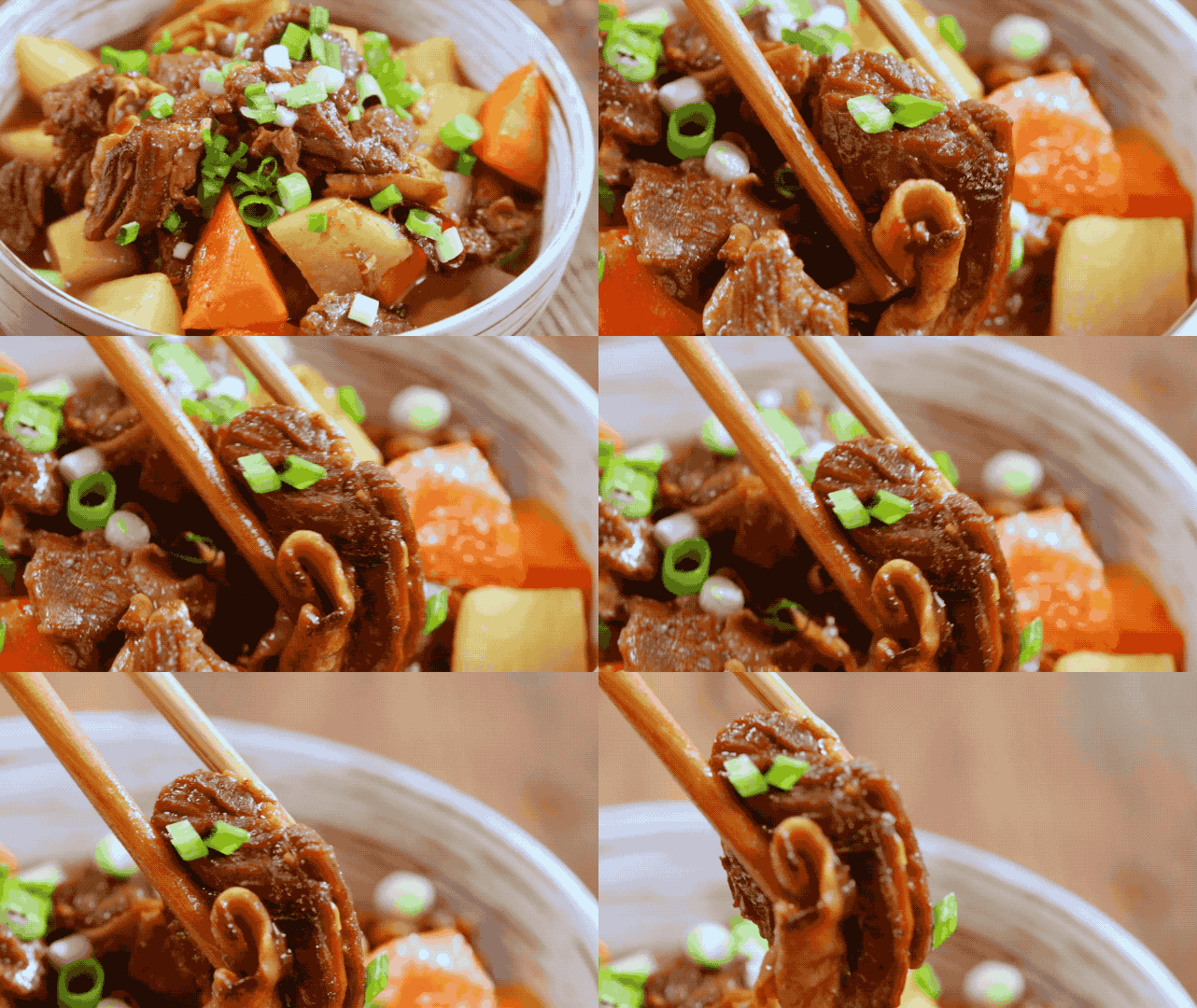
Hong Shao (Red Braising) is a primary Chinese cooking technique used to cook meat with soy sauce, sugar, and aromatics, resulting in a glossy, reddish-brown sauce. While there are many regional variations—from the spicy Sichuan versions to the sweeter Shanghainese styles—this specific recipe strikes a balance. It’s savory and aromatic without being overwhelmingly spicy, allowing the natural sweetness of the radish and carrot to shine through.
Key Ingredients & Substitutions
- Beef Brisket (Niu Nan): You want a cut with alternating layers of fat, connective tissue, and lean meat. In US supermarkets, look for “Rough Flank” or “Beef Finger Meat.” If you can’t find brisket, Boneless Beef Short Ribs or Chuck Roast cut into cubes are excellent substitutes.
- White Radish (Daikon): This is the long white radish found in Asian markets. It adds a refreshing sweetness that cuts through the fat. If unavailable, you can increase the amount of carrots, but the flavor profile will change slightly.
- Hangjiao (Long Green Pepper): The recipe calls for Hangjiao (杭椒), a mild to medium-hot wrinkled green pepper. You can substitute this with 2 Anaheim peppers (mild) or 1 Serrano pepper (if you want a kick).
- Sichuan Peppercorns & Star Anise: Essential for that signature Chinese braised flavor.
- Chinese White Liquor (Baijiu): Used to deglaze and remove gamey odors. If you don’t have Baijiu, Vodka, Gin, or Dry Sherry are acceptable substitutes.
- Soy Sauces: We use a combination. Light Soy Sauce provides the salty umami, while Dark Soy Sauce provides the deep caramel color.
- Oyster Sauce: Adds a thick, savory depth. Oyster Sauce is essential for the glossiness of the sauce.
Recipe Notes Before We Begin
The Pot Matters: Use a heavy-bottomed pot, such as a Dutch oven or a cast-iron wok. This ensures even heat distribution during the searing phase and consistent temperature during the simmer.
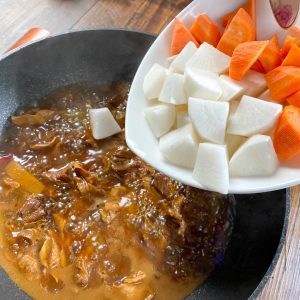
Knife Skills: For the radishes and carrots, use the “rolling cut” (turning the vegetable 45 degrees after each cut). This creates irregular shapes with more surface area to absorb the sauce.
Prep is Key: Because the stir-fry stage moves quickly, have your Mise en place ready. Your aromatics should be chopped and your sauces measured (or at least bottles opened) before you turn on the heat.
Ingredients
Main:
- 1.1 lbs (500g) Beef Brisket, cut into 1.5-inch chunks
- ½ Daikon Radish (White Radish), peeled and rolling-cut
- ½ Carrot, peeled and rolling-cut
Aromatics:
- ½ Leek or large Scallion (white part), cut into 2-inch segments
- 1 inch piece Ginger, sliced
- 3 cloves Garlic, sliced
- 1 Long Green Pepper (Hangjiao/Anaheim), sliced into segments
- 3-5 Dried Red Chilies (adjust to spice tolerance)
- 10 Sichuan Peppercorns
- 1 Star Anise
Seasonings:
- 1 tbsp Cooking Oil (neutral oil like canola or vegetable)
- 1 tbsp Chinese White Liquor (Baijiu) or Vodka
- 1 tbsp Light Soy Sauce (Kikkoman or Pearl River Bridge)
- 1 tbsp Dark Soy Sauce
- 1 tbsp Oyster Sauce
- 1 tsp Sugar
- ½ tsp Salt (adjust to taste)
- ¼ tsp MSG (optional, but recommended for authentic flavor)
- Hot Boiling Water (enough to cover beef)
How to Make Braised Beef Brisket with Radish
Step 1: Prepare the Ingredients
Wash the beef brisket thoroughly and pat it completely dry with paper towels. Chef’s Tip: Dry beef sears better; wet beef steams. Cut the radish and carrot into rolling chunks. Slice the scallion, ginger, garlic, and green pepper. Break the dried chilies in half.

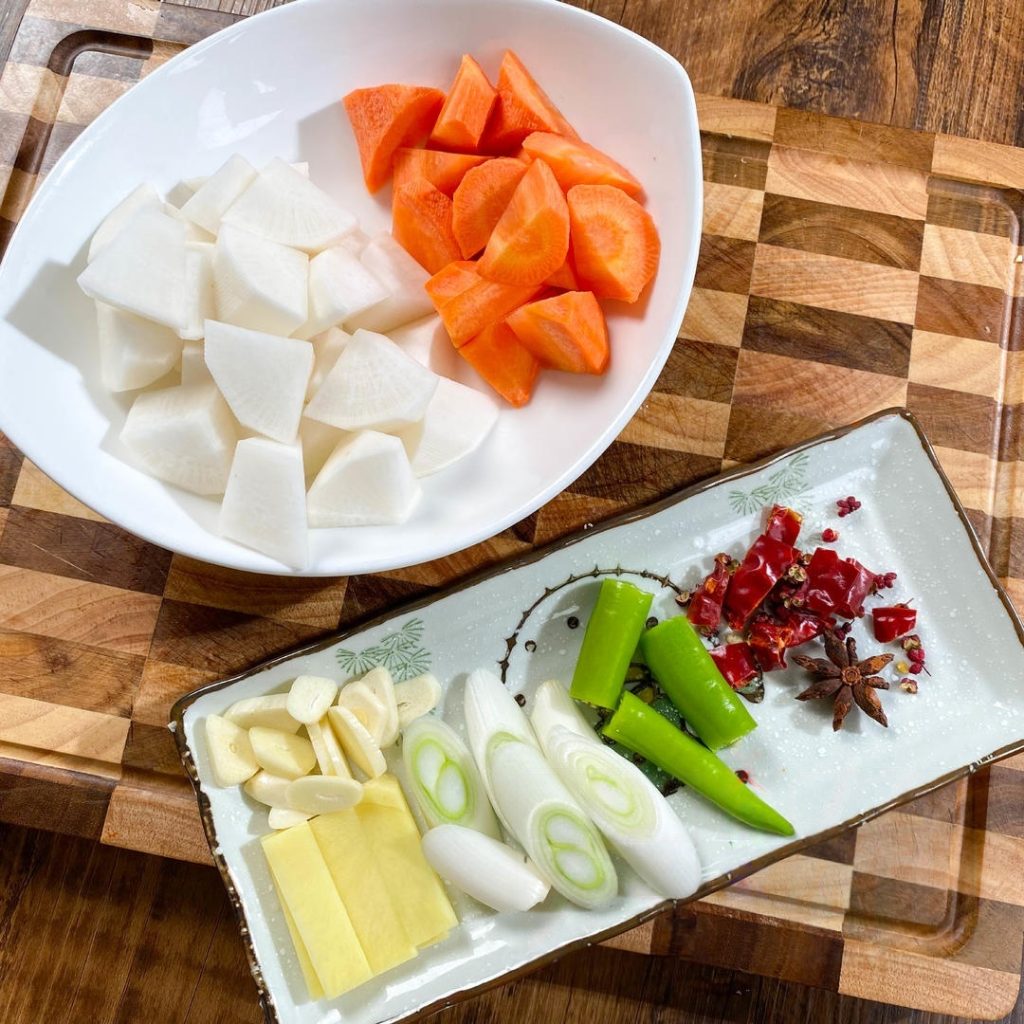
Step 2: Bloom the Aromatics
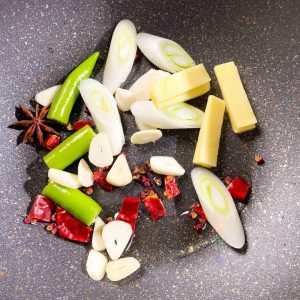
Heat your wok or heavy pot over high heat. Add 1 tablespoon of cooking oil. Toss in the scallion segments, garlic slices, ginger slices, green pepper segments, dried chilies, Sichuan peppercorns, and star anise. Stir-fry briskly for about 30 seconds until the garlic is golden and the spices are fragrant.
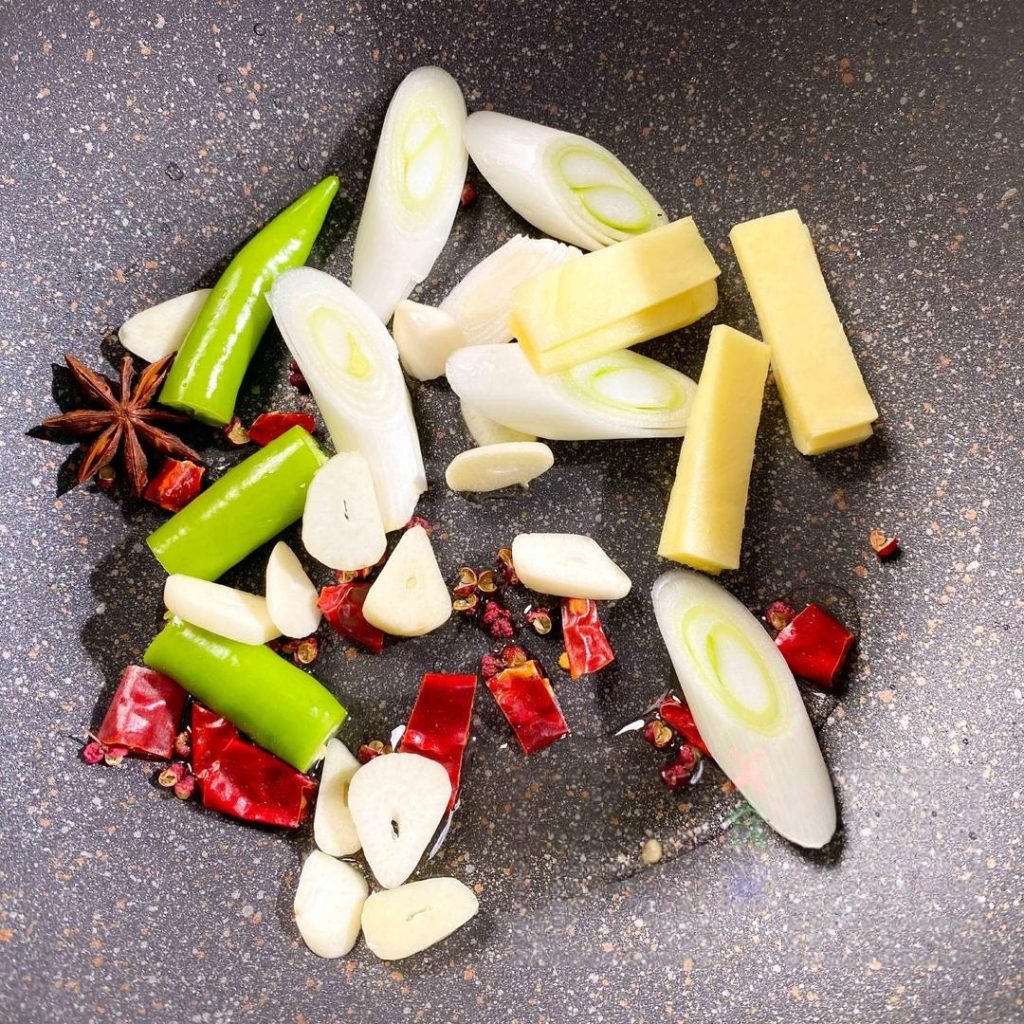
Step 3: Sear the Beef
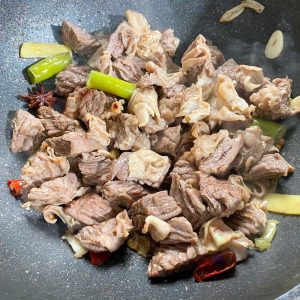
Add the beef chunks to the pot. Keep the heat on high. Stir-fry continuously. We are looking for the beef to turn white/pale, then for the liquid to evaporate, and finally for the beef to start releasing its own oil and browning slightly. This step removes the raw blood taste without blanching.
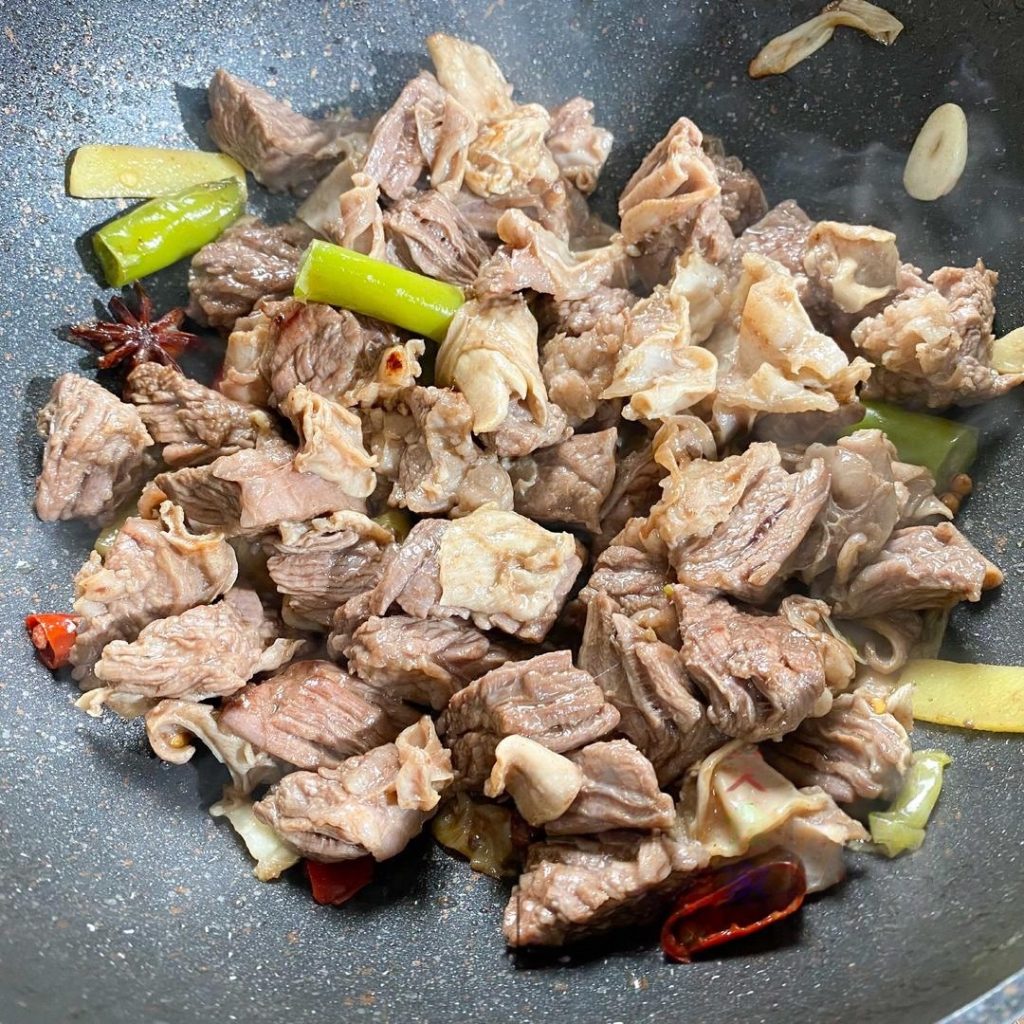
Step 4: Season
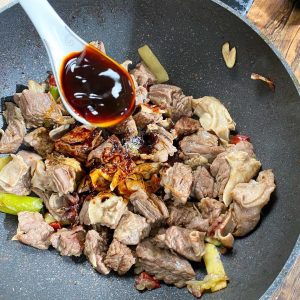
Add 1 tablespoon of White Liquor (Baijiu) around the rim of the pot to deglaze. Then add the MSG, salt, sugar, Dark Soy Sauce, Light Soy Sauce, and Oyster Sauce. Stir well to coat the beef in the rich, dark color.
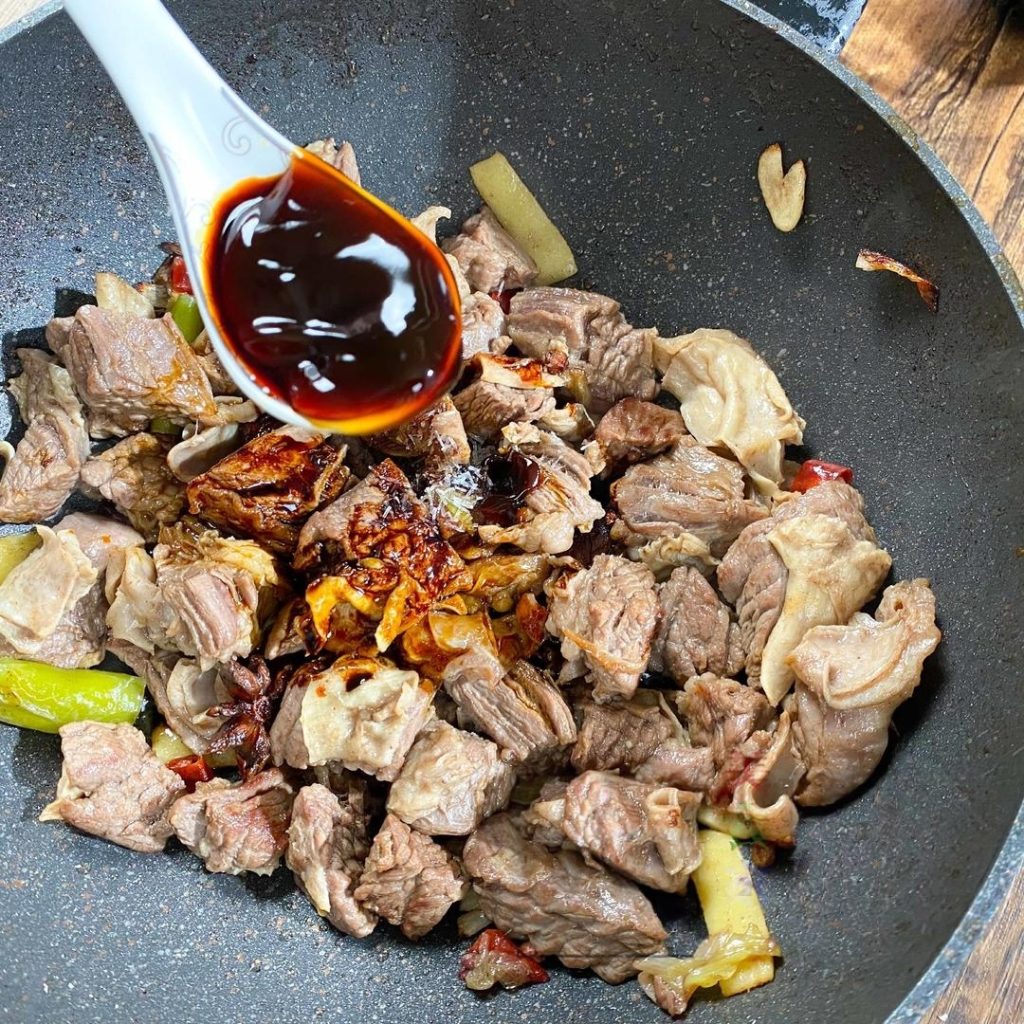
Step 5: The Braise
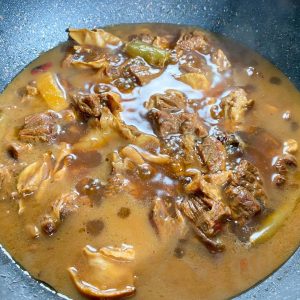
Pour in boiling water. Crucial Note: Do not use cold water, or the meat fibers will tighten up and become tough. Add enough water to just submerge the beef. Bring it to a vigorous boil. Skim off any brown scum (foam) floating on the surface with a spoon.
Cover the pot with a tight-fitting lid. Reduce heat to medium-low to maintain a gentle simmer.
- Stovetop: Simmer for about 1 hour.
- Pressure Cooker/Instant Pot: Cook on High Pressure for 20 minutes.
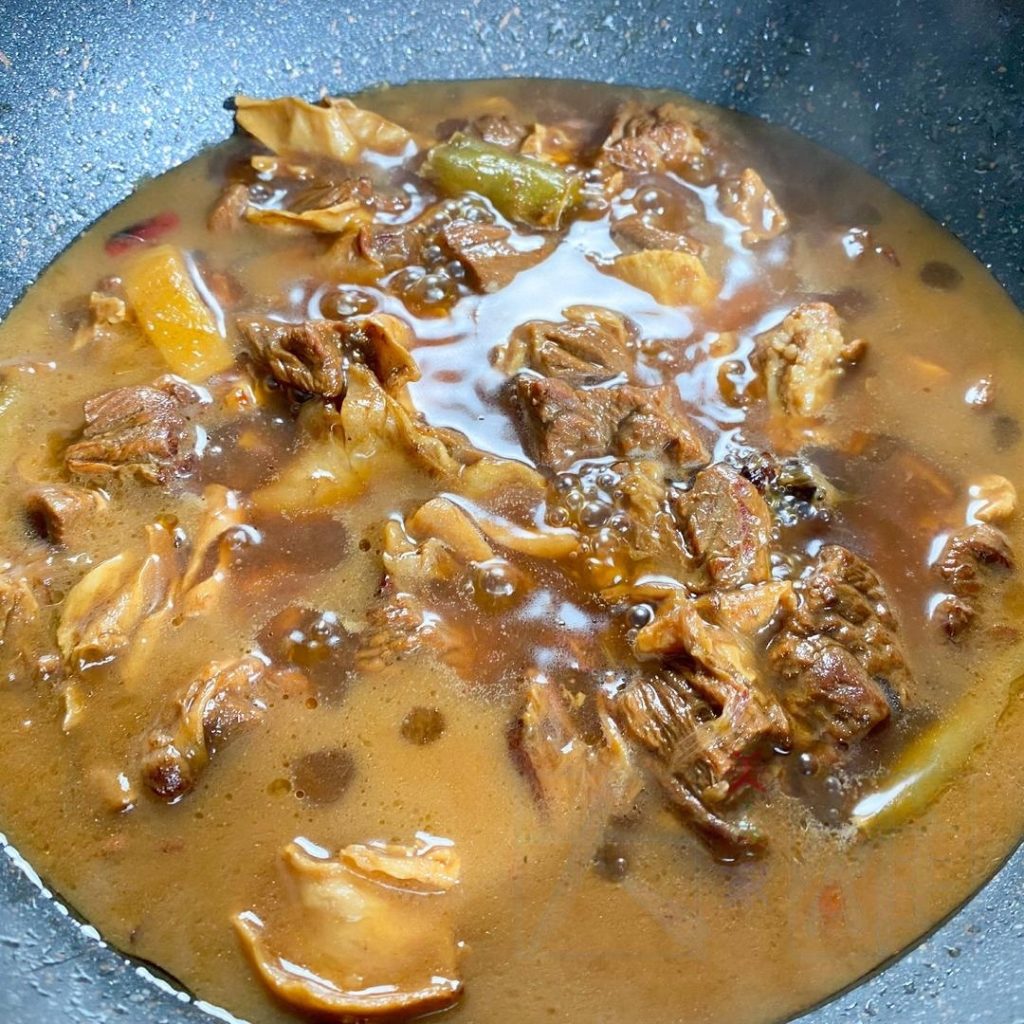
Step 6: Add Vegetables
Uncover the pot. The beef should be mostly tender now. Add the white radish and carrot chunks. Stir to submerge them in the liquid. Cover and simmer for another 10 to 15 minutes on medium-low heat.

Step 7: Reduce and Serve
Remove the lid. Check the radish; it should be fork-tender and translucent. If the sauce is too thin, turn the heat up to high and stir constantly to reduce the liquid until it coats the beef and vegetables (this technique is called shou zhi). Taste and adjust salt if necessary.
Serve piping hot. This dish is fantastic over steamed jasmine rice or noodles.
Troubleshooting & FAQ
Q: My beef is still tough after an hour. What happened? A: Brisket cooking time can vary depending on the age of the animal and the specific cut. If it’s tough, simply add a splash more boiling water and continue simmering. Acidic ingredients (like a splash of Chinkiang Vinegar) or a slice of papaya can also help tenderize meat faster.
Q: Can I skip the MSG? A: Yes, you can. However, MSG occurs naturally in ingredients like tomatoes and kelp and is a safe flavor enhancer used widely in Chinese cooking to boost umami. If you omit it, you might want to add a little more Oyster Sauce.
Q: Why did my radishes turn to mush? A: You likely added them too early. Radishes have a high water content and cook much faster than brisket. Always add them in the last 15-20 minutes of cooking.
Food Safety and Preparation
- Beef Handling: Ensure you wash your hands and cutting board thoroughly after handling raw beef to prevent cross-contamination.
- Serving Temperature: Serve immediately. If storing for later, cool rapidly and refrigerate.
- Reheating: This dish actually tastes better the next day as the flavors meld! Reheat on the stove until the internal temperature of the beef reaches at least 165°F (74°C).
Authoritative References
For more on the science of stewing and collagen breakdown, refer to Serious Eats’ Guide to Stewing. For dietary guidelines regarding red meat consumption, please consult the WHO Healthy Diet Fact Sheet.
Nutrition Info
- Calories: ~350 kcal per serving
- Protein: 25g
- Fat: 22g
- Carbs: 12g
- Sodium: Estimated 900mg (varies by soy sauce brand)
(Disclaimer: Nutrition information is calculated using an ingredient database and should be considered an estimate. In cases where multiple ingredient alternatives are given, the first listed is calculated for nutrition. Garnishes and optional ingredients are not included.)
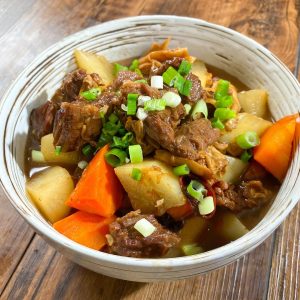
Braised Beef Brisket with Radish (Hong Shao Niu Nan)

Equipment
- Wok or Dutch Oven
- Knife and Cutting Board
Ingredients
Main Ingredients
- 1.1 lbs beef brisket cut into 1.5-inch chunks
- 1/2 daikon radish peeled and rolling-cut
- 1/2 carrot peeled and rolling-cut
Aromatics
- 1/2 scallion (white part) cut into sections
- 1 inch ginger sliced
- 3 cloves garlic sliced
- 1 long green pepper (Hangjiao) or Anaheim pepper, sliced
- 3-5 dried red chilies
- 10 Sichuan peppercorns
- 1 star anise
Seasonings
- 1 tbsp cooking oil
- 1 tbsp Chinese white liquor (Baijiu) or Vodka/cooking wine
- 1 tbsp light soy sauce
- 1 tbsp dark soy sauce
- 1 tbsp oyster sauce
- 1 tsp sugar
- 1/2 tsp salt adjust to taste
- 1/4 tsp MSG optional
Instructions
- Clean the beef brisket and pat completely dry. Cut into chunks. Cut radish and carrot using the rolling cut method. Prep aromatics.

- Heat oil in a wok/pot over high heat. Add scallions, garlic, ginger, green pepper, dried chilies, Sichuan peppercorns, and star anise. Stir-fry until fragrant.
- Add beef brisket. Stir-fry over high heat until the meat turns white, liquid evaporates, and oil is released (meat starts to brown).
- Add Baijiu (liquor), MSG, salt, sugar, dark soy sauce, light soy sauce, and oyster sauce. Stir well to coat.
- Pour in enough boiling water to cover the beef. Bring to a boil, skim off foam, cover, and simmer on medium-low for 1 hour (or pressure cook for 20 mins).
- Open lid, add radish and carrot chunks. Cover and simmer for another 10 minutes until vegetables are tender.
- Serve hot with rice or noodles.
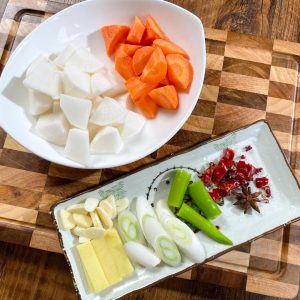
Notes
1. Do not blanch the beef; stir-frying raw preserves elasticity.
2. Must use boiling water to stew; cold water makes beef tough.





Leave a Reply