There is a moment in every good noodle shop when the cook lifts a spoon from a dark jar and the whole bowl changes. That jar is black scallion oil — 黑葱油 — and it is the reason a plate of plain noodles or a bowl of wontons can taste like it came from a restaurant kitchen. It is not a sauce and not a condiment in the usual sense; it is oil that has been coaxed, over a long slow fry, into carrying the entire flavor of scallion, onion, ginger, and garlic.
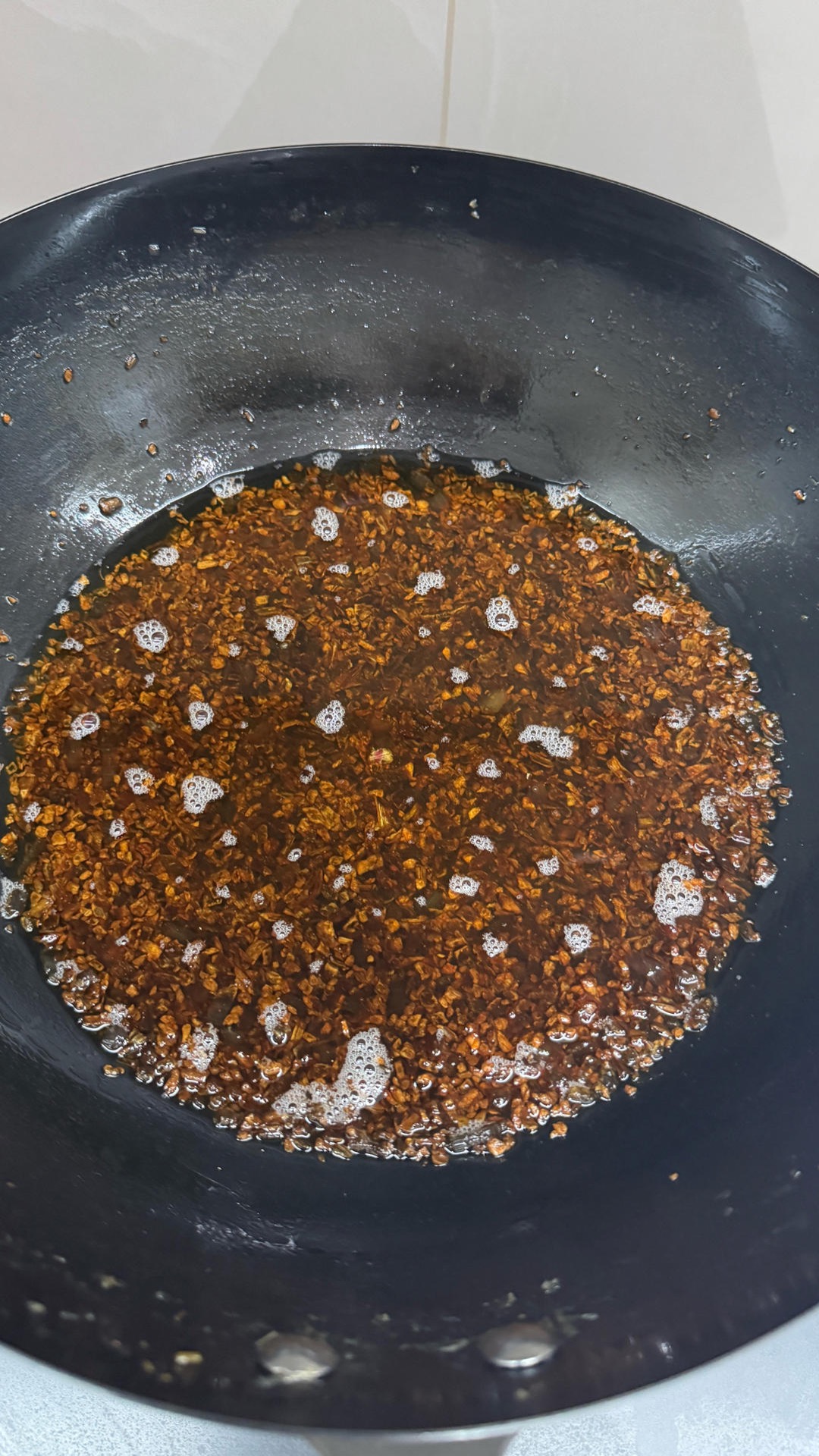
The first time you make it you will probably stand over the wok wondering whether you have done something wrong, because for the first half hour the oil looks cloudy and the vegetables look pale and nothing seems to be happening. Then, slowly, the oil goes clear, the solids shrink and darken, and the kitchen fills with a smell so good that people wander in from other rooms to ask what you are cooking. That is the whole trick of 黑葱油: nothing but time and low heat, applied patiently to four ordinary aromatics.
This is a technique recipe rather than a dish, and it rewards the same things every good infusion rewards — an even hand, an eye on the pan, and the discipline not to crank up the flame when you get impatient. Make one batch and you will have a month of flavor sitting in your refrigerator, ready to finish noodles, dress cold vegetables, gloss a bowl of rice, or lift a plate of wontons into something memorable.
What Is Black Scallion Oil (黑葱油)?
Black scallion oil is a slow-fried infused oil from the Jiangnan region of China, most closely associated with Shanghai. Its name comes from the color it takes on after a long, gentle fry followed by a covered rest: what starts as pale golden oil and light green vegetables ends up a deep, almost inky black, with the aromatics reduced to dark, crisp, intensely savory bits suspended in the oil.
The flavor is not simply oniony. Because scallion, onion, ginger, and garlic are all cooked together for a long time, their sugars caramelize and their sulfur compounds mellow and transform, producing something rounded, roasted, and faintly sweet underneath the savory depth. A small amount of lard adds body, and a pinch of five-spice powder (十三香) goes in at the very end, off the heat, so it blooms without burning.
The name 黑葱油 is literal — 黑 means black, 葱 means scallion, and 油 means oil. The color is not added; it develops on its own as the aromatics fry and then steep in the cooling oil.
It is worth knowing how this differs from the more common scallion oil you may have seen in other recipes. A quick scallion oil is made in ten minutes over medium heat and stays golden and bright. Black scallion oil is the opposite approach: low heat, a much longer fry, more aromatics, and a long covered rest that lets the color and flavor deepen. The two are not interchangeable, and the slow version is what gives noodle-shop bowls their characteristic depth.
If you want to see how the faster, brighter version behaves in a full dish, this universal scallion oil is a good place to start and makes a useful comparison. If you would rather jump straight into using the black version, this scallion oil noodles is the classic application and the reason most people learn to make the oil in the first place.
For a dish that leans on scallion oil as a braising liquid rather than a finishing drizzle, this scallion oil braised chicken shows how far a good infused oil can carry a whole pot of food.
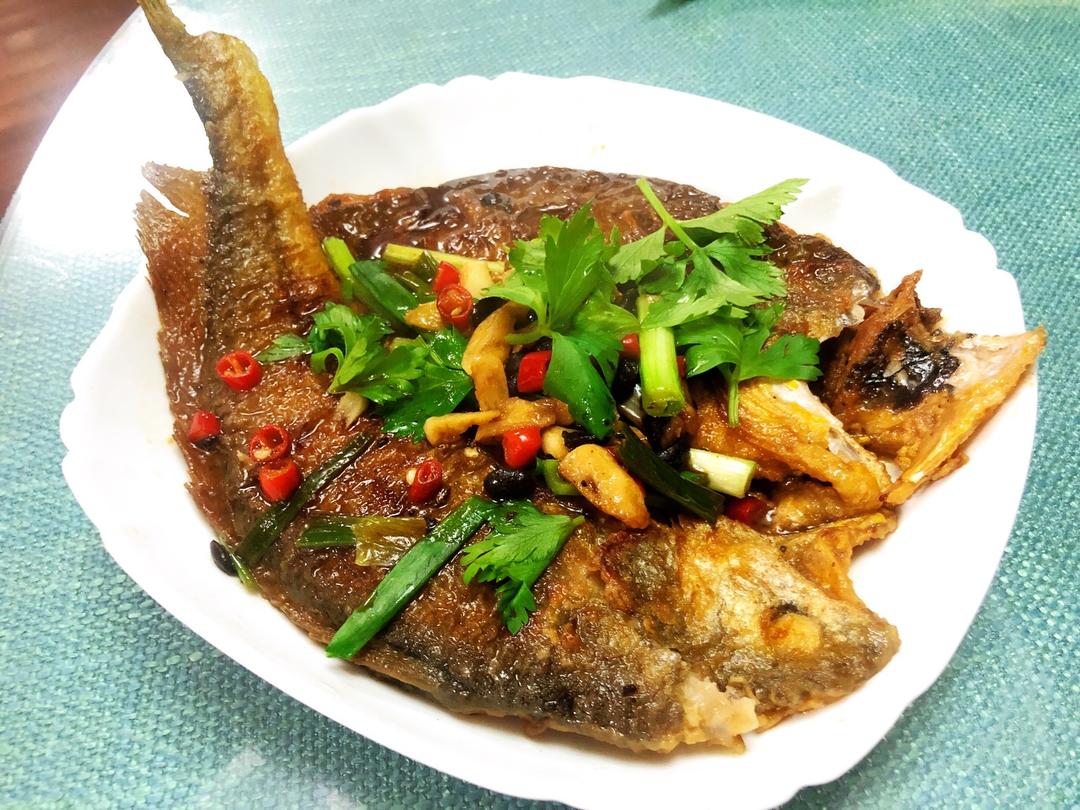
Related recipes worth trying: pan fried yellow croaker with black bean sauce for another deeply savory, fermented-and-fried flavor profile.
1Pan-Fried Yellow Croaker with Black Bean SauceA savory, quick, and authentic Sichuan-style fish dish known as a ‘Rice Killer’. Crispy pan-fried Yellow Croaker is braised for minutes in a rich sauce of fermented black beans, garlic, and chilies.Check out this recipe
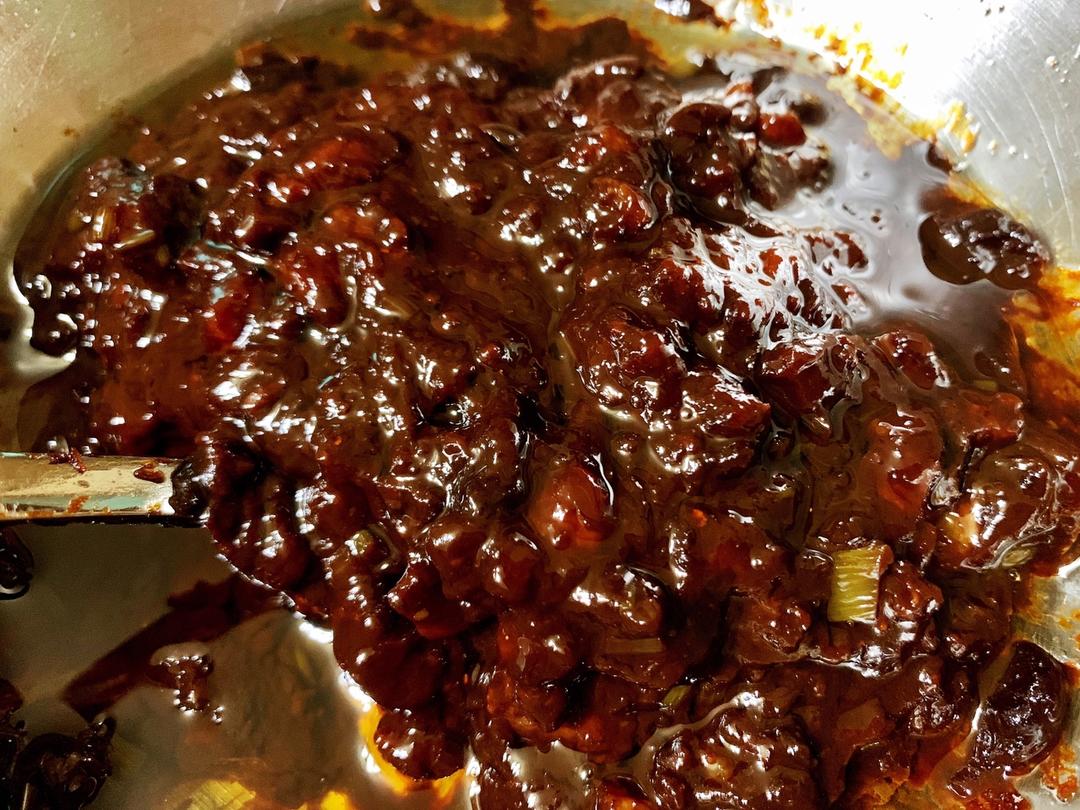
Related recipes worth trying: Beijing zha jiang mian for a noodle bowl built on a slow-cooked, deeply savory sauce.
2Beijing Fried Sauce (Zha Jiang) with Pork BellyAuthentic Old Beijing style Zha Jiang (Fried Sauce) made with hand-cut pork belly cubes and dry yellow soybean paste. A savory, rich topping for noodles.Check out this recipe
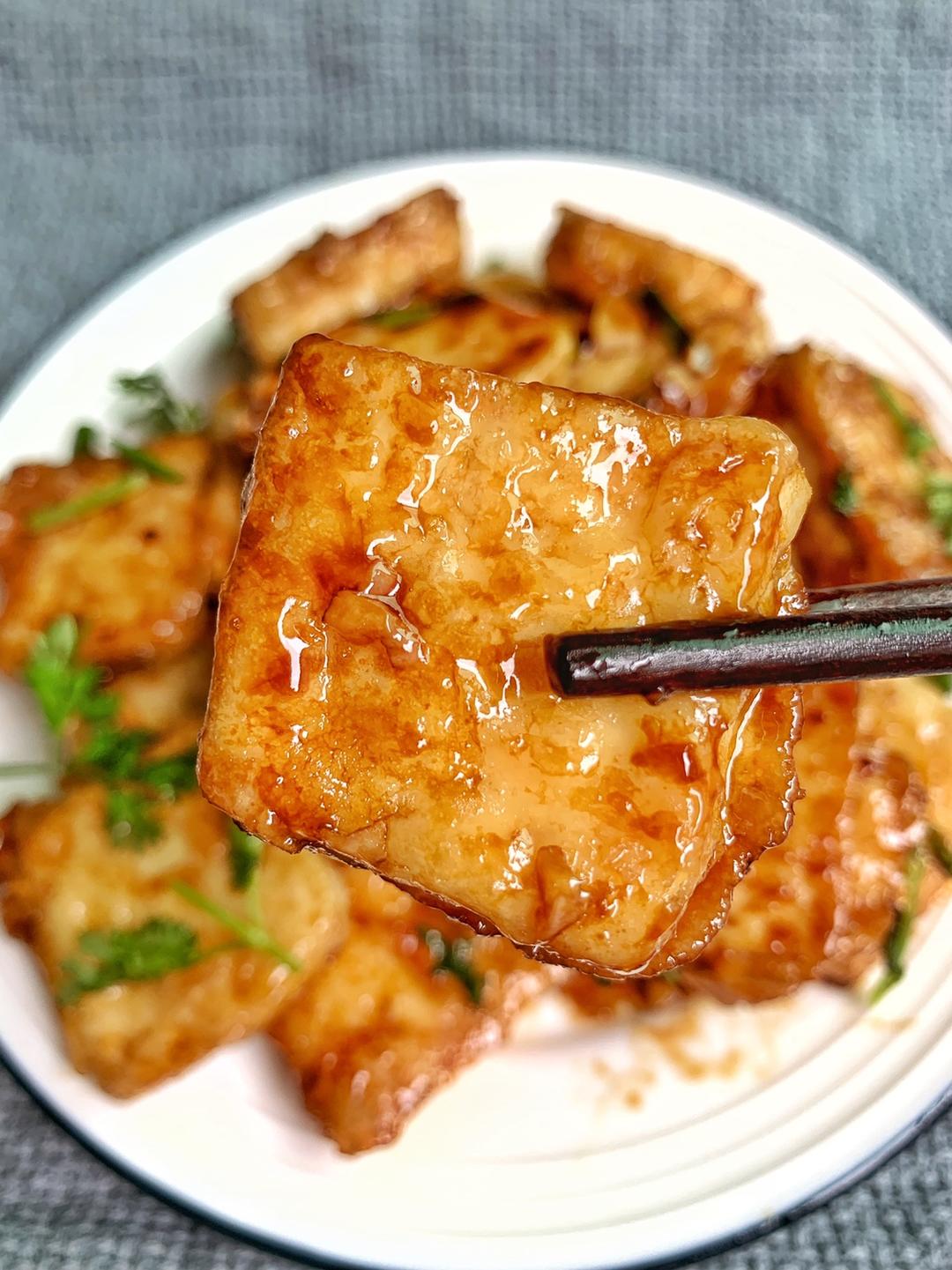
Related recipes worth trying: pan fried tofu with garlic sauce for a garlicky, pan-fried dish that plays well with a spoonful of black scallion oil.
3Easy Pan-Fried Tofu with Garlic Sauce (香煎豆腐)This 15-minute recipe creates unbelievably crispy pan-fried tofu cubes tossed in a rich, savory, and glossy garlic soy sauce. It’s a homestyle Chinese dish that’s fast, easy, and better than takeout.Check out this recipe
Why This Recipe Works
Four aromatics instead of one is the first reason. Scallion alone gives a clean, grassy sweetness, but it flattens out when cooked long. Onion brings bulk, water, and a deeper caramelized sweetness; ginger adds a warm, slightly citrusy bite; garlic contributes the savory, roasted notes that make the finished oil taste full rather than thin. Together they build layers that no single allium can produce on its own.
The second reason is the fat blend. All neutral oil would work, but the small addition of lard gives the finished oil a rounder, more coating texture that clings to noodles instead of sliding off. It is a small proportion — about 30 grams in 450 grams of oil — but it changes how the oil feels on the tongue.
The third reason is the covered rest. Most infused oils are strained and used immediately. Here the pan comes off the heat, five-spice goes in, and everything sits covered for about two hours. During that time the residual heat keeps extracting color and flavor from the solids, and the oil darkens from amber to near-black. Skipping this step is the single most common reason a batch comes out looking and tasting thin.
Finally, the technique is forgiving in the ways that matter. Because the heat stays low, there is a wide window between “done” and “burnt” — you are watching for color, not racing a timer. That makes this a genuinely approachable recipe for anyone who has never infused oil before.
Equipment Needed
A wok is the traditional vessel and the best choice, because its wide, sloped sides give the aromatics room to spread out and fry evenly rather than piling up in a narrow pot. A deep, heavy-bottomed saucepan or Dutch oven also works well and holds heat more steadily, which is an advantage if your stove runs hot.
You will also want a cutting board and a sharp knife, or a food processor if you would rather not hand-chop 250 grams of onion. A slotted spoon or spider makes it easy to check and stir the solids, and a fine-mesh strainer is useful if you decide to strain the oil — though many cooks, myself included, keep the fried bits in the jar. Finally, have a clean, dry glass jar ready, ideally one you have washed and let air-dry completely, since any water left in the jar will shorten the oil’s shelf life.
A kitchen thermometer is optional but helpful if you are new to infusing oil. You want the oil to hover around 250°F to 275°F (120°C to 135°C) during the long fry — hot enough to drive off moisture, cool enough that nothing scorches.
Ingredients
The full ingredient list with exact amounts is in the recipe card at the bottom of this post. Here is what each component is doing and why it matters.
Scallions (150 g, about 8 to 10 stalks). Use both the white and green parts. The whites carry more pungent sulfur compounds that mellow into savoriness, while the greens bring the grassy sweetness people associate with scallion oil. Roughly chop them — precision is not important because everything softens and shrinks dramatically.
Yellow onion (250 g). Onion is the bulk of the batch and the main source of sweetness. It has a high water content, which is actually helpful: as the water cooks off, it keeps the temperature of the solids down and prevents early burning. Yellow onion is the best default; white onion is sharper and sweeter onion works too, though it will brown faster.
Ginger (20 g) and garlic (80 g). Both minced. Garlic is the largest aromatics contribution after onion, and it is also the most prone to burning, which is why the heat must stay low. Ginger rounds out the top notes and keeps the oil from tasting flat.
Neutral oil (450 g). Grapeseed, canola, peanut, or any neutral oil with a high smoke point. Do not use olive oil — its flavor will fight the aromatics, and its lower smoke point makes a long fry riskier.
Lard (30 g). Optional but recommended. It adds richness and a slightly firmer set when the oil is cold, which makes it easier to spoon out of the jar.
Five-spice powder (2 g, 十三香). Added off the heat at the very end. It is a small amount on purpose — it should be a background warmth, not the headline.
Ingredient Notes
Scallion choice matters more than you might expect. Fat, thick-stemmed scallions give more usable white parts and a sweeter result than thin, spindly ones. If your scallions look tired and limp, they will still work, but the finished oil will be less fragrant.
On the onion: the recipe calls for roughly chopping rather than mincing, and that is deliberate. Finely minced onion releases more water and more sugars into the oil at once, which can cause the batch to foam and brown unevenly. Roughly chopped pieces cook more slowly and more predictably, and they are easier to fish out or leave in as you prefer.
If you cannot find 十三香, a pinch of Chinese five-spice powder is a reasonable substitute, though the blends are not identical — 十三香 typically contains more than a dozen spices. Use half the amount and taste before adding more.
Finally, do not skip the lard if you can help it, but do not substitute butter. Butter contains milk solids that will burn during a forty-minute fry and leave a scorched, unpleasant note in the finished oil.
Prep & Mise en Place
Everything about this recipe is easier if you set up before the wok goes on the stove, because once the aromatics go in you will be stirring more or less continuously for the better part of an hour.
Start by washing and thoroughly drying the scallions. Any water clinging to them will spit violently when it hits the oil, and excess water also lengthens the cooking time. Chop the scallions roughly, including the green tops, and set them aside in a bowl.
Peel and roughly chop the onion, then peel the ginger and garlic. Mince the ginger and garlic — a food processor is fine here, and if you are using one, you can pulse the onion in it too, though stop before it turns to paste. If you are chopping by hand, expect the onion and scallion to make your eyes water; a sharp knife and a cold onion help, and so does working near an open window.
Measure out the oil and lard so they are ready to go into the wok together, and have the five-spice powder measured and sitting in a small dish next to the stove — you will need it the moment the heat goes off. Set out your clean, dry jar and a slotted spoon. With everything within arm’s reach, the actual cooking becomes a calm, unhurried process rather than a scramble.
If you plan to serve the oil over noodles the same day, this scallion oil chicken is a good companion dish to prepare while the oil rests, since both come together with the same flavor vocabulary.
Cooking Process
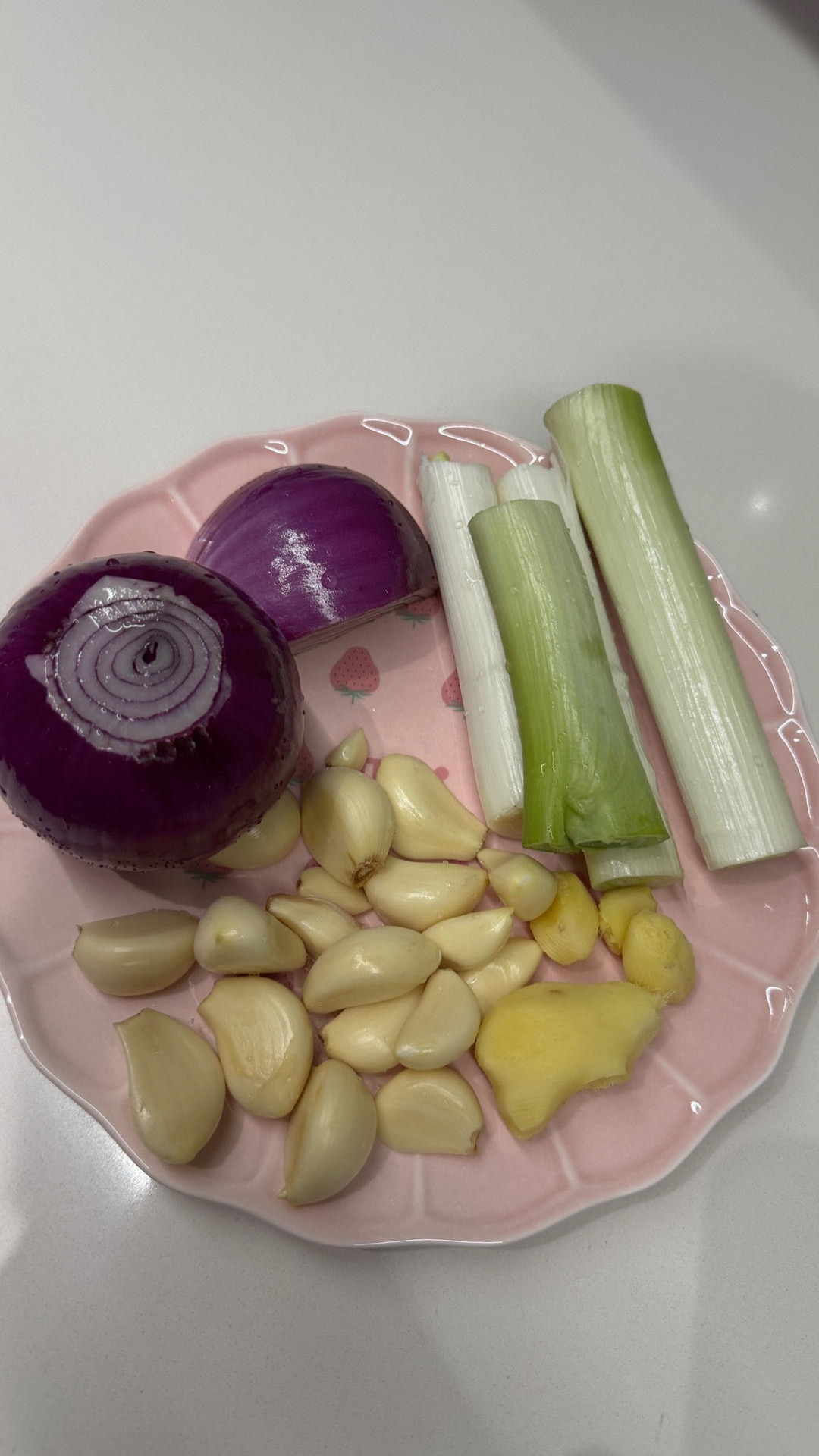
Step 1 — Gather the Ingredients
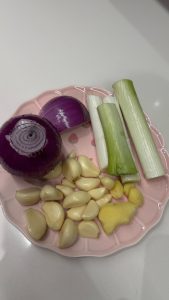
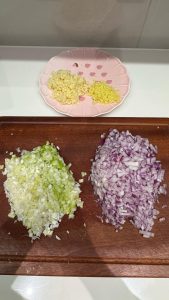
This is roughly all the material you will need.
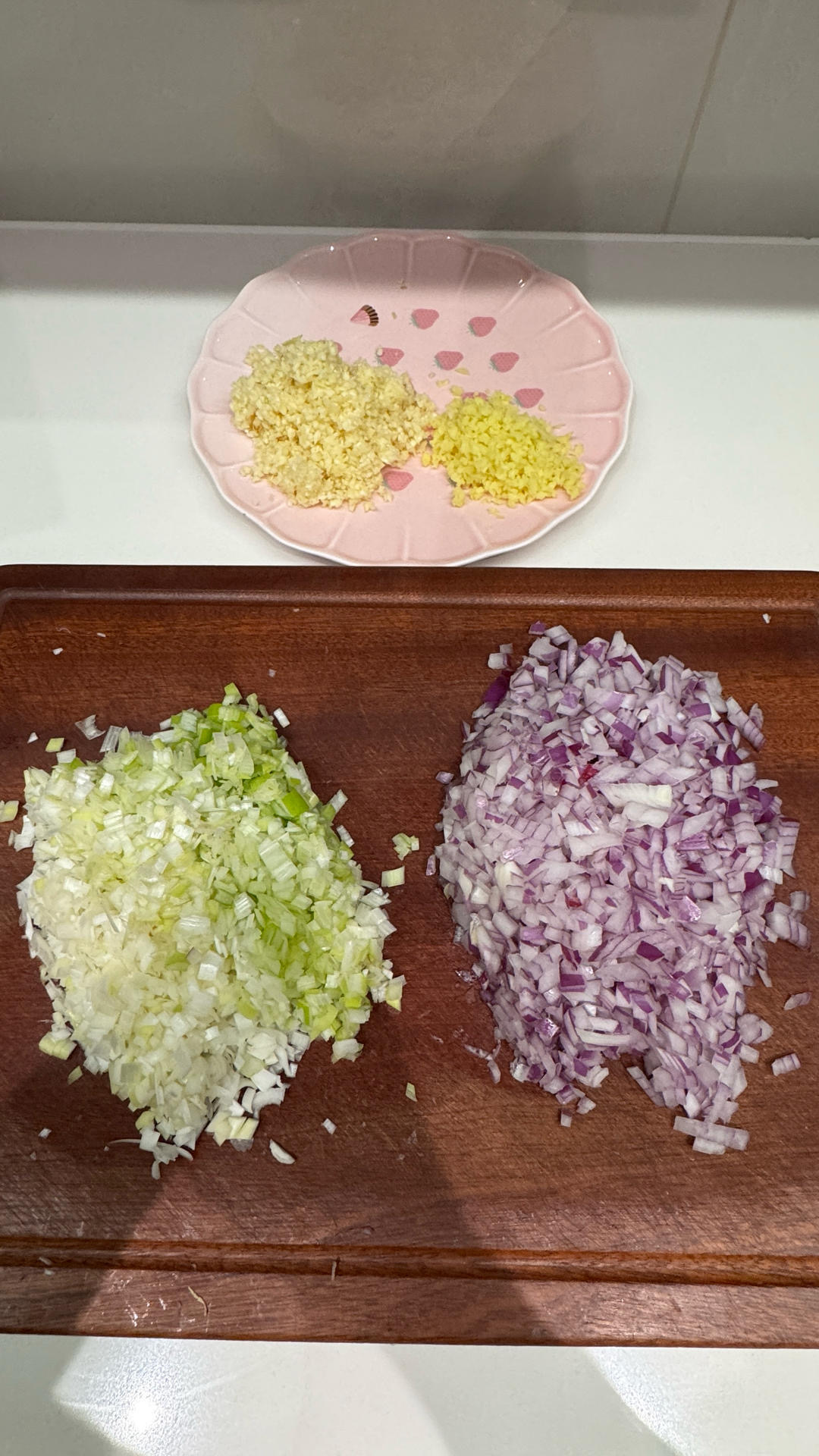
Step 2 — Chop the Aromatics
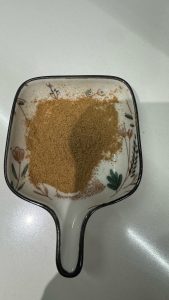
Chop the onion and scallion; because onion and scallion release so much water they are not ground in a meat grinder, so it is just a chopping process that leaves your eyes streaming, and even wearing glasses does not help — if you do not want to chop, use a meat grinder instead. Mince the garlic and ginger.
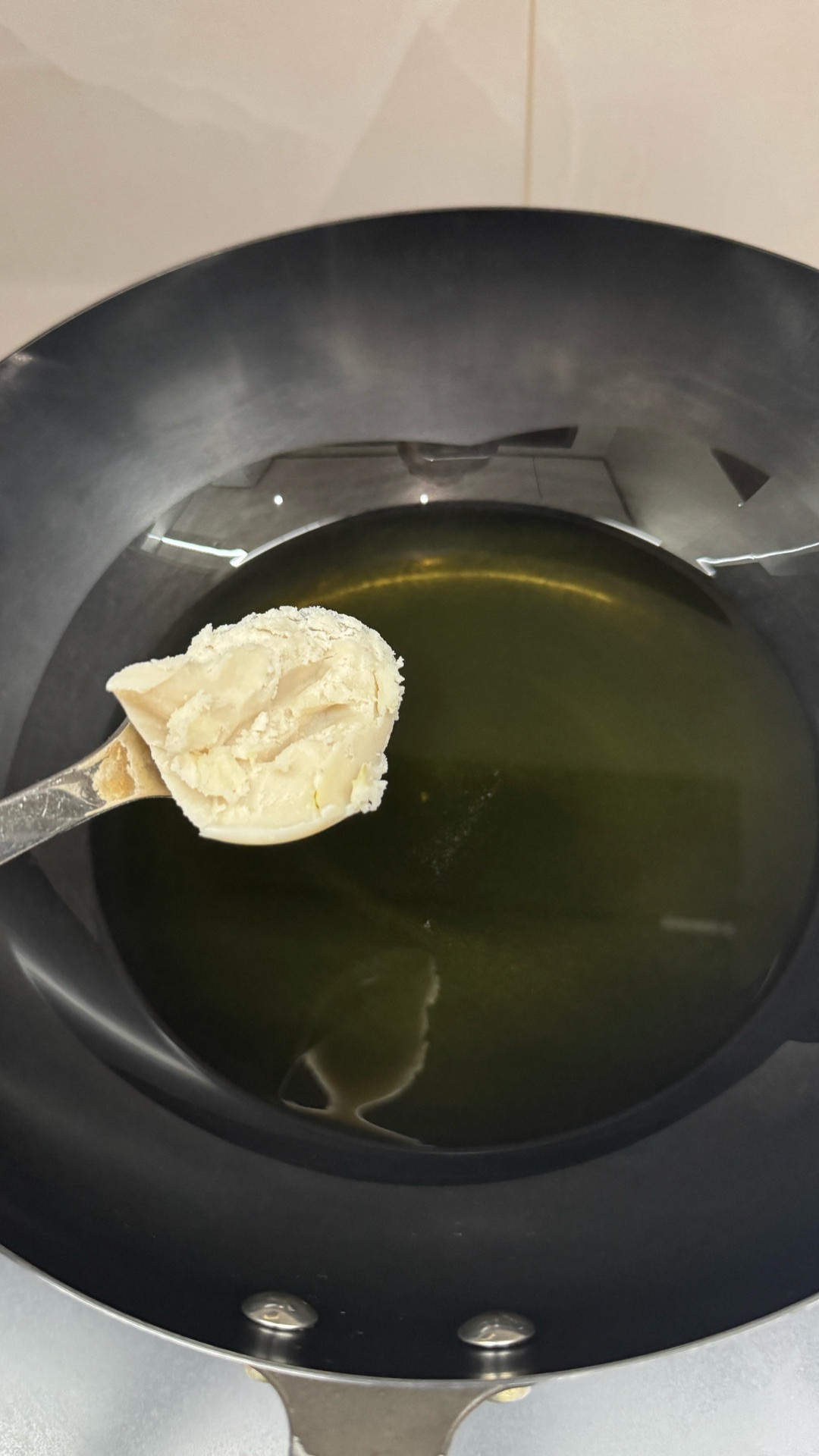
Step 3 — Heat the Oil
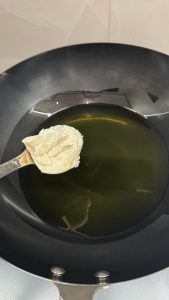
Pour 450 grams of cooking oil into the wok, add 30 grams of lard for extra fragrance, and do not let the oil get too hot.
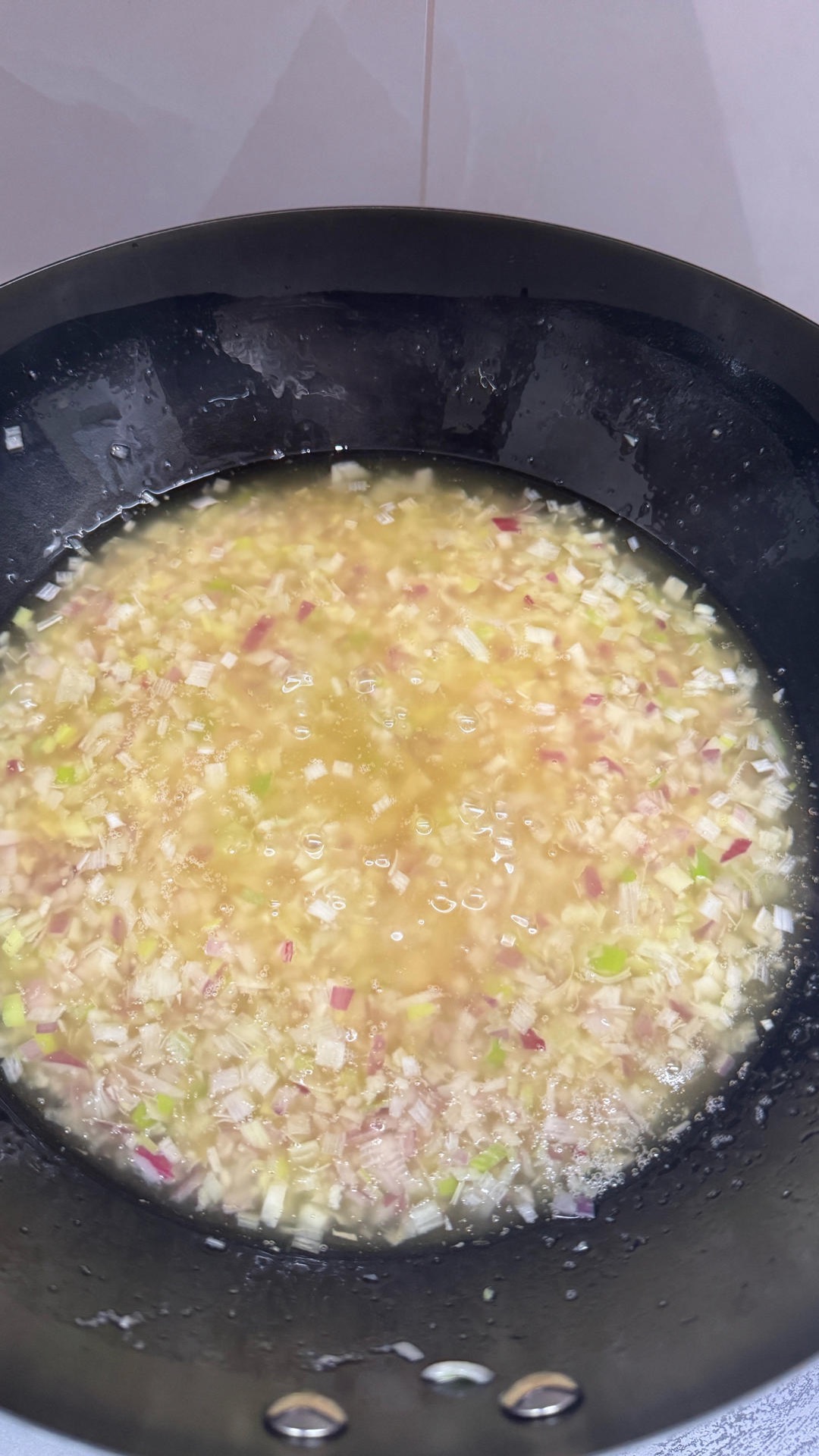
Step 4 — Add Everything and Fry Low and Slow
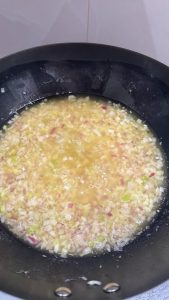
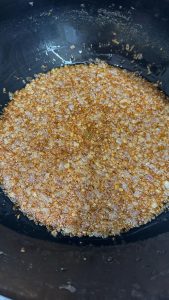
Pour in all the ingredients (scallion, onion, ginger, garlic) and fry over low heat, stirring constantly — it will stick to the bottom of the wok; at the start the oil is cloudy, and by the end of frying the oil turns clear.
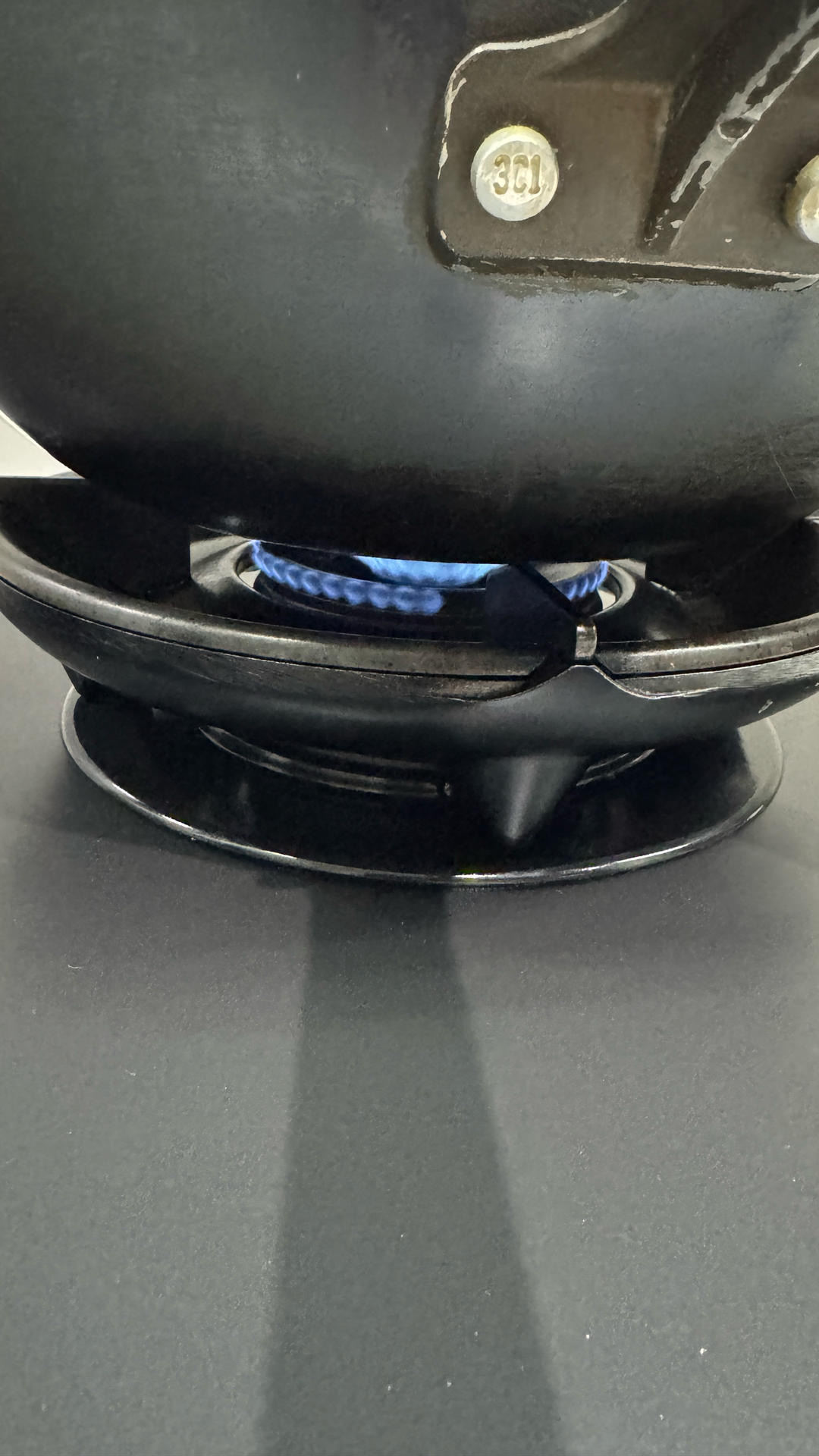
Step 5 — Keep the Heat Steady
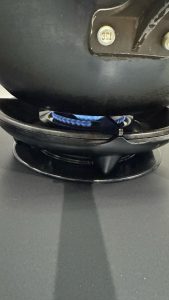
Keep simmering at this same heat for about 40 minutes; this is not something you can rush.
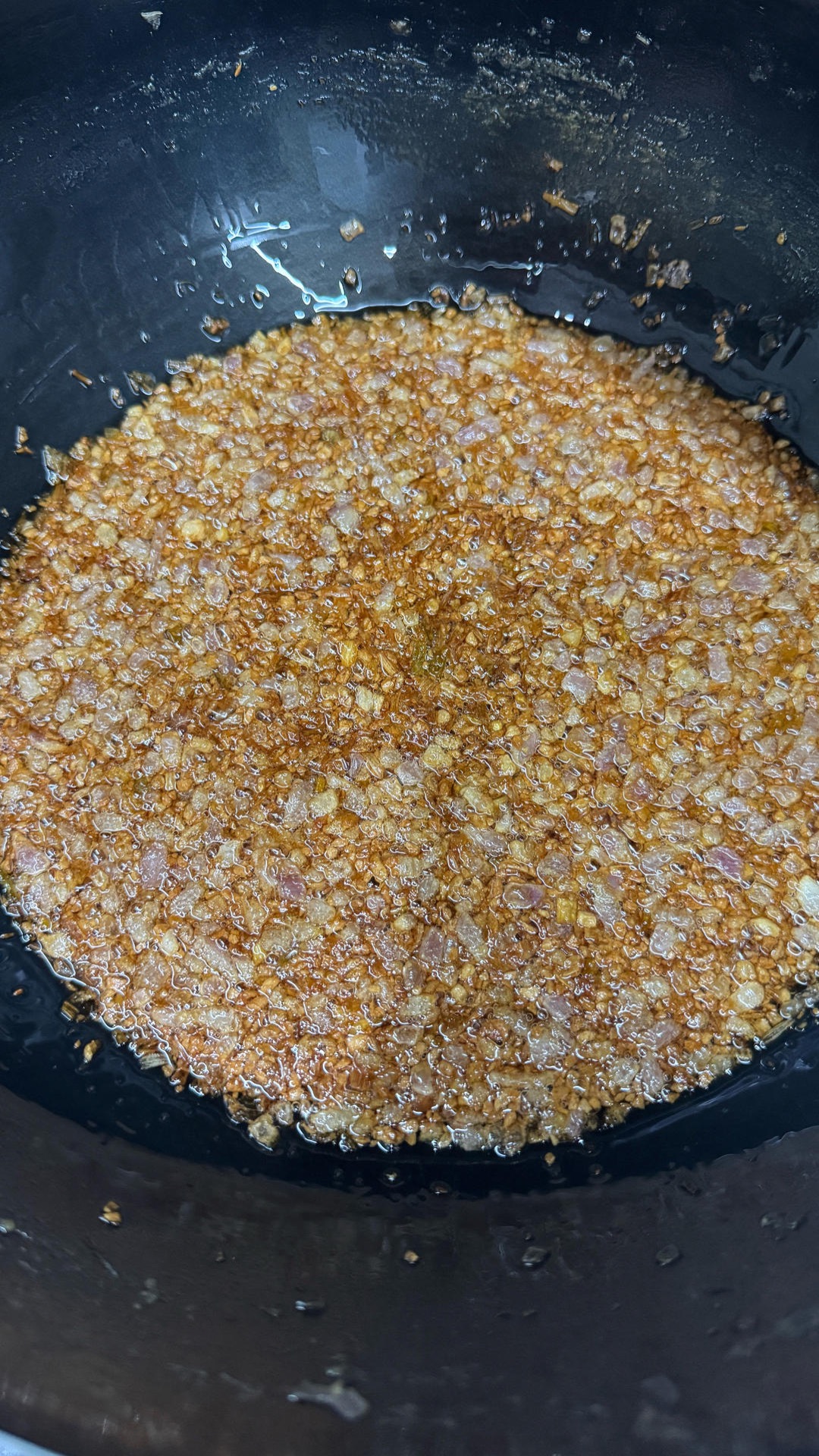
Step 6 — Fry Until Lightly Golden
Fry until all the ingredients turn slightly焦 golden brown, then turn off the heat.
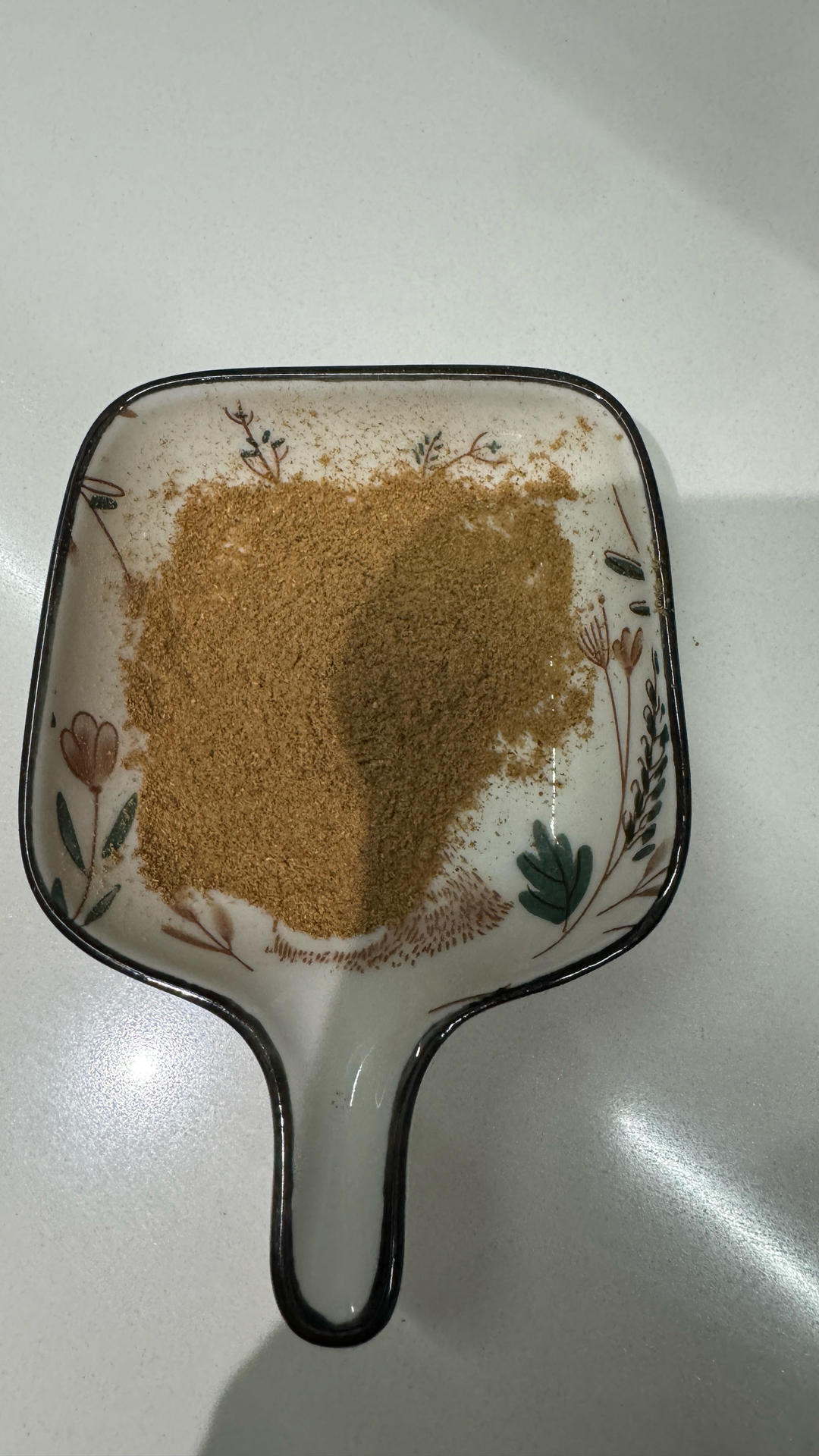
Step 7 — Add Five-Spice and Steam
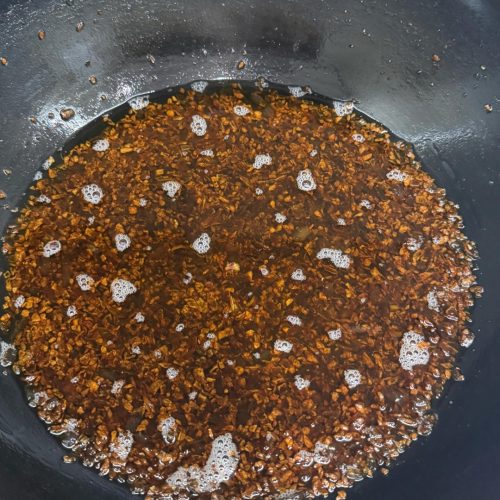
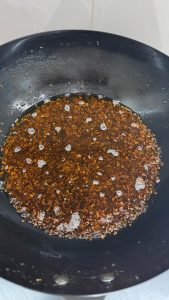
Pour in the five-spice powder, turn off the heat and let it sit covered for about 2 hours; if you are not in a hurry you can let it sit until completely cool before bottling — at this point the whole house smells fragrant.
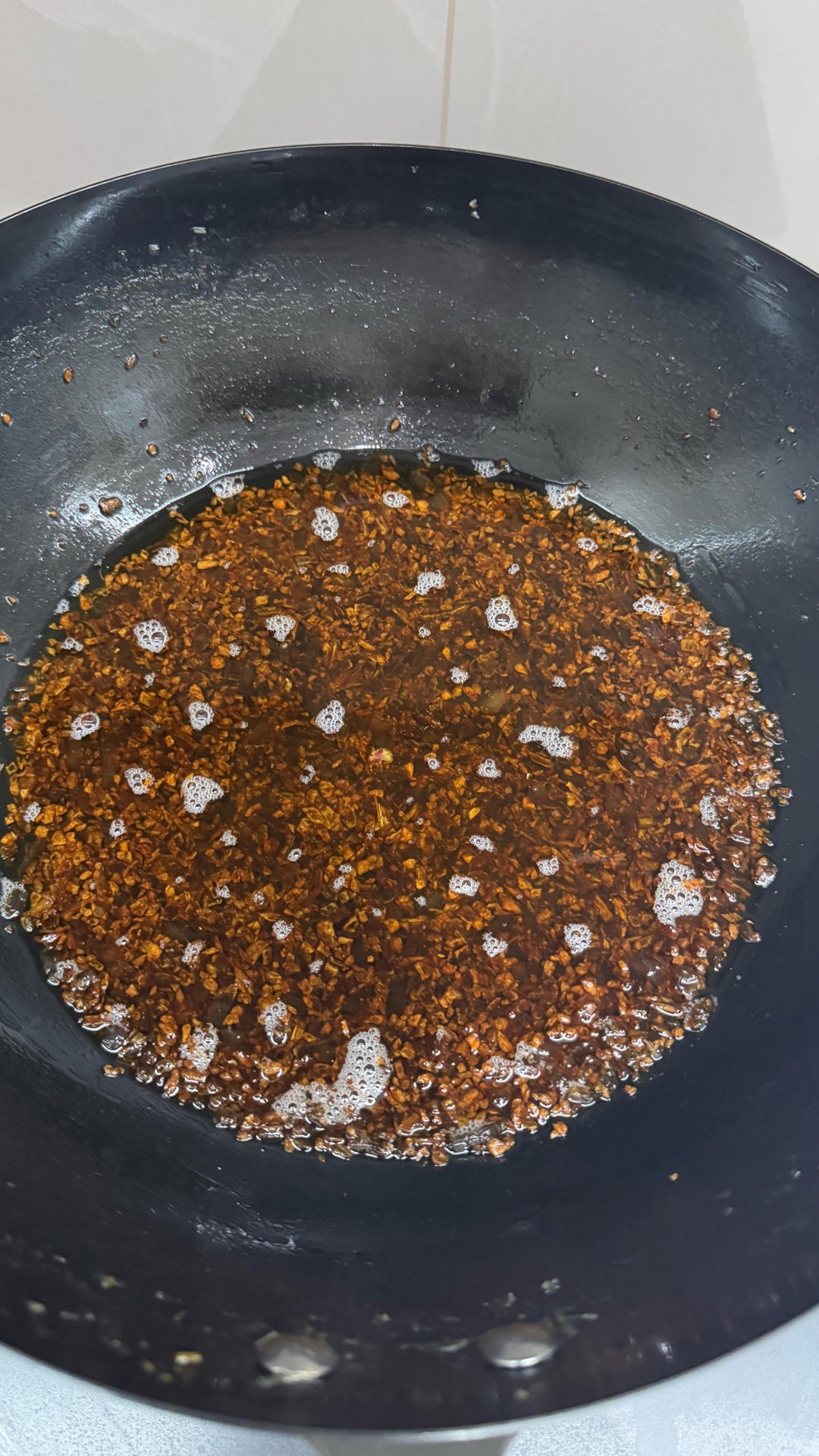
Step 8 — It Turns Black
After steaming it becomes black.
Step 9 — Serve Right Away
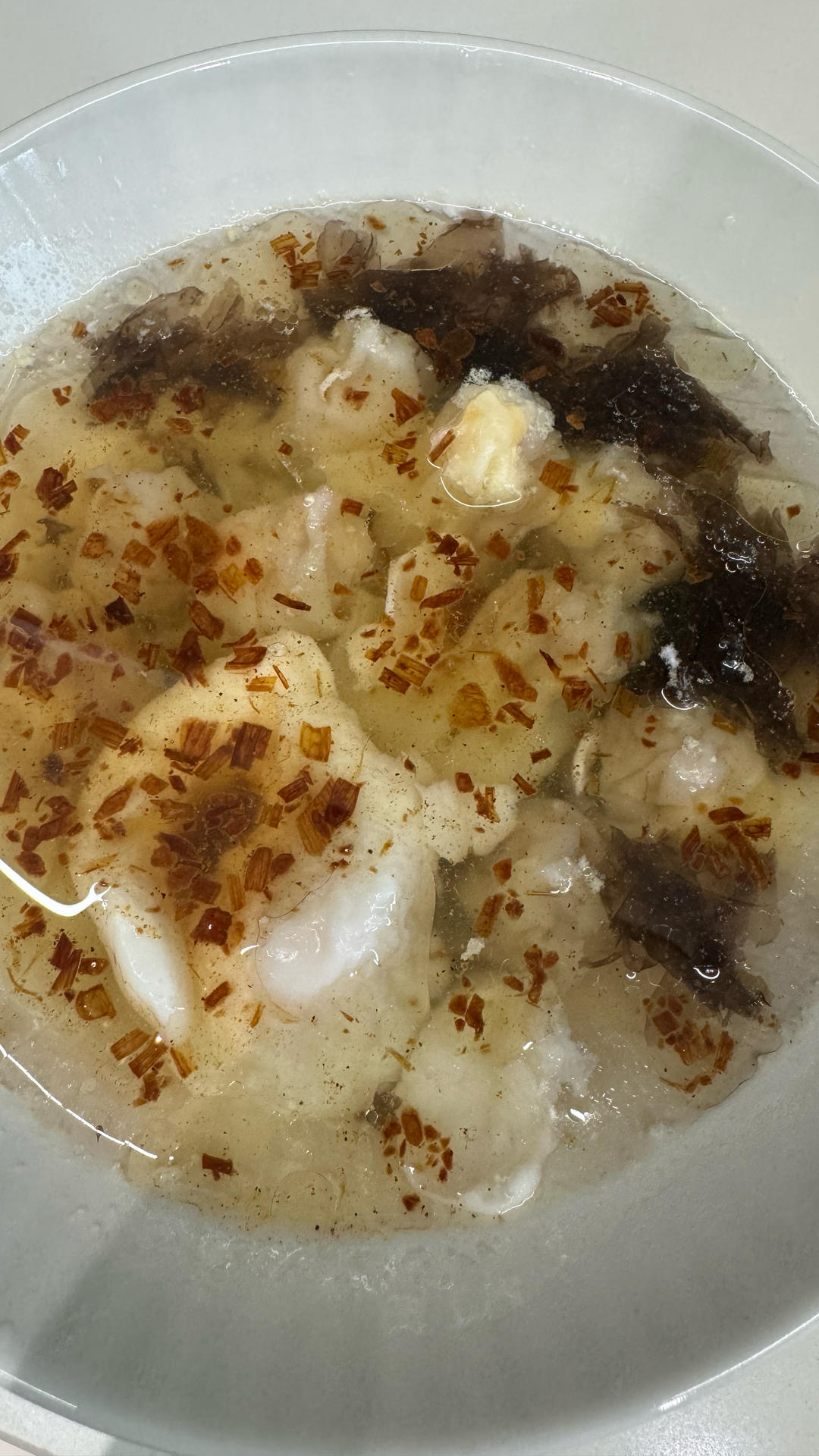
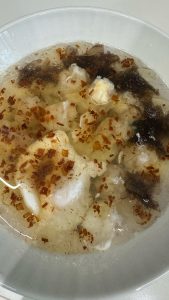
That same day I boiled wontons, and it was really fragrant.
Common Mistakes When Making Black Scallion Oil
1. Turning the heat up to save time. This is the mistake that ruins the most batches. High heat browns the outside of the aromatics before their interior moisture has cooked off, so you get burnt edges and a bitter, acrid oil. The fix is simple: keep the flame low, accept the full forty minutes, and judge doneness by color rather than by the clock. If you are tempted to rush, remember that the long fry is what makes the oil taste like anything at all.
2. Not stirring often enough. The chopped aromatics sink to the bottom of the wok and sit directly against the hottest surface. Left alone for even a few minutes, that layer scorches and the whole batch picks up a burnt note. The fix is to stir every couple of minutes at minimum, scraping the bottom of the wok each time, and more frequently toward the end of the fry when the solids are lightest and most fragile.
3. Adding the five-spice to hot oil. Ground spices burn in seconds at frying temperature, and burnt five-spice is aggressively bitter — it will dominate the entire jar. The fix is to turn the heat off first, wait a moment for the oil to stop bubbling, and only then stir in the spice. The residual heat is more than enough to bloom it.
4. Skipping the covered rest. Many cooks fry the aromatics, strain the oil, and call it done. The result is amber and pleasant but nowhere near black, and the flavor is thinner. The fix is to leave the pan covered off the heat for about two hours — or until completely cool — so the oil keeps extracting color and flavor from the solids. This is the step that turns a good scallion oil into 黑葱油.
5. Jarring the oil while it is still warm. Putting hot oil into a sealed jar traps steam, which condenses into water and creates exactly the environment that spoils infused oil. The fix is to let the oil come fully to room temperature before bottling, and to make sure the jar itself is bone dry. If you are in a hurry, spread the oil in a wide, shallow pan to cool faster.
6. Using wet aromatics. Scallions and onion that still carry rinse water will make the oil spit and will extend the fry time, and the trapped moisture also shortens shelf life. The fix is to dry everything thoroughly on a clean kitchen towel before it goes anywhere near the wok.
Variations
All-oil version. Skip the lard and use 480 grams of neutral oil instead. The finished oil is lighter and fully vegan, and it stays liquid in the refrigerator rather than setting slightly. It is a good choice if you plan to use the oil for cold dishes or dressings.
Extra-garlic version. Increase the garlic to 120 grams and reduce the onion to 200 grams. The result is sharper and more pungent, closer to the garlic-forward oils used in some Sichuan cold dishes. Watch the heat carefully, since more garlic means more burning risk.
Dried shrimp or scallop version. Add 20 grams of small dried shrimp or shredded dried scallop along with the aromatics. This is a Cantonese-leaning variation that pushes the oil toward a seafood-forward savoriness, excellent over wontons and simple noodles. Note that this makes the oil unsuitable for anyone with shellfish allergies.
Chili version. After the rest, stir in 2 to 3 tablespoons of coarsely ground dried chili flakes while the oil is still slightly warm, then let it cool. You get a black scallion oil with a gentle, fruity heat — a useful bridge between this recipe and a proper chili oil.
Strained versus unstrained. Both are traditional. Strained oil is cleaner and keeps longer; unstrained oil carries the crisp fried bits, which add texture and an extra hit of flavor when spooned over rice or noodles. If you leave the solids in, plan to use the jar within a month.
Frequently Asked Questions
Why did my black scallion oil turn out bitter? Bitterness almost always means the aromatics scorched. Either the heat was too high, the solids sat unstirred against the bottom of the wok, or the five-spice went into oil that was still hot. There is no way to fix a bitter batch — the compounds responsible cannot be removed — so the only remedy is to start again with lower heat and more frequent stirring.
How long does black scallion oil last? Stored in a clean, dry glass jar in the refrigerator, it keeps for about one month. In the freezer, in small sealed portions, it holds for up to three months. Because it contains fresh garlic and onion, it should never be kept at room temperature for more than a few hours. Discard it if it smells rancid, turns cloudy in a way it was not before, or shows any sign of mold.
Can I make this without lard? Yes. Use an equal weight of neutral oil in place of the lard. The oil will be slightly less rich and will not firm up in the refrigerator, but the flavor is still excellent and the recipe becomes fully plant-based.
Should I strain out the solids? It is entirely a matter of preference. Leaving them in gives you crisp, flavorful bits in every spoonful and a slightly deeper taste, but the oil will not keep quite as long. Straining gives you a cleaner, more versatile oil that lasts longer and will not scorch if you use it for high-heat cooking later.
Why is my oil still not black after two hours? The color develops from residual heat and from how dark the aromatics got during the fry. If your solids were only pale gold when you turned off the heat, the oil will land at amber rather than black. Next time, fry a few minutes longer until the aromatics are a clear light golden brown before adding the five-spice and covering the pan.
How to Serve
The most traditional way to use black scallion oil is over noodles: cook them, drain, and toss with a spoonful of the oil, a splash of light soy sauce, and a pinch of sugar, and you have a bowl that needs nothing else. It is equally good spooned over wontons in broth, stirred into plain white rice, drizzled over blanched greens, or used to finish a plate of cold tofu.
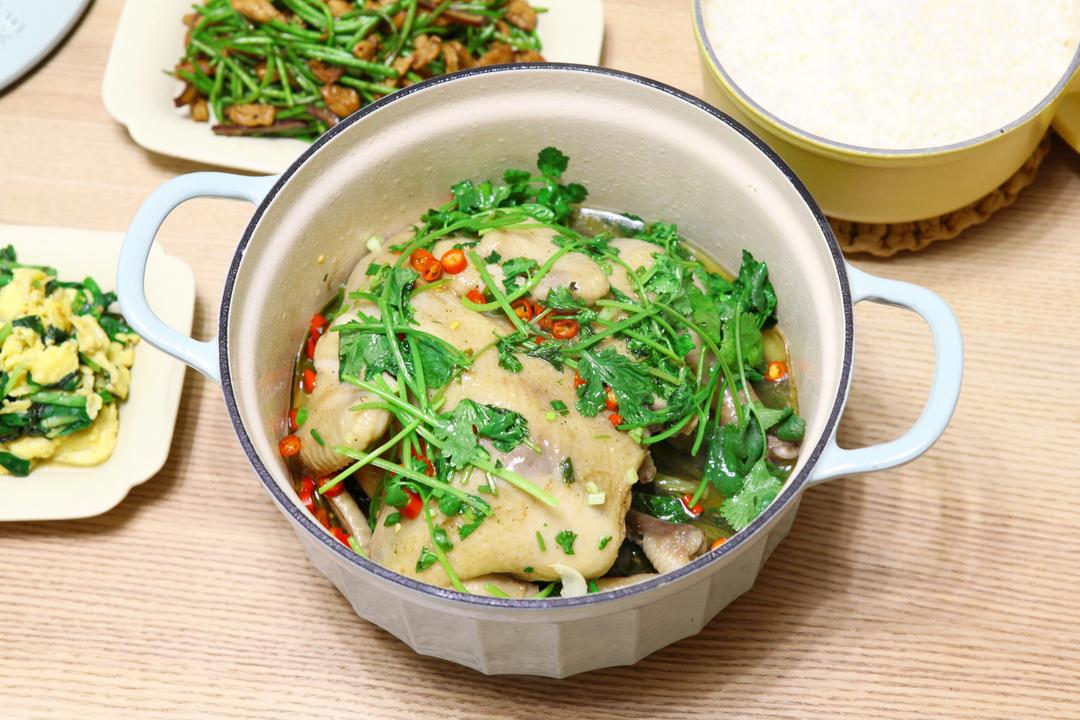
For a full meal built around the same flavor, this scallion oil chicken is a natural pairing — the oil can be used both in the cooking and as a finishing drizzle. If you would rather keep things simple and pan-focused, this pan seared scallion oil beef comes together quickly and benefits enormously from a good homemade oil. And for a vegetable side that uses the oil as a dressing rather than a cooking fat, this scallion oil potato strips is a great weeknight option.


Storage & Reheat
Cool the oil completely to room temperature before transferring it to a clean, dry glass jar with a tight-fitting lid. If you are keeping the fried solids in the oil, stir them through before jarring so they distribute evenly. Label the jar with the date — infused oils are easy to lose track of in a crowded refrigerator.
Refrigerate for up to one month, or freeze in small portions for up to three months. The oil will thicken and may look cloudy or semi-solid when cold, especially if you used lard; this is normal and it returns to a liquid state at room temperature or after a few seconds in a warm pan. There is no need to reheat the oil for most uses — a spoonful straight from the cold jar melts instantly over hot noodles or rice.
If you want to use it for cooking rather than finishing, spoon it into a cold pan and bring it up to heat slowly, since cold infused oil can spatter if it hits a very hot surface. Discard the oil if it develops an off or rancid smell, if the color or clarity changes noticeably, or if you see any mold on the surface or around the rim of the jar.
For guidance on safe food handling and storage temperatures, the FDA’s cold food storage guidance is a useful reference for anything you make ahead and keep.
Allergen Notice
The oil itself contains no gluten, dairy, egg, nuts, or shellfish. Garlic and onion are both alliums, which some people need to avoid for medical or dietary reasons — there is no way to make this recipe without them, since they are the entire point of the dish.
The optional light soy sauce used at serving contains soy and, depending on the brand, wheat. If you are keeping the oil itself soy-free, simply leave the soy sauce out of the jar and add it at the table. If you add the dried shrimp or dried scallop variation described above, the oil will contain shellfish. Always check the labels of your five-spice blend, since some commercial mixes include additional ingredients such as star anise, fennel, or licorice.
Nutrition Disclaimer
Nutrition information is calculated using an ingredient database and should be considered an estimate. In cases where multiple ingredient alternatives are given, the first listed is calculated for nutrition. Garnishes and optional ingredients are not included.
About the Author & Recipe Development
This recipe was developed and tested in my own kitchen for Woks of Love, where I share the Chinese home cooking I grew up with and the dishes I have learned from cooks, markets, and noodle shops along the way. Black scallion oil is one of those recipes that looks like nothing on paper — four vegetables, some fat, a long wait — and then turns into something you keep in the refrigerator at all times.
I tested this batch with both an unlined carbon steel wok and a heavy Dutch oven to make sure the timing works on different stoves. The forty-minute fry is the number that worked most reliably in my kitchen; on a very low-burning electric element it may take closer to fifty minutes, and on a powerful gas burner you may want to start checking at thirty-five. The covered rest is the part I would not shorten. Every time I have rushed it, the oil has come out amber rather than black, and the flavor has been noticeably flatter.
If you make this, I would love to hear how you use it — over noodles, over rice, spooned onto wontons, or something I have not thought of yet. That is the best part of a technique recipe: it belongs to whoever cooks it next.
Authoritative References
For safe handling and storage of homemade infused oils, see the FDA cold food storage guidance. For general food safety principles including the handling of garlic-and-oil mixtures, the USDA Food Safety and Inspection Service maintains a comprehensive set of home-food-safety resources. For background on the Maillard reaction and the flavor chemistry behind slow-fried aromatics, the Science of Cooking’s explanation of the Maillard reaction is a readable starting point.
Black Scallion Oil (黑葱油): Slow-Fried Scallion Oil, Deep Umami

Equipment
- Wok
- Cutting Board
- Slotted Spoon
- Fine-mesh strainer
- Clean glass jar
Ingredients
For the Aromatics
- 150 g scallions about 8-10 stalks, green and white parts, roughly chopped
- 250 g yellow onion roughly chopped
- 20 g ginger peeled and minced
- 80 g garlic peeled and minced
For the Oil
- 450 g neutral cooking oil grapeseed, canola, or peanut oil
- 30 g lard for extra richness
- 2 g five-spice powder 十三香
For Serving
- 1 tbsp light soy sauce optional, for noodles
Instructions
- This is roughly all the material you will need.

- Chop the onion and scallion; because onion and scallion release so much water they are not ground in a meat grinder, so it is just a chopping process that leaves your eyes streaming, and even wearing glasses does not help — if you do not want to chop, use a meat grinder instead. Mince the garlic and ginger.
- Pour 450 grams of cooking oil into the wok, add 30 grams of lard for extra fragrance, and do not let the oil get too hot.
- Pour in all the ingredients (scallion, onion, ginger, garlic) and fry over low heat, stirring constantly — it will stick to the bottom of the wok; at the start the oil is cloudy, and by the end of frying the oil turns clear.
- Keep simmering at this same heat for about 40 minutes; this is not something you can rush.
- Fry until all the ingredients turn slightly焦 golden brown, then turn off the heat.
- Pour in the five-spice powder, turn off the heat and let it sit covered for about 2 hours; if you are not in a hurry you can let it sit until completely cool before bottling — at this point the whole house smells fragrant.
- After steaming it becomes black.
- That same day I boiled wontons, and it was really fragrant.







Leave a Reply