The first time I saw a box of bacon and pork floss toast in a Chinese bakery window, I did not understand the packaging. Four little rolls sat snugly inside a tall paper box, their tops swirled with mayonnaise, and the whole thing looked less like bread and more like a gift. Then I tore one open and the smell hit: smoky bacon, sweet-salty pork floss, and the soft, almost milky crumb that only a tangzhong dough produces. I bought two boxes and ate one standing on the street.
This xiachufang recipe is the bakery version, built on a big, tangzhong-enriched dough that bakes into the famously soft Chinese bread crumb. Each little roll is flattened around half a slice of bacon and a spoonful of spicy pork floss, rolled up, coated in cheese powder, and baked four to a box, so the rolls puff together into a pull-apart loaf you can share or hoard. It is a weekend project with a serious payoff, and the dough freezes beautifully if the bakery quantities feel large at first.
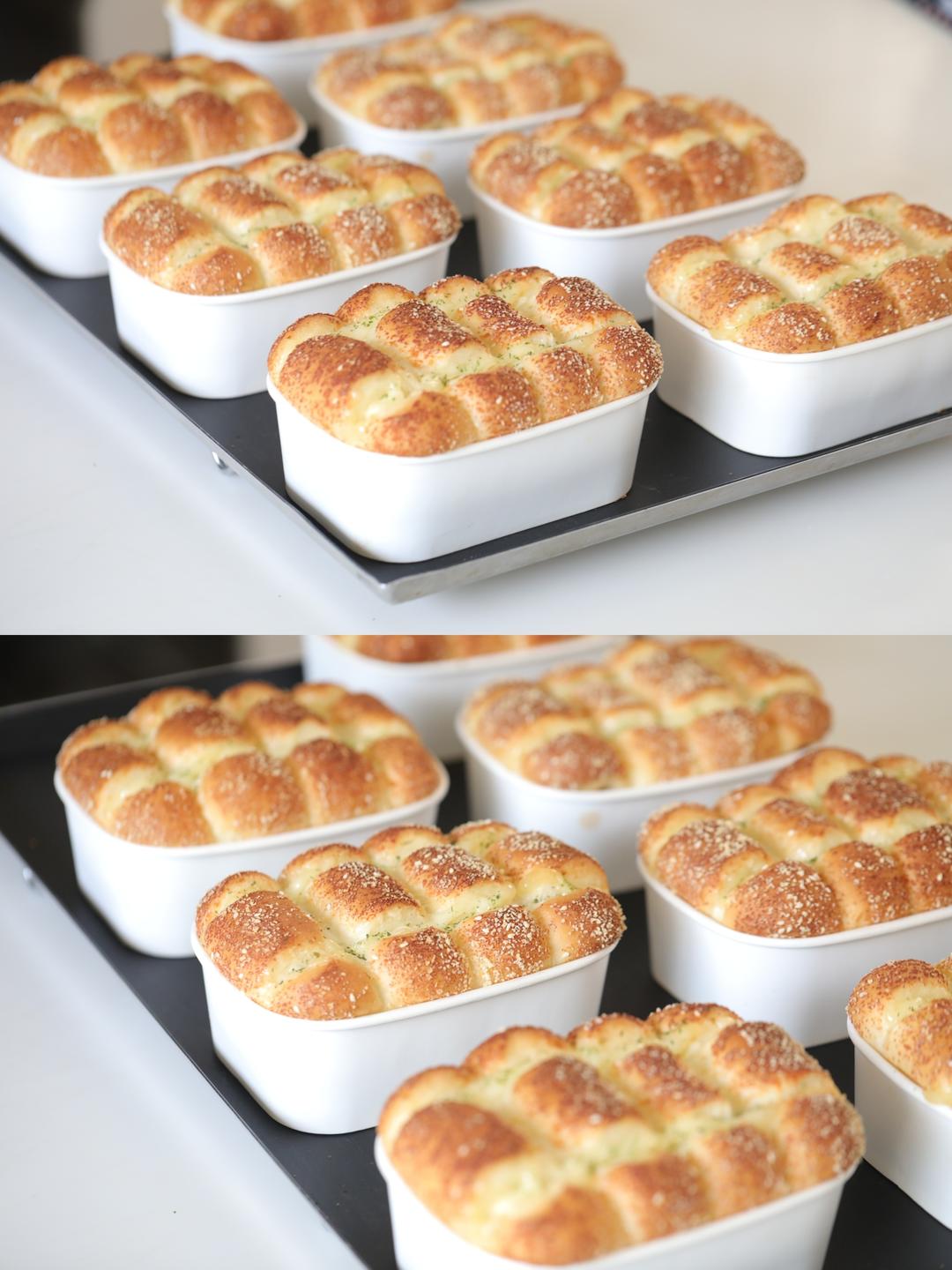
What Is a Bacon and Pork Floss Bento Toast?
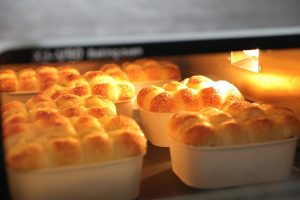
A bacon and pork floss bento toast is a pull-apart bread from Chinese bakery chains, where enriched bread rolls are wrapped around smoky bacon and 肉松 (rou song, savory pork floss), then baked together in tall paper boxes that resemble lunch boxes, which is where the “bento” name comes from. The top is usually finished with cheese powder and mayonnaise, which melts into golden streaks during baking.
The dough is the bakery’s secret weapon: a straight dough boosted with tangzhong, the cooked flour-water paste that lets bread hold more moisture and stay soft for days. The filling walks the line between sweet and savory, with the pork floss doing most of the flavor work. At home, the recipe makes a generous seven boxes of four rolls, so it is perfect for freezing or for feeding a crowd.
If you already love pork floss in bread, my pork jerky and pork floss bread is a cousin of this recipe, and a great one to make while you decide whether to tackle the full bento-box batch.
1Pork Jerky and Pork Floss Bread (Zhuroupu Tusi)A soft, fluffy Asian-style milk bread loaf filled with savory pork jerky, pork floss, and mayonnaise. A popular sweet and savory bakery treat.Check out this recipe
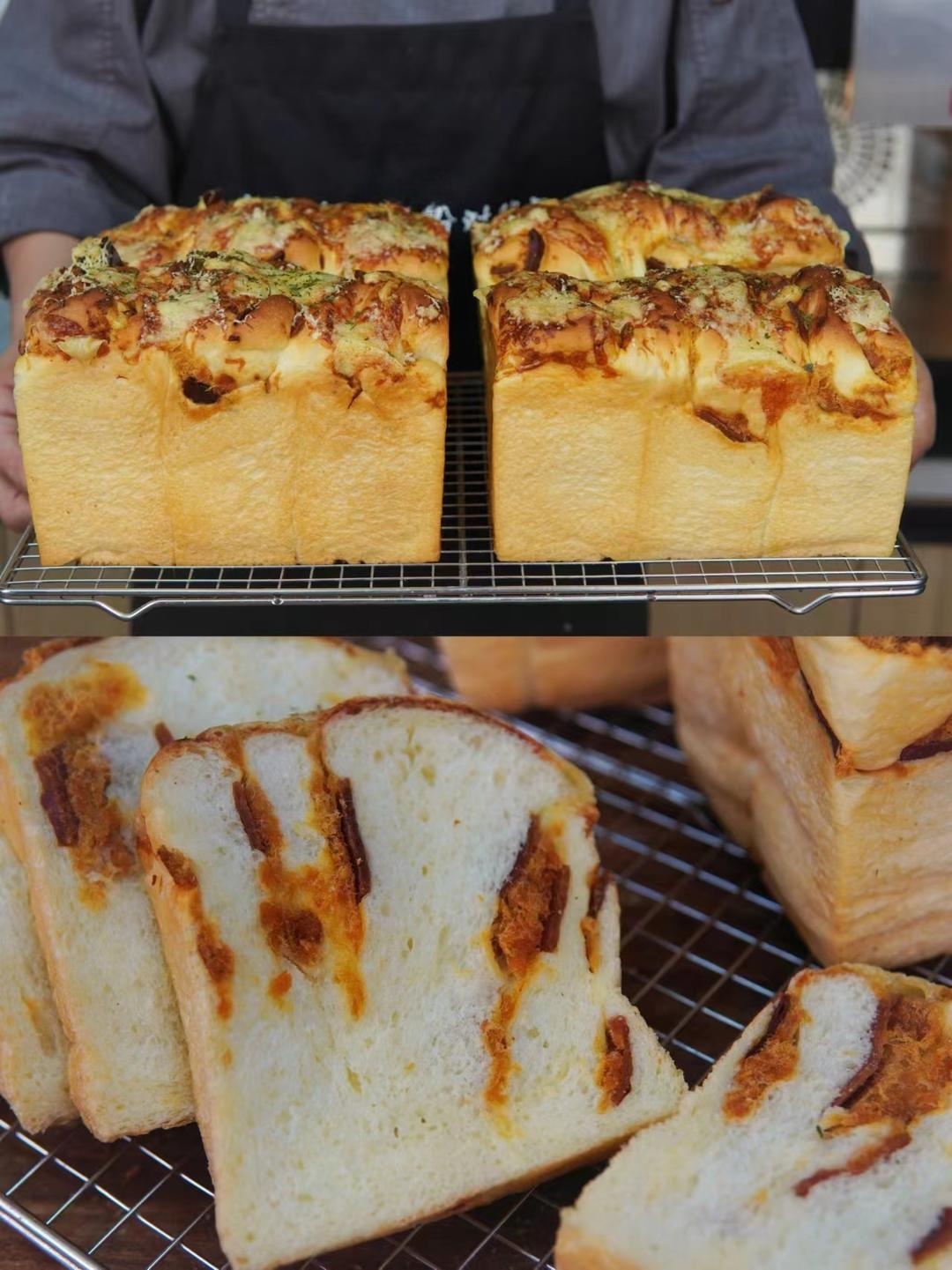
Why This Recipe Works
- Tangzhong locks in moisture. The scalded flour-water paste lets the dough absorb extra liquid, which is why the rolls stay soft for days instead of going stale overnight.
- Delayed-butter mixing builds a strong dough. Kneading the flour, liquid, and yeast first lets the gluten develop before the fat goes in, giving a silky, elastic dough that rises high.
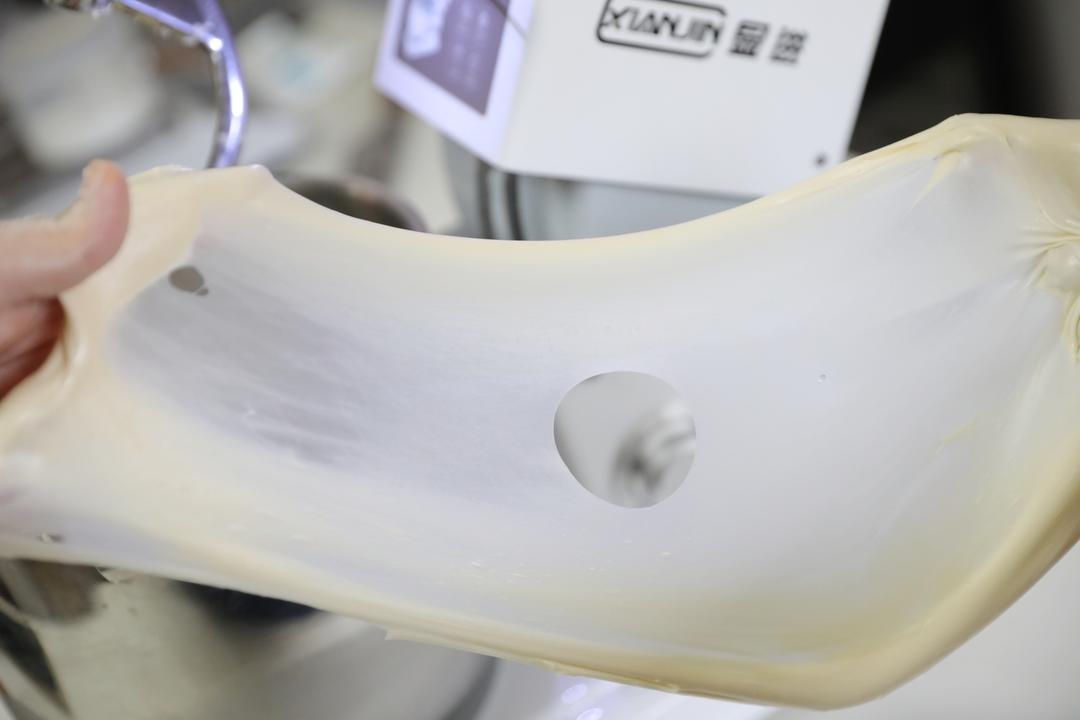
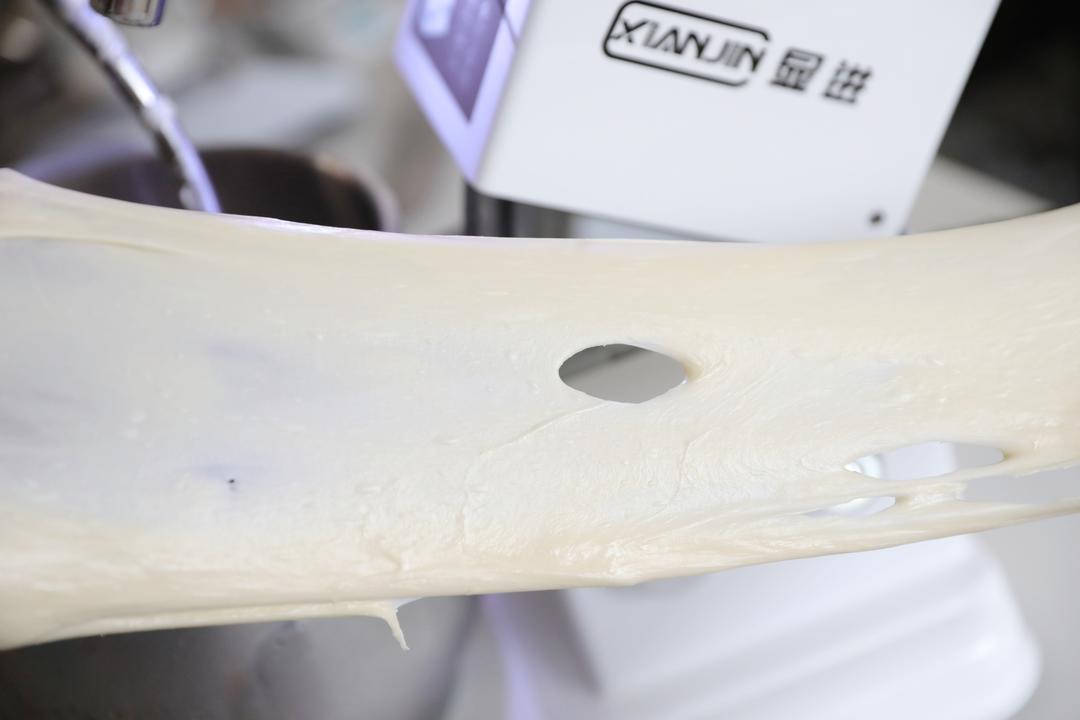
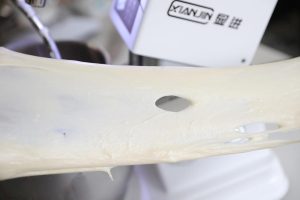
- A full gluten window is the goal. The dough is mixed until it pulls into a thin, translucent, extensible membrane, which guarantees the soft, stringy crumb of bakery bread.
- Filling ratio is generous but balanced. Half a bacon slice and a small spoon of spicy floss per roll means every bite has filling without tearing the dough.
- Baking four to a box creates pull-apart magic. The rolls proof into each other and tear apart in soft, craggy pieces, like the bakery version.
Equipment Needed
- Stand mixer with a dough hook
- Kitchen scale
- Proofing box or a warm, humid spot (oven with a pan of hot water works)
- Rolling pin
- Spray bottle with water
- Paper bento-box bread molds, or a deep baking pan lined with parchment
- Scissors or a sharp knife for scoring
- Instant-read thermometer
Ingredients
For the Dough
- 5 cups (700 g) bread flour
- 6 tbsp (84 g) fine sugar
- 1 3/4 tsp (10.5 g) fine salt
- 21 g fresh yeast (7 g instant yeast)
- 3 1/2 tbsp (28 g) milk powder
- 105 g whole egg, lightly beaten (about 2 large eggs)
- 1 cup (240 ml) milk
- 1 cup minus 2 tbsp (230 ml) water
- 3 tbsp (42 g) unsalted butter, softened
- 140 g tangzhong (about 3/4 cup; see notes)
For the Filling and Topping
- 14 slices bacon (about 10.5 oz / 300 g)
- 250 g (about 2 1/2 cups) spicy pork floss
- Cheese powder, for coating
- Mayonnaise, for piping on top
Ingredient Notes
Tangzhong (烫种). This is a paste of flour cooked with water until it thickens, added to the dough for softness. The original recipe links to its own tutorial; any standard tangzhong works, typically 1 part flour to 5 parts water by weight, cooked to a thick paste and cooled completely before use. If you prefer a poolish-style soft bread, my whole-wheat toast with poolish shows the alternative method.
Fresh yeast vs. instant. The recipe calls for fresh yeast (鲜酵母). If you use instant yeast, use about one third of the weight, so about 7 g, and mix it straight into the dry ingredients.
Spicy pork floss (辣肉松). This is the shredded, dried, seasoned pork sold at Chinese grocers; the spicy version has chili oil and pepper through it. Regular pork floss works if you prefer mild, or use the kind you like most, as in my pork floss buns and my silky steamed egg with milk and pork floss.
Cheese powder and mayonnaise. The surface is coated in cheese powder and topped with mayonnaise piped in lines before baking. If you cannot find cheese powder, finely grated Parmesan is a close stand-in.
Prep & Mise en Place
Make the tangzhong first, at least an hour ahead (or the night before), so it cools completely before it goes into the dough. Weigh all the dough ingredients, keeping the butter aside. Soften the butter so it blends into the dough in seconds rather than tearing it, and line up your box molds or deep baking pan.
Cut the 14 bacon slices in half crosswise and set the pork floss in a wide bowl. Have the cheese powder in a shallow dish and fit a piping bag (or a zip-top bag with a corner cut) with mayonnaise. Because the dough ferments for over an hour and then proofs twice more, this recipe is happiest on a day when you are around the kitchen anyway.
Cooking Process
Step 1 — Prepare the Tangzhong Ahead of Time
Make and cool the tangzhong before starting the dough. The original recipe points to a separate tutorial for the paste; any standard tangzhong ratio (about 1 part flour to 5 parts water, cooked to a thick paste) works here. Cool it completely, since a warm tangzhong will overheat the dough.
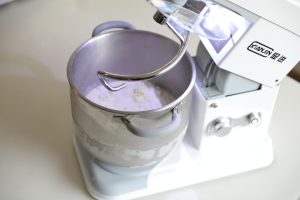
Step 2 — Set Up the Stand Mixer
This recipe was tested on a commercial stand mixer, but any stand mixer with a dough hook handles the batch. If your mixer is small, divide the dough in half and mix in two batches.
Step 3 — Mix Everything Except the Butter
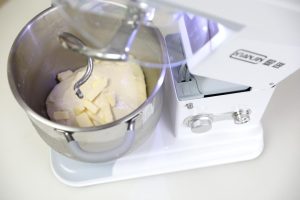
Put all the dough ingredients except the softened butter into the mixer bowl: bread flour, sugar, salt, yeast, milk powder, egg, milk, water, and the cooled tangzhong.
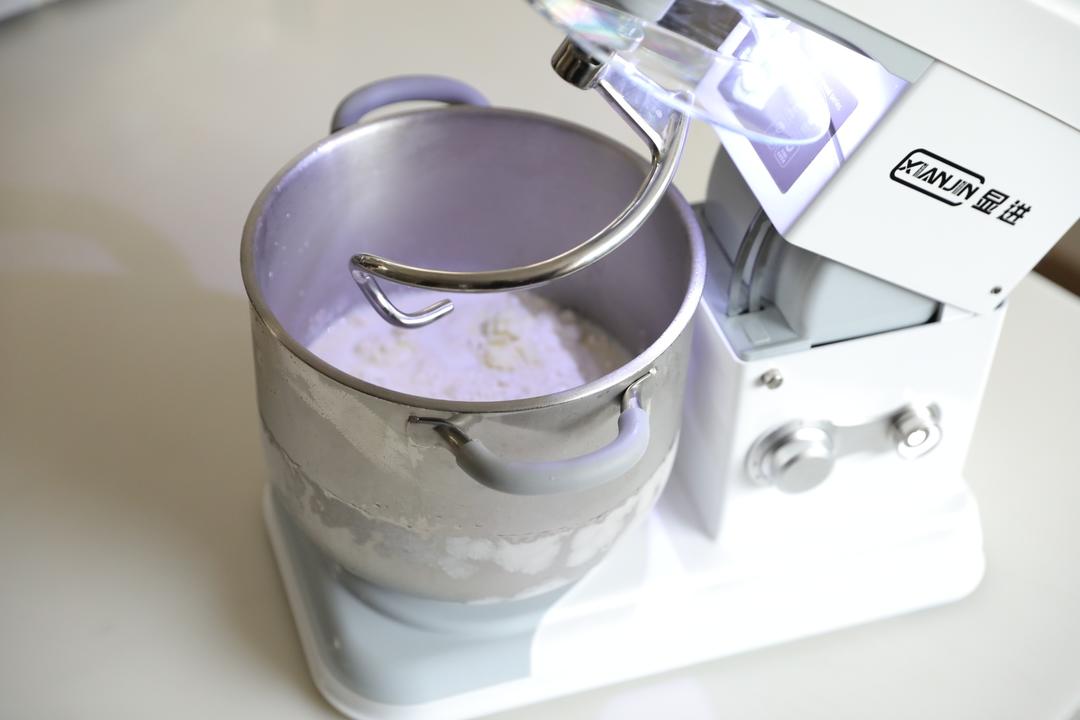
Step 4 — Mix on Low, Then Increase the Speed
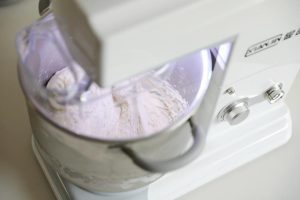
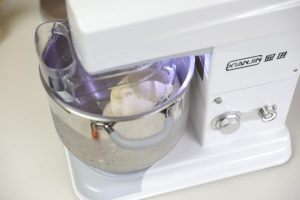
Mix on speed 1 or 2 for about 1 minute until no dry flour remains, then increase to speed 6 and continue kneading.
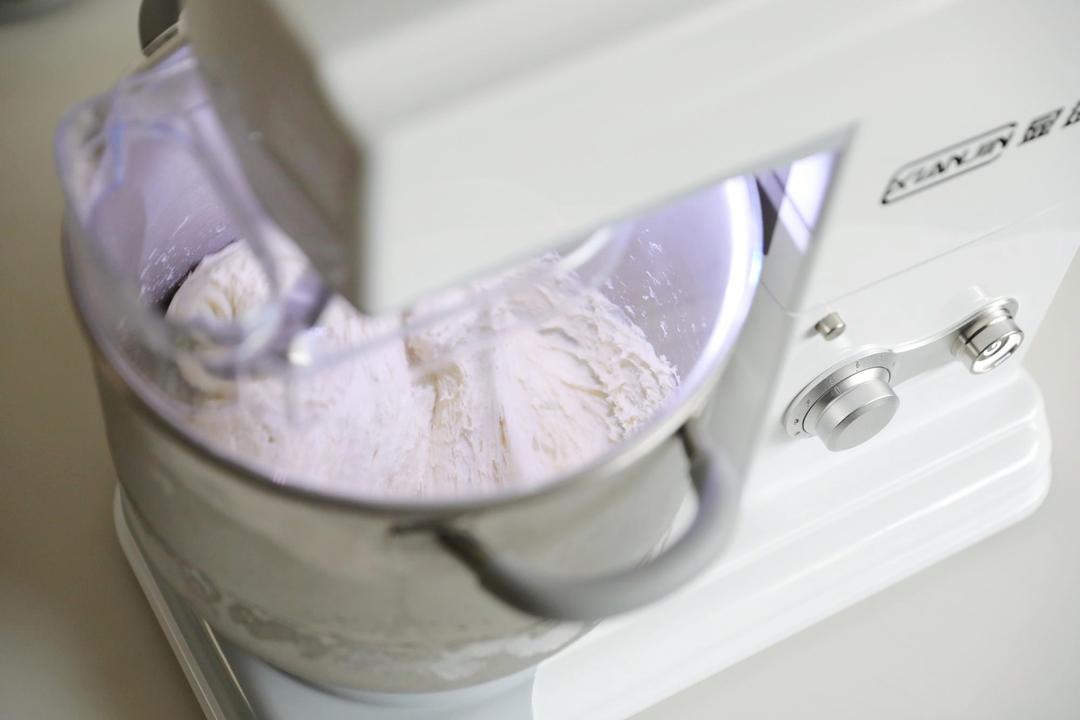
Step 5 — Control the Dough Temperature
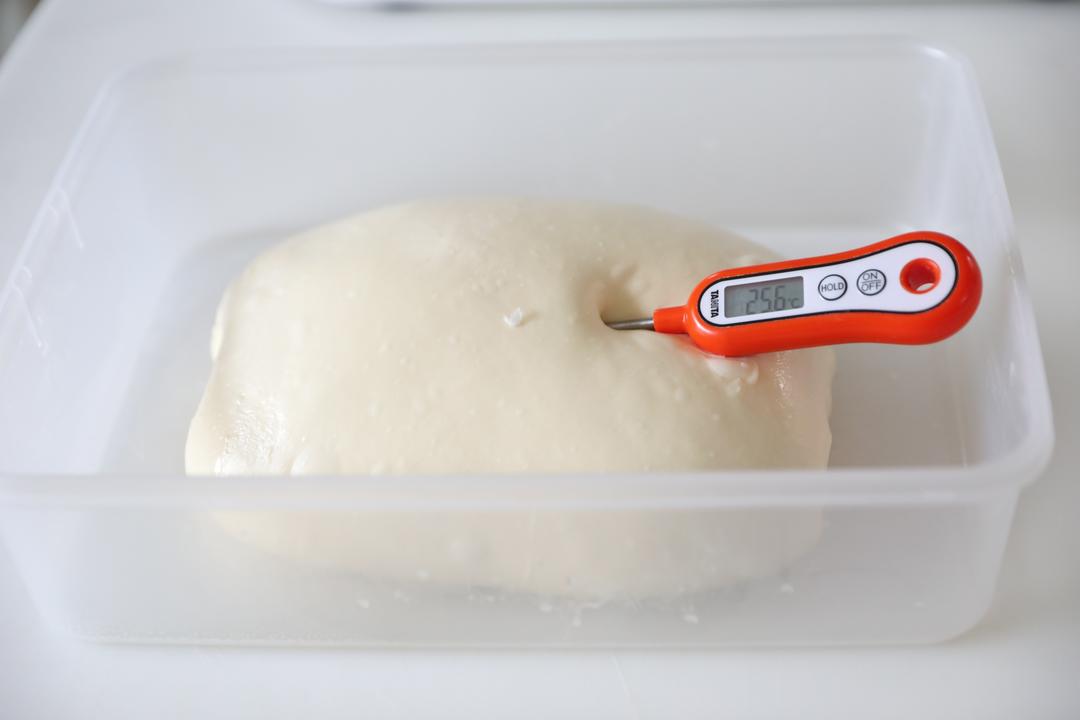
The dough will be sticky at first, which is normal for a high-hydration tangzhong dough. Keep an eye on the dough temperature as it kneads; if it climbs above 82°F (28°C), pause and let it rest or chill briefly before continuing.
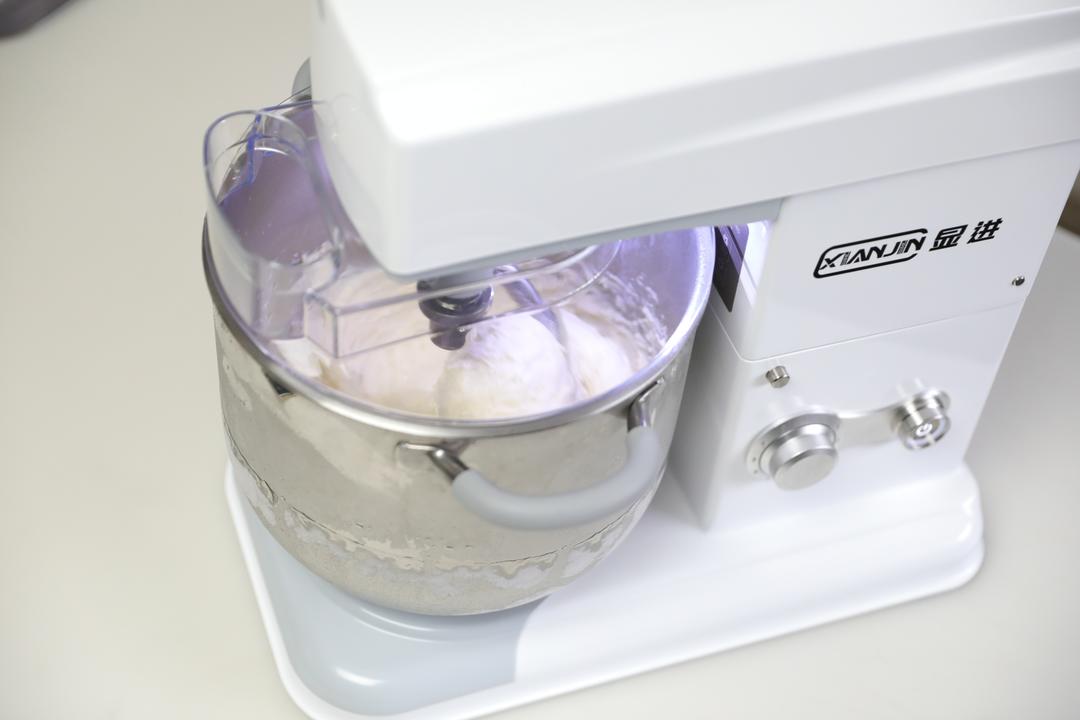
Step 6 — Watch the Gluten Develop
As kneading continues, the gluten forms and the dough smooths out. Stop and pull a piece; it should stretch into a large, fairly thick membrane at this stage, not yet the full windowpane.
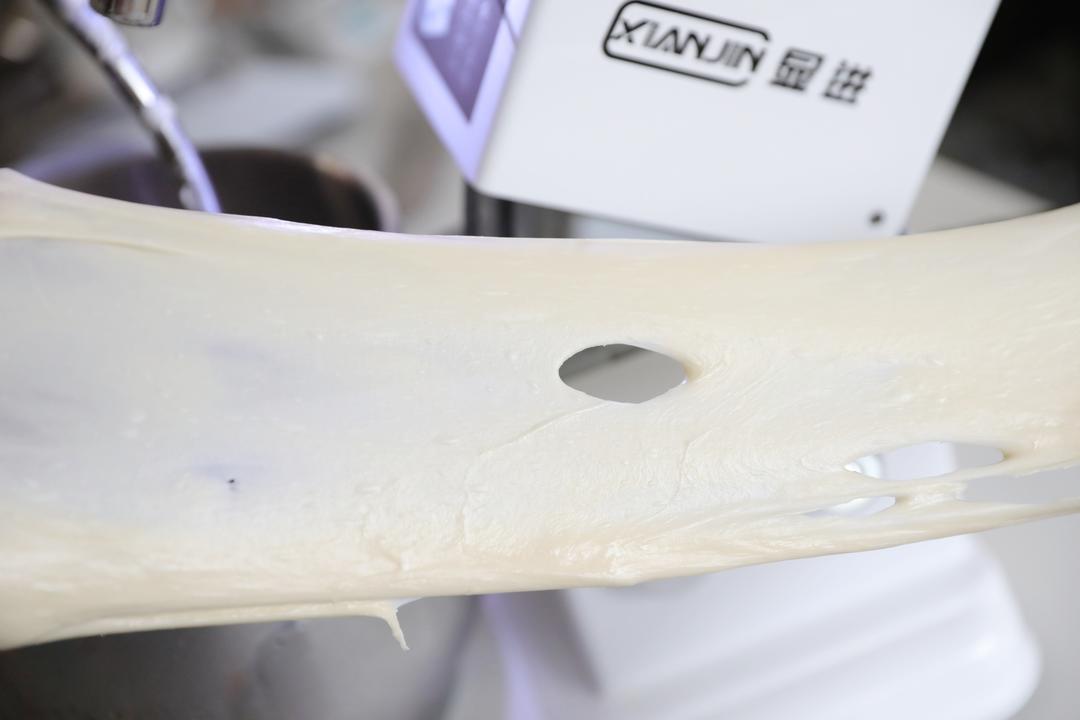
Step 7 — Add the Softened Butter
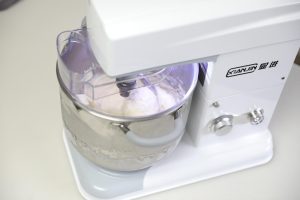
Add the softened 42 g butter to the dough.
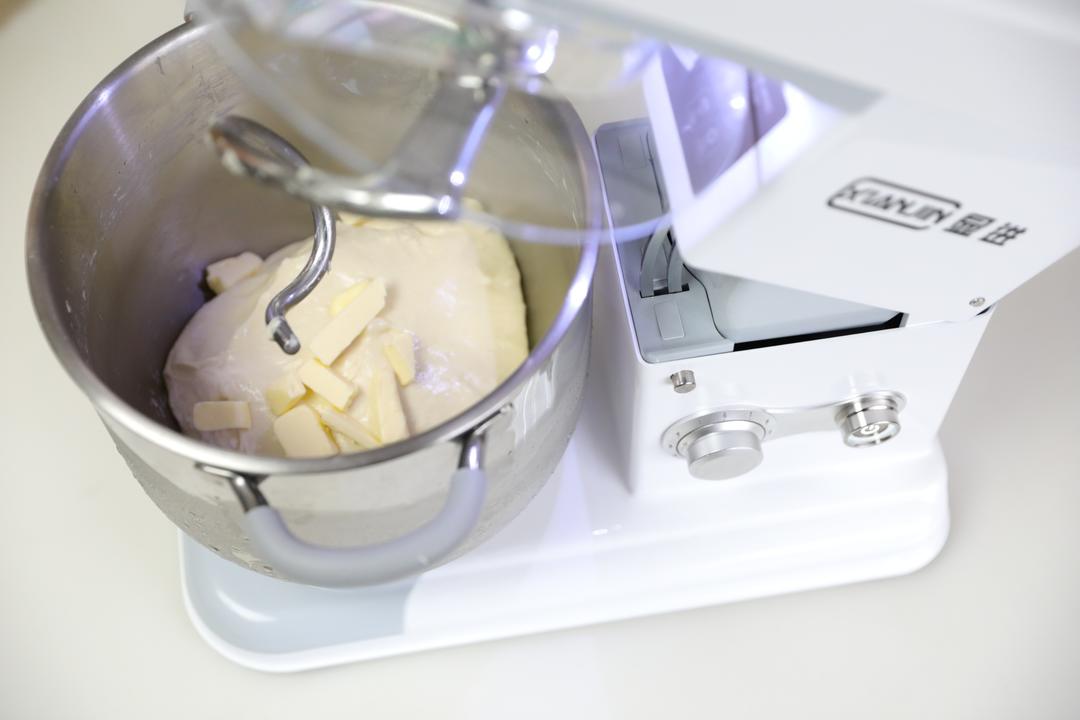
Step 8 — Knead the Butter In, Then Increase Speed
Mix on low speed until the butter disappears into the dough and no greasy streaks remain, then increase to speed 5 or 6 and knead until the dough is smooth and elastic.
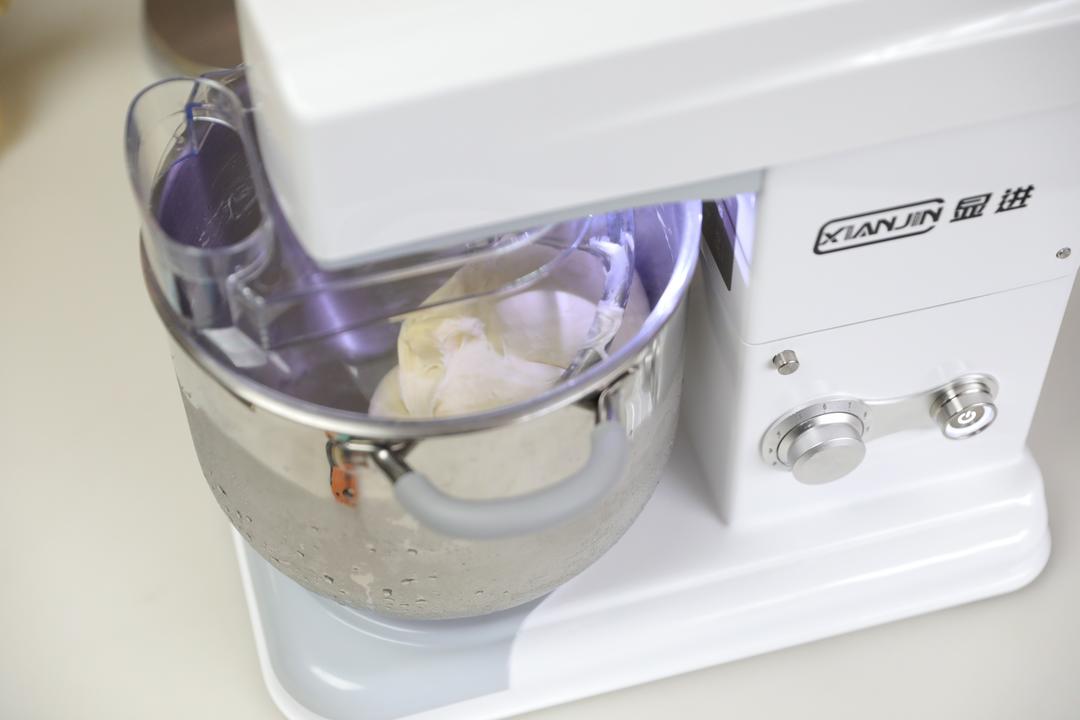
Step 9 — Mix to Full Gluten Development
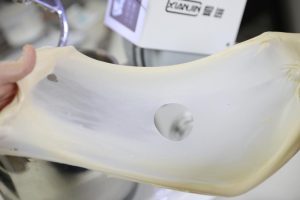
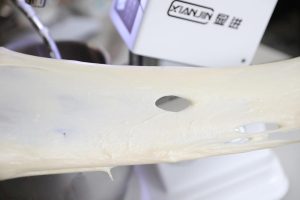
Knead until the dough passes the full windowpane test: a piece stretches into a thin, nearly transparent membrane with good extensibility before tearing. This is the stage that gives bakery bread its soft, stringy crumb.
Step 10 — First Fermentation
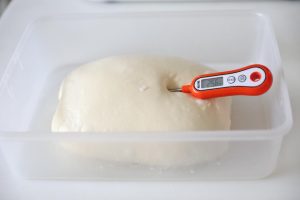
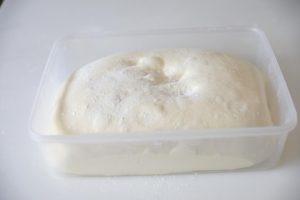
Shape the dough into a ball and place it in a lightly oiled container. Ferment at 82°F (28°C) with about 75 percent humidity for roughly 60 minutes, until the dough is puffy and almost doubled.
Step 11 — Ferment Until Two and a Half Times the Size
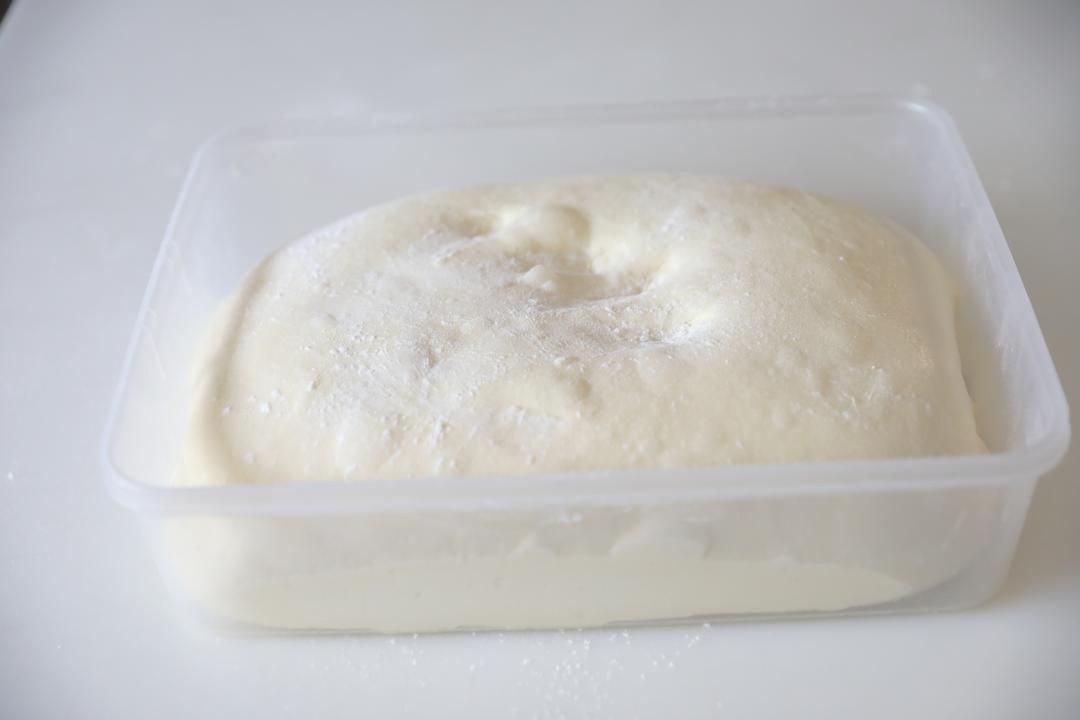
Continue fermenting until the dough reaches about 2.5 times its original volume. This takes roughly 60 to 75 minutes total; a warm, draft-free spot makes the rise even.
Step 12 — Divide the Dough Into 55 g Pieces
Turn the dough out onto a lightly floured surface and divide it into pieces of about 55 g each. This batch makes roughly 28 to 29 pieces, depending on exact dough weight.
Step 13 — Round Each Piece and Rest 20 Minutes
Fold each piece into a smooth round and place it on the work surface. Rest the rounds in a proofing box at 82°F (28°C) with 75 to 80 percent humidity for 20 minutes so the gluten relaxes.
Step 14 — Roll Out One Rested Dough Piece
Take one rested round and roll it out into an oval or rectangle large enough to hold the filling, about 1/4 in (6 mm) thick. Keep the remaining pieces covered while you work.
Step 15 — Fill With Bacon and Spicy Pork Floss
Flip the rolled dough over. Lay half a slice of bacon across the center and spoon 8 to 10 g of spicy pork floss over the bacon.
Step 16 — Roll Up and Pinch the Seam
Roll the dough up tightly from the top edge downward, and pinch the seam and the two ends firmly so the filling stays sealed during proofing and baking.
Step 17 — Coat With Cheese Powder and Arrange Four to a Mold
Spray the surface of each roll lightly with water, then roll it in the cheese powder to coat. Arrange the rolls four to a paper bento mold (or in a deep parchment-lined pan in groups of four).
Step 18 — Final Proof, Score, and Pipe Mayonnaise
Proof the filled rolls at about 90°F (32°C) with 80 percent humidity until they reach about 90 percent of the mold’s height, so they will finish filling it in the oven. Snip or score the top of each roll, then pipe a line of mayonnaise over the score.
Step 19 — Bake in a Preheated Oven
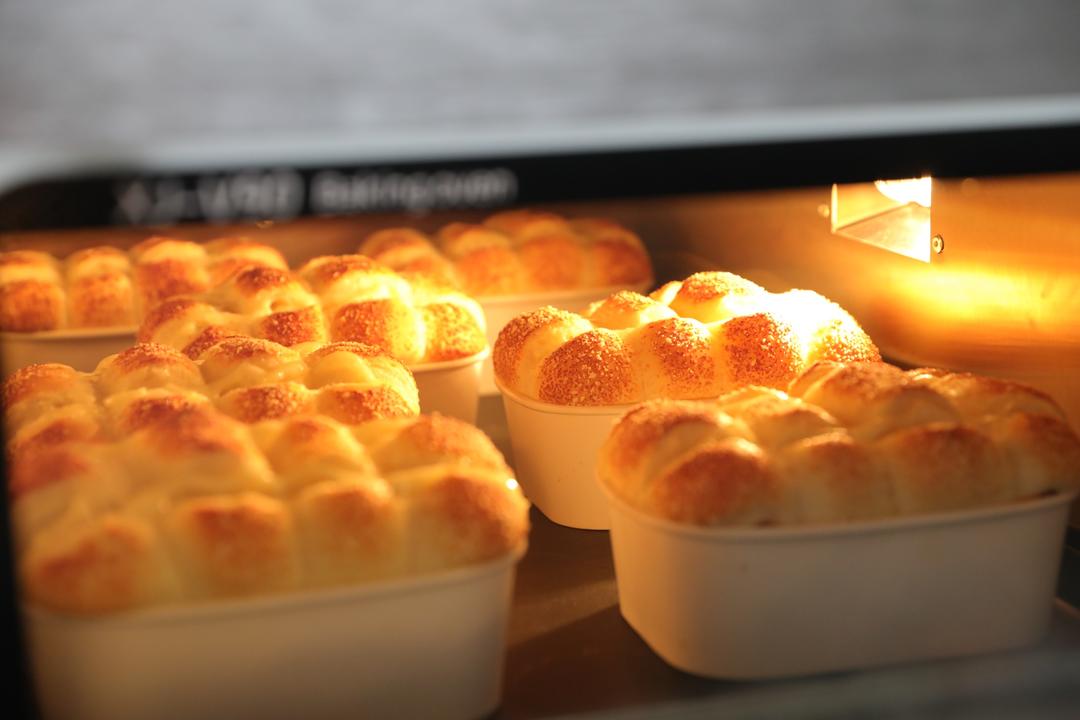
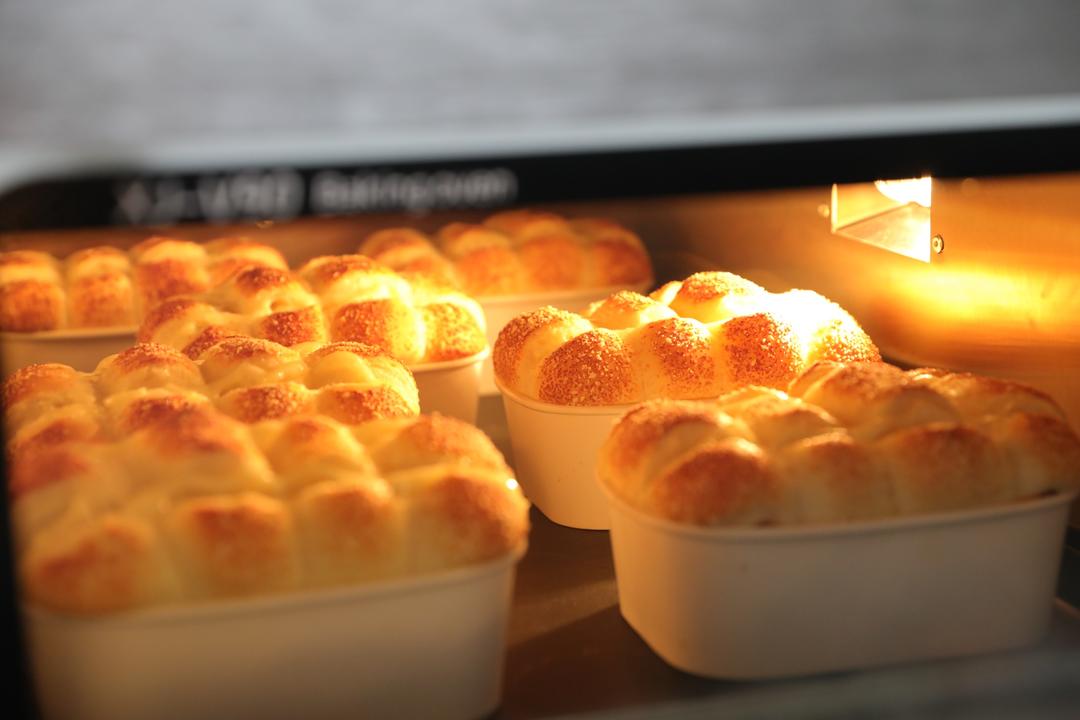
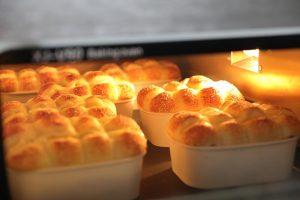
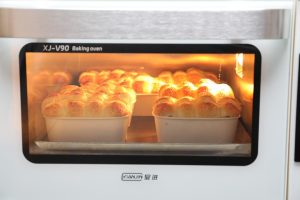
Bake in an oven preheated to about 355°F (180°C) with the bottom element hotter if your oven allows, or simply at your usual toast-baking temperature; the original deck-oven settings translate to roughly 355°F (180°C) top and 465°F (240°C) bottom for about 19 to 20 minutes. Bake until the tops are deep golden and the rolls reach 195°F (90°C) inside.
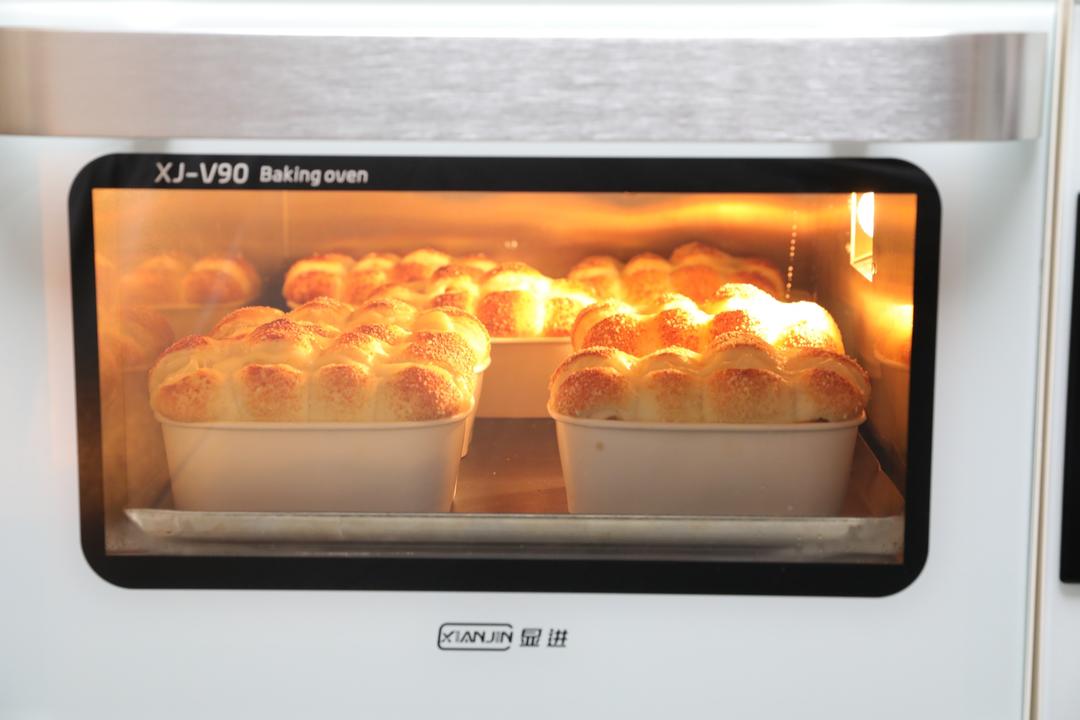
The hot bottom heat is what gives these rolls their characteristically even bake and a slightly crisp base inside the mold, while the gentler top heat lets the mayonnaise and cheese powder caramelize without burning. A home oven can approximate this with a baking stone or steel on the lower rack, or simply by preheating thoroughly.
Step 20 — Adjust for Your Own Oven
Every oven runs differently, so feel free to adjust the temperature up or down by about 10°C (roughly 20°F) if the rolls brown too fast or too slowly. For a regular home oven, the note from the original baker is simple: use the same settings you would for baking toast bread.
Step 21 — Drop the Pan and Cool
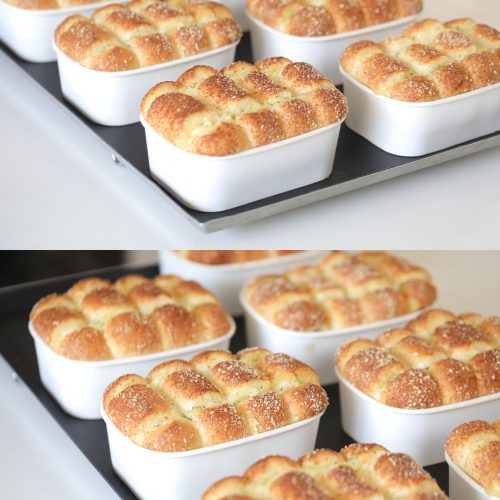
As soon as the rolls come out of the oven, drop the pan firmly on the counter once to release steam, then let the boxes cool on a wire rack. Serve warm, pulled apart by hand, or cool completely before freezing.
Common Mistakes When Making Bacon Pork Floss Bento Toast
1. Dense, heavy rolls that never soften. Cause: dough that never reached full gluten development, or a warm tangzhong that overheated the dough and slowed the yeast. Fix: mix to a real windowpane and keep the dough temperature under 82°F (28°C).
2. The filling leaks out during baking. Cause: the seam was not pinched, or the filling was piled too high. Fix: pinch the seam and ends firmly and keep the floss to 8 to 10 g per roll.
3. The rolls blow out or tear on top. Cause: skipping the score before baking, or over-proofing so the dough has no oven spring left. Fix: score each roll before the final proof ends and bake when the rolls reach about 90 percent of the mold.
4. Pale, doughy centers. Cause: under-baking or an oven that runs cool. Fix: bake until the center reads 195°F (90°C) and the tops are deep golden; adjust the temperature if needed.
5. Bacon stays raw inside the bread. Cause: thick bacon and a short bake. Fix: use thin-sliced bacon or give the slices a quick fry to render some fat before filling the dough.
6. The dough tears when rolled. Cause: the 20-minute rest was skipped. Fix: always rest the divided rounds before rolling, and keep unworked dough covered.
Variations
Mild pork floss. Swap the spicy floss for regular pork floss for a milder, sweeter roll, or use chicken floss for a lighter filling.
Sausage rolls. Replace the bacon with half a cooked Chinese sausage or hot dog, cut to fit the dough.
Cheese pull. Add a small cube of mozzarella or a half slice of processed cheese with the floss for a melting center. If you love that enriched soft crumb, my milk cream cheese bread and cloud-soft milk bread rolls are both built on similar doughs.
Half batch. Halve every ingredient for about 14 rolls, or freeze the shaped, unbaked rolls and bake them straight from frozen, adding about 5 minutes.
Frequently Asked Questions
Can I make the dough in a bread machine? You can use the dough cycle of a bread machine for the knead and first rise, then shape, proof, and bake as written. If you usually bake with a machine, my bread machine whole wheat buns show the workflow.
What is tangzhong and can I skip it? Tangzhong is a cooked flour-water paste that makes the bread softer and slower to stale. Skipping it gives a firmer roll; add about 80 g (1/3 cup) of water to the dough to compensate, and accept a denser crumb.
Where do I buy spicy pork floss? Asian grocery stores sell pork floss (肉松) in jars or bags, usually with mild and spicy options. It is also available online. If you cannot find spicy, regular pork floss plus a pinch of chili flakes works.
Do I need the paper bento boxes? No. The boxes are for presentation and pull-apart shape, but a deep baking pan lined with parchment holds the rolls just as well; arrange them four across so they proof into each other.
Why did my rolls collapse after baking? Usually under-baking or over-proofing. Bake until the center is 195°F (90°C) and proof only to about 90 percent of the mold, so the rolls still have oven spring left.
How to Serve
Serve the bento toast warm, straight from the box, and let everyone pull their own roll. It makes a spectacular breakfast or snack next to milk tea or coffee, and it travels well, which is the whole point of the bento box. If you are building a soft-bread table, put it out with a loaf of super soft milk bread and let people compare the crumbs.
Storage & Reheat
Keep the baked rolls in their boxes or an airtight container at room temperature for up to 2 days. For longer storage, wrap and freeze them for up to 2 months; thaw at room temperature, then refresh in a 300°F (150°C) oven for 6 to 8 minutes to bring back the soft crust. Reheat leftovers until piping hot, especially because the filling contains bacon, and never leave filled bread at room temperature longer than 2 hours.
Allergen Notice
Contains gluten (bread flour), milk (milk, milk powder, butter, cheese powder), egg, and soy (mayonnaise and some pork floss contain soy). Pork floss is a pork product; check labels for wheat or soy additives if cooking for allergy-sensitive guests.
Nutrition Disclaimer
Nutrition information is calculated using an ingredient database and should be considered an estimate. In cases where multiple ingredient alternatives are given, the first listed is calculated for nutrition. Garnishes and optional ingredients are not included.
About the Author & Recipe Development
I am Lin, and I spent a decade in professional kitchens before I turned to writing recipes, so a dough this size does not scare me. What surprised me was how well the bakery formula survived a home kitchen: I halved the batch on the first test, baked the full batch on the second, and learned that the tangzhong and the full gluten window matter more than any fancy oven. The note in this article about home-oven settings comes straight from the original baker, and it is the most useful sentence in the whole recipe.
Authoritative References
King Arthur Baking on gluten and dough development for understanding the windowpane stage, and USDA Safe Temperature Chart for reheating bacon-filled breads safely.
Bacon Pork Floss Bento Toast (La Song Pei Gen Tu Si)

Equipment
- Stand Mixer with Dough Hook
- Proofing box
- Paper bento bread molds
- Rolling Pin
- Pastry brush and spray bottle
Ingredients
For the Dough
- 5 cups bread flour
- 6 tbsp fine sugar
- 1.75 tsp fine salt
- 21 g fresh yeast (or 7 g instant yeast)
- 3.5 tbsp milk powder
- 105 g whole egg, lightly beaten about 2 large eggs
- 240 ml milk
- 230 ml water
- 3 tbsp unsalted butter, softened
- 140 g tangzhong, cooled scalded flour-water paste
For the Filling and Topping
- 14 slices bacon, halved crosswise
- 250 g spicy pork floss about 2 1/2 cups
- 1 dish cheese powder, for coating
- 1 bag mayonnaise, for piping
Instructions
- Prepare the tangzhong ahead of time and cool it completely.
- Set up the stand mixer with the dough hook.
- Add all dough ingredients except the butter to the mixer bowl.

- Mix on speed 1 to 2 for 1 minute until no dry flour remains, then speed 6 to knead.
- The dough will be sticky at first; keep the dough temperature under 82°F (28°C) as it kneads.
- Knead until the gluten forms and the dough pulls into a thick membrane.
- Add the softened butter to the dough.
- Knead on low until the butter is incorporated, then speed 5 to 6 until smooth.
- Mix to full gluten development: the dough stretches into a thin, transparent, extensible membrane.
- Ferment at 82°F (28°C) with 75% humidity for about 60 minutes.
- Ferment until the dough reaches about 2.5 times its volume.
- Divide the dough into pieces of about 55 g each (about 28 to 29 pieces).
- Round each piece and rest at 82°F (28°C) with 75 to 80% humidity for 20 minutes.
- Roll out one rested piece into a thin oval.
- Flip the dough, add half a slice of bacon and 8 to 10 g of spicy pork floss.
- Roll up from the top and pinch the seam and ends closed.
- Spray with water, coat with cheese powder, and arrange four rolls per paper mold.
- Proof at 90°F (32°C) with 80% humidity to 90% of the mold, then score and pipe mayonnaise on top.
- Bake in a preheated oven at about 355°F (180°C), hotter on the bottom if possible, for 19 to 20 minutes until golden and 195°F (90°C) inside.
- Adjust the temperature by about 20°F (10°C) as needed; a home oven should use normal toast-baking settings.
- Drop the pan once to release steam, then cool the boxes on a rack before serving.












Leave a Reply