As the short spring fava bean season comes to a close, I always find myself looking for ways to use up the older, starchier beans. Therefore, I turn to a classic childhood favorite: Spiced Fava Beans, or Hui Xiang Dou.

Growing up in our family restaurant’s kitchen in Sichuan, I watched my mother meticulously sort through bushels of freshly harvested fava beans. Consequently, the young, tender ones were reserved for delicate stir-fries, while the mature, slightly tougher beans were destined for the simmering pot.
This recipe transforms those sturdier beans into a deeply savory, addictive snack. Moreover, it requires only five simple ingredients and about 30 minutes of inactive simmering. You will love how the warm spices penetrate the beans, making them an ideal companion for a cold beer or a cup of hot tea.
What Is Hui Xiang Dou?
Hui Xiang Dou (茴香豆) translates to “fennel beans” or “anise-spiced beans.” It is a famous traditional Chinese snack originating from Shaoxing in Zhejiang province. Historically, it was popularized by Lu Xun’s famous short story, “Kong Yiji,” where the protagonist would order a plate of these beans with his rice wine.
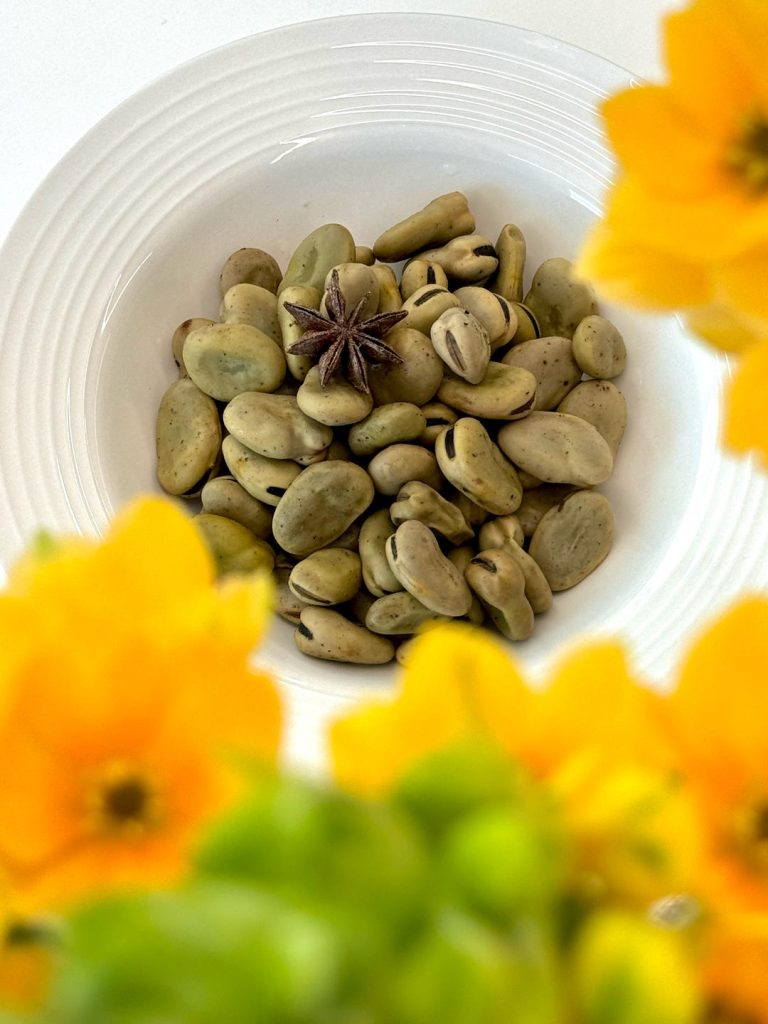
Unlike Western preparations that often mash or puree fava beans, this traditional method slowly braises them in a spiced brine. As a result, the beans absorb the rich, earthy flavors of star anise and cinnamon while retaining a satisfying, slightly chewy bite.
Have Tender Fava Beans? Try This Instead!
If you have very young, tender fava beans on hand, boiling them for 30 minutes will turn them to mush. Instead, you should try our Stir-Fried Fava Beans with Eggs. That recipe perfectly highlights the delicate sweetness of early-season beans.
Why This Recipe Works
- Selective Sorting: We specifically use mature, older fava beans. Their higher starch content allows them to hold their shape during a long simmer.
- Flavor Penetration: Removing the small black crescent (the sprout mark) from each bean allows the spiced liquid to seep directly into the center.
- The Reduction Technique: By allowing the simmering liquid to reduce completely at the end, the concentrated spices cling to the bean skins, maximizing the flavor.
- Gentle Heat: Maintaining a steady medium-low heat (around 200°F / 93°C) prevents the bean skins from bursting prematurely.
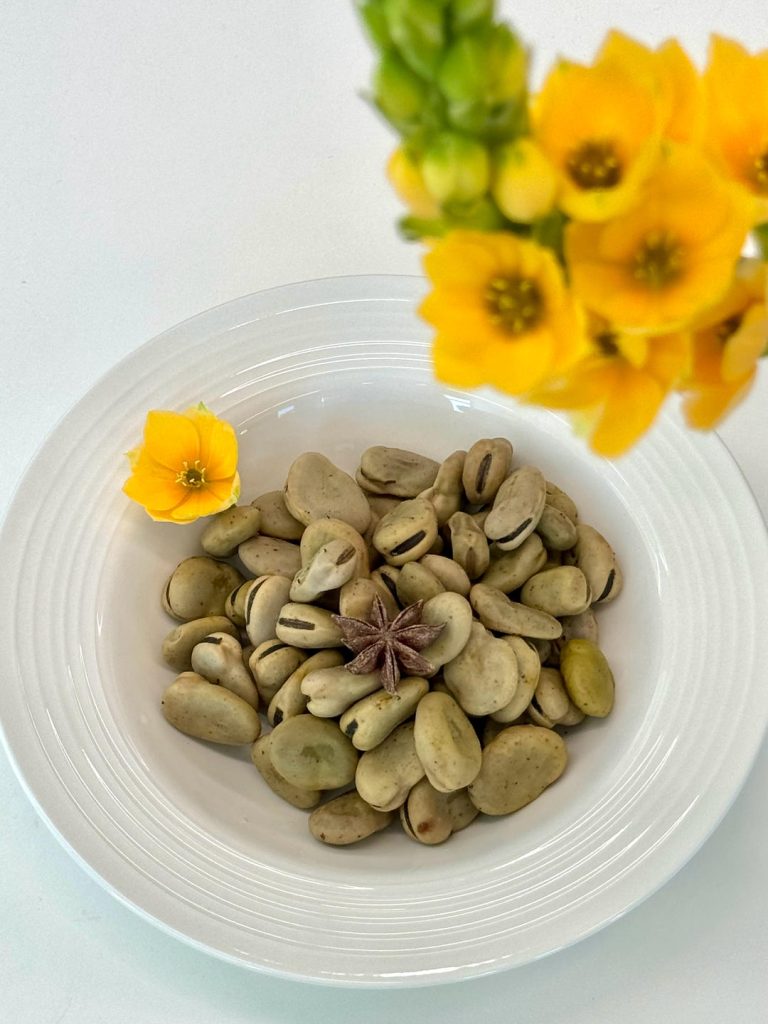
Key Ingredients & Substitutions
- Fresh Fava Beans (Broad Beans): You need 250g of shelled fava beans. Look for slightly older, larger beans. If fresh aren’t available, frozen shelled fava beans work perfectly (thaw them first).
- Star Anise: 3 whole Star Anise pods provide the signature sweet, licorice-like aroma.
- Chinese Cinnamon: 2 pieces of Chinese Cinnamon (Cassia bark) add a warming, woody depth. You can substitute with 1 standard cinnamon stick.
- Salt: 2 teaspoons of Salt. We use slightly more salt than usual because the thick bean skins require a stronger brine to properly season the interior.
- Water: Just enough to cover the beans in your saucepan.
- (Optional) Fennel Seeds: You can add a pinch of Fennel Seed for an extra layer of aromatic complexity.
Deeper Dive: The Anatomy of a Fava Bean
Fava beans have a thick outer skin that encases the bright green cotyledon inside. For many recipes, cooks meticulously peel off this outer skin. However, for Hui Xiang Dou, keeping the skin intact is absolutely crucial. The skin protects the bean during the long simmer, preventing it from dissolving into a mushy puree.
Ingredients
- 8.8 oz (250g) shelled fresh fava beans (choose mature, older beans)
- 3 whole star anise pods
- 2 small pieces Chinese cinnamon (cassia bark)
- 2 tsp kosher salt (adjust to taste)
- Water (enough to cover the beans)
Recipe Notes Before You Start
- Equipment: You will need a standard 2-quart or 3-quart heavy-bottomed saucepan. A heavy bottom ensures even heat distribution, preventing the beans at the bottom from scorching.
- Temperature Control: We will bring the water to a rolling boil (212°F / 100°C), but it is vital to immediately drop the heat to a gentle simmer.
- Food Safety Note: Fava beans must be thoroughly cooked. Consuming raw or undercooked fava beans can trigger favism in individuals with a specific genetic enzyme deficiency (G6PD deficiency).
Mise en Place / Prep
- Peel the Pods: If starting with whole fava bean pods, crack them open and remove the beans. Discard the fuzzy outer pods.
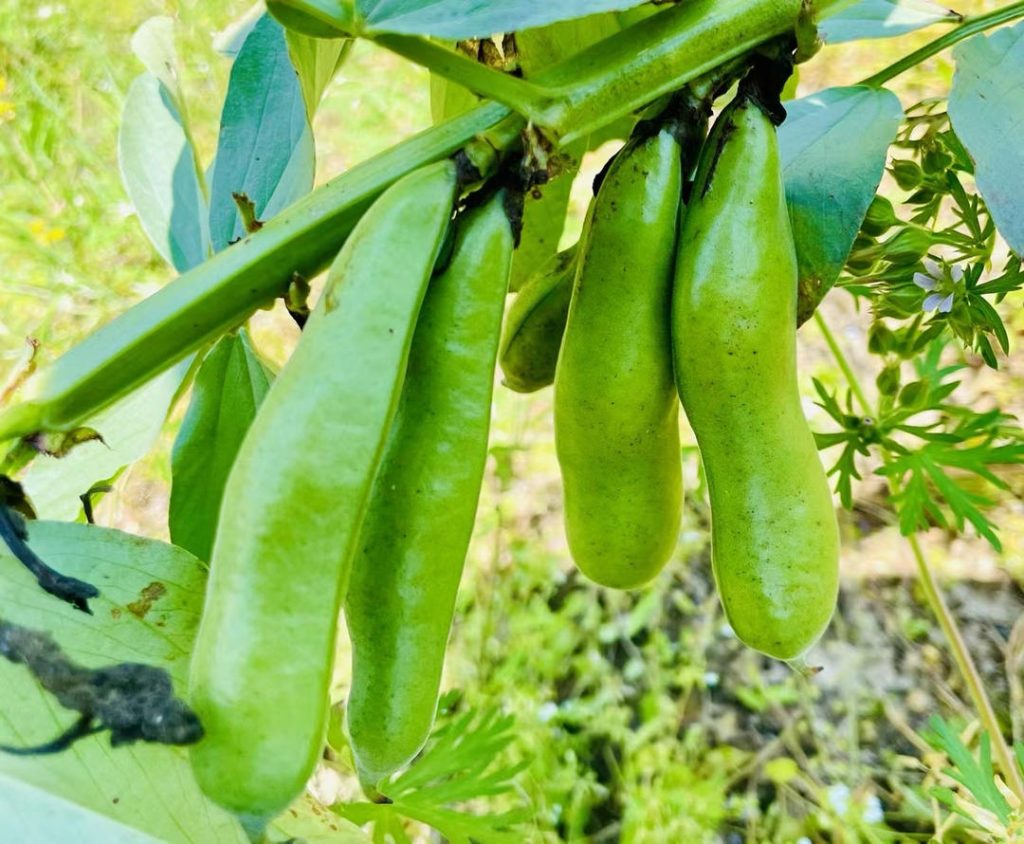
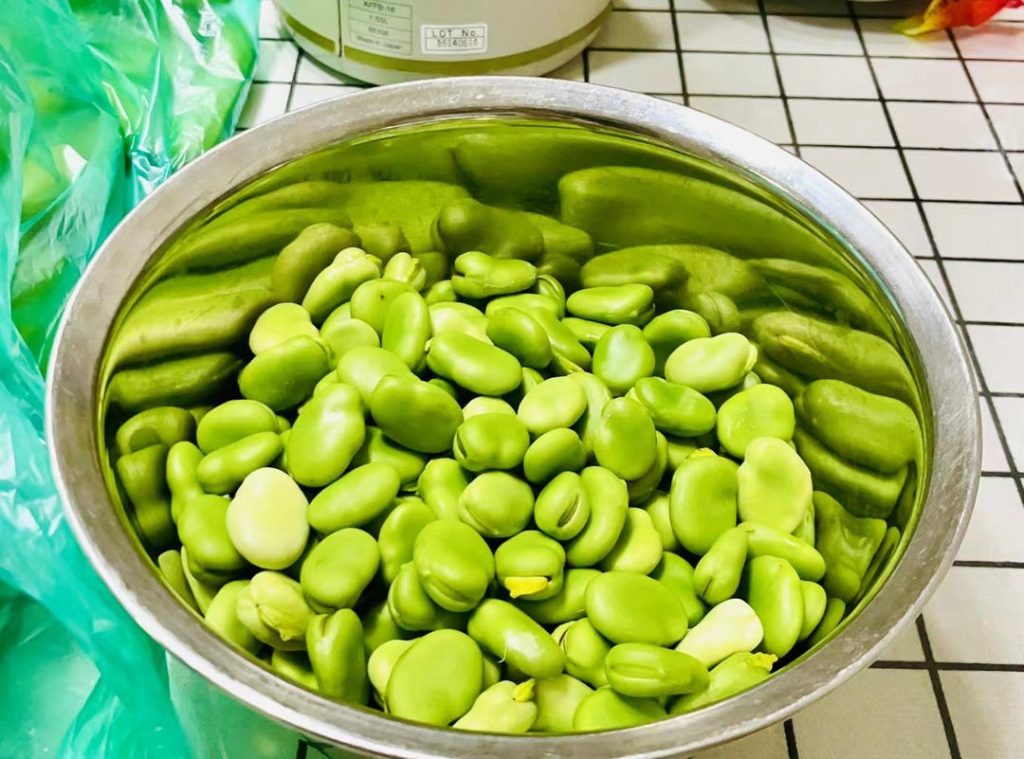
- Sort the Beans: Pick through your batch. Save the soft, bright green tender ones for a quick stir-fry. Keep the larger, paler, firmer beans for this recipe.
- Trim the Beans: Wash the beans thoroughly under cold water. Using your thumbnail or a small paring knife, gently pick off the small black crescent moon shape (the hilum) at the top of each bean.
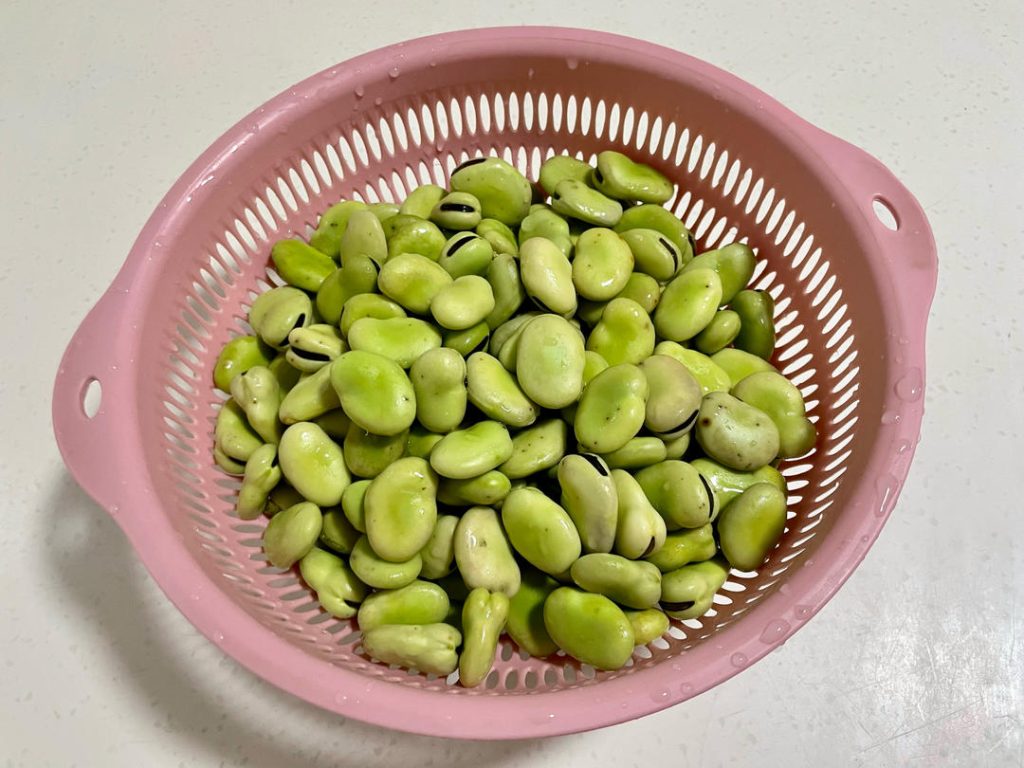
- Gather Spices: Have your star anise, cinnamon, and salt measured and ready by the stove.
How to Make Spiced Fava Beans (Hui Xiang Dou)
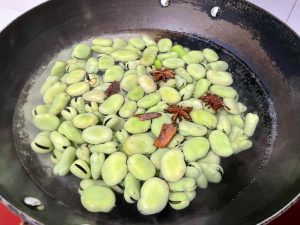
Step 1: Combine Ingredients in the Pot Place the cleaned, trimmed fava beans into your saucepan. Add the star anise and Chinese cinnamon pieces.
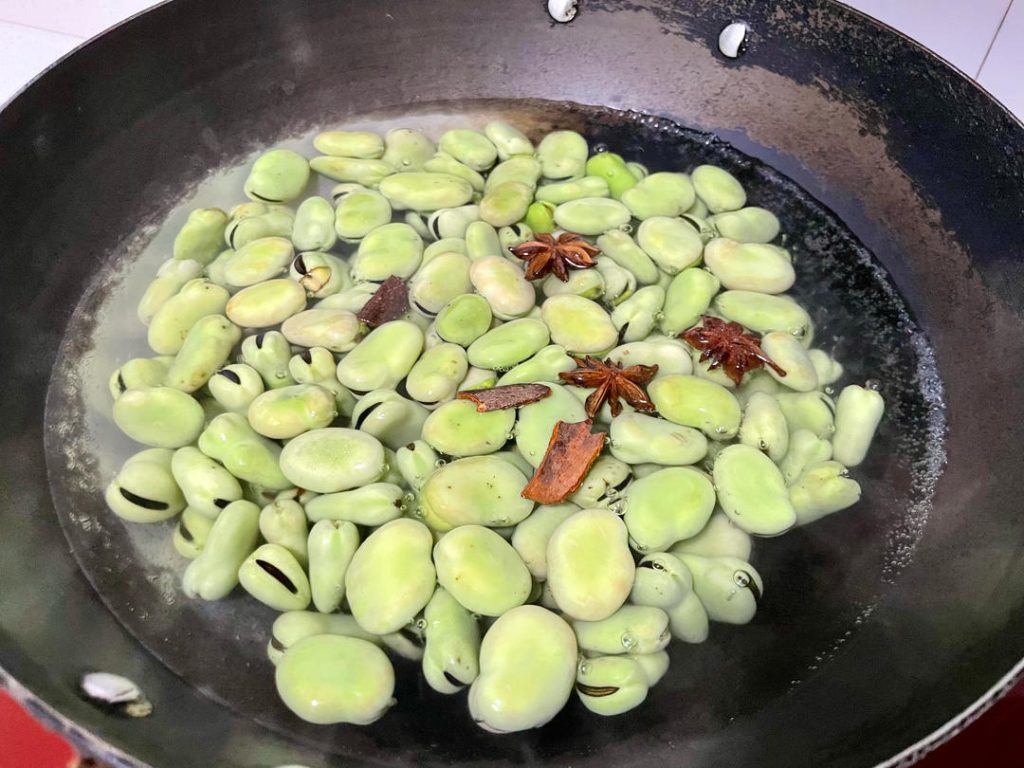
Step 2: Add Water Pour in just enough cold water to completely submerge the beans. Generally, the water should cover the beans by about half an inch (1.25 cm).
Step 3: Bring to a Boil Place the pot over high heat and bring the water to a rolling boil. Consequently, you will see the water bubbling vigorously.
Step 4: Simmer and Season Once boiling, immediately reduce the heat to medium-low. Add the salt and stir gently. Cover the pot loosely with a lid, leaving a small crack for steam to escape. Simmer gently for 25 to 30 minutes. The beans are ready when they are easily pierced with a fork but still hold their shape.
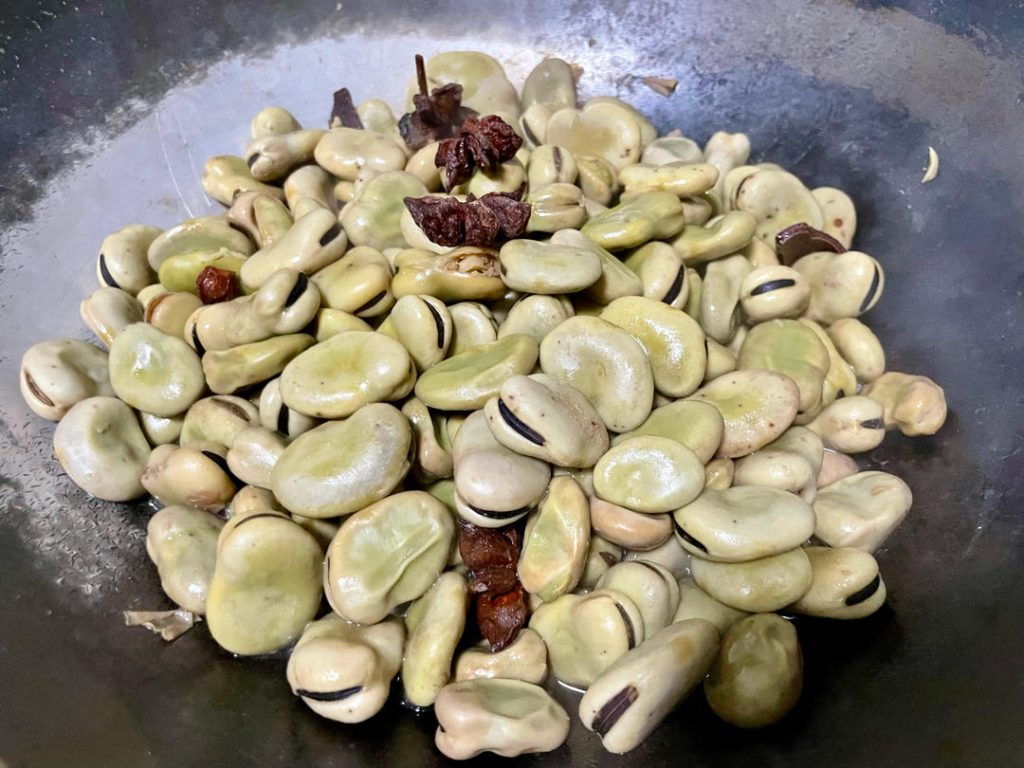
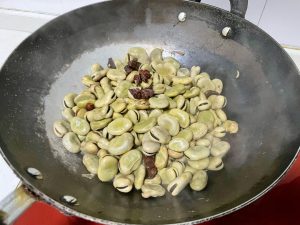
Step 5: Reduce the Liquid Remove the lid completely. Turn the heat up slightly to medium-high. Let the remaining liquid aggressively boil down until the pot is almost completely dry. Stir constantly during the last minute to coat the beans in the concentrated spice glaze.
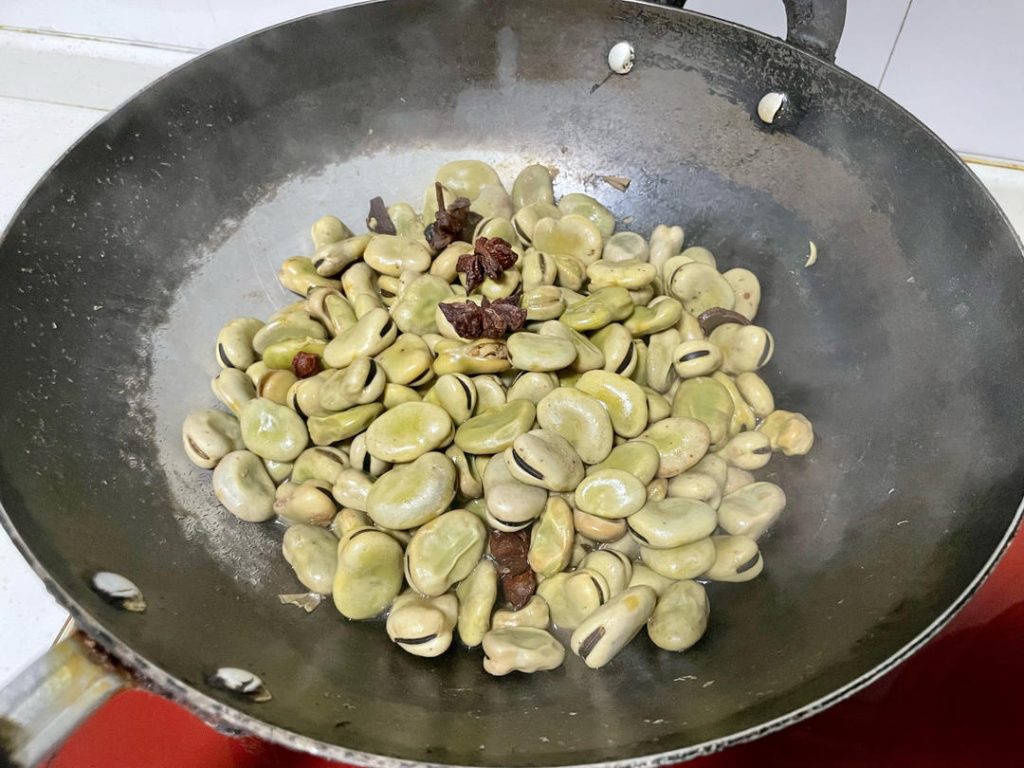
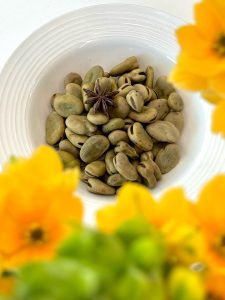
Step 6: Cool and Serve Transfer the beans to a serving plate. You can enjoy them warm, but they actually taste better once they have cooled to room temperature!
Common Mistakes When Making Hui Xiang Dou
- Using Young Beans: If you use extremely young, tender beans, they will turn into a starchy paste after 30 minutes of boiling.
- Skipping the Trimming Step: Failing to remove the black crescent mark prevents the salt and spices from penetrating the tough outer skin, resulting in bland beans.
- Leaving Too Much Water: If you serve the beans like a soup, the flavor will be diluted. You must reduce the liquid at the end so the spices cling to the bean skins.
FAQ / Troubleshooting
Why are my bean skins falling off entirely? Your simmering heat was likely too high. A violent, rolling boil will agitate the beans and tear their skins. Always maintain a gentle, lazy simmer.
Can I make this dish with dried fava beans? Yes, but you must rehydrate them first. Soak dried fava beans in cold water for 12 to 24 hours until fully plumped. You will also need to increase the simmering time by 15-20 minutes.
My beans taste too salty. How can I fix this? If the liquid reduces too much and the beans become overly salty, simply add a splash of hot water back into the pot. Toss them briefly to wash off some of the concentrated salt glaze.
Is it safe to eat fava bean skins? Absolutely. The long braising process softens the tough outer skins, making them perfectly edible and rich in dietary fiber.
What if I don’t have Chinese cinnamon? You can easily substitute standard Ceylon cinnamon sticks. The flavor will be slightly sweeter and less pungent, but still delicious.
Tips for Success
💡 Chef’s Tip: To test for doneness, carefully remove one bean and bite into it. The interior should be creamy and soft, akin to a perfectly roasted potato, with absolutely no chalky or raw crunch left in the center.
- Use a wide, shallow pot if possible. This increases the surface area, allowing the water to evaporate much faster during the final reduction step.
- Let them rest. The flavors will continue to deepen as the beans cool down on the plate.
Variations & Make-Ahead
Spicy Version: If you prefer a kick, add 2-3 dried Sichuan chili peppers to the pot along with the star anise. Make-Ahead: This is a brilliant make-ahead snack. You can cook these a day in advance and store them in the refrigerator. The spices will actually infuse more deeply overnight.
Serving Suggestions
These beans are traditionally served as a rustic appetizer or a casual bar snack. Arrange them on a small, shallow dish. Provide a small bowl for your guests to discard the cinnamon sticks and star anise pods. Serve them alongside a cold beer or traditional Chinese rice wine (Huangjiu).
What to Serve With It
Because this is a light, savory appetizer, it pairs wonderfully with a larger, balanced Chinese meal. Consider serving these as a starter before enjoying a comforting bowl of Hot and Sour Soup.
For main courses, they complement seafood beautifully, such as our crispy Salt and Black Pepper Shrimp. Alternatively, pair them with a homestyle classic like Steamed Egg with Minced Pork for a deeply comforting family dinner.
How to Store & Reheat
- Fridge: Store leftover beans in an airtight container in the refrigerator for up to 4 days.
- Freezer: I do not recommend freezing cooked fava beans, as the cellular structure breaks down, turning them mealy upon thawing.
- Reheating: You can eat them cold straight from the fridge! If you prefer them warm, microwave them for 30-45 seconds, or toss them in a skillet over medium heat with a tiny splash of water until heated through (about 165°F / 74°C internal temperature).
Nutrition Information (Estimate)
- Calories: 110 kcal
- Carbohydrates: 20g
- Protein: 9g
- Fat: 0.5g
- Sodium: 450mg
- Fiber: 6g
(Disclaimer: Nutrition information is calculated using an ingredient database and should be considered an estimate. In cases where multiple ingredient alternatives are given, the first listed is calculated for nutrition. Garnishes and optional ingredients are not included. Actual values vary.)
Food Safety and Preparation
- Ensure fava beans are completely tender and fully cooked before consumption.
- Never leave simmering pots unattended on the stove.
- Wash all fresh produce thoroughly under cold running water to remove agricultural residues.
Authoritative References
To better understand the nutritional benefits and the science behind cooking fava beans safely, you can refer to the USDA FoodData Central guidelines on broad bean nutrition. Additionally, information regarding safe preparation methods for legumes can be found through the FDA’s food safety guidelines.
About the Author & Recipe Development
I’m Lin, and I grew up in my family’s bustling restaurant kitchen in Sichuan, China. Cooking is in my blood. Under the strict but loving guidance of my chef father, I learned the foundations of traditional Chinese culinary arts. Later, I formalized my education at the Sichuan Higher Institute of Cuisine.
Over my 10 years of working in professional kitchens, I have developed a deep respect for simple, time-honored techniques. I personally tested this Hui Xiang Dou recipe three times on standard home ranges to ensure the liquid ratios and cooking times translate perfectly from a commercial wok burner to your everyday kitchen stove.
Final Thoughts
This simple snack proves that you do not need expensive ingredients to create complex, deeply satisfying flavors. By honoring the ingredient and applying a bit of patience, a humble handful of older beans transforms into a delicacy. I hope these spiced fava beans bring a touch of traditional Chinese comfort to your home kitchen.
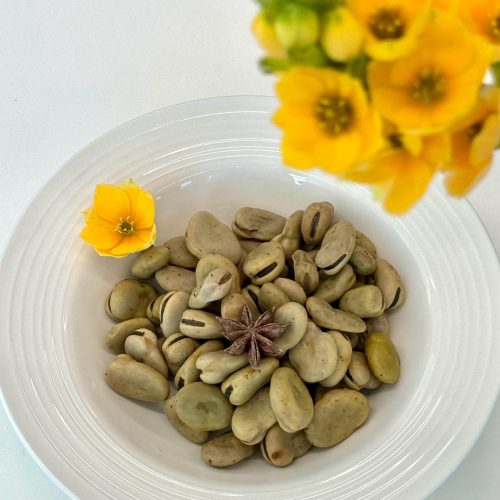
Authentic Spiced Fava Beans (Hui Xiang Dou)

Equipment
- 2-Quart Saucepan
Ingredients
Main Ingredients
- 250 g shelled fresh fava beans mature/older beans are best
- 3 whole star anise pods
- 2 pieces Chinese cinnamon (cassia bark) or 1 standard cinnamon stick
- 2 tsp kosher salt adjust to taste
- Water enough to cover the beans
Instructions
- Prep the Beans: Wash the fava beans thoroughly. Using your fingernail or a paring knife, gently remove the small black crescent shape at the top of each bean. This allows flavors to penetrate.
- Combine in Pot: Place the cleaned fava beans, star anise, and Chinese cinnamon into a saucepan.

- Add Water: Pour in enough cold water to completely submerge the beans (about 1/2 inch above the beans).
- Boil and Simmer: Bring the water to a rolling boil over high heat. Once boiling, immediately reduce the heat to medium-low. Add the salt.
- Cook: Cover the pot loosely and simmer gently for 25 to 30 minutes, until the beans are tender but still hold their shape.
- Reduce Liquid: Remove the lid and increase the heat to medium-high. Boil aggressively until the liquid is almost completely evaporated, stirring constantly to coat the beans in the spice glaze.
- Serve: Transfer to a plate. Serve warm or at room temperature.




Leave a Reply