Hello, Lin here. Today I am sharing a quintessential Chinese restaurant favorite that you can easily recreate in your home kitchen: Dry Pot Cauliflower (Gan Guo Hua Cai). This recipe is all about utilizing the rich, savory fat rendered from pork belly to blister and flavor the cauliflower florets, combined with a deeply savory sauce.
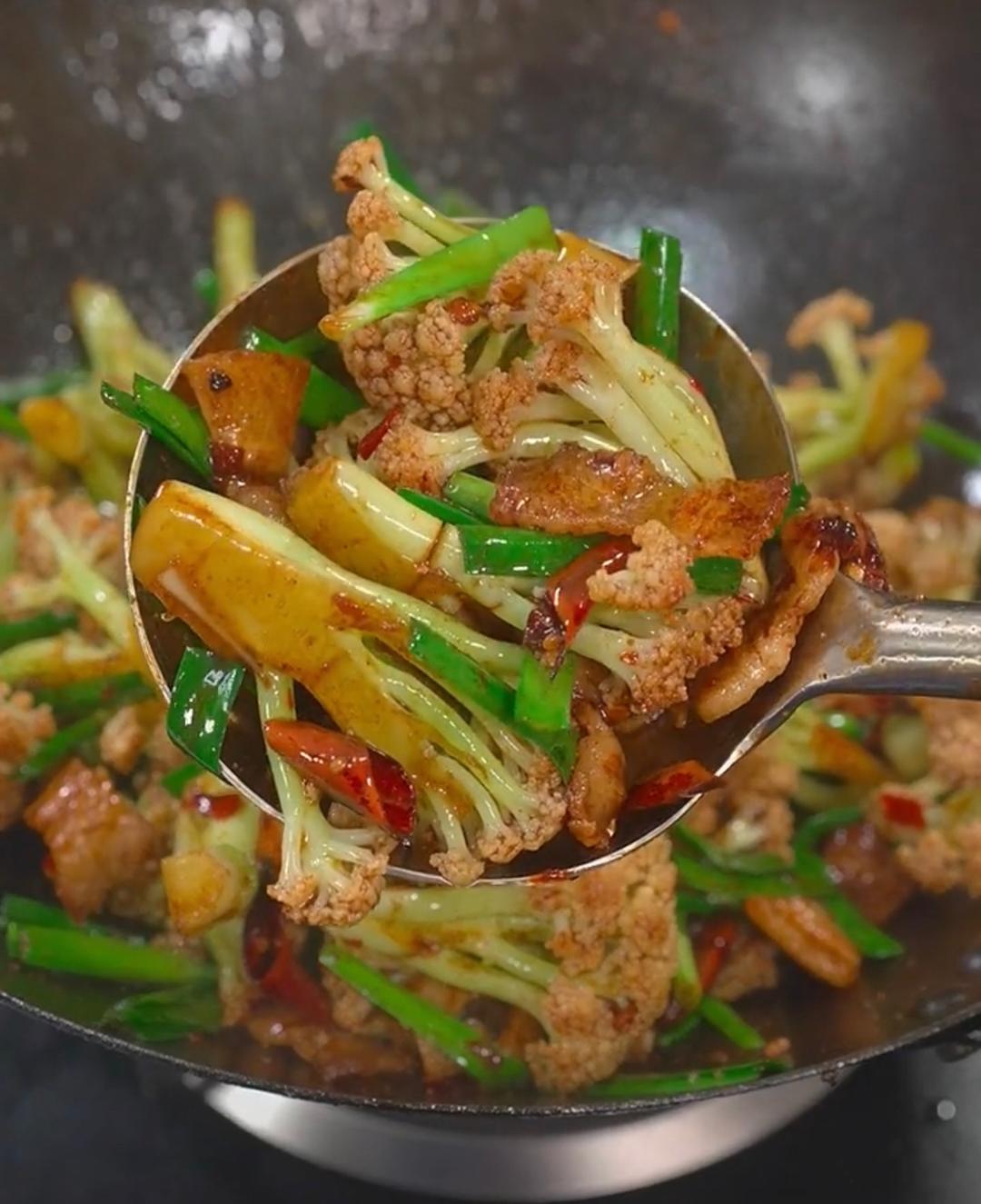
If you have ever ordered this at a Sichuan restaurant, you know it usually arrives at the table crackling over a mini flame. This stovetop version captures all that sizzling magic in just about 20 minutes, making it a perfect weeknight dinner.
What Is Dry Pot Cauliflower?
Dry pot (Gan Guo) is a cooking method originating from Sichuan province. Unlike traditional hot pots that are swimming in broth, dry pot dishes are cooked with very little liquid, allowing the ingredients to slightly char and absorb intense flavors from the oils, chilies, and aromatics. The cauliflower remains slightly crisp and immensely flavorful.
If you are looking for another fantastic variation of this dish or want to compare techniques, be sure to check out my other guide on Homestyle Sichuan Dry Pot Cauliflower, which explores a slightly different flavor profile!
Ingredients
The Main Components:
- 0.5 head Cauliflower (about 400g / 14 oz), cut into small bite-sized florets
- 200g (7 oz) Pork belly, thinly sliced
- 100g (3.5 oz) Garlic chives (jiucai) or garlic leaves, cut into 2-inch segments
- 4 to 6 Dried chili peppers, snipped in half
- 3 cloves Garlic, minced
- The Sauce Mixture:
- 1 tbsp Doubanjiang (fermented chili broad bean paste)
- 1 tbsp Oyster sauce
- 1 tbsp Light soy sauce
- 0.5 tbsp Steamed fish soy sauce (seasoned soy sauce)
- 0.25 tsp Chicken bouillon (or chicken essence/powder)
- 0.33 tsp Cumin powder
- Salt, to taste
- 2 to 3 tbsp Water (only if needed during cooking)
Ingredient Notes
- Doubanjiang: This fermented chili bean paste is the soul of Sichuan cooking. If you need a refresher on this ingredient, read my comprehensive guide on Doubanjiang.
- Light Soy Sauce: Provides the essential salty and umami base. Not to be confused with dark soy sauce. Learn more about Light Soy Sauce.
- Steamed Fish Soy Sauce: This is slightly sweeter and more heavily seasoned than regular soy sauce. If you don’t have it, substitute with a mix of regular soy sauce and a tiny pinch of sugar.
Equipment Needed
- A carbon steel wok or a large, heavy-bottomed skillet. (If you are setting up your kitchen, read my recommendations for the best carbon steel wok for beginners).
- A sharp chef’s knife for thinly slicing the pork belly.
Prep & Mise en Place
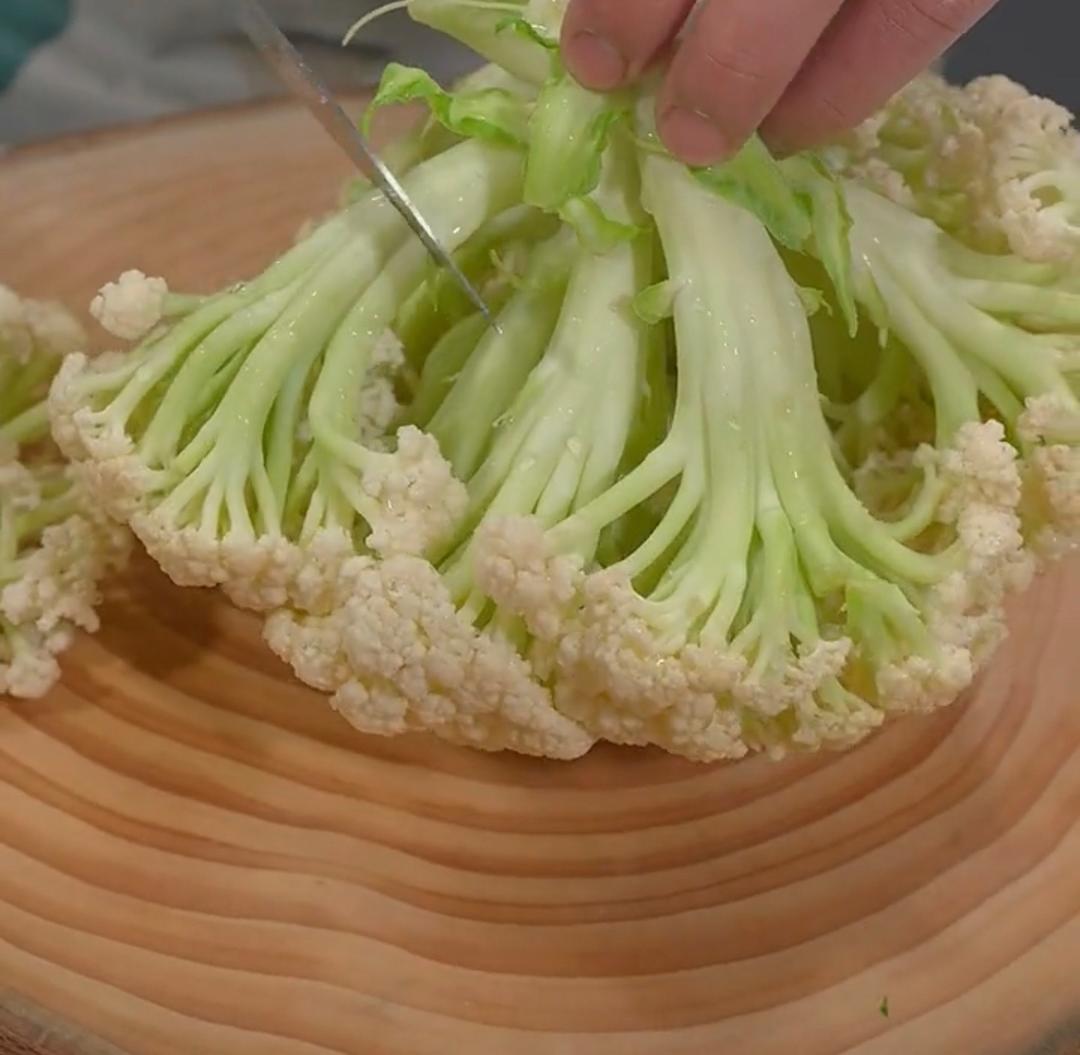
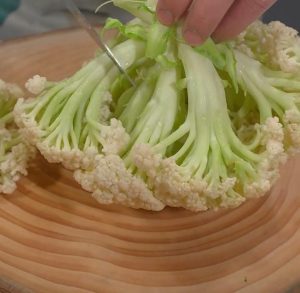
- Trim the Cauliflower: Remove the tough lower root of the cauliflower. Cut the remaining head into small, even florets so they cook quickly and uniformly.
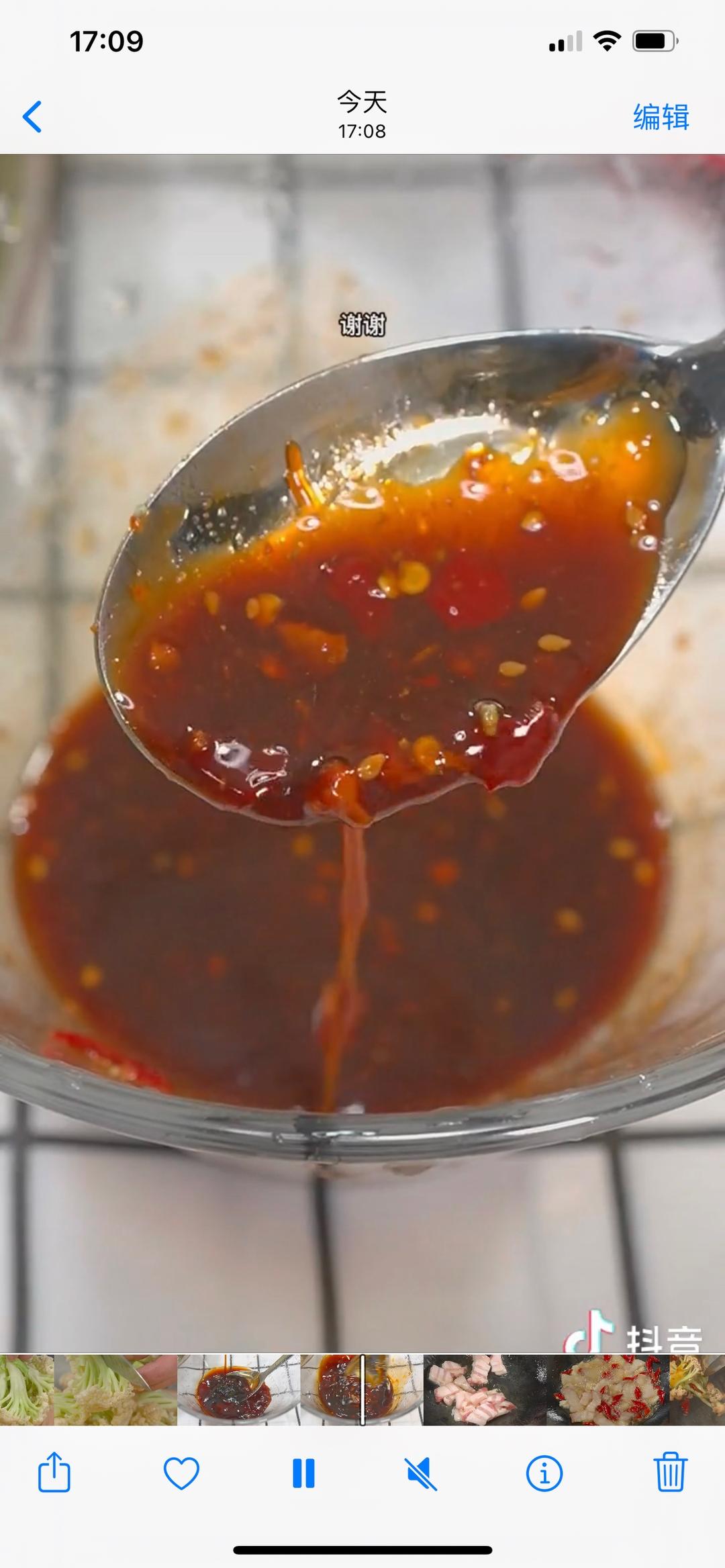
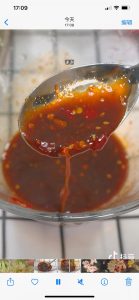
- Mix the Sauce: In a small bowl, combine the doubanjiang, oyster sauce, light soy sauce, steamed fish soy sauce, and chicken bouillon. Stir well and set aside. Having this ready prevents the garlic and chilies from burning while you scramble for bottles.
- Slice the Meat: Keep the pork belly slices around 1/8-inch thick so the fat renders out efficiently.
Cooking Process
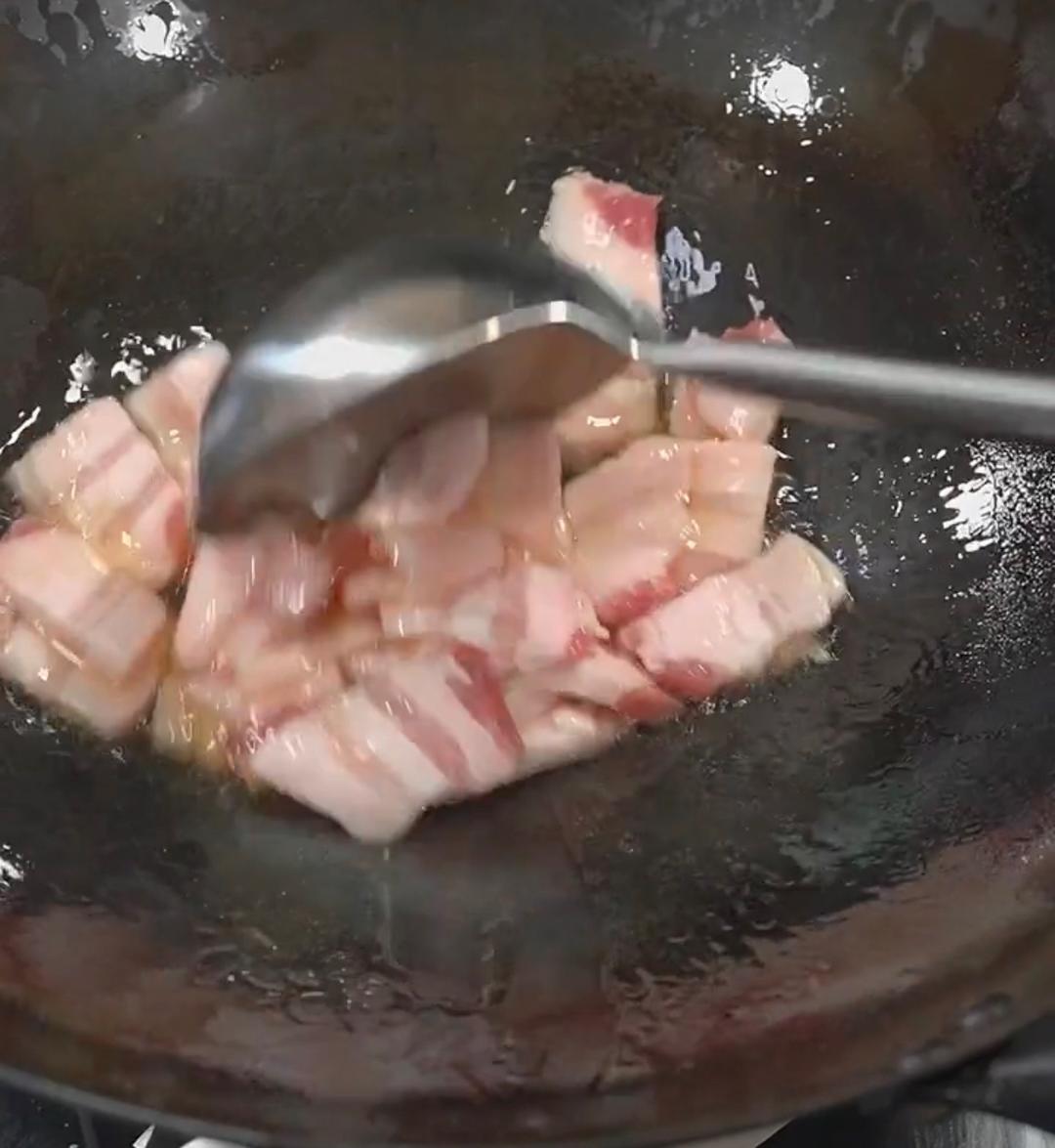
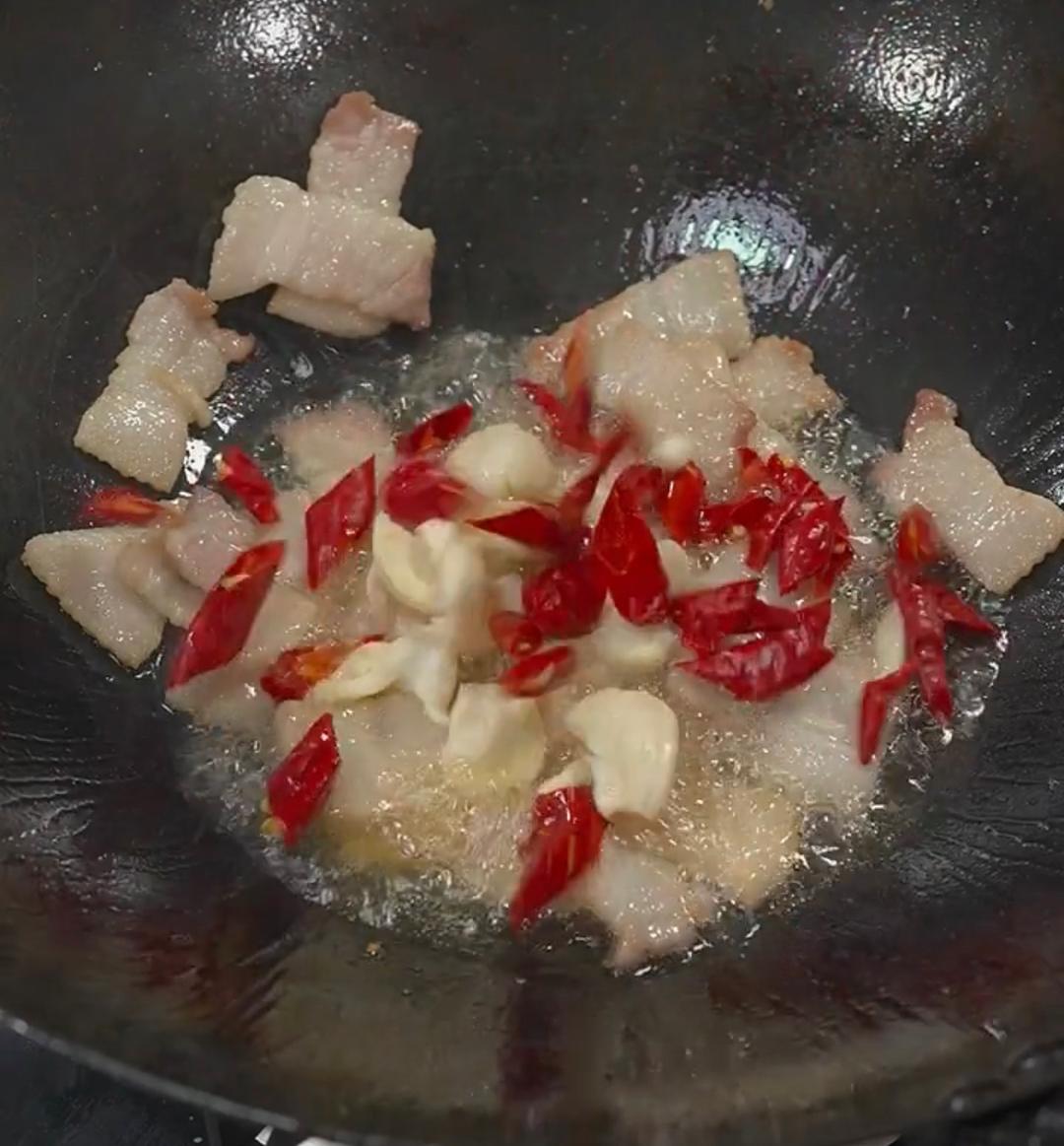
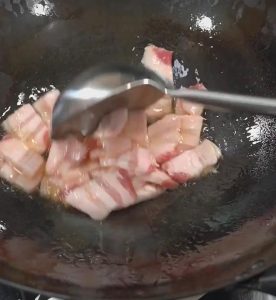
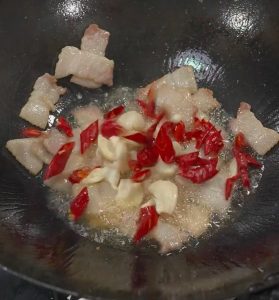
- Render the Pork Fat (Medium-Low Heat, 3–5 minutes): Place your wok over medium-low heat and add the thinly sliced pork belly. Cook slowly to allow the fat to render out. The meat will turn golden brown and slightly crisp.
“Taking the time to properly render the pork fat is crucial. Through the Maillard reaction, the browning of the proteins creates a complex, savory flavor base that regular cooking oil simply cannot replicate.”
- Aromatize the Oil (Medium Heat, 1 minute): Push the pork to the side of the wok. Add the dried chili peppers and minced garlic into the rendered fat. Stir-fry for about 30 to 60 seconds until highly fragrant, being careful not to let the garlic burn.
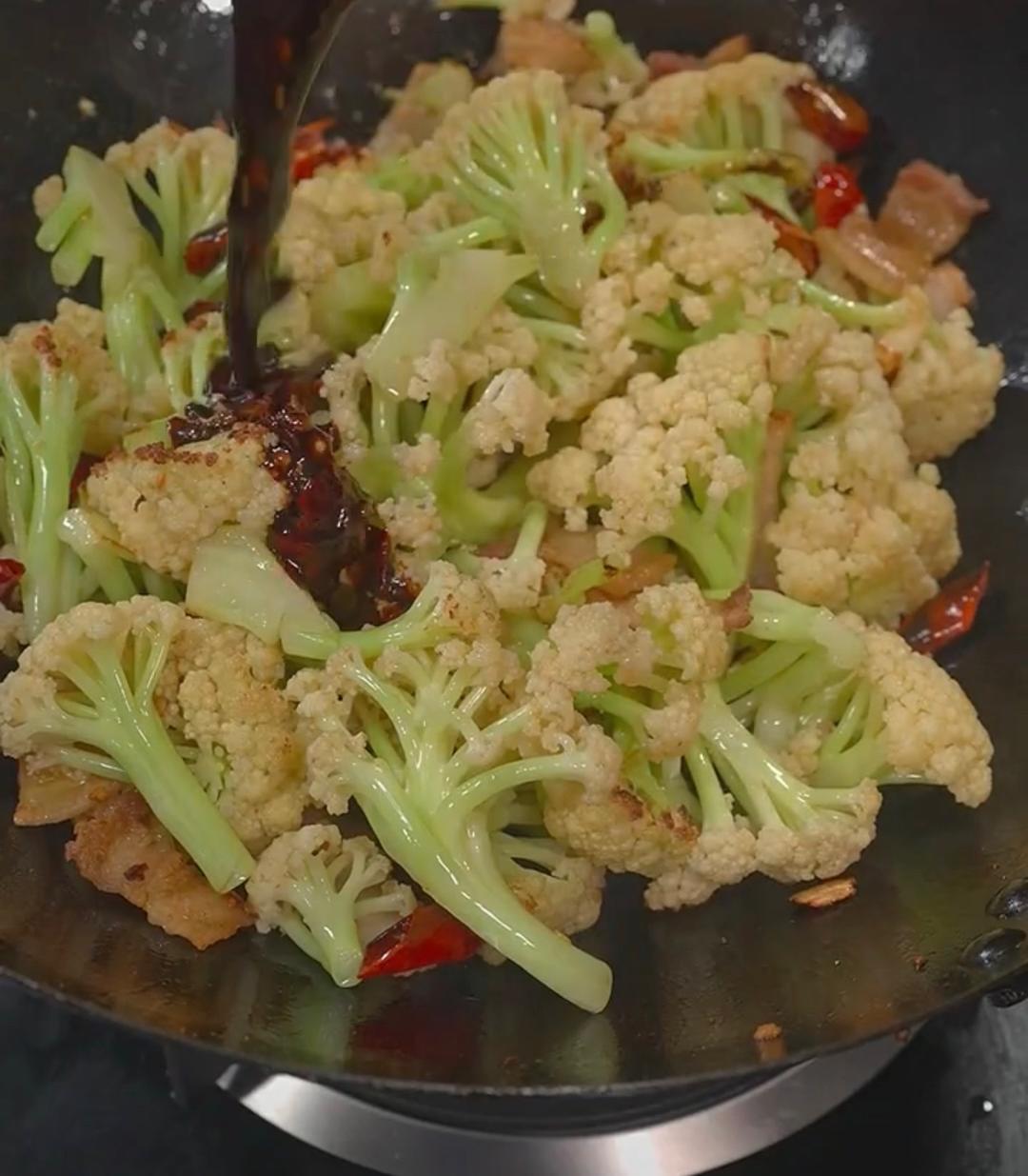
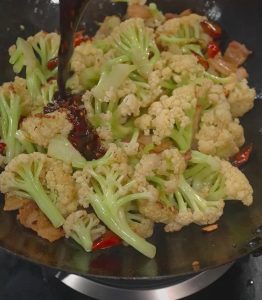
- Blister the Cauliflower (Medium-High Heat, 4–6 minutes): Add the cauliflower florets and pour the pre-mixed sauce over the top. Toss vigorously to coat the cauliflower in the fat and sauces. Stir-fry continuously. If the wok gets exceptionally dry and the sauce threatens to burn, add a splash of water (about 1 tablespoon at a time).
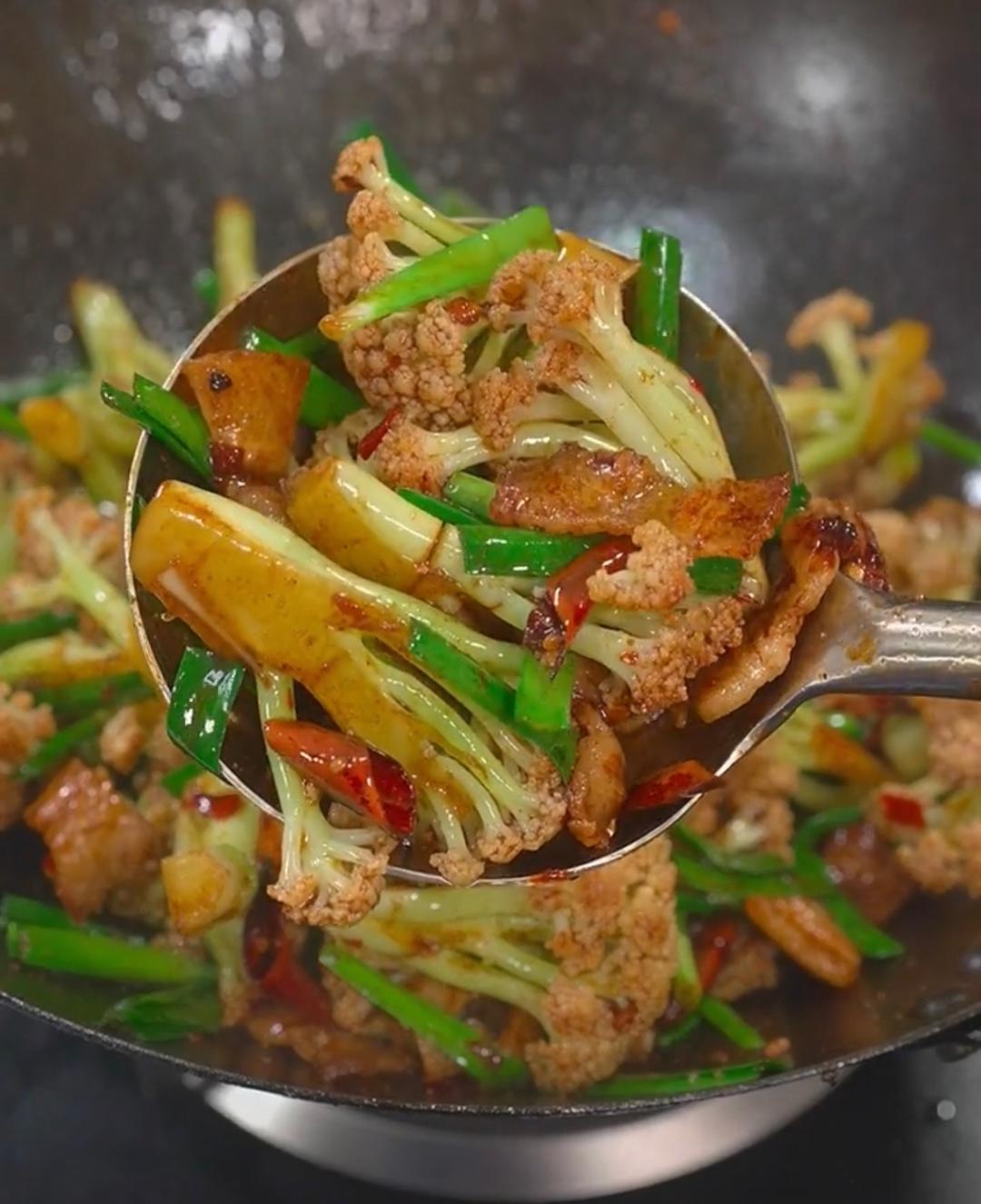
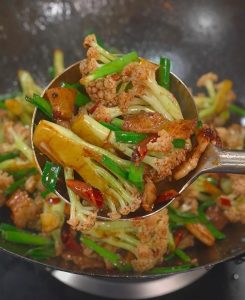
- Final Toss (High Heat, 1–2 minutes): When the cauliflower is tender but still has a slight bite, toss in the garlic chives (jiucai). Sprinkle the cumin powder and a pinch of salt over the dish. Toss for another 30 seconds until the chives are just wilted. Dish out immediately and serve.
Why This Recipe Works
- Fat as a Flavor Carrier: Using rendered pork belly fat rather than regular cooking oil deeply seasons the bland cauliflower.
- Pre-mixed Sauce: Combining the complex sauces (doubanjiang, oyster sauce, soy sauces) beforehand prevents the aromatics from burning and ensures even distribution.
- Dry Frying Technique: Adding water only in small, controlled splashes ensures the cauliflower fries and blisters rather than boils, concentrating its natural sweetness.
Common Mistakes When Making Dry Pot Cauliflower
- Mistake: The cauliflower is mushy and wet.
- Reason: Too much water was added during the cooking process, effectively boiling the vegetable.
- Solution: Only add water 1 tablespoon at a time if the pan is smoking aggressively. Rely on the oil and tossing motion to cook the florets.
- Mistake: The dish lacks the signature savory depth.
- Reason: The pork belly was not rendered long enough, leaving rubbery fat and unflavored oil.
- Solution: Keep the heat at medium-low during the first step and wait until the pork edges are golden and crispy before adding the aromatics.
Frequently Asked Questions
Can I make this vegetarian?
Yes. Omit the pork belly and chicken bouillon. Use a neutral oil (like peanut or avocado oil) to fry the aromatics, and add some sliced shiitake mushrooms for an umami boost. If you are unsure which oil to use, check out my guide on the best oil for stir frying.
Is this dish very spicy?
It has a mild to medium kick depending on the dried chilies you use. The doubanjiang provides a fermented, savory heat rather than a sharp burn. You can reduce the dried chilies if sensitive to spice.
Can I substitute the garlic chives?
If you cannot find garlic chives (jiucai), regular scallions (green onions) or sliced leeks make excellent substitutes.
How to Serve
This highly savory, slightly spicy dish is meant to be eaten with plain white rice to balance the bold flavors. For the perfect pairing, follow my method on how to cook jasmine rice perfectly.
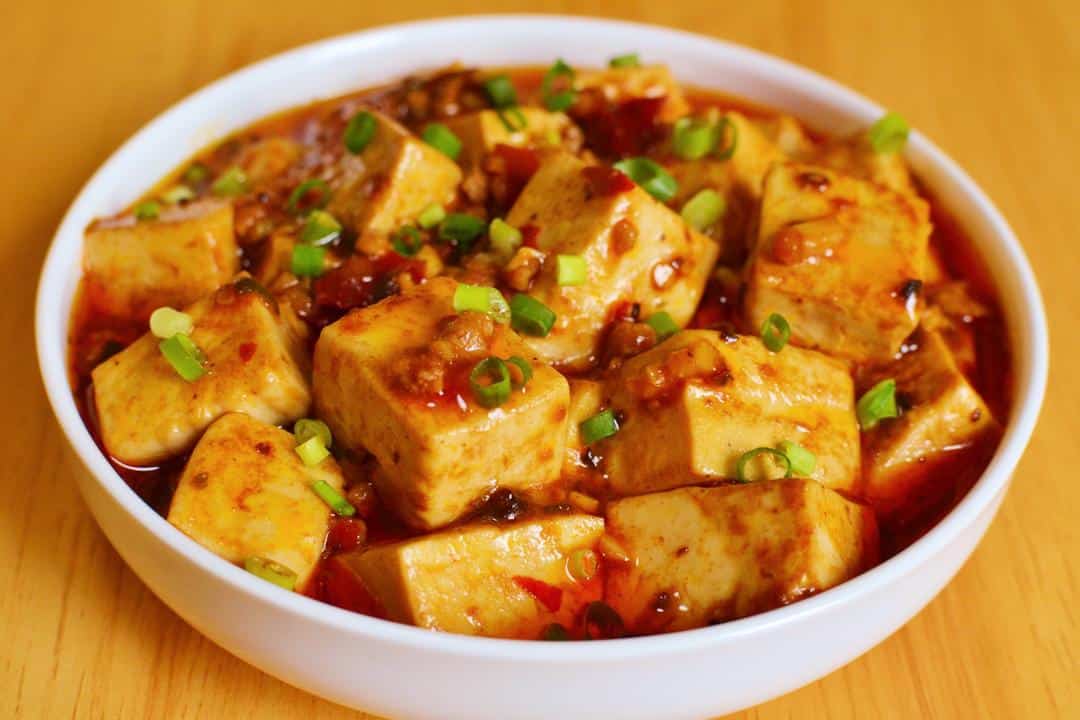
To make it a complete feast, serve it alongside a comforting protein like authentic Mapo Tofu.
Storage & Reheat
- Fridge: Store leftovers in an airtight container in the refrigerator for up to 3 days.
- Reheat: The best way to reheat is in a pan over medium heat for 2-3 minutes until warmed through. Microwaving works but will soften the cauliflower further. Freezing is not recommended as the cauliflower will become entirely mushy upon thawing.
Allergen Notice
- Gluten: Present in light soy sauce, steamed fish soy sauce, and doubanjiang. (Use tamari and gluten-free doubanjiang if necessary).
- Soy: Present in doubanjiang and all soy sauces.
- Shellfish: Present in traditional oyster sauce.
Nutrition Disclaimer
Nutrition information is an estimate and provided for informational purposes only. The exact caloric and fat content will vary heavily based on the exact fat percentage of the pork belly used and the amount of rendered fat that makes it onto your plate.
About the Author & Recipe Development
I’m Lin, the recipe developer and writer behind Woks of Love. I developed this Dry Pot Cauliflower recipe by testing multiple rendering times for the pork belly in my home kitchen to ensure it flawlessly matched the wok hei and flavor profile you find in professional Sichuan kitchens. My goal is always to translate professional restaurant techniques into practical, reliable steps for the everyday home cook.
Authoritative References
For more information regarding the Maillard reaction and how browning proteins affects flavor development in cooking, you can refer to the Institute of Food Technologists (IFT) science explanations. For meat safety, always refer to the USDA Safe Minimum Internal Temperature Guidelines to ensure all pork products reach a safe internal temperature of 145°F (62.8°C) with a 3-minute rest time.
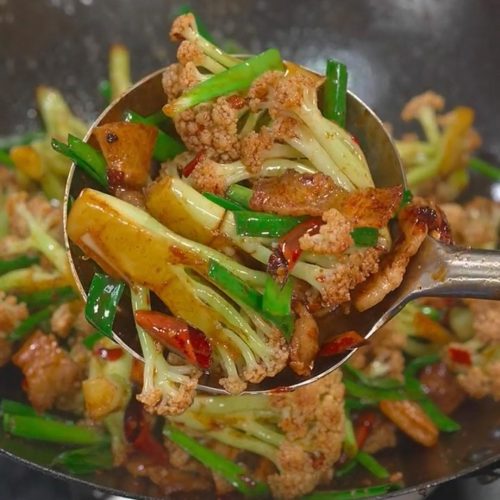
Authentic Sichuan Dry Pot Cauliflower
Equipment
- Carbon Steel Wok or Heavy Skillet
Ingredients
- 0.5 head cauliflower cut into small florets
- 7 oz pork belly thinly sliced
- 3.5 oz garlic chives (jiucai) cut into 2-inch pieces
- 4 whole dried chili peppers snipped in half
- 3 cloves garlic minced
- 1 tbsp doubanjiang broad bean paste
- 1 tbsp oyster sauce
- 1 tbsp light soy sauce
- 0.5 tbsp steamed fish soy sauce seasoned soy sauce
- 0.25 tsp chicken bouillon
- 0.33 tsp cumin powder
- 1 pinch salt to taste
Instructions
- Wash the cauliflower, cut off the root, and slice the head into small bite-sized florets.

- In a small bowl, combine the doubanjiang, oyster sauce, light soy sauce, steamed fish soy sauce, and chicken bouillon. Stir well and set aside.

- Place a wok over medium-low heat. Add the sliced pork belly and slowly pan-fry until the fat renders out and the meat turns golden and slightly crisp (about 3-5 minutes).

- Add the dried chili peppers and minced garlic to the rendered pork fat. Stir-fry for about 30 to 60 seconds until fragrant.

- Increase heat to medium-high. Add the cauliflower florets and pour the prepared sauce over the top. Stir-fry continuously until the cauliflower is cooked but remains slightly crisp. If the wok becomes too dry, add water 1 tablespoon at a time.

- When the cauliflower is almost ready, add the garlic chives (or garlic leaves). Sprinkle with cumin powder and a pinch of salt. Toss for another 30 seconds until the chives are wilted, then plate and serve immediately.

Notes
Calories: 420 kcal | Protein: 14g | Fat: 35g | Carbohydrates: 15g | Sodium: 1200mg Safety Warning: Ensure the pork belly reaches a safe minimum internal temperature of 145°F (62.8°C) before consuming. Be cautious of oil splattering when adding water to the hot wok.




Leave a Reply