There is a whole category of Cantonese soup that does not try to be rich. It is not a long-simmered bone broth, not a collagen-thick pot of pork knuckle, and definitely not a cream soup. It is clear, pale gold, faintly sweet, and you drink it in a small bowl before the rest of the meal arrives. This American ginseng dendrobium lean pork soup is exactly that kind of soup.
I grew up drinking it whenever the weather turned dry, or when someone in the family had been staying up too late. My mother would set the double boiler going in the afternoon and the whole apartment would smell like sweet roots. It is one of the few soups I make that feels less like cooking and more like brewing tea.
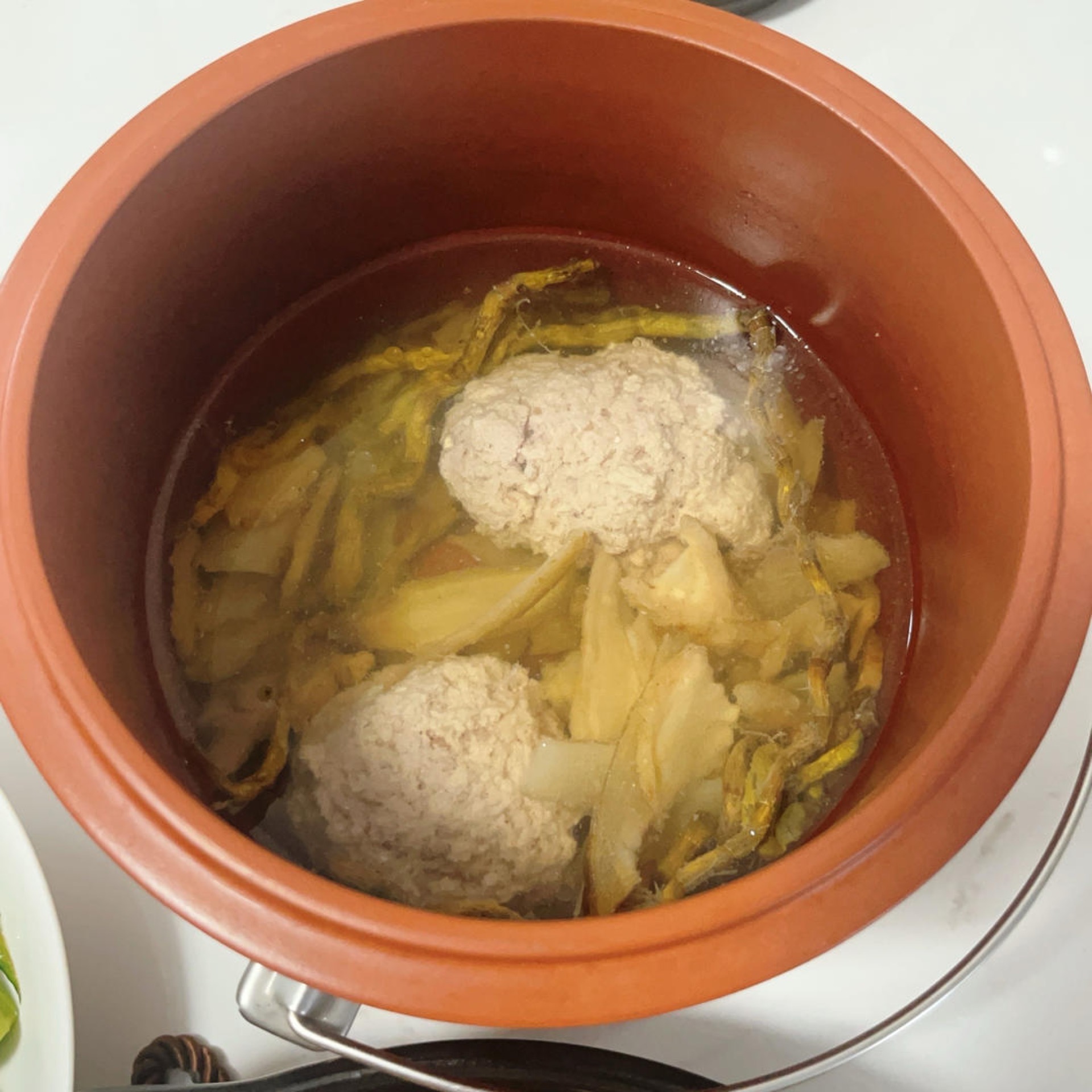
The technique is simple, but there is one detail that makes or breaks it: you must add boiling water, not cold. I will explain why below. If you have ever wondered how a soup can taste this clean, this is the answer.
What Is American Ginseng Dendrobium Lean Pork Soup?
In Cantonese, this is 花旗参石斛瘦肉汤 — hua qi shen (American ginseng), shi hu (dendrobium), and shou rou (lean pork). It belongs to the family of soups called tang that are cooked in a double boiler (炖盅, dun zhong) rather than simmered directly over flame. Because the pot never touches the heat source, nothing reduces violently, nothing emulsifies, and the broth stays glass-clear.
Double boiling is the reason this soup tastes sweet instead of heavy. The ingredients steep gently at a low, even temperature — closer to a long infusion than a boil.
American ginseng (Panax quinquefolius) is the cool, slightly bitter cousin of Korean red ginseng. Where red ginseng warms you up, American ginseng is used in Chinese home cooking for the opposite purpose — it is considered mildly cooling and is paired with ingredients like dendrobium and mai dong for their moistening, throat-soothing quality.
Why This Recipe Works
- Smashed, hand-formed lean pork meatballs give the broth body and a clean meaty sweetness without releasing fat into the liquid.
- Pre-soaking the dendrobium, mai dong, and yu zhu for 20 minutes softens them so they actually release flavor during a relatively short double boil.
- Boiling water, added at the start, keeps the double boiler at temperature instead of forcing it to climb back up from cold — the difference between a sweet broth and a flat one.
- Double boiling at a low, steady temperature means the soup never clouds and never tastes greasy.
- No salt goes in until the end, so you can taste the sweetness of the herbs first and season to your own bowl.
Equipment Needed
- A double boiler or a ceramic soup pot (炖盅) that fits inside a larger pot or steamer
- A large wok or stockpot wide enough to hold the soup pot with water coming halfway up its sides
- A cleaver or chef’s knife and a cutting board
- A large bowl for soaking the dried herbs
- A fine-mesh skimmer or spoon
- Small bowls for serving
- A kitchen scale (herbal soups are far easier to get right by weight than by eye)
Ingredients
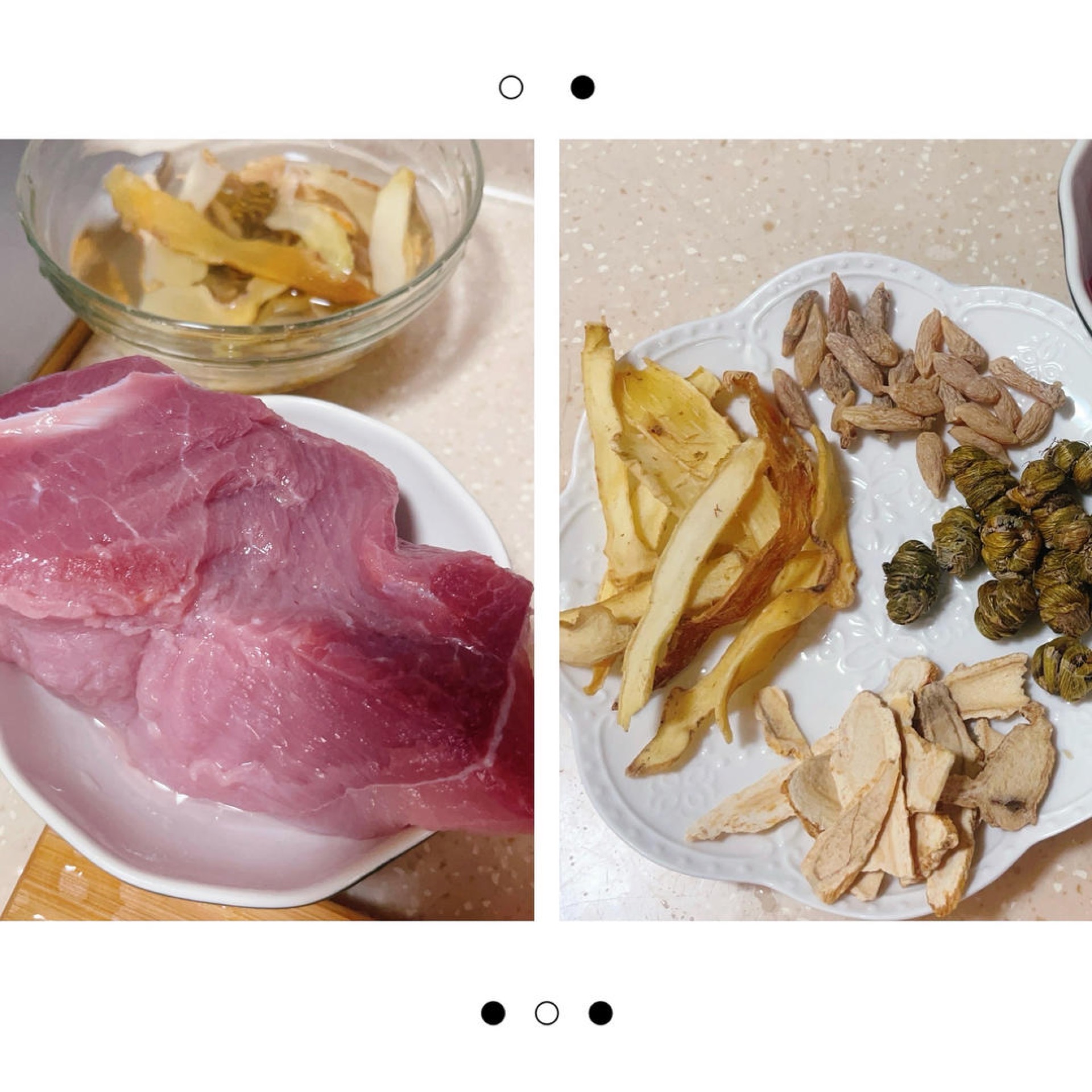
- 300 g lean pork (瘦肉), preferably pork loin or a piece of 肉眼肉 / ribeye cap if you can find it
- 10 g American ginseng slices (花旗参)
- 10 pieces dried dendrobium (石斛)
- 10 g mai dong / dwarf lilyturf root (麦冬)
- 10 g yu zhu / fragrant solomonseal rhizome (玉竹)
- About 900 ml–1 L boiling water
- Salt, to taste, added at the table
Ingredient Notes
Lean pork. The source recipe admits the cook could not find 肉眼肉 that day and used plain lean pork instead. I will be honest: 肉眼肉 (the ribeye cap, a well-marbled piece from the shoulder end) genuinely makes a more fragrant soup. Plain lean pork works and keeps the broth cleaner, but it is a compromise. If you have a Chinese butcher, ask for 肉眼肉 or a piece of pork shoulder with a little intramuscular fat.
American ginseng. Buy sliced, not whole roots. Slices are easier to portion by weight and steep faster. Expect a faint bitterness — that is the point, and it should be balanced by the sweet herbs.
Dendrobium (石斛). Sold as dried stems, sometimes coiled. They are tough and woody; do not skip the soak. Good ones are slightly glossy and smell faintly grassy.
Mai dong and yu zhu. Both are mild, sweet, starchy roots that soften the ginseng’s edge. They are the reason this soup tastes sweet without any sugar or dates. Both are sold in Chinese herbal shops and online. If you cannot find one, do not substitute the other — just leave it out rather than doubling up.
This soup has no aromatics at all: no ginger, no scallion, no wine. That is deliberate. Anything stronger would bury the herbs.
Prep & Mise en Place
Soak the dendrobium, mai dong, and yu zhu in cold water for 20 minutes, then drain and rinse. Rinse the ginseng slices briefly — they do not need soaking.
Cut the pork into small chunks, then chop it further. Chopping it finer than you think necessary is what gives you the right texture.
Put a kettle on for the boiling water and start heating your large pot with enough water to come halfway up the sides of your soup pot. Get that water going before you assemble anything.
Have your soup pot, a lid, and a small plate ready. Once the meatballs are formed, everything moves quickly.
Cooking Process
Step 1: Soak the dried herbs
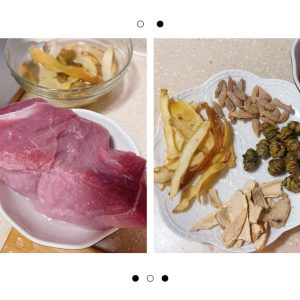
I could not find 肉眼肉 at the market today, so I bought a piece of lean pork — with 肉眼肉 the soup is more fragrant. Soak the yu zhu, mai dong, and dendrobium in cold water for 20 minutes first.
Step 2: Chop and form the pork meatballs
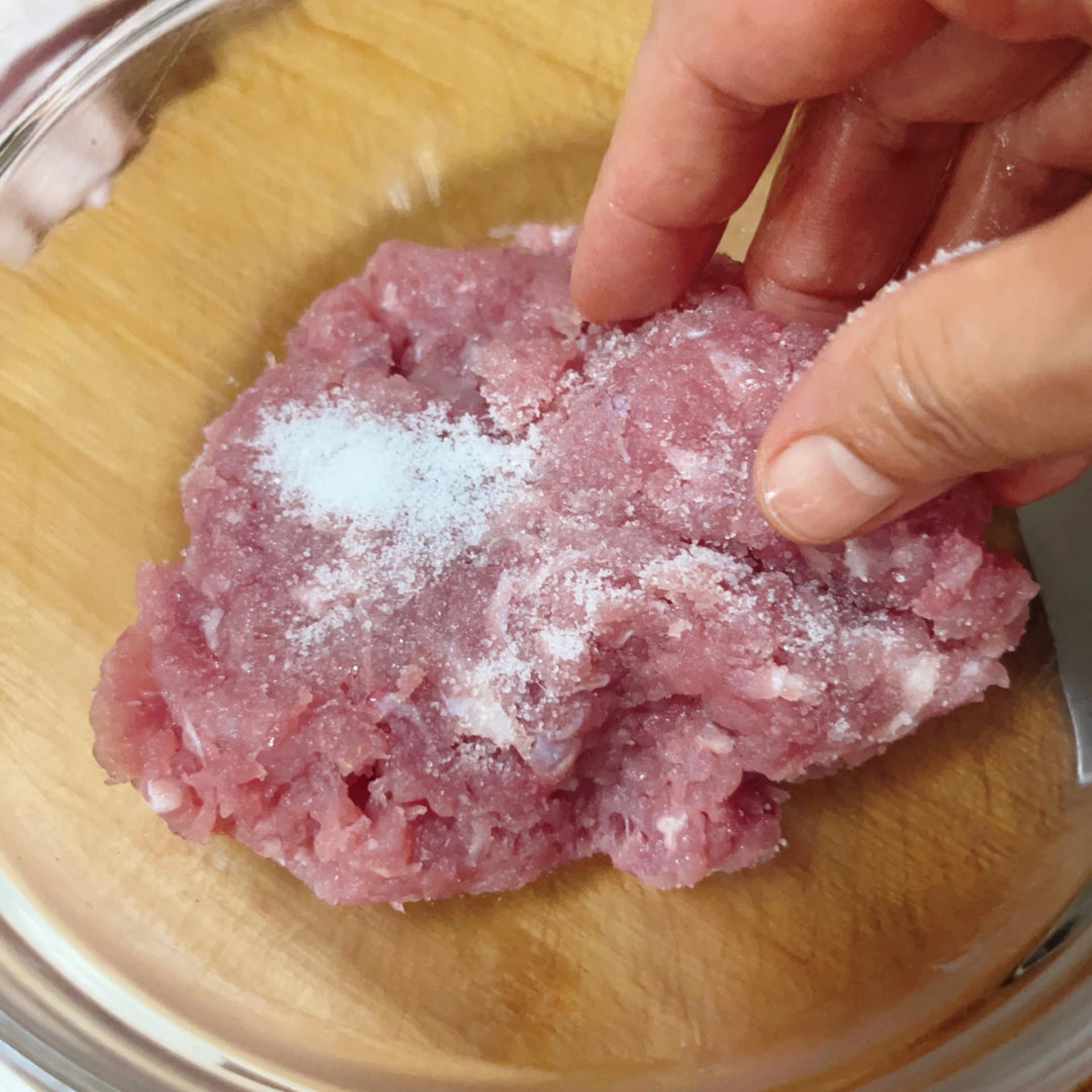
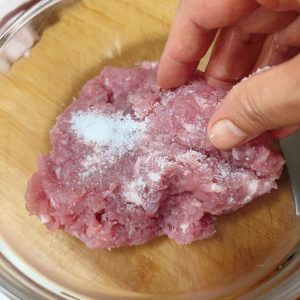
Cut the lean pork into small pieces, then chop it — mincing it is even better. Add a pinch of salt and mix with your hand until it is evenly seasoned. Then lift the meat and throw it back into the bowl several times, until it becomes slightly sticky and holds together. Shape it into two large meatballs.
Step 3: Assemble the pot
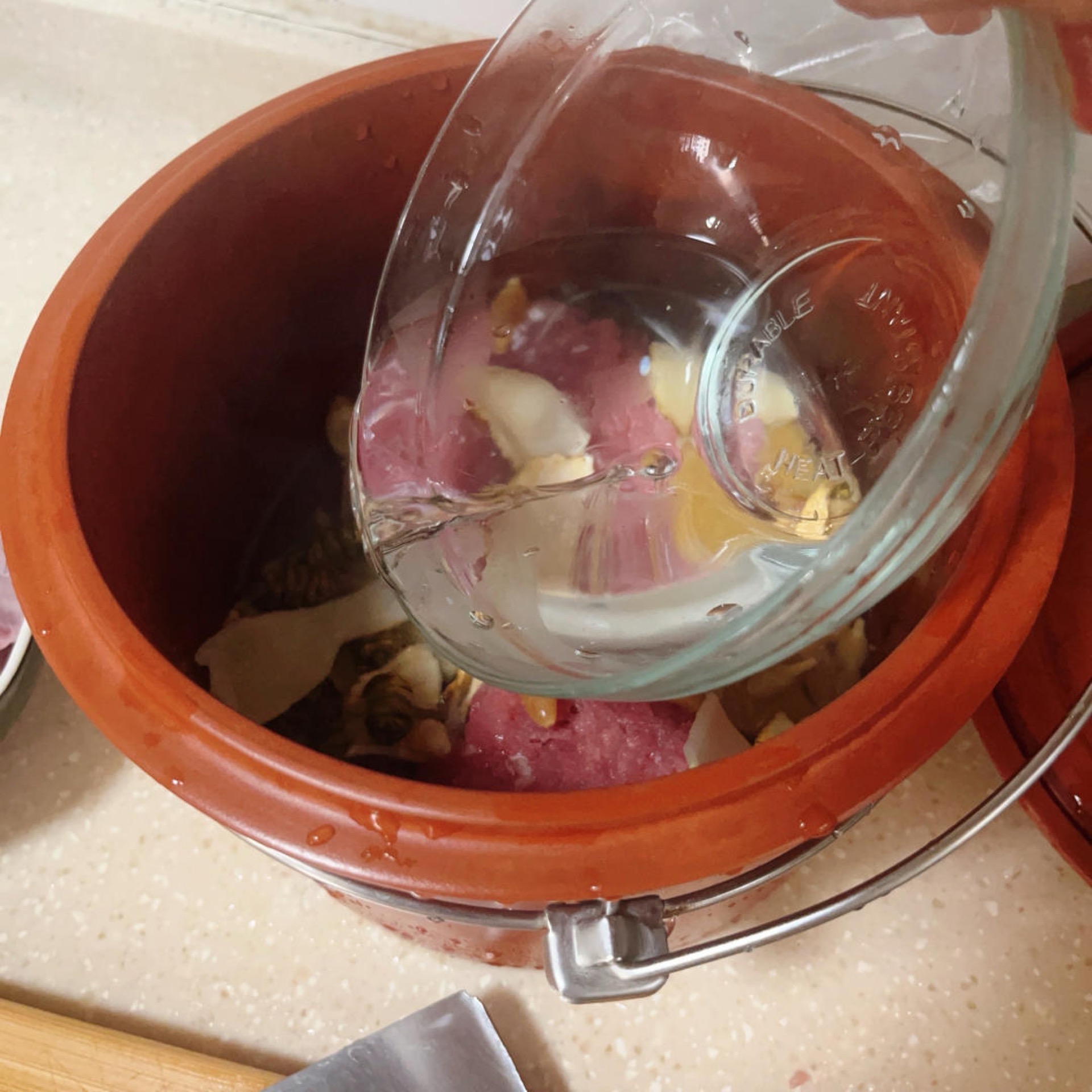
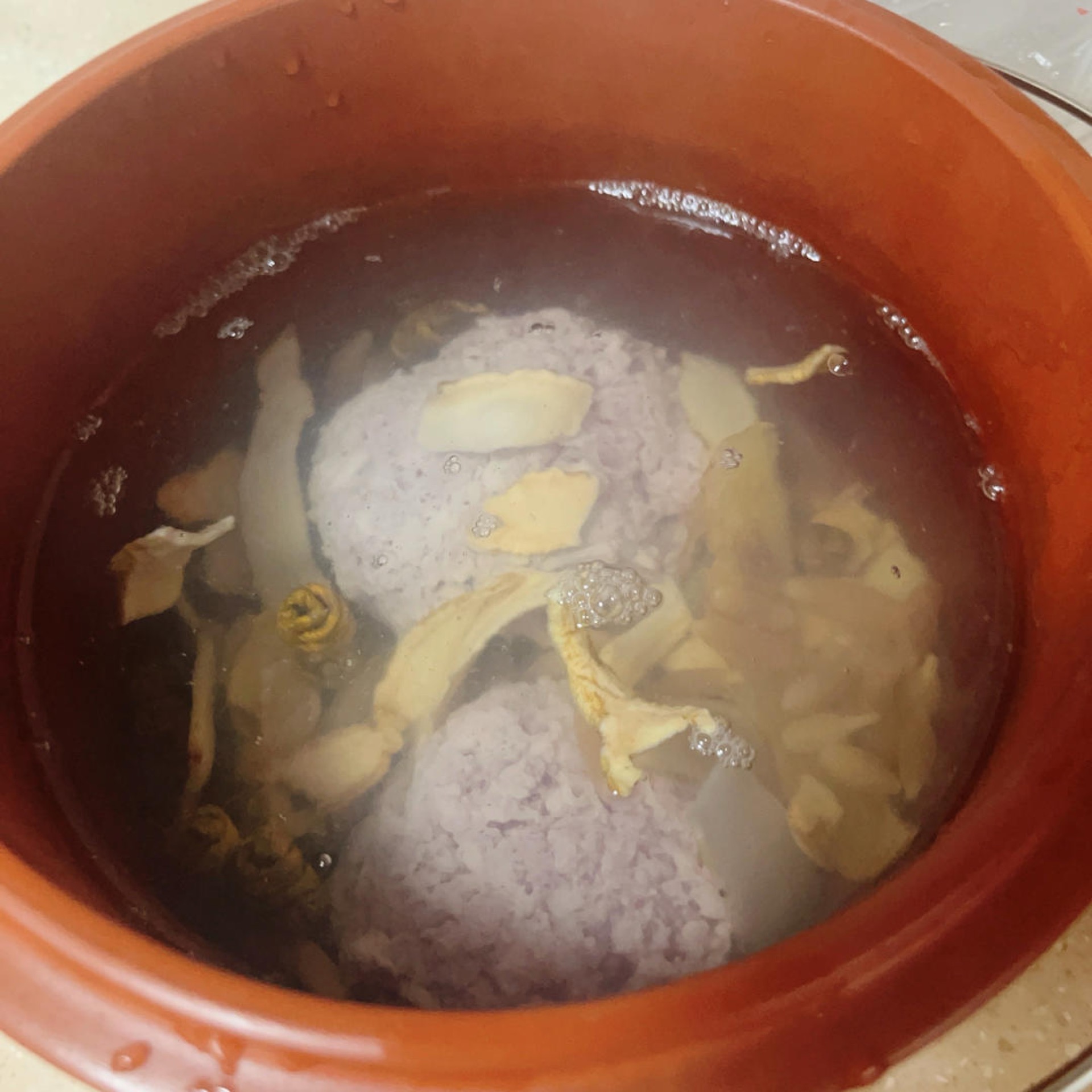
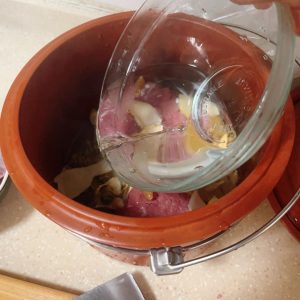
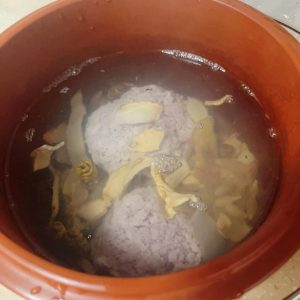
Place the meatballs into the double-boiler pot, add all the soaked herbs and the ginseng slices, then pour in an appropriate amount of boiling water.
Step 4: Why boiling water matters
Adding boiling water is what draws the flavor out. Cold water drops the temperature of the whole double boiler, and the herbs never get the steady heat they need to open up.
Step 5: Double boil for 1.5 to 2 hours
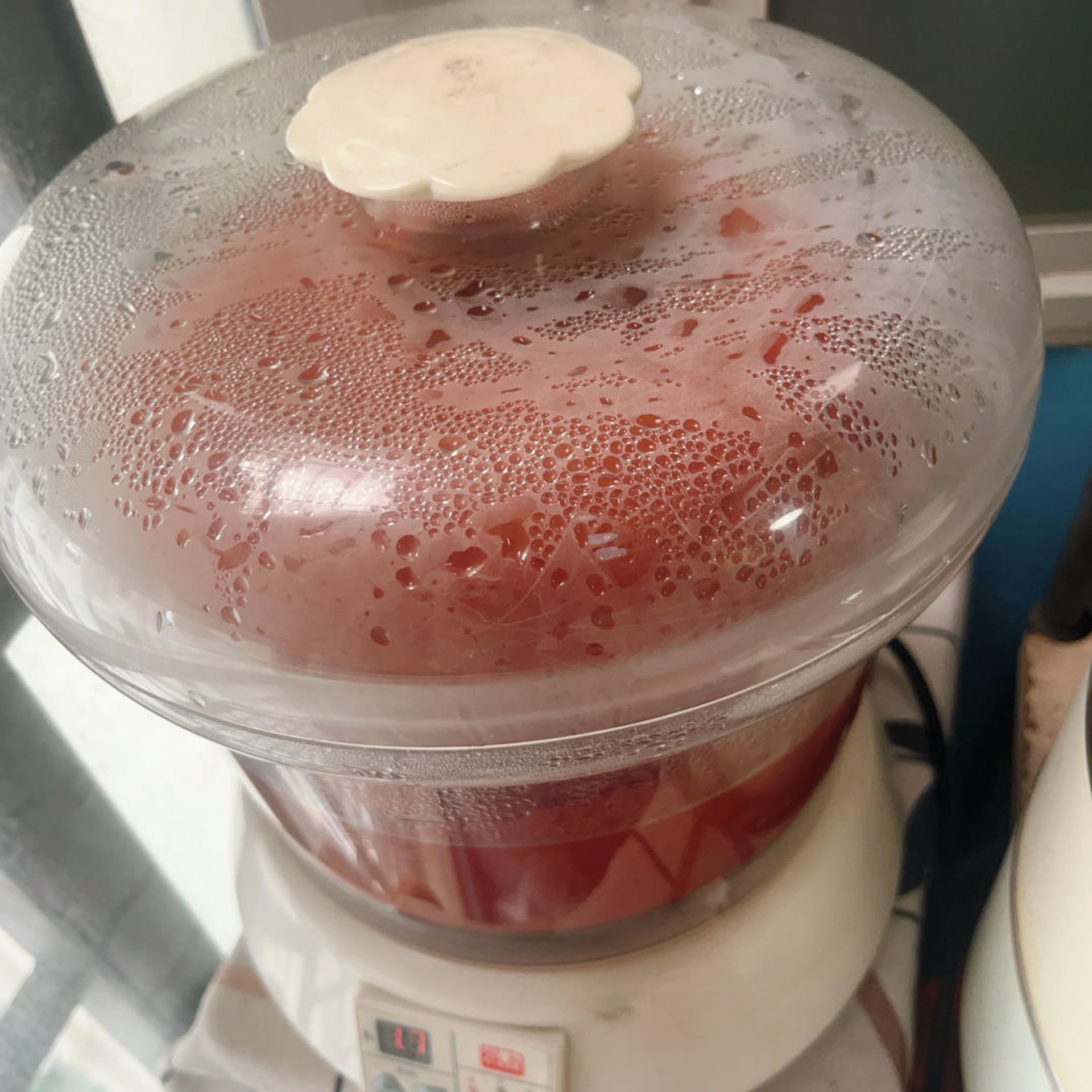
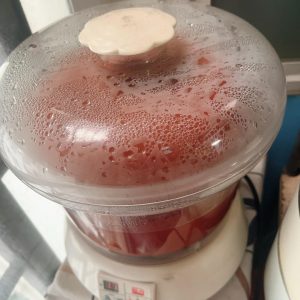
Cover with the lid and double boil for 1.5 to 2 hours. Keep the outer pot at a gentle simmer, not a rolling boil — you want steam and steady heat, not agitation. Check the water level in the outer pot every 30 minutes and top it up with boiling water if it drops below halfway.
Step 6: Taste and serve
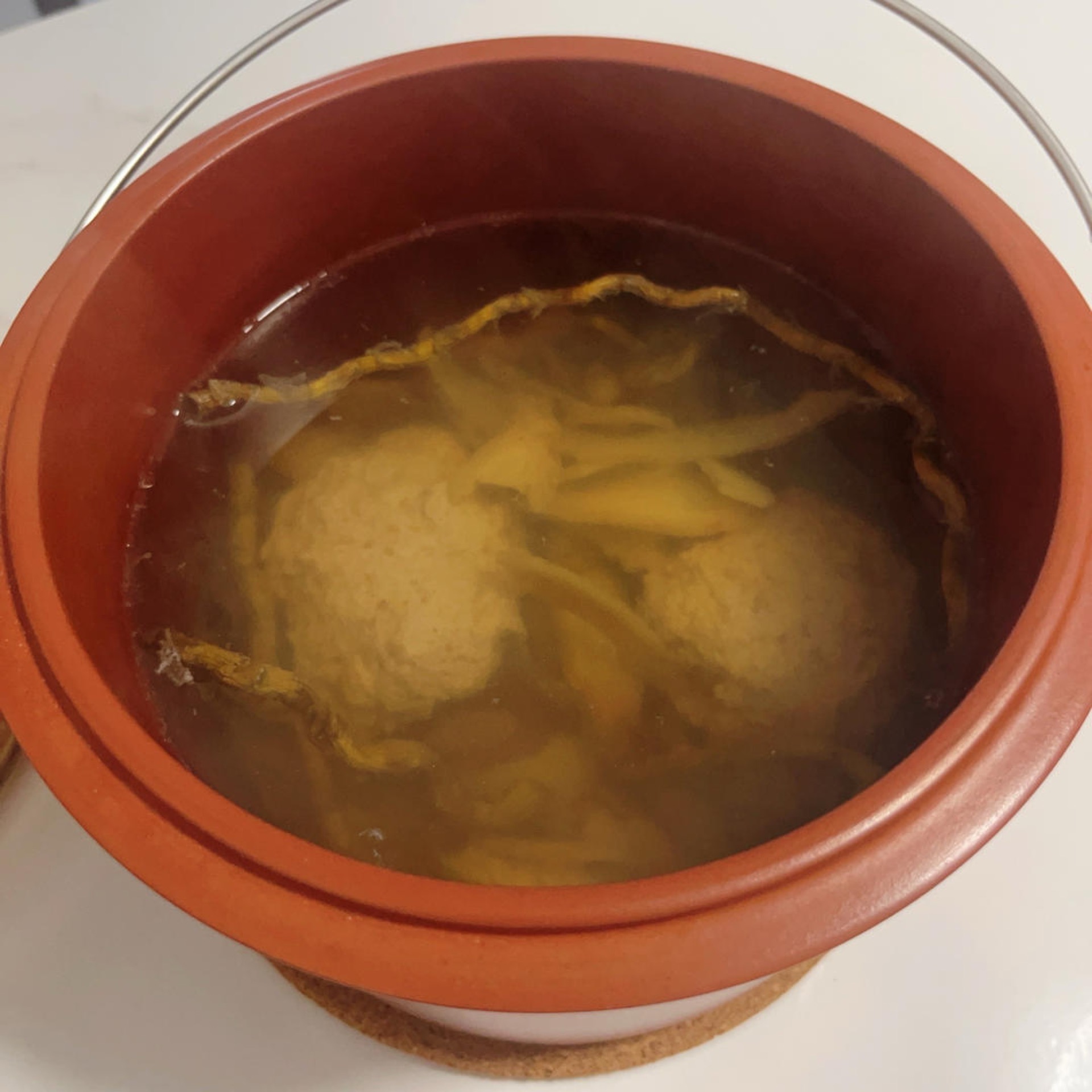
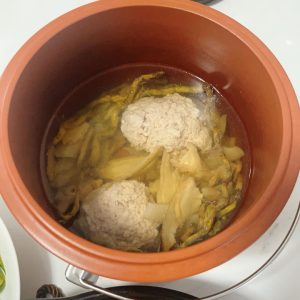
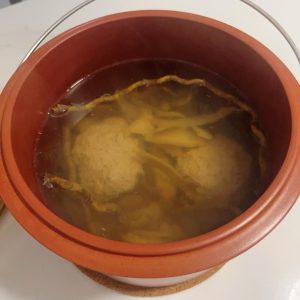
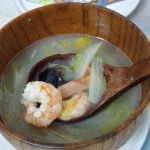
The finished soup is very clear and sweet, and not at all greasy. Season with salt at the table, not in the pot, so each person can adjust their own bowl.
Common Mistakes When Making American Ginseng Dendrobium Lean Pork Soup
1. Adding cold water. This is the single most common error. Cold water stalls the double boiler and the herbs stay tight and closed. Always use water that is at a rolling boil, and top up the outer pot with boiling water too.
2. Not soaking the dried herbs. Dendrobium in particular is woody and will stay woody. Twenty minutes in cold water makes a real difference in how much flavor you get out of a 2-hour cook.
3. Skipping the throwing step on the pork. If you just shape the meat into balls, they will be crumbly and the broth will pick up loose particles. Throwing the meat against the bowl develops stickiness and keeps the meatballs intact.
4. Boiling hard instead of double boiling. If the outer pot is at a violent boil, the soup inside agitates, the pork breaks apart, and the broth turns cloudy. A gentle simmer is the whole point.
5. Salting in the pot. Salt added early tightens the pork and mutes the sweetness of the herbs. Salt each bowl at the table. This is also why the recipe lists salt as “to taste” rather than a measured amount.
Variations
With 肉眼肉. Use ribeye cap or a marbled piece of pork shoulder instead of lean pork. The soup will be noticeably more fragrant, though slightly less clear.
Chicken version. Swap the pork for 300 g of skinless chicken thigh or a small free-range chicken. Double boil the same way; add 15 minutes to the cook time.
Add red dates. Two or three dried red dates add a rounder sweetness and a little color. Leave out the sugar — the dates do that job. If you enjoy date-sweetened cooking, my red date cake uses the same pantry staple.
Add dried scallop. Two or three small dried scallops add a savory depth that plays well with ginseng. Rinse and soak them with the herbs.
Vegetarian version. Omit the pork entirely and add 100 g of fresh shiitake or a handful of soaked dried mushrooms plus a slice of kombu. The soup will be lighter and less sweet, so add two red dates to compensate.
If you enjoy building soups and braises by feel rather than by strict measurement, my guide to what you need to start cooking Chinese food covers the pantry basics that make recipes like this one easy to improvise.
Honest caveat: if you are used to Western broths, this soup will taste almost under-seasoned at first sip. It is meant to be subtle. Drink it slowly and the sweetness arrives on the second or third spoonful.
Frequently Asked Questions
Can I make this in a regular pot instead of a double boiler? Yes, but it will not be the same soup. Simmer it covered over the lowest possible heat for 1 hour, and expect a slightly cloudier broth. A heat diffuser helps a lot.
Can I use a slow cooker? Yes. Combine everything in the slow cooker with boiling water and cook on low for 4 hours. The result is close, though the broth is a touch less clear because slow cookers hold a slightly higher temperature at the base.
Do I eat the herbs and meatballs? The meatballs, absolutely — they are the best part. The dendrobium stems are woody and are usually left in the pot. The ginseng slices can be chewed if you like; they are bitter but some people enjoy them.
Why is my soup bitter? Too much ginseng relative to the sweet herbs, or ginseng that was boiled too hard. Stick to 10 g per 300 g of pork, and keep the outer pot at a simmer.
Can I make it ahead? Yes. Double boil it, cool it quickly, refrigerate up to 3 days, and reheat gently in a small pot. Do not boil it hard on the reheat or you will lose the clarity.
How to Serve
Serve this as the opening course of a Cantonese-style meal, in small bowls, one meatball per person. It is traditionally drunk before the main dishes arrive. It also works beautifully alongside a simple plate of greens and rice — I often pair it with garlic oyster sauce broccoli and a bowl of Wenling fried rice noodles.
If you are serving a larger spread, this soup sits comfortably next to sweet and sour pork ribs or steamed egg with clams, both of which are richer and benefit from a light soup to balance them.
Serve the salt on the side in a tiny dish with a small spoon. Letting people season their own bowl is how it is done at home.
Storage & Reheat
Cool the soup to room temperature within an hour, then refrigerate in a sealed container for up to 3 days. Because there is almost no fat, it will not form much of a fat cap — that is normal.
Reheat in a small saucepan over low heat until just steaming. Do not boil. If you want to freeze it, freeze the broth and meatballs together for up to 2 months; thaw overnight in the fridge. The meatballs will be slightly softer after freezing, which is fine for soup.
Allergen Notice
This recipe as written is free of the major allergens — no wheat, no soy, no egg, no dairy, no shellfish, no nuts, no fish. However, dried Chinese herbs and dried scallops (if you add them) are often processed in facilities that also handle nuts, soy, and shellfish. Check labels if you have serious allergies. If you add soy sauce or oyster sauce at the table, those contain soy and often shellfish.
Nutrition Disclaimer
Nutrition figures are estimates calculated from standard ingredient databases and will vary with the actual pork cut, the amount of salt added, and how much of the broth each person drinks. They are provided as a rough guide only and are not a substitute for advice from a qualified health professional. Herbal soups are not medicine — if you are pregnant, nursing, taking medication, or managing a health condition, talk to your doctor before adding ginseng or dendrobium to your diet.
About the Author & Recipe Development
I am Lin, and I grew up in my parents’ restaurant kitchen in Chengdu, where every dish on the menu had to earn its place. That meant no shortcuts and no decorative ingredients — if something was on the menu, it was because it worked and people ordered it again.
This soup is not a Chengdu restaurant dish. It came into my kitchen through my mother-in-law, who made it every autumn and insisted on the boiling-water detail. I tested it three times while writing this: once with 肉眼肉, once with plain lean pork, and once with chicken. The 肉眼肉 version was the most fragrant, the chicken version the lightest, and the plain lean pork version the clearest. All three are good. The boiling water is not optional.
For more on the tools I actually reach for, see my notes on the best kitchen tools for Chinese cooking. And if you like this style of gentle, herb-forward cooking, try my yam millet jujube buns, which use the same sweet-root logic in a completely different form.
Authoritative References
- Chinese Pharmacopoeia Commission, Pharmacopoeia of the People’s Republic of China — monographs on Panax quinquefolius and Dendrobium.
- Harold McGee, On Food and Cooking — on collagen extraction, meat protein binding, and why gentle heat produces clear broths.
- Fuchsia Dunlop, The Food of Sichuan and Invitation to a Banquet — context on Chinese soup cookery and the double-boiling method.
- USDA FoodData Central — nutrition data for pork loin and dried lilyturf root.
American Ginseng Dendrobium Lean Pork Soup (花旗参石斛瘦肉汤): Clear & Sweet

Equipment
- Double boiler or ceramic soup pot (炖盅)
- Large wok or stockpot
- Chef’s knife and cutting board
- Large Bowl (for soaking)
- Fine Mesh Skimmer
- Small serving bowls
- Kitchen Scale
Ingredients
Main Ingredients
- 300 g lean pork 瘦肉; pork loin or 肉眼肉 / ribeye cap if available
- 10 g American ginseng slices 花旗参
- 10 pieces dried dendrobium 石斛
- 10 g mai dong (dwarf lilyturf root) 麦冬
- 10 g yu zhu (fragrant solomonseal rhizome) 玉竹
- 1 L boiling water about 900 ml–1 L; must be at a rolling boil
- salt to taste, added at the table
Instructions
- I could not find 肉眼肉 at the market today, so I bought a piece of lean pork — with 肉眼肉 the soup is more fragrant. Soak the yu zhu, mai dong, and dendrobium in cold water for 20 minutes first.

- Cut the lean pork into small pieces, then chop it — mincing it is even better. Add a pinch of salt and mix with your hand until evenly seasoned. Lift the meat and throw it back into the bowl several times, until it becomes slightly sticky and holds together. Shape it into two large meatballs.
- Place the meatballs into the double-boiler pot, add all the soaked herbs and the ginseng slices, then pour in an appropriate amount of boiling water.
- Adding boiling water is what draws the flavor out. Cold water drops the temperature of the whole double boiler, and the herbs never get the steady heat they need to open up.
- Cover with the lid and double boil for 1.5 to 2 hours. Keep the outer pot at a gentle simmer, not a rolling boil. Check the water level every 30 minutes and top up with boiling water if it drops below halfway.
- The finished soup is very clear and sweet, and not at all greasy. Season with salt at the table, not in the pot, so each person can adjust their own bowl.


Leave a Reply